
Williams Candy Photos



You might also consider

More like Williams Candy
Recommended Reviews - Williams Candy
Start your review...


3 months ago
7 months ago
6 months ago

4 years ago
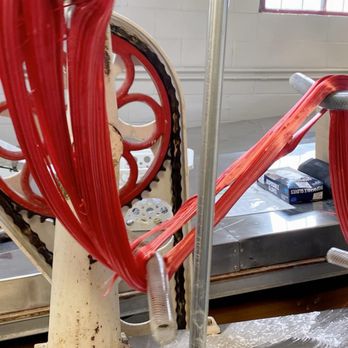
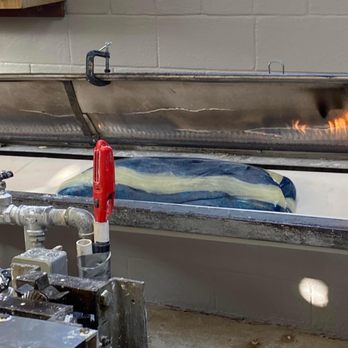
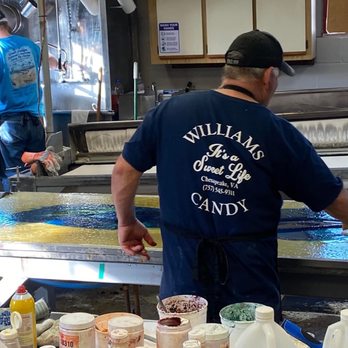
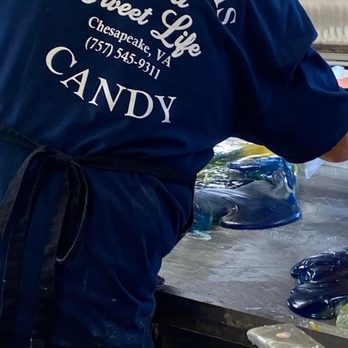
Who can take a sunrise...Sprinkle it with dew. Cover it with chocolate and a miracle or two. The Candy man...the candy man can. Or H. E. Williams Candy Co, in Chesapeake, VA can. Located in a residential neighborhood in South Norfolk, the white, 4,000-square-foot factory would be completely nondescript were it not for the old-timey red-and-white sign hanging by the front door. But inside there awaits an experience like few others in the country can offer. Step through the door and watch as the Williams family makes commercial quantities of hard candy by hand using equipment, recipes and methods dating to the 1900s. I met David Williams and his two brothers and sister- and watched as they started the process with fifty pounds of corn syrup, seventy pounds of sugar, and a gallon of water. When the cauldron heats it to 310° degrees, it's ready for phase 2. Aided by a pulley system, the pot is tilted and the mixture spills across a long steel table, settling into a viscous layer. Cold water flows through a tray just below the surface, helping to cool the mixture. The men spoon on globs of food coloring, then add flavoring. It was blueberry today and using ruler-like metal sticks they cut the sheet into sections. After vigorous folding and kneading, they hoists a 50-pound loaf onto a 100-year-old machine. Its rollers dip and spin, stretching the dough into a sticky, arm-thick rope. The process took about 45 minutes, from magma to packed and labeled. It's entirety was done by hand. By brothers, sister, nephews and a cousin or two. It's a family affair that's now been in operation over a century. Grandpa S.L. Williamson went into business in 1919, and the family has followed the same recipes and, with the exception of two or three new flavors has produced the same core line of products. In 1919, S.L. Williamson settled in Norfolk and took over a big, city-block-sized building on the waterfront. There he set up shop manufacturing candy. By the 1930s, he was selling candy throughout the U.S. To keep up with demand, S.L. had his own spur of railroad with tracks leasing to each end of the factory. Trains came to the back delivering syrup, sugar, flavoring etc. Trains in the back got supplies, The ones that came to the front got loaded down with candy. Hard times ensued during WW2, but they never closed. In 1982, highway construction led the government to make an offer on the property, and the company moved into a smaller building in Chesapeake. In the 35 years since the move to Perry Street, the family's business model has not varied. While other companies were busy automating, rebranding and shifting toward newer offerings, the Williams kept on doing things the old fashioned way. Today, their business still doesn't own a single computer and has no official online presence. They do not advertise and haven't employed a salesman since the 1960s. Orders are completed either in person or over a landline telephone and are payable by cash or check. Prices haven't risen a penny since the 1990s. Seriously, a bag of candy is .90c and a large box is $5.00. Between October and Jan. 1, the Williams will bring on dozens of temporary workers. Most of them family and friends working six 10- to 12-hour days a week. They will make, package, sell and ship nearly 100,000 pounds of candy by New Year's. So while the company's steadfast refusal to change has turned it into something of a working museum, the preserved line of heirloom products could well be the key to its future. I witnessed a miracle or two and met the Candy Man in Chesapeake, VA. read more



1 year ago
2 years ago
4 years ago
5 years ago
7 years ago
More info about Williams Candy
1230 Perry St
Chesapeake, VA 23324
Directions
(757) 545-9311
Call Now
Hours
Payment methods
Food & Alcohol
Outdoor Amenities
Other Amenities
From the Business
Ask the Community - Williams Candy






















Why does Yelp recommend reviews?
1 review that is not currently recommended
The reviews below are not factored into the business's overall star rating.
14 years ago


