
Reyna Photos




REYNA ATMOSPHERE

Recommended Reviews - Reyna
Start your review...

Reviews With Photos


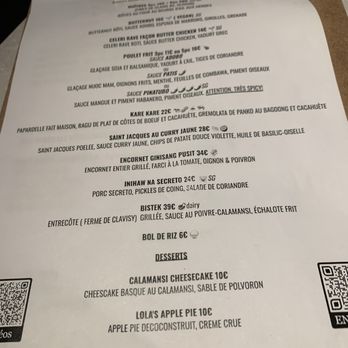
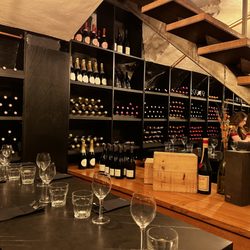
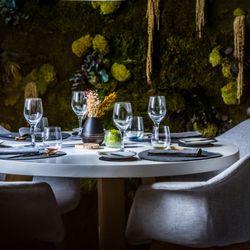
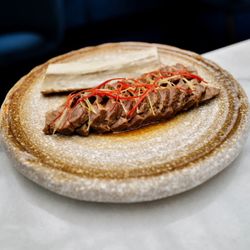
Asian fusion indeed borrowing heavily from east Asia, with an emphasis on filipino. I regret to inform those looking for a home cooked meal, this will not get those core memories stimulated. The food at Reyna leaves much to be desired and still leaves people hungry at the end. We came in for a dinner for four and it is a must to reserve ahead as the limited seating almost guarantees you will not get a walk in. Our host was Andre as I recall was polite and provided insight on the menu. It must be noted that they do not have an English menu and must fend for yourself when selecting or translating your fare. Our host did try to guide us to the most popular dishes they served which for the most part made up for this lack of an English menu despite the targeted audience for this food being in all honesty, not meant for filipinos. In fact nothing really reminds you that this food is for filipinos except the names that some of the dishes borrow. We started with the kare kare, lechon half head, and the sisig. The kare kare was separated chunks of chewy beef chunks on a bed of peanut sauce. It comes with a separate dish of yellow rice that they tell you to mix into the adjoining bowl. Though the rice and the meat in sauce has elements of kare kare, after mixing and tasting the dish turns into a meat kabab with rice with a hint of peanut butter to barely qualify as kare kare. I have seen all sorts of deconstructed kare kare and this one takes the top trophy, but leaves much to be desired despite the well cooked portions of beef and the one note sauce. Next up was the sisig which truthfully was the closest to filipino as it gets. The pork and skin was cooked well, savory and comes with accompanying atcha which when eaten masks, not enhances the pork flavor. The sauce altogether for this dish comes off a little on the sweet side which left me puzzled. Again the presentation was top notch, the texture present as required of sisig, but ultimately left me wanting more. Portion size not withstanding this dish in no way reminded me of home. The last piece presented was the half pig head, lechon. Again aside from the presentation as it comes as a half roasted pighead with a knife sticking out of it, comes as another glamours reminder that this dish is not filipino. Even the accompanying dip reminded me more of a chimichurri sauce that was suffocated under olive oil. Why you would pair an already fatty oily dish with an oil soaked dip is beyond me. Yes the dish was crunchy, the skin almost like biting into pork rinds, but the meat, even the fat was relatively tasteless. To be fair the only taste left in my mouth was oil and fat which honestly was unimpressive. Not even a sufficient hint of lemongrass as most filipinos would want was in the meat, aside from appearing as a filipino dish, it does not taste so. Like a lot of the dishes presented here, it borrows from the filipino palate, but unfortunately despite the glitz and the awe factor, it fails to deliver the flavors of home. Not to detract from its intended audience, many I'm sure in Paris would love to try this food, it is still executed well, and there is some flavor, but it does not warrant what I call an iconic level of following. I would try again, but only if the menu changes and it often does I hear, because to me once you drill down to the essentials of ingredients, flavor, and its ability to evoke memories of home, I would say this location is a one trick pony. As an aside for the drinks, they lean heavily to wine, which many of my constituents don't have much of a background in, and their alternatives, fusion herbal soda, and natural cola are all manufactured here in France. Nothing in the drink menu even remotely resembles Philippines. In summary, the dishes at Reyna, though executed well, and posses a wow factor, once it's in your mouth will fail to deliver that feeling on home cooking. Even the atmosphere reminds you of the crowded subway tunnels of Paris. If you have read this far then I thank you for your consideration as always.


In Paris to celebrate my parent's 50th wedding anniversary and was so special to share chef's menu experience with them at Reyna. Learned more about how my lolas approached these dishes traditionally back home in the Philippines and enjoyed seeing how Chef Erica took creative twists and turns with her dishes. The pride in our culture was apparent but also a desire to push beyond those boundaries and create a unique experience. Mission accomplished!


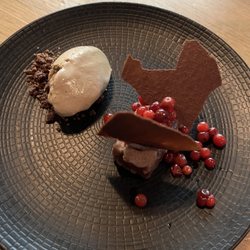
It's a small resto but warm and inviting. The lead wait staff s very friendly and takes the time to explain the menu and recommends how to order. Since the plates aren't too large, the recommendation is 2-3 plates per person. Of course, that depends on the person and appetite! We had a late merienda, so we we ordered only a f w items. The special was the half ulo. However, we know from experience that a half ulo is too much food for the two of us. It looks good! Best to come with a group and order the half ulo and other plates! We ordered to share: Oysters Fried chicken in patis sauce Bisteck Rice Calamansi cheesecake The oysters were the favorite. I could've ordered seconds. The chicken was delicious! The Bisteck was not like a traditional Bisteck but I could est this again and again. The cheesecake was a great end to the meal. But too sweet. Just a hint of Calamansi. Enjoy! read more




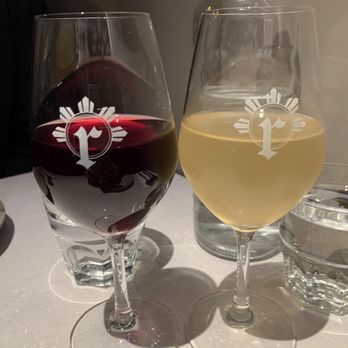


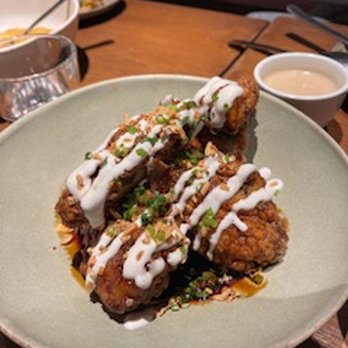
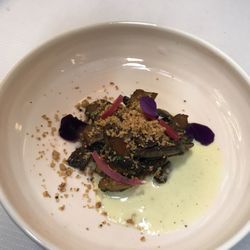
My favorite meal in Paris, hands down. Easy to navigate if you don't speak French (the waiter gave an English menu and explained everything so perfectly to help guide me towards amazing choices and the right portion sizes.) I came for a late lunch on a Sunday and got the kare kare (zucchini in the most delicious savory peanut sauce) with rice to start, a small order of the adobo fried chicken and a chocolate rice pudding with like a salted caramel situation. I'm from the American South and the fried chicken at Reyna was literally the best fried chicken I've ever had. You eat it with your hands so it's a bit messy but it's the perfect combo of sweet, salty, crunchy, and meaty. Just absolute perfection. The kare kare was one of the most interesting and satisfying flavors of curry I've ever had - balanced so perfectly with sunchoke and pomegranate on top. Really great orange wine that I paired with the meal and a pretty reasonable price for 3 course and a couple of glasses of wine. I did take a nap after this meal and I had no regrets. read more


3 years ago
Food - Elevated filipino dishes. Who would have thought? I never understood why filipino dishes aren't more popular, so it's kind of exciting to see and taste familiar dishes kicked up a notch. That's what it is for me - familiar dishes, kicked up a few notches. I didn't have a hard time trying to figure out what I was eating. My group pretty much had everything on the menu. The kare-kare tasted like a properly cooked kare-kare, the lechon (pork belly) and lechon/pork "ulo" (head) was crispy outside, tender insider, and salted properly. What it is, it's not trying hard to be something it's not. It's not trying to put a twist on traditional dishes. It's not adding on or taking away too much from the dishes that the dishes become completely unrecognizable. Reyna keeps it familiar, while elevating the dishes. NOTE: Kare-kare is a beef/peanut based dish served with sauteed "alamang" (fermented mini shrimp). It's served that way because this dish by nature is a bit bland, so the alamang adds to the flavor. I never eat this dish without the alamang. That night was the first night I did. I don't know if the alamang was mixed in, but it was flavored enough that I didn't notice it missing. I don't know if I was tired, but I actually forgot about it. Service - Very attentive service from kuya. Paris was the last leg of our 3 city trip (London, Oslo, Paris). It was our first night and we were a little tired so it was hard to remember details like names, etc. But our server (I kept calling him "kuya" - equivalent of "senpai" or big brother) was really attentive and kept some conversation going. "Masarap" (delicious) was the word of the night. Location - It's in Paris, which is nice. We took the train/bus to the place, so I don't know about parking in the area. It looked like street parking only. The place is easily accessible using public transportation. It's kind of funny to think about it - we went all the way from Hawaii to Paris to have some lechon and kare-kare. LOL! The place is small-ish, but that's part of the charm in Paris. We never got to meet chef Erika. We saw her, but never got to say hi. She was sitting across us having a meeting with someone after most of the dinner service was done. I didn't want to bother her. But it was cool. I would go back if ever we re-visited. It's nice to know I can have filipino food, even in Paris. And no, I didn't get to take pictures of the food because I was busy eating and feeding my daughter. read more




4 years ago
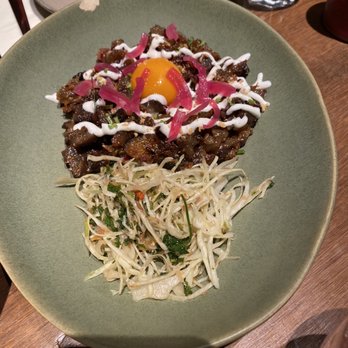
Asian fusion indeed borrowing heavily from east Asia, with an emphasis on filipino. I regret to inform those looking for a home cooked meal, this will not get those core memories stimulated. The food at Reyna leaves much to be desired and still leaves people hungry at the end. We came in for a dinner for four and it is a must to reserve ahead as the limited seating almost guarantees you will not get a walk in. Our host was Andre as I recall was polite and provided insight on the menu. It must be noted that they do not have an English menu and must fend for yourself when selecting or translating your fare. Our host did try to guide us to the most popular dishes they served which for the most part made up for this lack of an English menu despite the targeted audience for this food being in all honesty, not meant for filipinos. In fact nothing really reminds you that this food is for filipinos except the names that some of the dishes borrow. We started with the kare kare, lechon half head, and the sisig. The kare kare was separated chunks of chewy beef chunks on a bed of peanut sauce. It comes with a separate dish of yellow rice that they tell you to mix into the adjoining bowl. Though the rice and the meat in sauce has elements of kare kare, after mixing and tasting the dish turns into a meat kabab with rice with a hint of peanut butter to barely qualify as kare kare. I have seen all sorts of deconstructed kare kare and this one takes the top trophy, but leaves much to be desired despite the well cooked portions of beef and the one note sauce. Next up was the sisig which truthfully was the closest to filipino as it gets. The pork and skin was cooked well, savory and comes with accompanying atcha which when eaten masks, not enhances the pork flavor. The sauce altogether for this dish comes off a little on the sweet side which left me puzzled. Again the presentation was top notch, the texture present as required of sisig, but ultimately left me wanting more. Portion size not withstanding this dish in no way reminded me of home. The last piece presented was the half pig head, lechon. Again aside from the presentation as it comes as a half roasted pighead with a knife sticking out of it, comes as another glamours reminder that this dish is not filipino. Even the accompanying dip reminded me more of a chimichurri sauce that was suffocated under olive oil. Why you would pair an already fatty oily dish with an oil soaked dip is beyond me. Yes the dish was crunchy, the skin almost like biting into pork rinds, but the meat, even the fat was relatively tasteless. To be fair the only taste left in my mouth was oil and fat which honestly was unimpressive. Not even a sufficient hint of lemongrass as most filipinos would want was in the meat, aside from appearing as a filipino dish, it does not taste so. Like a lot of the dishes presented here, it borrows from the filipino palate, but unfortunately despite the glitz and the awe factor, it fails to deliver the flavors of home. Not to detract from its intended audience, many I'm sure in Paris would love to try this food, it is still executed well, and there is some flavor, but it does not warrant what I call an iconic level of following. I would try again, but only if the menu changes and it often does I hear, because to me once you drill down to the essentials of ingredients, flavor, and its ability to evoke memories of home, I would say this location is a one trick pony. As an aside for the drinks, they lean heavily to wine, which many of my constituents don't have much of a background in, and their alternatives, fusion herbal soda, and natural cola are all manufactured here in France. Nothing in the drink menu even remotely resembles Philippines. In summary, the dishes at Reyna, though executed well, and posses a wow factor, once it's in your mouth will fail to deliver that feeling on home cooking. Even the atmosphere reminds you of the crowded subway tunnels of Paris. If you have read this far then I thank you for your consideration as always. read more



4 years ago
In Paris to celebrate my parent's 50th wedding anniversary and was so special to share chef's menu experience with them at Reyna. Learned more about how my lolas approached these dishes traditionally back home in the Philippines and enjoyed seeing how Chef Erica took creative twists and turns with her dishes. The pride in our culture was apparent but also a desire to push beyond those boundaries and create a unique experience. Mission accomplished! read more


4 years ago
Excellent, boutique restaurant near the Farhberg Chaligny, Metro 8. Smaller place, reservations strongly recommend. Though we were lucky to have been able to walk in. It can get a bit loud if there are a group of loud people just due to the smaller size of the place. Chic, upscale hotspot. Fantastic Asian fusion of Filipino cuisine with a Parisian vibe. Smaller plates, but generously sized to provide a delicious meal that is not only beautiful to look at, but filling as well. We were awed by the perfectly prepared octopus, so tender and a menage of flavors with an ink reduction sauce. We could sense a bit of Barcelona in the dish... but it was it's own masterpiece. We also tried the lechon and poulet frit. The lechon was beautifully crispy slices of fatty pork belly on top of a lemon grass salad. The poulet frit was a better version of Korean fried chicken reminiscent of Bonchon in California...but much , much better in a wonderful soy base. Service was beautiful, efficient, and warm with friendliness. read more


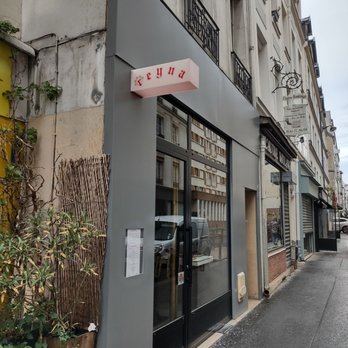
More info about Reyna
41 Rue de Montreuil
75011 Paris
France
Nation/Vincennes, 11ème
Directions
01 76 54 13 76
Call Now
Visit Website
https://reyna.paris
Hours
Food & Alcohol
Outdoor Amenities
Other Amenities
Reyna Reviews in Other Languages












Why does Yelp recommend reviews?
1 review that is not currently recommended
The reviews below are not factored into the business's overall star rating.

3 years ago
Reyna - filipino - Updated June 2026
Browse Brands
Browse Articles
People who viewed Reyna also viewed

BOBI - Filipino Food
25 reviews
11ème

Hanoi
41 reviews
Beaubourg, Marais, 4ème
€€€

Chez Zhong
38 reviews
Trocadéro/Iéna, 16ème
€€

Signature Montmartre
21 reviews
Montmartre, 18ème

Chez Cay
35 reviews
Beaubourg, 3ème
€

Le Palais de la Griserie
14 reviews
Notre Dame De Paris, Saint-Michel/Odéon, 5ème

Chez Ming
71 reviews
Tour Eiffel/Champ de Mars, 7ème
€

Pho Bobun
48 reviews
Strasbourg-St Denis/Bonne Nouvelle, 9ème
€€

Street Bangkok
17 reviews
Saint-Germain-Des-Prés, 6ème

Pho 14 Opera
105 reviews
Palais Royal/Musée du Louvre, 1er
€€