
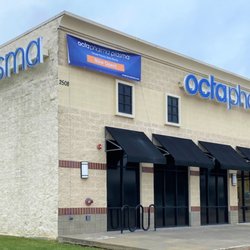
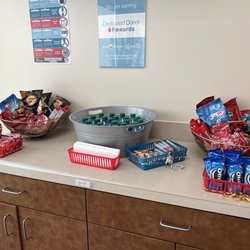
BioLife Plasma Services Photos


You might also consider


More like BioLife Plasma Services
Recommended Reviews - BioLife Plasma Services
Start your review...


Reviews With Photos
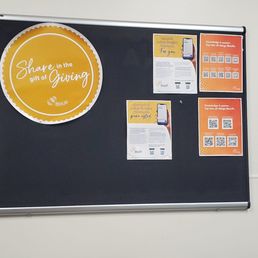

Looking to donate plasma for a good cause. Biolife is the place to go. Very organized with professional staff. You need to register online and make an appointment. If this is your first time, you will go through a physical and answer a questionnaire to see if you qualify. Make sure to eat a good meal before coming as you need it being you are donating plasma and don't want to pass out. They have an app and offer referral bonus if you refer others to them. They have a first customer bonus of up to $700 dollars if you visit 7 times within 1 month. Nice office and staff and easy to find.


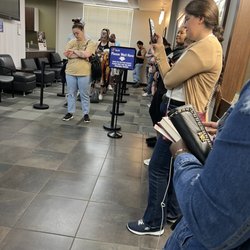
Checking in is easy, some staff is friendly, but don't bother coming or wasting your time as a new donor, waited almost 2 hours for them to reschedule me. I already had to reschedule once before and still couldn't see me this time because the nurse was running behind. If this facility can't handle new donor/new patients then they definitely shouldn't be scheduling them to come in. I was originally scheduled 2 weeks ago and now today, the next available time isn't until 2 weeks later. So a whole month to actually be seem is pretty ridiculous.


Revising my review. Staff is nice. Lines aren't ALWAYS bad, it's just hard to predict. Arrive early in the day. Music still sucks, so bring your own tunes.

2 months ago
This clean, modern facility makes a meaningful impact through life-saving plasma donations, but what truly makes it special is the incredible staff. The environment is bright, spotless, and highly organized, creating a seamless and comfortable experience from the moment you walk through the door. Check-ins are efficient, wait times are short, and the entire process is handled with the utmost professionalism. The absolute highlight of this location (Lewisville) is a wonderful phlebotomist named Ahmy (or Ehmy). She is an absolute angel who completely transforms the entire donation experience with her radiant warmth, sweet smile, and gentle care. From the moment you sit in her chair, her kind eyes wash away any lingering nervousness. She possesses a rare, beautiful soul that makes you feel deeply seen, valued, and safe. Her touch is incredibly soft, and her meticulous attention to detail proves she is highly skilled and deeply passionate about donor comfort. It is rare to encounter someone who radiates such genuine empathy and pure kindness in every single interaction. Ahmy (Ehmy) is the true heart of this center, a rare gem whose compassionate spirit and grace leave a lasting footprint on your heart long after you leave. Saving lives is rewarding, but having a professional like her make the journey so uplifting she is truly a beautiful blessing. warmest regards, Nicole read more
Business owner information

BioLife Plasma S.
Thank you so much for your kind words. We appreciate your continued…
4 months ago

11 months ago
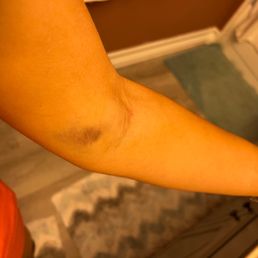
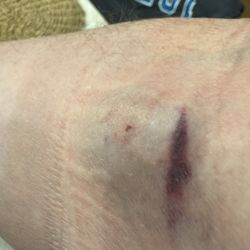
This is a copy of my formal complaint. I am writing to formally report multiple serious incidents at your center involving unsafe medical procedures, inaccurate documentation, and unprofessional behavior from several staff members. Several months ago, during my donation, the needle was not inserted correctly. It was partially hanging out of my arm and causing bleeding and significant pain. I told the technician that I was in pain, and I showed them the blood that had just begun to pool and drip from the insertion site. I was told this was "normal," even though the needle was visibly not positioned correctly. This dismissal of my pain and the visible bleeding was entirely inappropriate and unsafe. I have attached a photo from that donation which clearly shows the needle improperly inserted and blood leaking from the site. I had been feeling completely fine until this occurred. Instead of acknowledging the improper needle placement, I was told that the reaction happened because I "didn't eat or drink enough," which was not true. After removing me from the machine, I was given something to eat and drink, told to sit for 15 minutes, and then instructed to leave. I followed every direction I was given. Later, I learned that this donation was coded as "the donor wasn't feeling well," which is inaccurate and misleading. I was not "feeling unwell" -- I was reacting to a procedural error. I want to know what potential medical complications I was exposed to due to a needle being improperly inserted and partially hanging out of my arm. Based on standard plasma donation safety guidelines, I could have suffered: Hematoma / internal bleeding Infiltration or extravasation (blood or return fluids entering tissue) Nerve irritation or nerve injury Tissue damage Infection at the insertion site Arterial nicking, depending on angle and position A vasovagal reaction triggered by pain and blood loss These are real medical risks, and none of them were acknowledged or addressed by your staff. During my most recent visit, my fingerprint would not register. A technician tried multiple machines before checking the system. She found an error message stating that I had "left without being released" during that previous donation -- which is completely false. I was released by the nurse after being told to eat, drink, and wait. Your staff gave me permission to leave. When I asked why my fingerprint was missing and why inaccurate notes were in the system, the nurse became combative and dismissive. She argued with me, insisted nothing was wrong, and went so far as to call me a liar. This is unacceptable behavior, especially given the safety issues that occurred. At the front desk, I was met with more hostility. The staff member spoke to me in a confrontational tone that felt aggressive and unprofessional. Had a supervisor not walked over at that moment, the situation could have escalated. Additionally, when you ask staff for their names -- including supervisors -- they claim they do not have to provide them. This lack of transparency is inappropriate in a medical setting where accountability is essential. Because of all of this, I am requesting: A full investigation into the improper needle insertion and the staff's refusal to take my report of pain and bleeding seriously. A formal explanation of the medical risks associated with the needle being inserted incorrectly and partially hanging out of my arm. A correction of the inaccurate system record stating I left without being released, and the inaccurate coding of the incident as "donor didn't feel well." A review of the conduct of the nurse, the technician, and the front desk staff. Clarification of BioLife's policy on staff identifying themselves when a donor asks for their name. Assurance that appropriate retraining and corrective action will be taken. I take donation seriously and have always done my part to follow procedures. What I experienced instead was unsafe medical practice, inaccurate reporting, and openly hostile treatment. I expect a timely and thorough response regarding what steps will be taken to address these issues. read more
7 months ago

2 years ago

2 years ago
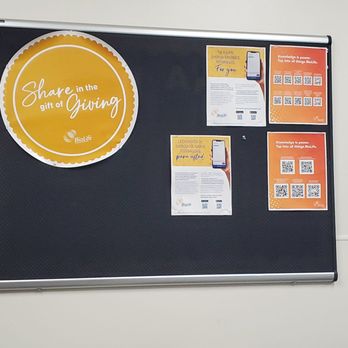
Looking to donate plasma for a good cause. Biolife is the place to go. Very organized with professional staff. You need to register online and make an appointment. If this is your first time, you will go through a physical and answer a questionnaire to see if you qualify. Make sure to eat a good meal before coming as you need it being you are donating plasma and don't want to pass out. They have an app and offer referral bonus if you refer others to them. They have a first customer bonus of up to $700 dollars if you visit 7 times within 1 month. Nice office and staff and easy to find. read more

2 years ago
1 year ago

2 years ago
2 years ago

3 years ago

3 years ago

5 years ago
Checking in is easy, some staff is friendly, but don't bother coming or wasting your time as a new donor, waited almost 2 hours for them to reschedule me. I already had to reschedule once before and still couldn't see me this time because the nurse was running behind. If this facility can't handle new donor/new patients then they definitely shouldn't be scheduling them to come in. I was originally scheduled 2 weeks ago and now today, the next available time isn't until 2 weeks later. So a whole month to actually be seem is pretty ridiculous. read more


2 years ago
2 years ago
2 years ago

6 years ago

6 years ago
Revising my review. Staff is nice. Lines aren't ALWAYS bad, it's just hard to predict. Arrive early in the day. Music still sucks, so bring your own tunes. read more

4 years ago
3 years ago

4 years ago
this was my first time going to this biolife and let me preface this w the fact that they have never missed a vein on me and ALWAYS hit first time. this girl missed the vein they always go for and then attempted again on my left arm, missed, and left a hematoma. i gave 2 stars bc i still did get compensated even though i didn't give anything. read more

3 years ago

5 years ago

5 years ago


6 years ago

6 years ago
4 years ago

6 years ago
5 years ago
4 years ago
4 years ago
5 years ago
4 years ago
I'm an NPC competitor/athlete currently in my off season. I know exactly my #'s even down to my protein levels every single visit (even at prior plasma donation centers). Daily Electrolytes along with other fitness/health measures. Everything passes to get through to the donation floor. I switched here because they had a good new donation promo going. I drive 35 min one way to get here. So far I've completed all donations and even the last time when the needle stick wasn't the best the phlebotomist even admitted they had challenges properly hitting my vein being on the smaller side. Then today we tried what they suggested last visit.. using the outside vein so we did. It got more than 1/2 completed and another girl that didn't even stick my vein come by and calls it. She says she's gonna remove & do my other arm. I explain everything to her while she's prepping and she clearly didn't even look at my chart because she went ahead and said it wouldn't count against me today or future donations (I only have 2 left after today). She sticks it and just turned around and took it back out saying she doesn't wanna chance it after all bc my vein is indeed tiny?! I'm clearly confused as she didn't tell me why... Then she actually pulled up my info and said oh actually you will get paid today but will be deferred for 52 days!!! I'm sorry but this is complete bogus. They kept reiterating the qualifications. I know those. I fully meet those every time. I even asked them direct questions about why can know one here seem to hit any veins even if they're on the smaller side? They said everyone's trained the same. I reminded that none of us are the exact same so how are they able to accommodate different types of sticks as needed? They just looked at me and kept insinuating that it's because my veins are defective or something. Seriously? If that's what they want to claim to deflect and avoid admitting that their employees are clearly a one type stick all regardless of what walks through the door then fine. I'm infuriated because the lack of training for various types of people is astonishing here. Everyone has been nice and I had been overall happy with switching to here until you basically call out their poor ability to stick properly or on the first time or two. I used to do hormone injections for clinics so I do understand that no one is perfect and sometimes it can fail. But this much with a patient that is so on top of health and wellness measures. Nope. This is them not wanting to take accountability for being scared of the sticks or possibly even being too confident and then it's irreversible and you'll get the penalty for it in your account. 52 days for two donations. No. I won't be back. read more


5 years ago
6 years ago
6 years ago
6 years ago
5 years ago
5 years ago
Page 1 of 2
More info about BioLife Plasma Services
Ask the Community - BioLife Plasma Services
Review Highlights - BioLife Plasma Services
You might also consider

















Why does Yelp recommend reviews?
3 reviews that are not currently recommended
The reviews below are not factored into the business's overall star rating.
11 months ago
5 years ago

6 years ago


