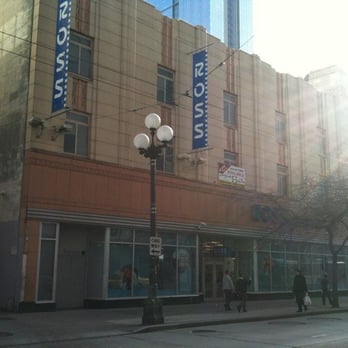
Ross Dress for Less Photos


You might also consider


More like Ross Dress for Less
Recommended Reviews - Ross Dress for Less
Start your review...


Reviews With Photos


The trek and outside of this location is sketchy and pretty disgusting. The downtown store entrance faces a busy bus stop with lotsa undesirables such as needles, trash, human waste reeking of grossness just making your skin crawl thinking about it all! Ugh..you wonder upon entry if the nastiness of outside is reflected within. Well, it's not. This location probably has the most security service and undercover employees just watching to ensure the safety of the ahem merchandise. I have been to a number of Ross stores and I think location has the cheapest merchandise with markdowns upon markdowns. It is possible the prices are lower because the draw of the crowd has less cash to spend and the location is sketchy upon approach. During the holidays the store was packed with gifts and brand name items such as Nike, Sephora like toiletries, Mercedes Benz cars, plush pillows, macadamia nut chocolates and other finds that would make fun stocking stuffers. The store is very clean and appears to be almost immaculate with employees constantly wiping and mopping. Post holidays the store is wiped out of merchandise with almost nothing on the shelves. Not sure why they are not stocking. Possibly items come in waves. Unfortunately I prefer not to stop by too often as the outside is a trial in itself upon approach.

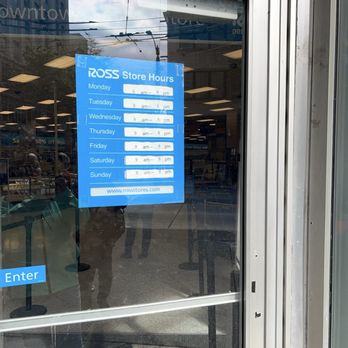
This is terrible! I came to the store at 7:50 and was not allowed to enter. I didn't want to buy things today, I needed to see if there was a thing I needed here in order to buy it tomorrow. Because I try to save my time and not waste it! I'm leaving tomorrow! And I must understand, it makes sense to go to this store tomorrow or not! But, they didn't let me into the store and said that it was already closed! I took the time to come here, because Google Meps shows that the store is open until 8! This means that I still had 10 minutes to watch the desired item. I asked for 2 minutes, but they just kicked me out! This is humiliating and it shouldn't be! I am very unpleasant and insulting. You can't break the rules! If the site says that the store will close at 8, then it should not close earlier!


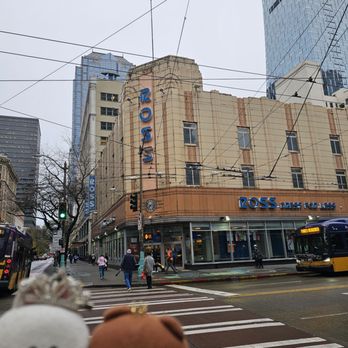
Buying waterproof shoes in Seattle, Washington... When I was walking in the dark to my niece's new apartment, I noticed that there were many puddles and some mud on the sidewalks. I didn't want wet shoes and socks, so I walked on the side of the road. It was still wet and slippery! Thinking that I needed rainboots or some better footwear, other than Sketchers, I searched for the nearest ROSS. Parking was challenging because this is Downtown. I did find a spot about a block away... eventually... after circling around three times or so... Like other reviews stated, there are Security personnel at the door and they do check receipts. I found the Women's Shoe Department easily and had a choice of olive green or black boots (which were $10 more than the olive pair and had a higher heel). I chose the more practical pair, paid, and asked the cashier to cut the tags off because I wanted to wear them immediately. Well, walking to the car was challenging because I got a bigger sized shoe. I walked back in my Sketchers and held the boots in my hand. I showed the Security personnel the boots and they let me grab a different size from the shelf and exchange the used boots for a smaller size. The clerk attached all of the tags back onto the larger sized boots and helped me remove the tags from the new pair. Yay! It all worked out and my feet are happy because they're warm and dry! read more


1 year ago
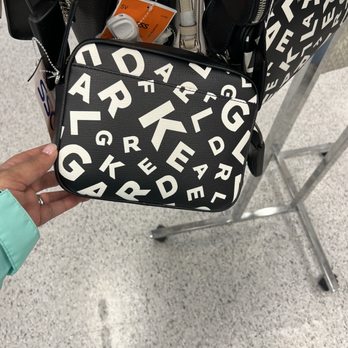
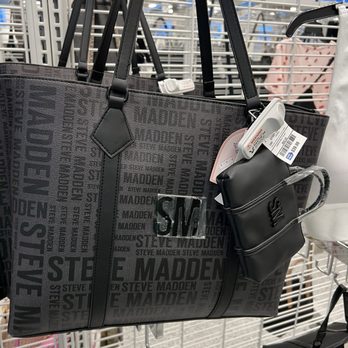
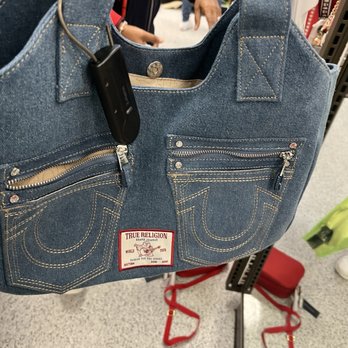
Walking back to hotel we stumbled upon Ross. There is a disclaimer from security before you are even let in basically telling you Don't steal, cameras are everywhere, then we were granted entry ! Well lit spacious store. Plenty of designer items from apparel, purses, electronics, perfumes etc. Prices vary ! Name brand galore. Ross has really stepped there game up ! read more




9 months ago

9 months ago


2 years ago

4 years ago

2 years ago

2 years ago
2 years ago
2 years ago

5 years ago

6 years ago
The trek and outside of this location is sketchy and pretty disgusting. The downtown store entrance faces a busy bus stop with lotsa undesirables such as needles, trash, human waste reeking of grossness just making your skin crawl thinking about it all! Ugh..you wonder upon entry if the nastiness of outside is reflected within. Well, it's not. This location probably has the most security service and undercover employees just watching to ensure the safety of the ahem merchandise. I have been to a number of Ross stores and I think location has the cheapest merchandise with markdowns upon markdowns. It is possible the prices are lower because the draw of the crowd has less cash to spend and the location is sketchy upon approach. During the holidays the store was packed with gifts and brand name items such as Nike, Sephora like toiletries, Mercedes Benz cars, plush pillows, macadamia nut chocolates and other finds that would make fun stocking stuffers. The store is very clean and appears to be almost immaculate with employees constantly wiping and mopping. Post holidays the store is wiped out of merchandise with almost nothing on the shelves. Not sure why they are not stocking. Possibly items come in waves. Unfortunately I prefer not to stop by too often as the outside is a trial in itself upon approach. read more


8 years ago
5 years ago
This is terrible! I came to the store at 7:50 and was not allowed to enter. I didn't want to buy things today, I needed to see if there was a thing I needed here in order to buy it tomorrow. Because I try to save my time and not waste it! I'm leaving tomorrow! And I must understand, it makes sense to go to this store tomorrow or not! But, they didn't let me into the store and said that it was already closed! I took the time to come here, because Google Meps shows that the store is open until 8! This means that I still had 10 minutes to watch the desired item. I asked for 2 minutes, but they just kicked me out! This is humiliating and it shouldn't be! I am very unpleasant and insulting. You can't break the rules! If the site says that the store will close at 8, then it should not close earlier! read more


7 years ago

12 years ago


19 years ago

10 years ago
Uggggggh!!!! Where do I start? This place just sucks. I guess my biggest problem is the set up. Upstairs is the clothes and shoes and downstairs is the candles, suitcases, housewares, and other things. Also if ya gotta pee, good luck. No bathroom in the store for customers, but I'm discovering that most stores downtown don't have bathrooms. I asked an employee where the candles were and she looked at me, shrugged, then walked away. WTF??? Don't you work here??? I never thought that I would say this but, I've received better service at Walmart. If you want a little step up, go to their competition across the street (TG Maxx). Its a little more pricier than Ross but it's cleaner and their employees are more professional. read more


13 years ago


8 years ago
This store is incredibly messy and disorganized, you have to be in a certain mood to shop here. I come here once in a while because you can find some gems here but you really HAVE to search for them. I would recommend shopping in the weekday because the weekends gets very crowded and chaotic. They do have great deals, its cheaper than Maxx but Maxx has better items. If you want to shop by price, start at Ross than move on to T.J.Max. I randomly found a marble-like table which was very affordable and stylish, it was a bit wobbly but that is expected from a store like Ross. Things are always slightly off. A lot of their clothes are "irregular" sizes, items are slightly defected but if you value a good deal and you have the time and energy to search for it, then I recommend Ross. If you know exactly what you want and don't have much time, go somewhere else. read more


12 years ago


7 years ago

15 years ago

9 years ago

15 years ago

4 years ago

9 years ago

18 years ago


4 years ago

18 years ago

17 years ago


16 years ago
Page 1 of 3
More info about Ross Dress for Less
301 Pike St
Seattle, WA 98101
Downtown
Directions
(206) 623-6781
Call Now
Visit Website
http://www.rossstores.com
Hours
Payment methods
Outdoor Amenities
Ross Dress for Less Reviews in Other Languages
Ask the Community - Ross Dress for Less
When are you going to open?
The timing of our re-openings can change from time to time. Please check our website for the most up to date information on our re-openings. Thank you for shopping at Ross!
You might also consider














Why does Yelp recommend reviews?
12 reviews that are not currently recommended
The reviews below are not factored into the business's overall star rating.
15 years ago

6 years ago

6 years ago

17 years ago

10 years ago

2 years ago
2 years ago
3 years ago


6 years ago

6 years ago


