New Balance Hubway Photos


You might also consider


More like New Balance Hubway
Recommended Reviews - New Balance Hubway
Start your review...



11 years ago


15 years ago
So far so good. Despite living in Cambridge and not having any stations the $60 introductory annual rate and a free helmet tempted me into becoming an early adopter. I'm not a bike rider and my previous attempts at starting have not been pretty but these bikes were extremely easy for me to pick up and ride. The system works great. Occasionally you'll run into a bike that it won't let you take (probably because someone hit the broken bike button) but all you do is just try another and it will usually give it to you. Other people have complained about being timed out for 5 minutes after returning a bike. This does happen but only for the original bike you took out. My suggestion is to just grab a different bike. My only complaint is that some of the stations aren't marked accurately on the maps however Hubway was quick to fix the ones I pointed out to them so kudos to them for listening. Can't wait until they come to Cambridge either this fall or next spring. read more


15 years ago
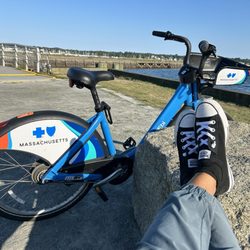
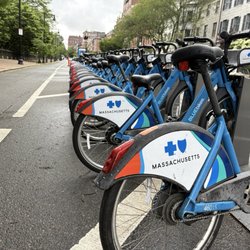
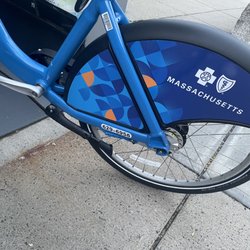
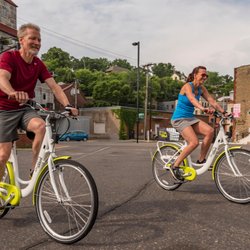
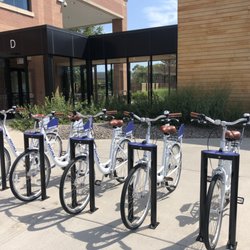
I love the idea of a bicycle sharing program in Boston but I must admit that it has left room for improvement. It's not cheap. You must pay to be a member ($85/year, $12/3days, $5/day), then you must pay for rides longer than 30 min. When you return a bike, you have to wait just under two minutes to check another out again (whether its the same bike or another bike), making it slightly inconvenient to station hop for 'free' rides. The fee scale increases sharply for rides over the 30 min mark - an hour costs $2, two hours is $20, and a full day is $100. For comparison, most bike shops rent bicycles for $30/day. For the price of a year membership you could buy a cheap bike at Target or a decent bike off Craigslist. If a Hubway bike is not returned in a day your credit card gets charged $1,000. Ive encountered a few people having difficulty buying a membership with a credit card, and one kiosk with a frozen screen. Priced as such, its clear that the system is designed for quick trips - commuting or running errands instead of recreation or sightseeing. Unfortunately, less stations were installed than planned (there are about 45 as of 8/13/11), and they are not well-placed. There are clusters of stations instead of an even spread across the city. The residential section of the Back Bay is completely left out, as is Beacon Hill, most of the North End, and a huge piece of the South End. I believe they were placed based on where they could find sponsors, not out of convenience. They have plans to expand into Cambridge and Somerville in the future. There's a cool app that tells you where the stations are, and how many bikes are available at each one (in real time, but I get a lot of 'server errors'). I have already run into docks completely out of bikes when I've needed one, and docks completely filled when I've needed to return one. In the latter case it can give you 15 extra minutes to find another, but its a big inconvenience. Hopefully they will be better at redistributing the bikes or place more stations. The bikes themselves are utilitarian, durable and very slow. Most noticeably there is no top tube, making getting on and off easy. They have an internal 3-speed rear hub controlled by a grip-shifter. The brakes, controlled by normal brake levers, are built into the hubs. The wide, hard, and slippery seat is easily raised or lowered, and cannot be completely pulled out of the frame. A generator in the front hub powers a built in white headlight and red taillights. Parts are secured to the frame with specialty bolts. There is a pseudo basket (no sides) in the front with a bungee - I'm not sure why it isn't a real basket. When a bicycle breaks you place it in a dock and press a repair button, which will prevent it from being checked out again. It would be nice if the bikes had an indicator for how long they have been checked out for, instead of having to racing an invisible clock to get to the next station in under 30 min. I think my biggest complaint is how low the bikes are geared, making it impossible to go fast on flat ground. I'm not about to count chainring teeth but at about 10mph in 3rd gear my pedals are spinning too quickly to keep up with. I'm sure this is a safety feature. Locking the bikes is actually a bit difficult; it takes a some skill to get the mechanism to properly engage the bike on the first try. A guy next to me heard the noise and walked away assuming his had locked. Luckily I noticed the tiny light flash red and re-locked it for him. I think there needs to be more of a warning when lock failed. I foresee a lot of good people getting charged 1k for a bike they thought they had returned. *Update, I have heard stories of people getting large charges after they had taken a sub-30 minute trip. At least the next guy who took it out didn't keep it! Always triple check to make sure it was returned properly, the locks are far from perfect. Within minutes of returning a bike to a station, I saw a teenager try to yank it out of the dock. He gave up pretty quickly. I'm sure drunk college kids, especially tool-wielding MechEs, will give the system a better test. Already I've encountered a few bikes with broken bells, out of true wheels, and one with a broken fender. I've also encountered two broken dock mechanisms. I hope these were lemons and the system wont fall apart this quickly. Helmets are required by the terms of the Hubway, and are sold for $8 at vendors across Boston (shown on the station map). Out of all the Hubway riders I've seen so far, I've seen one, only one, person wearing a helmets. It's also apparent that the police are not ticketing riders for violations - plenty of running red lights, sidewalk riding, and lack of signaling. This was expected. I really hope this program will expand next season. Until then, its very limited in its practicality. Please keep in mind that the program is still new; I'll try to keep this updated. read more


15 years ago

15 years ago

15 years ago

15 years ago

15 years ago

15 years ago

15 years ago

15 years ago


15 years ago

11 years ago

10 years ago

15 years ago

10 years ago

15 years ago

15 years ago

14 years ago

11 years ago

15 years ago


15 years ago

15 years ago


11 years ago

15 years ago

15 years ago

13 years ago

11 years ago

15 years ago

15 years ago
14 years ago

14 years ago
11 years ago


11 years ago
11 years ago
Page 1 of 2
More info about New Balance Hubway
1 City Hall Sq
Boston, MA 02109
Downtown
Directions
(855) 948-2929
Call Now
Hours
Other Amenities