F45 Training Bressi Ranch
Services - F45 Training Bressi Ranch
F45 Training Bressi Ranch Photos


You might also consider


More like F45 Training Bressi Ranch
Recommended Reviews - F45 Training Bressi Ranch
Start your review...


Reviews With Photos


Back after 2 Years.... While the trainers have changed, the positivity, welcoming spirit and great workouts haven't changed! After a one week trial and friendly checkins by the trainers, I am back with an unlimited membership. The app makes it easy to book my workouts and the support and encouragement from everyone is outstanding! Highly recommended, either as a drop in or a member this is the place for you!
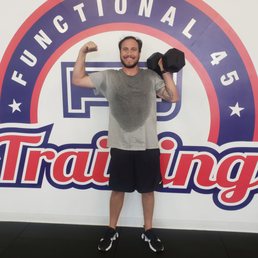

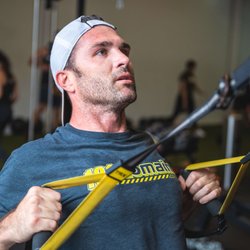
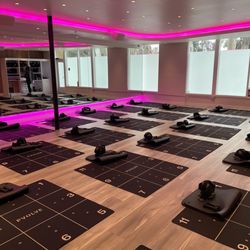
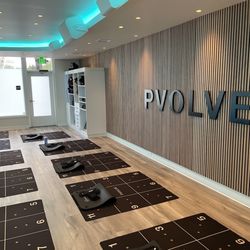
First time going to an F45 studio and it didn't disappoint. Coach Kayleigh and Coach Jacob did a great job introducing me to how the classes are set up: * Mondays and Wednesdays are cardio / plyometrics days. * Tuesdays, Thursdays, and Sundays focus on strength building. * Fridays and Saturday are hybrids that focus on full-body workouts. For my first day I tried cardio / plyometrics. It was a fantastic workout. Each station has a designated number and you're placed in groups of 2-3 people with the option of choosing from two different workouts at each section. Kayleigh made sure I was paired with a seasoned F45 member, since it was my first time. Every group is assigned a number and rotate to the next workout section. The coaches assist as needed and there are tv displays that demo how to do each workout, when to begin the sets, pause, and move to the next station. Kayleigh and Jacob did a 5 star job. I appreciate how clean and organize they kept the gym. Their process is great and it worked for me. If they weren't assisting, they were organizing the equipment or cleaning. They stayed engaged with the group - all this at 5:30 AM and there was a lot of us. Thank you for the great experience!! I felt very welcomed, informed, comfortable at the studio, and got a great workout. read more


10 months ago
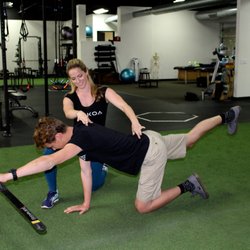
The hype is real at F45. The workouts are fun and anyone can get a good workout. The Coaches are part inspirational speakers, form correctors, older siblings and drill instructor. Each Coach is different and I like that I have choices with upper body or lower body workouts. I have lost 14lbs in 45 days during their Challenge. Lunchtime is my usual class time. Just 45 minutes! read more

3 years ago
Back after 2 Years.... While the trainers have changed, the positivity, welcoming spirit and great workouts haven't changed! After a one week trial and friendly checkins by the trainers, I am back with an unlimited membership. The app makes it easy to book my workouts and the support and encouragement from everyone is outstanding! Highly recommended, either as a drop in or a member this is the place for you! read more

1 year ago


6 years ago
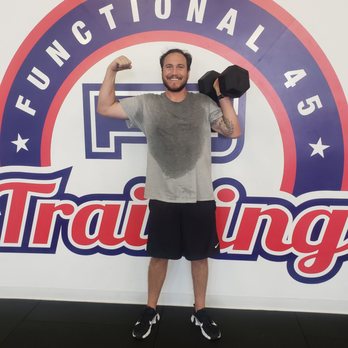
I cancelled my gym membership for F45. F45 has surpassed my expectations. Classes are 45 minutes of continuous movement. MWF are more cardio based (squat jumps, lunges, burpees, lots of body weight movements) and TTh is strength exercises with weights. Both kick my butt. 2 coaches are roatating on the floor. The owner Dean and Autum are great and built an amazing team. Their Studio manager Azin kicks butt and has the best smile. Christian is super friendly and makes the class fun. Vanessa is no joke, she almost made me puke but really nice. Kaitlyn is very knowledgeable not just in the gym, but in what to eat if you're needing help with that. Overall they check tick each of my boxes on my list for what I need in a gym. If you are in the area check out a discounted trial membership! read more

7 years ago

6 years ago
3 years ago

7 years ago

7 years ago
3 years ago

7 years ago

7 years ago

7 years ago

7 years ago

7 years ago

6 years ago

6 years ago

7 years ago

6 years ago

6 years ago

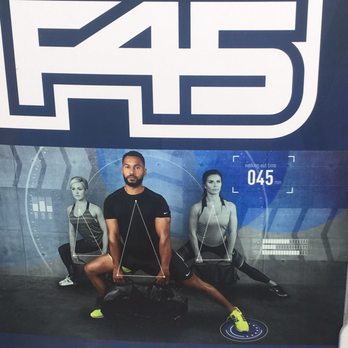
WOW!! Is all I can say. I was totally hesitant about doing this. I haven't exercised with such intensity in years. Literally since I was in the army over 36 years ago. I am very glad that I signed up for the F45 training. They allowed you to have a plus one so I brought my husband. Our first day was Tuesday and we did Tokyo disco. Believe me, it's nothing like what it sounds like. 12 stations, (6 upper body and 6 lower body stations) 35 seconds with 25 seconds to rest between sets. (Hope that's correct) I had never seen my husband sweat while exercising. He was drenched and so was I. I was proud of us for finishing the 45 minutes. We both felt great the next day until I woke up Thursday morning and could barely lift my arms!! My husband was just the opposite. His legs were killing him and we had another class to attend tonight. Let me tell you! I barely made it through tonight's class but coaches Shanon and Michael were extremely encouraging. As sore as I am, I'm looking forward to the Saturday class. Thank you F45!! read more




7 years ago

7 years ago

7 years ago

7 years ago

7 years ago

7 years ago

6 years ago
7 years ago
6 years ago
6 years ago
5 years ago
7 years ago
6 years ago

7 years ago
7 years ago
Page 1 of 2
More info about F45 Training Bressi Ranch
2662 Gateway Rd
Ste 165
Carlsbad, CA 92009
Directions
(619) 536-7557
Call Now
Visit Website
https://f45training.com/BressiRanch/
Hours
Outdoor Amenities
From the Business
Ask the Community - F45 Training Bressi Ranch
Do they have showers?
There are no showers at this F45 location but they have items in their bathroom to freshen up such as wipes, deodorant and dry shampoo.
Review Highlights - F45 Training Bressi Ranch
You might also consider

























Why does Yelp recommend reviews?
3 reviews that are not currently recommended
The reviews below are not factored into the business's overall star rating.
6 years ago
7 years ago
6 years ago


