Have you suffered the same experience at a big box store as me? You know; where you're looking for an item in a goliath of a building and the few employees manning the isles avoid eye contact as they walk past you. I doubt they do it on purpose, but rather have subconsciously evolved to avoid eye contact with random customers to avoid the risk of being asked a question by the customer, thus distracting them from their focused task at hand, be it helping another customer, or simply making it to the break room.
That happens to me a lot at some large retail stores like Home Depot, a bit less at Lowes, but it's very common at Wal-Mart. Food 4 Less is hit or miss for me. Both Vons and the Apple Store have very good customer relations. And while shopping at Kohl's on black Friday, I was really impressed with the customer service I received from their employees. But doctor's offices - while not big box - can be the worst.
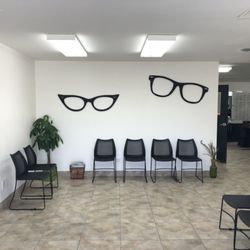
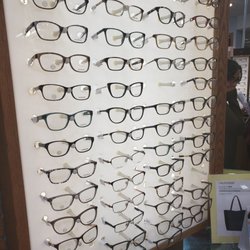
I replaced my broken iPhone with another one I had to purchase from the Apple Store (for around $300) on black Friday. Then I checked my pending voice mails I had missed over the past week. One was from my optometrist's staff informing they "still" had my new glasses and provided their business hours. On Monday afternoon, I took an hour leave from work to make it to my doctor's appointment. I made good time in the 40-mile drive from work to Barstow, and figured I had enough time to pop in to pick up my new glasses from the office of my Optometrist, Dr. James R. Dallas. In my experience, he's thorough, professional, and in my limited knowledge of optometry, Dr. Dallas is an exceptional optometrist. Unfortunately, and occasionally, a member of his office staff represents the opposite.
Such was my experience yesterday afternoon as I stopped by to pick up my glasses, which were paid for in full at the time I selected them over a month ago. When I informed the lady at the counter I was there to pick up my glasses, she said; "Sign in and have a seat. There's one person in front of you." So I signed in and sat down. A few minutes later, a woman with two children exited the office and on out the front door. I continued to wait. A minute or two later the woman returned with her children in tow and said; "These are still loose." The lady at the counter repeated "They're still loose? Well come on back and we'll adjust them for you."
Um, what about me? They left, why didn't she call me back while they were gone? Is my time so inconsequential to her that she can't even say something before serving the line jumper? Hmm. So I got up and made it to my doctor's appointment with a few minutes to spare.
I know, this is pretty petty, but it's not the first time I've been treated as though I'm an inconvenience to his staff.
It seems this is often a systemic challenge for the healthcare industry. The doctor's seem to care about their patients, but the office staff doesn't see us as a "patient" or even as a "customer." Rather they seem to see us as a necessary inconvenience to their day they must endure simply to bill their real customer; our respective insurance company. Such office staff may best be described as aloof, indifferent, uncaring, unconcerned, or even apathetic. They certainly don't treat us in a manner they would like to be treated if our roles were reversed. And they probably wouldn't be hired at Kohl's.
In truth, it's not their fault. Each of us is the end result of our own environment, and they work in an environment where the industry produces their quality of service as a consequence of how our healthcare industry is designed. But if my perception of poor service is as ubiquitous as I suspect, then this could be corrected by training provided by a good office manager. Such training would start with an informal discussion where the office manager encourages the employees to share horror stories of poor service they have endured, followed by a discussion of the Golden Rule ("Do unto others as you would they should do unto you."), which should be framed and mounted on a wall somewhere in the office area to help influence the end result produced by the employee's environment. Then the office manager would redirect the discussion relating to bad experiences employees or friends and family of employees have experienced in their visits to medical professional's offices. The goal is for the employee to consider how their customer perceives their experience when being served by the employee.
In short, poor customer service isn't a failure of labor. It's a failure of management. Of course if the office manager sucks, well then the workers are merely reflecting the behavior, attitude, and conduct of leadership in their environment. read more