西貢全記海鮮酒家 Photos


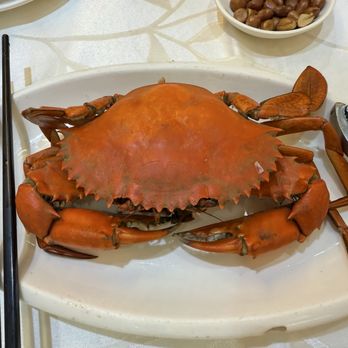

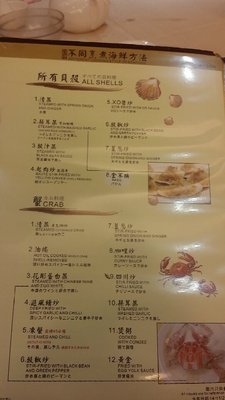

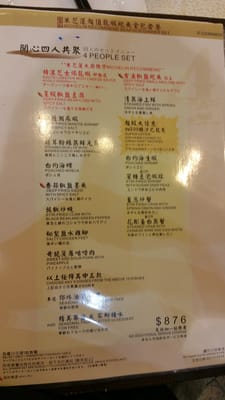

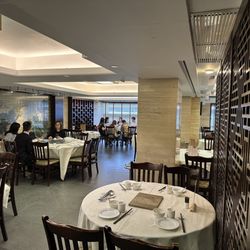
西貢全記海鮮酒家 ATMOSPHERE


Recommended Reviews - 西貢全記海鮮酒家
Start your review...

Reviews With Photos


A lot of Life seafood in Sai Kung and this is one of the best one. Nice to come for a visit if you have some time to kill. This place is not cheap and the price and one average size of king crab about 6 pounds can cost a few hundred USD.


There are a lot of options for the seafood lover and less worthy options for the non-seafood eater. If you're in Sai Kung and crave non-seafood delicacies, this is not the place to spend your money. Our table of six people were seated in the upstairs portion of the restaurant and were given ample time to peruse the menu. One person in our group does not eat any seafood but there were other choices such as beef chow fun, fried rice, and noodle dishes but at a price much higher than your typical restaurant. We settled for a six person set menu, which included a jellyfish appetizer, lobster with cheese over noodles, fried abalone, razor clams, scallops, salt and pepper mantis shrimp, and stir-fried crab. The seafood were all appetizing and fresh tasting. We were so full we could not finish everything! I don't know how much it would cost if we had bought the fresh catch from the boats along the restaurants for them to cook, but the cost was not cheap, although reasonable for the quality and taste. Overall, a good restaurant to dine at with your seafood loving friends.


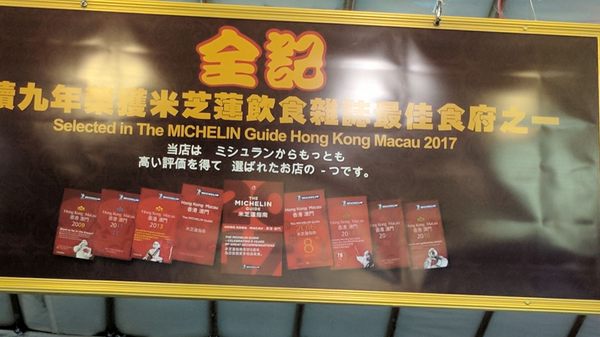
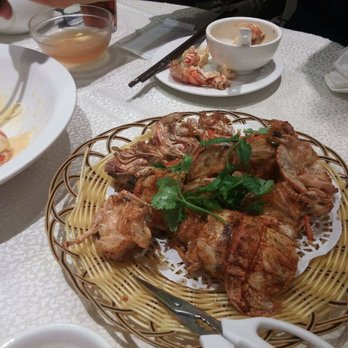
Note: this review was from a visit dating back to November 2016. I do not expect things to be very different as of the writing of the review in early 2019, but take that with a grain of salt. So there's this inane stereotype going around the western world that Hong Kong is a concrete jungle where wildlife is in short supply, and everyone lives in poultry farm cages within its superdense urban cores. Sure, there are illegally subdivided cage homes in Kowloon, and there are places where the scenery is strsight out of Blade Runner. However, it's not every inch of the city. Hong Kong is 80% hilly, and developments are centered on corridors of mega-density along its coastlines and valleys. The hilly interiors and the coves on the southern coast are typically ignored by major real estate developers. Those areas might be protected country parks/nature preserves, or they can be allotments for local villages dating back to Hong Kong's precolonial past. Some of those villages are resort towns serving as gateways to the more idyllic parts of Hong Kong, like Sai Kung on the Southeastern part of the New Territories. It's so well known by expats getting away from Causeway Bay or Central that you can buy namedropping merchandise at Goods of Desire (oh look, a keychain for Sai Kung, how local). The local gypsy ferries 街渡 taking you to the various settlements on the outlying islands is right off the pier near the bus terminal (20 minute ride to the MTR TKO line), and there are vendors on sampans selling you dried or fresh seafood right off the promenade - I am pretty sure they grabbed merchandise off a van at the parking lot out back, loaded up the dinghy at the municipal dock, and then pedaled it up to gawk the goods upon unsuspecting tourists. Whenever there are coastal villages with fishing boats, there are seafood restaurants nearby catering to visitors. Chuen Kee is one of those Cantonese seafood restaurants dotting the coastline of the town, vying with wine bars, Sri Lankan restaurants, cafes and piri piri chicken joints in the area for your hard earned money. Was it worth it? Well, ignore that Michelin gourmet sign - it's not the same as a star. Hell, the wine bar down the block from my NYC apartment has one, and no one here cares. Unless it's an actual star and it's current for the year (or if they sell French car/bike tires on-premise), that Michelin sign is meaningless. Any time you have seafood, you can expect a large outlay - I think I spent about 1200 HKD for 4 people (hint: roughly 8 HKD to a USD, so two benjies with change). Ambiance is interesting - it's right off the promenade with outside seating, and there are large tanks and displays for fresh seafood caught somewhere else far away and trucked here for your visceral pleasures. After the meal you can totally do a leisurely walk amongst the streets and alleys, maybe grab a cup of coffee and see the sunset in the area. Foodwise it's solid, but nothing to go nuts over. It's the usual fare you find in Cantonese seafood joints the world over. Scallops steamed with sweet soy, garlic and vermicelli, the Australian spiny lobsters stir fried in a cheese sauce, the salt-n-pepper deep fried mantis shrimp (aka the pissing shrimp, it's a bit overrated to be honest), the stir fried clams (little bit of sand), your typical seasonal veggies, and some crabs steamed with Shaoxing wine and a egg white reduction (not much meat and not really all that great). It was fine...no weird aftertaste, no overabundance of MSG, and like any solid seafood joints, not much was done to bury the natural flavors of the ingredients. Dessert was decent, with the usual fresh fruits and a corn-coconut pudding served on pandan leaves. Service was decent. I would say that the experience had been enjoyable, but if I visit Sai Kung again, I'll give this place a pass and try something else. It's a rather competitive area with plenty of options.


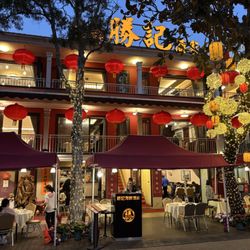
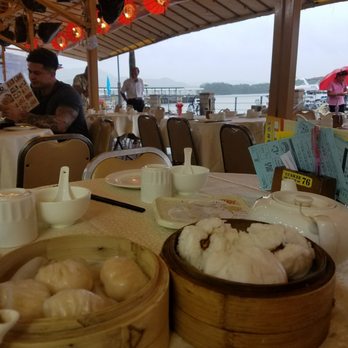
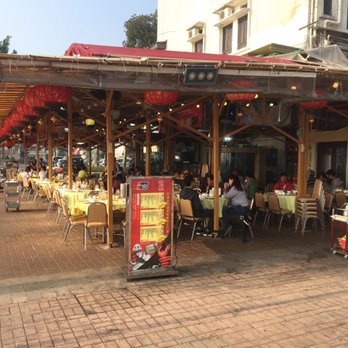
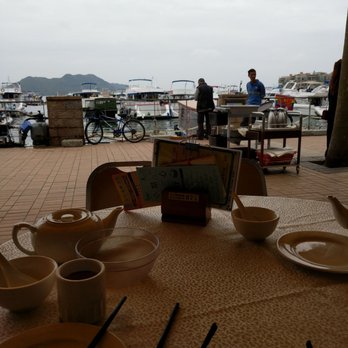
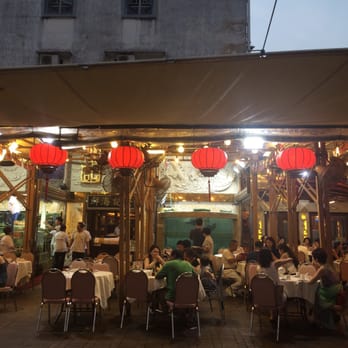
Located on the Sai Kung waterfront, you can choose to eat indoors or outdoors, right along the water. We chose to eat outdoors, despite the rain, so we could enjoy the crisp, wet air. Not to worry--we were covered by an awning lined with decorative lanterns. The outdoor area is an odd combination of janky and charming--the tables are covered with linens but the chairs are your basic plastic-lined uncomfortable chairs. It looks like they went the basic route on decor in the 80's and haven't updated since. It's more functional than it is appealing to the eyes. They have a variety of choices on their menu, but we came specifically for dim sum. Their dim sum starts in the morning and goes till about 2pm. Their lunch starts at 11am, so if you're looking to perhaps get their friend rice, don't come until then. We ordered their spring rolls, shao mai (aka shumai, pork in wanton wrapper), har gow (shrimp dumpling), char siu bao (BBQ pork bun), and jasmine tea. It was filling for the both of us and yummy, but pretty pedestrian. Nonetheless, it's a decent place if you're looking for dim sum in Sai Kung. And it has a waterfront view to boot, including huge fish tanks with odd looking fish that you can ogle while you're waiting for your food to come out!


There are several seafood places to choose from in Sai Kung. We picked Chuen Kee because it was the busiest and appeared to be full of locals. We were not disappointed. We had spicy salt mantis shrimp (aka pissing shrimp), stir fried razor clams with peppers in black bean sauce, steamed rock cod, steamed scallops with garlic and vermicelli, stir fried tong choy, and of course, some Tsing Tao beer. Everything was cooked perfectly. The razor clams were particularly awesome and I loved the shrimp! Prices are kind of on the high side. We paid close to $200 USD for 3 people and the service was just ok. Except the guy at the fish tanks was really nice and offered all sorts of suggestions on how to have everything cooked. I would go back again simply for the quality of the food. Plus if you get a table outside, the ambience is quite amazing with a great view of the harbour.
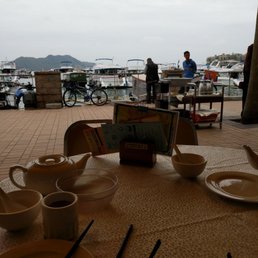

For a Michelin star restaurant, I am stunned. While the view was great, overall the food quality and service were mediocre. My wife and I went for lunch. The restaurant is right on the boardwalk and in view of a lot of boats. A woman greeter came up and ushered us to a great table. We saw the chefs special multi course lunch and signed up. Well, the first course of prawn and vegetable was bland. It tasted like a typical North American Chinese dish. The second course, was a special scallop. I was looking forward to it. But, the course was a single scallop on a shell. It was ok, but not worth it. The fried squid tasted like a calamari appetizer at a chain restaurant. The one good dish was the whole fish with onion and garlic. It was steamed perfectly. I would order this again. Overall, I cannot imagine why this restaurant got a star from the Michelin guide. While I will give it two stars, it was mostly for the view.


Come and pick your own fish and the restaurant cooks it right away in any style you want so it's as fresh as it can ever be. The only problem is that it gets so much traffic that it becomes chaotic at times. It's a must see area if you are in hkg but don't expect 5 star service. Its definitely a fun and interesting experience so if you are visiting HkG and love fresh seafood you want to be here.
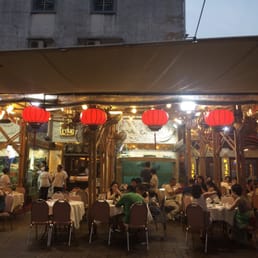

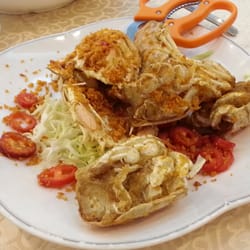
We had dinner here after a 3-hour hike in the nearby mountains. Dinner was pretty good! We had a number of dishes: 1) Fried Rice - quality comfort food, not too salty, not too oily, flavor was delicate, well done. 2) Fish Cake in Fried Dough - Yum! This was really tasty even without any of the dip that they provided. A bit on the oilier side, but that's okay with me. 3) Lettuce Sauteed in Garlic - This was okay. The dish was very heavy on the garlic and had a somewhat thicker sauce. If you are looking for a clearer, more delicate vegetable dish, avoid this. Otherwise, it was alright. 4) King Crab in Fried Dough - This was through and through, delicious. You can't really get this wrong. The bread crumbs were very good, but not spectacular. Was also thrown off by the large cubes of salt. Avoid the white stuff amongst the breadcrumbs! 5) Fried Fish - We went downstairs to choose a fresh fish. This was amazing, topped off with cilantro, lemongrass, and chives . The fish was perfectly done, not under or overcooked. The flavor was delicate despite the fried fish skin (which by the way was perfect, and this is coming from someone who doesn't normally like fish skin). This was my favorite of all the dishes. 6) Clams with Garlic - yum, yum, yum. Large plate of fresh clams. A LOT of garlic. Like an unbelievable amount. The waiters are very quick to change your teapot when you need them to. And oranges were provided at the end! This came to a total of 285 HKD for each person in a group of six, which was pretty decent considering all the fresh seafood we ordered. Would recommend!
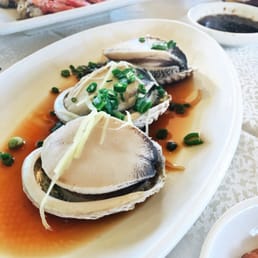

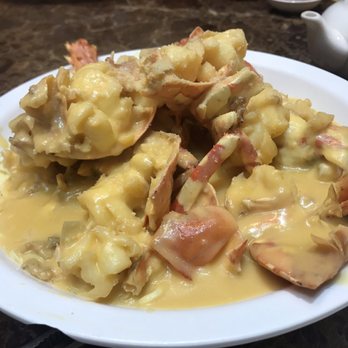
Fair warning, if you are planning to eat seafood, expect you pay a pretty penny. The nice thing about here is that you get to pick your own seafood. My recommendations: lobster noodles (yee meen) with cheese, razor clams with vermicelli/garlic and geoduck sashimi. We came in a big party so we were able to order 6 different types of seafood. Of the 6, everything was really good but the top 3 were phenomenal. The lobster noodles with cheese was my favorite. You can't find this in America and my friend specifically chose this restaurant for this dish. The cheese that they used went perfectly with the lobster and noodles. Almost made the noodles like a carbonara. I have never had razor clams before but it's just a long clam. The meat was soft and chewy. Who doesn't like fresh garlic and noodles? The sauce that was on the clam and noodles was delicious. Lastly the geoduck was used for sashimi and soup. The geoduck was sliced thinly and dipped with wasabi soy sauce. It was super fresh and you can't just stop at once piece. The soup that was prepared with the head had vegetables and tofu. It was rich and really sweet. The one thing I wanted to try in Asia was the mantis shrimp. They may look big, but it hardly has any meat. The flavor was spot on though. Service was good and they came around to change our plates frequently. Our bill was 6444 HKD for 7 dishes. read more


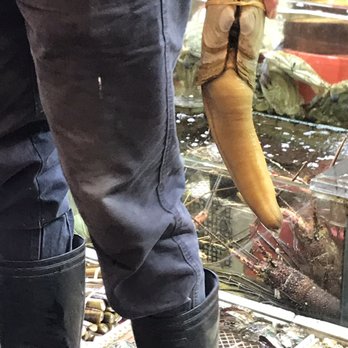

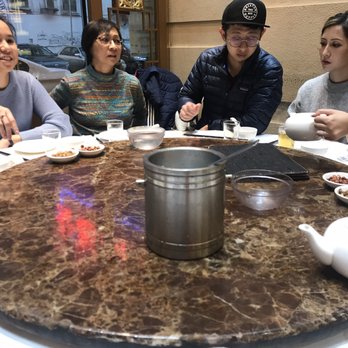


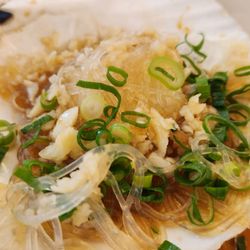
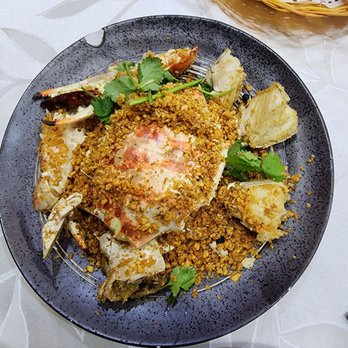
This restaurant has all live fresh seafood that you can pick any seafood and quantity you want, some of seafood is by piece or by weight. And then there is a charge to have all seafood cooked to whatever seasoning. We ordered mantis shrimp, it was deep fried there isnt much meat, scallops were steamed with rice vermicelli noodle and soy sauce, scallops were over cooked, and crab was deep fried with fried galic and green onions spicy. Cooked just right, and a fresh live fish was steam chinese style with scallions and soy sauce, fish steamed perfectly. They have indoor and outdoor seating. There is no pricing for the seafood than has to be weight, and there is a fee to cook each seafood item that choose, it will add up bill quickly. After receiving bill we were charged for tea and anything extra you requested. If you need to splurge once when in Hong Kong it is ok, pricing will be on the high end. They also have on far left a restaurant with same name. And on right is another restaurant that has same fresh live seafood restaurant. So chose wisely. read more


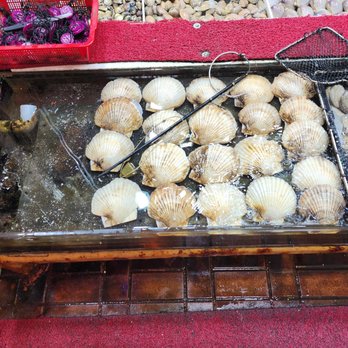


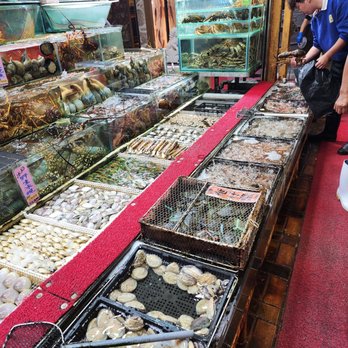

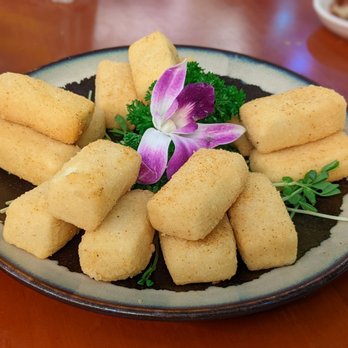
This place is the go to spot for seafood in Hong Kong. We came here for dinner and some of the highlights were the fried tofu, long razor clams, and the coconut pudding with sago. Some of the seafood like the lobster did not taste fresh as it was super mushy. The roasted goose was also very chewy. The abalone was overcooked as it was extremely chewy. read more




4 years ago
A lot of Life seafood in Sai Kung and this is one of the best one. Nice to come for a visit if you have some time to kill. This place is not cheap and the price and one average size of king crab about 6 pounds can cost a few hundred USD. read more

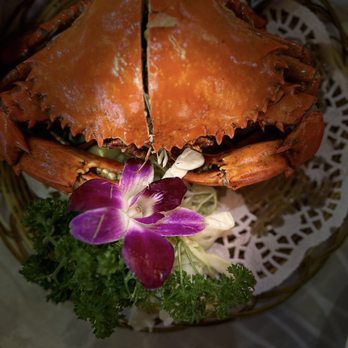
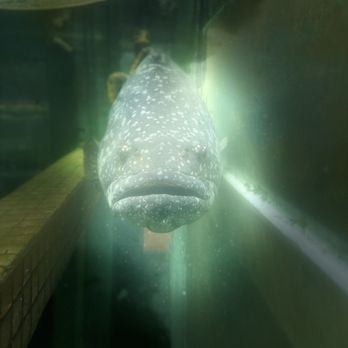

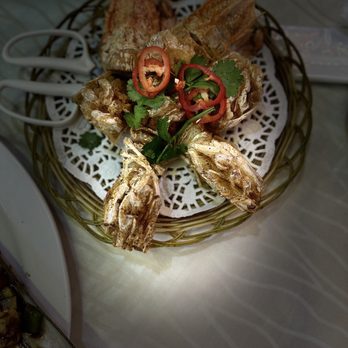

There are a lot of options for the seafood lover and less worthy options for the non-seafood eater. If you're in Sai Kung and crave non-seafood delicacies, this is not the place to spend your money. Our table of six people were seated in the upstairs portion of the restaurant and were given ample time to peruse the menu. One person in our group does not eat any seafood but there were other choices such as beef chow fun, fried rice, and noodle dishes but at a price much higher than your typical restaurant. We settled for a six person set menu, which included a jellyfish appetizer, lobster with cheese over noodles, fried abalone, razor clams, scallops, salt and pepper mantis shrimp, and stir-fried crab. The seafood were all appetizing and fresh tasting. We were so full we could not finish everything! I don't know how much it would cost if we had bought the fresh catch from the boats along the restaurants for them to cook, but the cost was not cheap, although reasonable for the quality and taste. Overall, a good restaurant to dine at with your seafood loving friends. read more






3 years ago

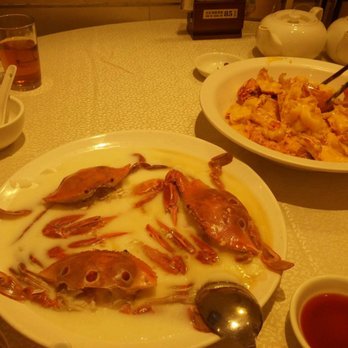
Note: this review was from a visit dating back to November 2016. I do not expect things to be very different as of the writing of the review in early 2019, but take that with a grain of salt. So there's this inane stereotype going around the western world that Hong Kong is a concrete jungle where wildlife is in short supply, and everyone lives in poultry farm cages within its superdense urban cores. Sure, there are illegally subdivided cage homes in Kowloon, and there are places where the scenery is strsight out of Blade Runner. However, it's not every inch of the city. Hong Kong is 80% hilly, and developments are centered on corridors of mega-density along its coastlines and valleys. The hilly interiors and the coves on the southern coast are typically ignored by major real estate developers. Those areas might be protected country parks/nature preserves, or they can be allotments for local villages dating back to Hong Kong's precolonial past. Some of those villages are resort towns serving as gateways to the more idyllic parts of Hong Kong, like Sai Kung on the Southeastern part of the New Territories. It's so well known by expats getting away from Causeway Bay or Central that you can buy namedropping merchandise at Goods of Desire (oh look, a keychain for Sai Kung, how local). The local gypsy ferries 街渡 taking you to the various settlements on the outlying islands is right off the pier near the bus terminal (20 minute ride to the MTR TKO line), and there are vendors on sampans selling you dried or fresh seafood right off the promenade - I am pretty sure they grabbed merchandise off a van at the parking lot out back, loaded up the dinghy at the municipal dock, and then pedaled it up to gawk the goods upon unsuspecting tourists. Whenever there are coastal villages with fishing boats, there are seafood restaurants nearby catering to visitors. Chuen Kee is one of those Cantonese seafood restaurants dotting the coastline of the town, vying with wine bars, Sri Lankan restaurants, cafes and piri piri chicken joints in the area for your hard earned money. Was it worth it? Well, ignore that Michelin gourmet sign - it's not the same as a star. Hell, the wine bar down the block from my NYC apartment has one, and no one here cares. Unless it's an actual star and it's current for the year (or if they sell French car/bike tires on-premise), that Michelin sign is meaningless. Any time you have seafood, you can expect a large outlay - I think I spent about 1200 HKD for 4 people (hint: roughly 8 HKD to a USD, so two benjies with change). Ambiance is interesting - it's right off the promenade with outside seating, and there are large tanks and displays for fresh seafood caught somewhere else far away and trucked here for your visceral pleasures. After the meal you can totally do a leisurely walk amongst the streets and alleys, maybe grab a cup of coffee and see the sunset in the area. Foodwise it's solid, but nothing to go nuts over. It's the usual fare you find in Cantonese seafood joints the world over. Scallops steamed with sweet soy, garlic and vermicelli, the Australian spiny lobsters stir fried in a cheese sauce, the salt-n-pepper deep fried mantis shrimp (aka the pissing shrimp, it's a bit overrated to be honest), the stir fried clams (little bit of sand), your typical seasonal veggies, and some crabs steamed with Shaoxing wine and a egg white reduction (not much meat and not really all that great). It was fine...no weird aftertaste, no overabundance of MSG, and like any solid seafood joints, not much was done to bury the natural flavors of the ingredients. Dessert was decent, with the usual fresh fruits and a corn-coconut pudding served on pandan leaves. Service was decent. I would say that the experience had been enjoyable, but if I visit Sai Kung again, I'll give this place a pass and try something else. It's a rather competitive area with plenty of options. read more




9 years ago
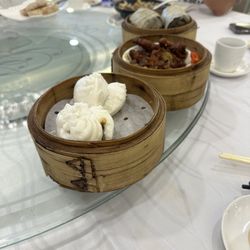
Located on the Sai Kung waterfront, you can choose to eat indoors or outdoors, right along the water. We chose to eat outdoors, despite the rain, so we could enjoy the crisp, wet air. Not to worry--we were covered by an awning lined with decorative lanterns. The outdoor area is an odd combination of janky and charming--the tables are covered with linens but the chairs are your basic plastic-lined uncomfortable chairs. It looks like they went the basic route on decor in the 80's and haven't updated since. It's more functional than it is appealing to the eyes. They have a variety of choices on their menu, but we came specifically for dim sum. Their dim sum starts in the morning and goes till about 2pm. Their lunch starts at 11am, so if you're looking to perhaps get their friend rice, don't come until then. We ordered their spring rolls, shao mai (aka shumai, pork in wanton wrapper), har gow (shrimp dumpling), char siu bao (BBQ pork bun), and jasmine tea. It was filling for the both of us and yummy, but pretty pedestrian. Nonetheless, it's a decent place if you're looking for dim sum in Sai Kung. And it has a waterfront view to boot, including huge fish tanks with odd looking fish that you can ogle while you're waiting for your food to come out! read more





12 years ago
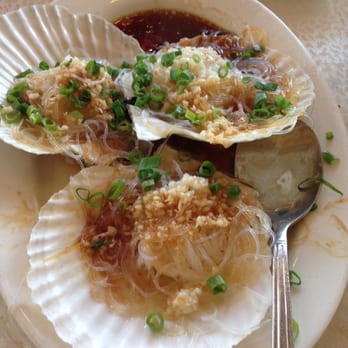
There are several seafood places to choose from in Sai Kung. We picked Chuen Kee because it was the busiest and appeared to be full of locals. We were not disappointed. We had spicy salt mantis shrimp (aka pissing shrimp), stir fried razor clams with peppers in black bean sauce, steamed rock cod, steamed scallops with garlic and vermicelli, stir fried tong choy, and of course, some Tsing Tao beer. Everything was cooked perfectly. The razor clams were particularly awesome and I loved the shrimp! Prices are kind of on the high side. We paid close to $200 USD for 3 people and the service was just ok. Except the guy at the fish tanks was really nice and offered all sorts of suggestions on how to have everything cooked. I would go back again simply for the quality of the food. Plus if you get a table outside, the ambience is quite amazing with a great view of the harbour. read more



For a Michelin star restaurant, I am stunned. While the view was great, overall the food quality and service were mediocre. My wife and I went for lunch. The restaurant is right on the boardwalk and in view of a lot of boats. A woman greeter came up and ushered us to a great table. We saw the chefs special multi course lunch and signed up. Well, the first course of prawn and vegetable was bland. It tasted like a typical North American Chinese dish. The second course, was a special scallop. I was looking forward to it. But, the course was a single scallop on a shell. It was ok, but not worth it. The fried squid tasted like a calamari appetizer at a chain restaurant. The one good dish was the whole fish with onion and garlic. It was steamed perfectly. I would order this again. Overall, I cannot imagine why this restaurant got a star from the Michelin guide. While I will give it two stars, it was mostly for the view. read more

9 years ago
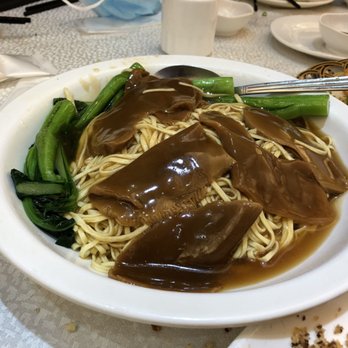
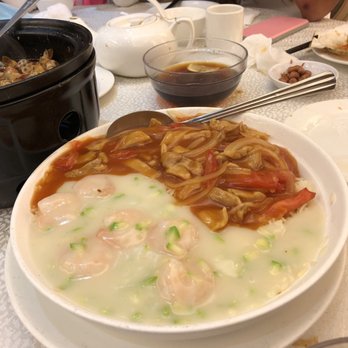
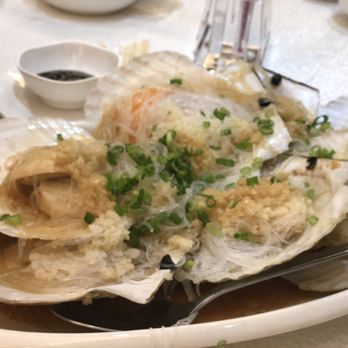
Come and pick your own fish and the restaurant cooks it right away in any style you want so it's as fresh as it can ever be. The only problem is that it gets so much traffic that it becomes chaotic at times. It's a must see area if you are in hkg but don't expect 5 star service. Its definitely a fun and interesting experience so if you are visiting HkG and love fresh seafood you want to be here. read more








11 years ago


11 years ago

11 years ago
We had dinner here after a 3-hour hike in the nearby mountains. Dinner was pretty good! We had a number of dishes: 1) Fried Rice - quality comfort food, not too salty, not too oily, flavor was delicate, well done. 2) Fish Cake in Fried Dough - Yum! This was really tasty even without any of the dip that they provided. A bit on the oilier side, but that's okay with me. 3) Lettuce Sauteed in Garlic - This was okay. The dish was very heavy on the garlic and had a somewhat thicker sauce. If you are looking for a clearer, more delicate vegetable dish, avoid this. Otherwise, it was alright. 4) King Crab in Fried Dough - This was through and through, delicious. You can't really get this wrong. The bread crumbs were very good, but not spectacular. Was also thrown off by the large cubes of salt. Avoid the white stuff amongst the breadcrumbs! 5) Fried Fish - We went downstairs to choose a fresh fish. This was amazing, topped off with cilantro, lemongrass, and chives . The fish was perfectly done, not under or overcooked. The flavor was delicate despite the fried fish skin (which by the way was perfect, and this is coming from someone who doesn't normally like fish skin). This was my favorite of all the dishes. 6) Clams with Garlic - yum, yum, yum. Large plate of fresh clams. A LOT of garlic. Like an unbelievable amount. The waiters are very quick to change your teapot when you need them to. And oranges were provided at the end! This came to a total of 285 HKD for each person in a group of six, which was pretty decent considering all the fresh seafood we ordered. Would recommend! read more

12 years ago

Fresh seafood in Sai Kung! Abalone, sea urchin, scallops, oysters, lobsters, crab.. You name it. Take out and sit down both available. The bill will be calculated based on the price of the seafood ingredients and cooking, separately, if you choose to sit and eat at the restaurant for some Canto-style seafood dishes. Solid flavors! read more
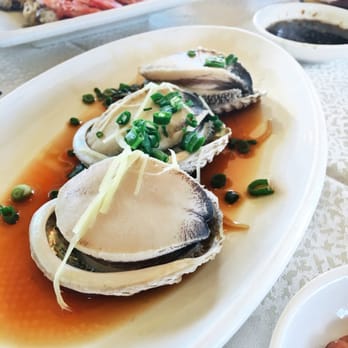
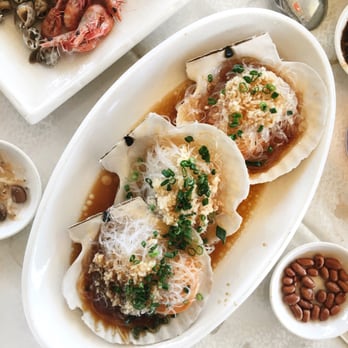

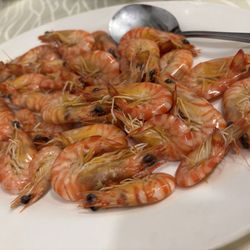
I went here with A's family, and we went for the package. Always go for the package. I've found that the set prices are more reasonable than individually ordering seafood in the tanks according to market price. This particular package, good for four, includes your choice of 5 seafood dishes with vegetables and dessert. Our go-to favourites in Sai Kung are always: the boiled shrimp with sweet soy sauce, plain yet always generously portioned and super fresh; scallops served in the half shell with yet another simple glass noodle and garlic topping; steamed fish; stir-fried crab with ginger and onion; and the much-loved mantis shrimp. These aren't necessary the best-value-for-money picks, though. I did see lobster with cheese sauce on the list, but I'm not much a fan of anything cheesy in Chinese cooking. Unless, of course, you're talking about "Chinese cheese", the fermented bean curd or 腐乳, which is typically served here with morning glory/tung choi. We opted for the tung choi alternative that night, cooked with shrimp paste. In all, the food was good - particularly the steamed fish which had a sauce that A's mother said was made with a special lard, thus giving it a very full flavour that can't really be replicated at home. However, when it came to the dessert, we were slightly appalled. We asked for red bean soup, and noticed the server went over to the corner of the restaurant where there were dirty dishes and trash overflowing from the bin. In between these two attractive points of reference, there was a red cooler. The server opened the lid, tossed it to the side, and ladled in some red bean soup into the plastic bowls on a tray. It looked so unappealing, and we were so happy to see the tray of bowls taken away somewhere beyond the crowd. Our happiness faded, however, when the tray came back, this time with little spoons in each bowl. A's father was the only one on the table courageous enough to give it a taste, and turned out it was lukewarm and generally not palatable. So we asked for some sweet watermelon slices straight from the fridge instead. Crisis averted. Other than desert, I'd definitely recommend! read more


9 years ago


9 years ago


More info about 西貢全記海鮮酒家
87-93 Man Nin Street Sai Kung NT
萬年街83-93號地下
Hong Kong
Sai Kung, New Territories
Directions
2792 6938
Call Now
Hours
Food & Alcohol
Indoor Amenities
Outdoor Amenities
Other Amenities