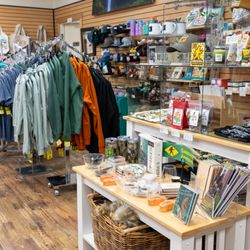
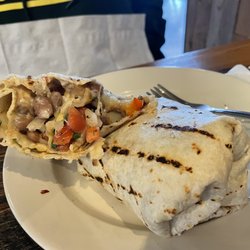
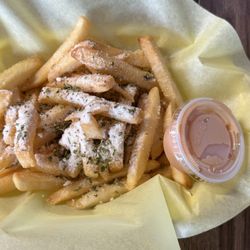
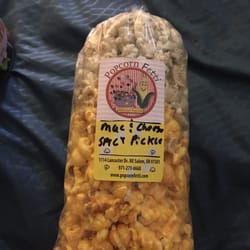
Willamette Valley Cheese Photos


You might also consider


More like Willamette Valley Cheese
Recommended Reviews - Willamette Valley Cheese
Start your review...

Reviews With Photos


In the local area around Salem, nicer restaurants proudly serve Willamette Valley Cheese Company cheese in appetizers and on burgers. My favorite is the smoked gouda, but they have so many good cheeses, it's hard to choose. I've been to this tasting room 3 times and all 3 times, a very nice lady let us taste as many as we wanted for free. I want to say they have about 20 available to taste. It's at a dairy and the drive to the tasting room will probably get your car dirty. There was an old dog that barely noticed us as we entered. If you like cows, you can see them as you walk to and from you car. We also buy their cheese in boutique stores around town when we want to treat someone.
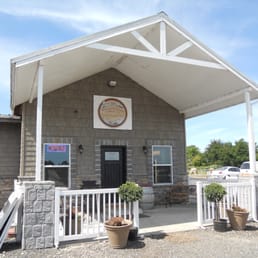

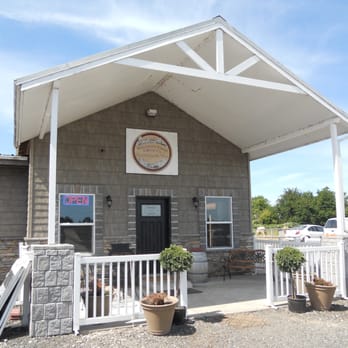
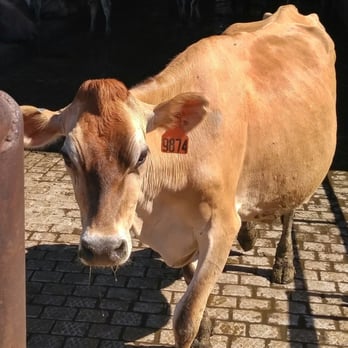
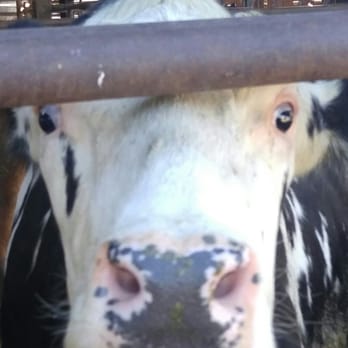
Husbandry, tasting facility and product observations in that order and based on a visit to the tasting room a few weeks ago. HUSBANDRY: They call them "Jersey working girls". The brown and white colored Jersey cows you see grazing in the fields on the drive up to the tasting room. But as we pulled up we also saw black and white cows (Holsteins?) that were being held in a pen, some lying in their own waste causing a passenger in our back seat to say, "I feel sorry for the cows. I couldn't work at a dairy". Yet, he (and I) eat cheese. And this is one of the good guy dairies whose cheese we buy at our local market. . A small artisan dairy with a thoughtful compass about animal husbandry and quality product production. Still, true enough that most of us, like our passenger that day, don't think of the process all the way through for how cheese is produced. Keeping cows pregnant and taking away the calves after delivery so the milk can be harvested for human use. Sending out the calves to be raised, in the case of the females, to be dairy animals themselves or, in the case of the males, to end up as veal production. It's good to think about where our food comes from. Some of us will choose not to eat dairy products as a result. Some of us will choose to still do that. But if we do that mindfully then we'll also choose to do business with places like Willamette Valley Cheese Company (WVCC) where husbandry standards are high. Employees take pride that the cows are well tended and pointed out, and we agreed, the lack of odor, even at the holding pen, that is present in mass market dairy farms and the lack of mournful "mooing" here (which can be a distress response in cows) as the cows graze in open field. They also share that the calves are not sent to feed lots for veal production, but to free range locations where they can grow into full sized cows. Which I can hear my vegetarian friends saying ultimately meet the same end of ending up on a dinner plate. True enough. I don't eat beef anymore myself. But if I did I would choose free range raised cattle over the suffering of those raised in food lots. TASTING ROOM: End of food source ruminations. Now for the tasting room. A smallish but bright space inside an old house on the dairy property. Tasting is free and samples are offered of all of the many cheeses made by WVCC. Six stars to the woman managing the tasting room the day we visited. Folks who want to know how to get this right at any tasting room might just come watch her as she could teach a master class. Every cheese made was freshly cut and offered as samples to the ten or so of us in the tasting room, all the while answering our questions and gathering our feedback and ringing up the sales. She was a great, friendly emissary for the business! Sadly, tasting here would be inaccessible to most people with mobility limits given the deep gravel parking lot and also that the tasting room has an awkward step up or two into it. (see photos) For advance planning if you need to consider barrier free access for yourself or family member or friend, you will find barriers here. Unfortunate since it would be readily achievable to fix this. But for now it is what it is. And it also is the reason this review is three stars and not four, the entry barriers to the 13% minority population of Americans that are people with mobility disabilities. I have MS myself so I put a high premium on equal access. And, no, a building is not grandfathered in to allow barriers because it was built before 1990 when the ADA was passed. That is where the "readily achievable" thing comes in for barrier removal. Just sayin'. PRODUCT: While Willamette Valley Cheese Company is likely best known for their flavored Havarti cheeses, we most enjoyed the aged Fontina they call Brindisi (a first for us at the tasting room since our market doesn't stock it), the aged Cheddar (white of course as all cheddar is absent food coloring agents which, thankfully, they do not add here) and Brie. We think their Brie is excellent and when purchased in the tasting room it is as fresh as it gets. . THIS N THAT: Since I'd seen WVCC ads that said their cheese is from all Jersey cow milk (which tends to be higher in fat and more flavorful for cheese they say), after our visit I emailed the company to ask about the black and white cows in the pen that had the passenger in our back seat feeling sorry for them. They told me that WVCC does raise other breeds of cows to sell milk to other cheese makers. Also they said all their cows are pasture raised but on that day there was work being done in a pasture hence these cows time in the holding pen. Very nice of them to answer my inquiry.


Put this on your list as a "must try". Great for the whole family, this is a working dairy and cheese factory, that features some sublime cheeses. You can taste them all if you so choose. Better than the wineries, because it costs you nothing. Unless, of course, you buy some to bring home. Which we did. Luckily, they are shrink wrapped to keep them fresh and will travel nicely in our little ice chest. Great experience, fun drive, even got to meet the ladies (i.e. cows) up close and personal, who are the real reason we are all there.

FREE cheese tasting! w00t! The lady was so nice and very generous with the cheese tasting! I'm so glad I stopped by to eat some cheese. ^__^ I say the harvati herb de provence was my favorite! It's not expensive either!


So glad I left this place as last on my trek to Salem as it is out in the boonies. This is a tiny store where you pass tons of cows before getting in. The smell is...cow. Holy cow. As I entered, there is a chalkboard of all the available cheeses on site. The kind and informative lady explained the history of the place and proceeded to start the tastings. She shared samples of everything. I almost wished I didn't go after lunch as I was full but not too full for cheese. I got to try ALL the cheeses. They were all wonderful. All made on site by those aromatic cows. I was expecting a big store or something equivalent to a winery size, but it is small. It also does the job. I'm so glad I got to go and try them all as I love love love cheese.
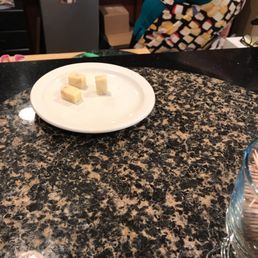

Wow, we arrived at the end of the day, and ended up tasting almost every cheese in the place! These are wonderful cheeses especially the havartis and the goudas. They are enriched with spices or fruits. I loved the herbs de Provence and the smoky gouda! The cheese is pre-packaged for purchase, so it is easy to grab your favorites on the way out. If you have been wine tasting during the day, many of the wineries also have this cheese. I would order this cheese again if they will ship it, and whole wheel cheese is available. Our host was delightful and very knowledgeable!


My husband and I received some of their cheese for Christmas along with a voucher that notes "this voucher is good for a free cheese tasting in our tasting room...", "Voucher good for 2 persons". As I was checking their website today, looking forward to one day using the voucher, I was puzzled as it looked like the cheese tasting was free so wondered the value of the voucher. I then checked out the Yelp reviews and seen a negative review addressing these vouchers indicating they called the company about them and were told that yes, the cheese tasting is free, and the voucher really had no value but they handed them out with this information as "good business". No, that's just being deceitful. Giving the impression that you were in possession of a voucher of value when in fact it is worth nothing, is just BAD business. A company that attempts to increase business with false advertising or deceiving information is not a company that deserves the public's trust and patronage. Needless to say, we will no longer be planning a trip to Willamette Valley Cheese Co and will be passing on their ploy to everyone we know. I rarely post reviews but my biggest pet peeve is dishonesty.
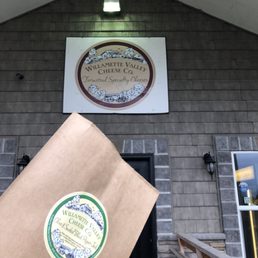

GREAT place to try local cheeses. Wide variety of cheddars, Goudas, Havarti, and Fontina. Relaxed tasting room with no pressure to purchase. I got a couple of different cheeses I just don't see in Los Angeles. Excited to get home & eat. Wish the cows would have been outside when I was there to add to the ambiance but understand they are on a schedule. Go. Taste. Enjoy.


The cheese tasting was free, which was a plus. The cheeses I sampled weren't that good. I bought a bag of cheese curds and they were especially not good.


Great cheese!!!!! The cranberry is amazing!!! Super nice and very informative!!! They even have papers on pairing your cheeses with food and drinks! Totally recommend this place to try some local cheese! And you can say hi to the Jersey girls (that's the cows!)!


8 years ago
We were here last year August 2017. I love cheese and it was a wonderful stop before our drive up to Madras for the Total Solar Eclipse. Nancy was working the tasting room today - she's always so patient and kind with questions and any odd queries we have for their varieties. My favorite is always the Gouda and Dill Havarti. We were able to share our favorite cheese spot with our friend who lives in nearby Dallas. Glad they are doing well and winning awards! Try the borenkaas too! So good! read more


9 months ago

Cheese, fresh, delicious Oregon Cheese, in about two dozen different varieties. What's not to love? California and Wisconsin cheesemakers, eat your hearts out! What ever issues there were in the past, clearly the owners have worked hard to resolve them. I found the store and restroom clean, there is plenty of parking, the Staff friendly, attentive, and enthusiastic, all in an authentic rural Willamette Valley farmstead setting. And they give you cheese samples. Glorious cheese. My favorite were the fresh Gouda. No, the smoked Gouda. The Havarti, any one of eight varieties. No, really, it was the Aged Cheddar. The Willamette Valley Cheese Company is deservedly a cornerstone of the Oregon Artisan Cheese and Food Trail. Do not miss it! Five Stars. read more

5 years ago
In the local area around Salem, nicer restaurants proudly serve Willamette Valley Cheese Company cheese in appetizers and on burgers. My favorite is the smoked gouda, but they have so many good cheeses, it's hard to choose. I've been to this tasting room 3 times and all 3 times, a very nice lady let us taste as many as we wanted for free. I want to say they have about 20 available to taste. It's at a dairy and the drive to the tasting room will probably get your car dirty. There was an old dog that barely noticed us as we entered. If you like cows, you can see them as you walk to and from you car. We also buy their cheese in boutique stores around town when we want to treat someone. read more


14 years ago
Husbandry, tasting facility and product observations in that order and based on a visit to the tasting room a few weeks ago. HUSBANDRY: They call them "Jersey working girls". The brown and white colored Jersey cows you see grazing in the fields on the drive up to the tasting room. But as we pulled up we also saw black and white cows (Holsteins?) that were being held in a pen, some lying in their own waste causing a passenger in our back seat to say, "I feel sorry for the cows. I couldn't work at a dairy". Yet, he (and I) eat cheese. And this is one of the good guy dairies whose cheese we buy at our local market. . A small artisan dairy with a thoughtful compass about animal husbandry and quality product production. Still, true enough that most of us, like our passenger that day, don't think of the process all the way through for how cheese is produced. Keeping cows pregnant and taking away the calves after delivery so the milk can be harvested for human use. Sending out the calves to be raised, in the case of the females, to be dairy animals themselves or, in the case of the males, to end up as veal production. It's good to think about where our food comes from. Some of us will choose not to eat dairy products as a result. Some of us will choose to still do that. But if we do that mindfully then we'll also choose to do business with places like Willamette Valley Cheese Company (WVCC) where husbandry standards are high. Employees take pride that the cows are well tended and pointed out, and we agreed, the lack of odor, even at the holding pen, that is present in mass market dairy farms and the lack of mournful "mooing" here (which can be a distress response in cows) as the cows graze in open field. They also share that the calves are not sent to feed lots for veal production, but to free range locations where they can grow into full sized cows. Which I can hear my vegetarian friends saying ultimately meet the same end of ending up on a dinner plate. True enough. I don't eat beef anymore myself. But if I did I would choose free range raised cattle over the suffering of those raised in food lots. TASTING ROOM: End of food source ruminations. Now for the tasting room. A smallish but bright space inside an old house on the dairy property. Tasting is free and samples are offered of all of the many cheeses made by WVCC. Six stars to the woman managing the tasting room the day we visited. Folks who want to know how to get this right at any tasting room might just come watch her as she could teach a master class. Every cheese made was freshly cut and offered as samples to the ten or so of us in the tasting room, all the while answering our questions and gathering our feedback and ringing up the sales. She was a great, friendly emissary for the business! Sadly, tasting here would be inaccessible to most people with mobility limits given the deep gravel parking lot and also that the tasting room has an awkward step up or two into it. (see photos) For advance planning if you need to consider barrier free access for yourself or family member or friend, you will find barriers here. Unfortunate since it would be readily achievable to fix this. But for now it is what it is. And it also is the reason this review is three stars and not four, the entry barriers to the 13% minority population of Americans that are people with mobility disabilities. I have MS myself so I put a high premium on equal access. And, no, a building is not grandfathered in to allow barriers because it was built before 1990 when the ADA was passed. That is where the "readily achievable" thing comes in for barrier removal. Just sayin'. PRODUCT: While Willamette Valley Cheese Company is likely best known for their flavored Havarti cheeses, we most enjoyed the aged Fontina they call Brindisi (a first for us at the tasting room since our market doesn't stock it), the aged Cheddar (white of course as all cheddar is absent food coloring agents which, thankfully, they do not add here) and Brie. We think their Brie is excellent and when purchased in the tasting room it is as fresh as it gets. . THIS N THAT: Since I'd seen WVCC ads that said their cheese is from all Jersey cow milk (which tends to be higher in fat and more flavorful for cheese they say), after our visit I emailed the company to ask about the black and white cows in the pen that had the passenger in our back seat feeling sorry for them. They told me that WVCC does raise other breeds of cows to sell milk to other cheese makers. Also they said all their cows are pasture raised but on that day there was work being done in a pasture hence these cows time in the holding pen. Very nice of them to answer my inquiry. read more


Put this on your list as a "must try". Great for the whole family, this is a working dairy and cheese factory, that features some sublime cheeses. You can taste them all if you so choose. Better than the wineries, because it costs you nothing. Unless, of course, you buy some to bring home. Which we did. Luckily, they are shrink wrapped to keep them fresh and will travel nicely in our little ice chest. Great experience, fun drive, even got to meet the ladies (i.e. cows) up close and personal, who are the real reason we are all there. read more


4 years ago

FREE cheese tasting! w00t! The lady was so nice and very generous with the cheese tasting! I'm so glad I stopped by to eat some cheese. ^__^ I say the harvati herb de provence was my favorite! It's not expensive either! read more
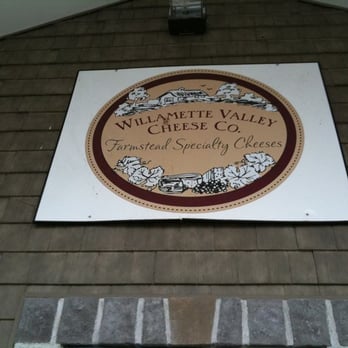


So glad I left this place as last on my trek to Salem as it is out in the boonies. This is a tiny store where you pass tons of cows before getting in. The smell is...cow. Holy cow. As I entered, there is a chalkboard of all the available cheeses on site. The kind and informative lady explained the history of the place and proceeded to start the tastings. She shared samples of everything. I almost wished I didn't go after lunch as I was full but not too full for cheese. I got to try ALL the cheeses. They were all wonderful. All made on site by those aromatic cows. I was expecting a big store or something equivalent to a winery size, but it is small. It also does the job. I'm so glad I got to go and try them all as I love love love cheese. read more

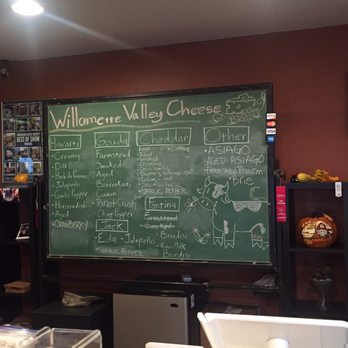


Wow, we arrived at the end of the day, and ended up tasting almost every cheese in the place! These are wonderful cheeses especially the havartis and the goudas. They are enriched with spices or fruits. I loved the herbs de Provence and the smoky gouda! The cheese is pre-packaged for purchase, so it is easy to grab your favorites on the way out. If you have been wine tasting during the day, many of the wineries also have this cheese. I would order this cheese again if they will ship it, and whole wheel cheese is available. Our host was delightful and very knowledgeable! read more
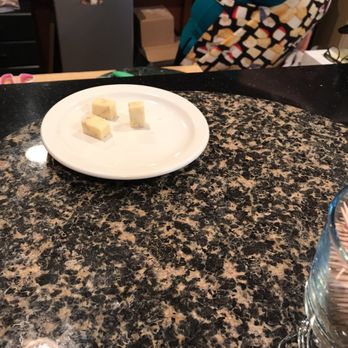


12 years ago
My husband and I received some of their cheese for Christmas along with a voucher that notes "this voucher is good for a free cheese tasting in our tasting room...", "Voucher good for 2 persons". As I was checking their website today, looking forward to one day using the voucher, I was puzzled as it looked like the cheese tasting was free so wondered the value of the voucher. I then checked out the Yelp reviews and seen a negative review addressing these vouchers indicating they called the company about them and were told that yes, the cheese tasting is free, and the voucher really had no value but they handed them out with this information as "good business". No, that's just being deceitful. Giving the impression that you were in possession of a voucher of value when in fact it is worth nothing, is just BAD business. A company that attempts to increase business with false advertising or deceiving information is not a company that deserves the public's trust and patronage. Needless to say, we will no longer be planning a trip to Willamette Valley Cheese Co and will be passing on their ploy to everyone we know. I rarely post reviews but my biggest pet peeve is dishonesty. read more


5 years ago


GREAT place to try local cheeses. Wide variety of cheddars, Goudas, Havarti, and Fontina. Relaxed tasting room with no pressure to purchase. I got a couple of different cheeses I just don't see in Los Angeles. Excited to get home & eat. Wish the cows would have been outside when I was there to add to the ambiance but understand they are on a schedule. Go. Taste. Enjoy. read more


15 years ago
The cheese tasting was free, which was a plus. The cheeses I sampled weren't that good. I bought a bag of cheese curds and they were especially not good. read more

5 years ago

14 years ago

13 years ago
Great cheese!!!!! The cranberry is amazing!!! Super nice and very informative!!! They even have papers on pairing your cheeses with food and drinks! Totally recommend this place to try some local cheese! And you can say hi to the Jersey girls (that's the cows!)! read more


What a super cute place to take a break from wine tasting! One of the area tasting rooms was sampling a lovely cheese from this place, and told us we should check it out. We are so glad we did! They had a great variety of havarti, gouda, cheddar and jack cheeses, and were delighted to offer us samples of every variety. The server was very nice and helpful. We wound up getting four different cheeses to enjoy at home with the wines we had purchased that day. When we went outside, we spent a few minutes looking at the cows. read more



14 years ago
9 years ago

12 years ago
6 years ago


12 years ago

12 years ago

9 years ago

9 years ago

12 years ago


10 years ago


14 years ago

11 years ago

11 years ago
9 years ago
16 years ago
Page 1 of 2
More info about Willamette Valley Cheese
8105 Wallace Rd NW
Salem, OR 97304
Directions
(503) 399-9806
Call Now
Hours
Payment methods
Outdoor Amenities