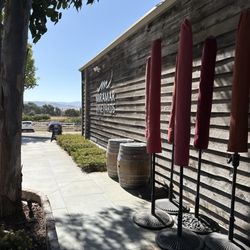
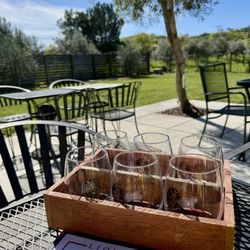
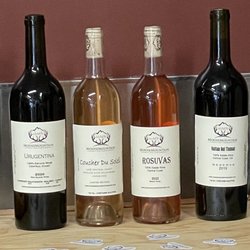
My husband and I visited Aimee June's quaint, historic tasting room on a beautiful Saturday…read morespringtime afternoon in mid-April. As you approach the entrance, you are greeted by verdantly growing outdoor planters and a pretty little guest patio with room for 6 to 8 people. Inside, we were hosted expertly by Paolina, who poured us the 8 wines on the list ($5 tasting fee) plus several additional samples so that we could compare wines vertically across vintages. This can often be a wonderful way to see how a winemaker adjusts to different growing seasons, which in California can vary almost as widely in recent years as is more typically the case in Europe.
2011, for example, was very cool in many Californian AVAs, while 2012 was a so-called "perfect" year in many grape-growing regions and generally produced richer wines higher in alcohol than 2011. 2015 was a very dry growing season (the last year of the recent drought), which produced some incredibly concentrated red wines like Pinot, Petite Sirah, and Zinfandel, while 2016 saw ample rains and generally much higher yields, especially good for white wines like Chardonnay and Sauvignon Blanc, I think, and for extremely bright and elegant rosé wines made from Rhône varietals like Grenache and Mourvedré. By tasting the same wine from different vintages, you can decide what kind of wines you like, with varying mixtures of fruit, herb, acid, earthiness, and finish.
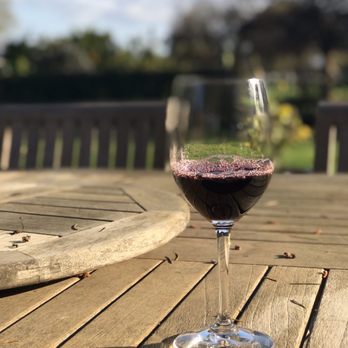
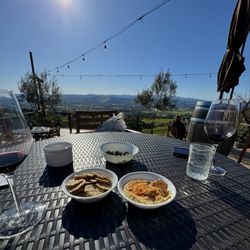
I was drawn most to the Paso Robles 2012 Merlot and 2011 Sangiovese wines we sampled. Both were extremely well made in an old world, handcrafted style, but being wines sourced from Paso, they also had full fruit, richness, and oak aging potential. Both of these wines had appealing aromas of dark cherry and ripe raspberry nicely complimented by food-friendly acidity, sweet tobacco, baking spice, and slightly smoky cedar box notes. We paired the Sangiovese with grilled Italian pork and fennel seed sausages and polenta and had the Merlot with grilled Northern California grass-fed bison kofta, slices of whole wheat sourdough bread, and fresh organic mixed greens from Happy Boy Farms in Watsonville. The wines had both been barrel aged for several years before release and continued to evolve in the glass over the course of the meal, a hallmark of naturally fermented wines that are bottled unfilitered with minimal SO2 as a preservative. The head winemaker, Gerald P., favors Paso Robles as a source for his wines, including an excellent Zinfandel, but he also sources wines from San Benito County as well, including a very good, crisp, and lively Chardonnay from a local vineyard.
The Aimee June Merlot came as close to a Bordeaux styled red wine as any North American candidate I have tasted lately, reminiscent to my mind of a quality aged Lalande-de-Pomerol, with dusty red fruit, attractive herbal elements, and a firm acid spine that made it an ideal pairing with grilled, simply seasoned meats. The Sangiovese was a bit lusher, brimming with dark cherry and a little bit of roses and wild strawberries, and a reminder of why Paso Robles is capable of producing really great, Tuscan style red wines (also the case with Giornata, an Italian wine specialist in Templeton). These medal-worthy wines are made in very limited quantities and are worth seeking out!
The tasting room makes a great weekend destination as part of a day trip to the San Juan Bautista and Hollister areas, either paired with wine tastings in the Cienega Valley at DeRose, Calera, or Pietra Santa, or with a hike at Fremont Peak state park or Pinnacles national park. Or it could be a destination in and of itself! If you like exploring the world of small scale, artisinal winemaking as much as I do, you'll find a lot about Aimee June to love!