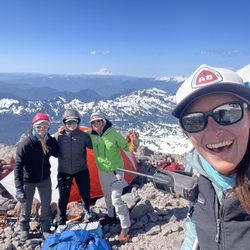
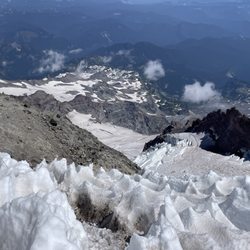
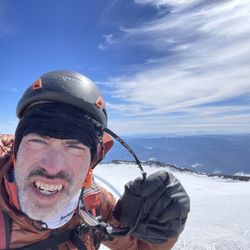
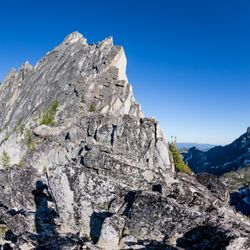
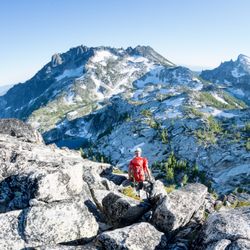
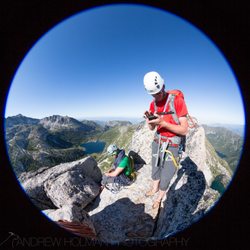
Burroughs Mountain Trail is one of the famed hikes within the Sunrise Section of Mount Rainier…read moreNational Park. It's highly recommended to make the trek and witness the up close views of Mount Rainier from not 1, but 2 peaks of Burroughs Mountain.
Let me just back up a little. So yeah...the 2 best and most worthwhile areas of Mount Rainier are the Paradise and Sunrise parts.
For Burroughs Mountain Trail being situated in Sunrise, there's this hike, along with a very similar trail as well called Mount Fremont Lookout Trail.
In total, both of these strenuous hikes (in my opinion they're strenuous) are similar in ground, terrain and distance while at the end affording you monumental scenery of symbolic snow capped Mount Rainier.
So...when you are here and visiting this Sunrise area, you can choose either this Burroughs Mountain or Mount Fremont Lookout, or even both, which is what I did. I appreciate hiking both of these trails and since I had the time...why not get both in!?
Now, I did write a separate review about Mount Fremont Lookout Trail, so I'll leave that alone. I will just mention that I'd certainly recommend hiking it in the morning as the fading sun in the afternoon disrupted my photo opportunities as I was staring straight into the beaming light of sun.
And...Mount Rainier didn't have that memorable moment for me to capture it's true essence standing tall in it's glory. Ugh, I hate when the sun disrupts my picture moments, lol.
But back to this Burroughs Mountain Trail. There are actually 2 peaks like I mentioned...1st Burroughs Mountain and 2nd Burroughs Mountain.
The round trip mileage for the 1st Mountain is 4.8 miles gaining 900 feet in elevation and about 3 hours hiking time.
If you continue onto the 2nd Mountain, the total mileage is 6 miles gaining 1200 feet in elevation and 4 hours hiking time.
My general recommendation is well, if you made it to the 1st mountain, might as well go all the way and hike to the 2nd to experience it all! Might as well go strong, lol.
And, the only real difference with the views of Mount Rainier between the 1st and 2nd peaks is just the 2nd mountain being a little bit closer. Still, it'd be better to officially claim that you climbed both mountains, lol.
Now back to starting out. From behind the Sunrise Visitors Center you'll immediately find the trailhead for this hike along with a bunch of other pathways to choose from. Honestly, this Sunrise Section is like a hiker's paradise! So many options and trails to choose from.
And just like Mount Fremont, this Burroughs Mountain pretty much starts out on the same pathway. You initially climb along Sourdough Ridge Trail and continue on that for a couple of miles. The views and scenery along Sourdough Ridge are fantastic and truly capture the spirit and feel for the Mount Rainier terrain and landscape.
Eventually you'll reach Frozen Lake and this is the intersection where you'll discover signs for a bunch of hikes leading in all sorts of directions. This is where you'll separate yourself from Mount Fremont and continue your journey along to Burroughs Mountain.
After Frozen Lake I found the elevation to really kick in! I was climbing hard and pushing myself to make it to the top of both Burroughs Mountains. It was a struggle for me, lol...especially when other hikers were passing me by. But I did it. I made it to both. Btw, after climbing the 1st mountain, wait till you see the incline going to the top of the 2nd! It was not easy, lol.
But overall, both the views, surroundings, landscapes and settings from atop 1st and 2nd Mountains offered grand moments for me to breathe in the fresh crisp air and gaze up at how tall and majestic Mount Rainier really was.
I would say to bring lunch, sit down atop both mountains, relax and have a picnic while simply being among such humbling scenery. You'll understand when you're there. Plus, be sure to grab many photos as you can imagine it's so fulfilling to be close to the shining symbol of the Pacific Northwest!
Finally, I made my way back towards the Sunrise Visitors Center. I'm glad I chose not just hiking to 1st and 2nd Burroughs Mountains, but to also get a glimpse of Mount Fremont Lookout Trail.
In fact, you can combine both trails for an all day excursion...it'd be very memorable. Having opportunities to pier up at the snow capped backdrop of Mount Rainier was as good as it gets. Both these trails and also including Sourdough Ridge will certainly complete your time in this Sunrise area.
Make sure to put Burroughs Mountain and or Mount Fremont on your To-Do list. I certainly was in fascination during my experience and I believe you too will be mesmerized just as much.