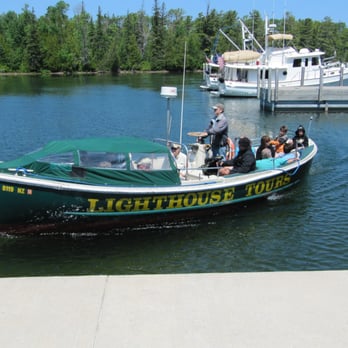
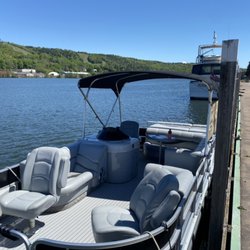
This is the Queen IV Ferry Service that departs from Copper Harbor, Michigan heading out for…read morevisitors to explore Isle Royale National Park.
In my opinion, the Queen IV Ferry is the most logical way to get to Isle Royale.
And...although Isle Royale is a pretty vast island, the Queen IV will take you to the primary section being the Rock Harbor area.
I took this Queen IV Ferry back in early June of this year, 2021 and the roundtrip price to and from Isle Royale was about $135.
That price is pretty normal/standard for getting on a boat and dropping you off at such a primitive destination.
Speaking of Isle Royale, it's located right on the Canadian border on the waters of Lake Superior.
So...this Queen IV Ferry departs from Copper Harbor, MI which is a tiny little coastal seaside town in the UP - Upper Peninsula of Michigan and takes you 3.5 hours each way to and from Rock Harbor.
And for $135...that's pretty reasonable.
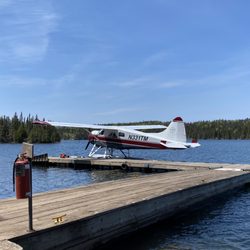
Now...for those interested in getting to Isle Royale in a quicker fashion...they do offer seaplanes that depart from Houghton, Michigan (another picturesque town roughly 45 miles south of Copper Harbor) but obviously a seaplane will cost $$$ more.
For myself, I was in no rush during my summer road trip plus I was excited to explore around charming Copper Harbor for a few days prior to my voyage to Isle Royale.
And Copper Harbor if you look at a map is situated right at the tippy top section of Michigan. It's a remote town and there's not even cell phone reception available (at least for me there wasn't).
So yeah, if you don't choose a seaplane, then this Queen IV Ferry will be your fastest path to Isle Royale at 3.5 hours each way.
Also in Houghton, MI they offer the Ranger III Ferry but during my research it mentioned about a 6 hour journey each way! Crazy! Why would anyone take the Ranger III Ferry for 6 hours when they can drive 45 miles north to Copper Harbor and grab the Queen IV for half the time? Makes no sense, imo.
And finally, there are boat departures from Grand Portage, Minnesota on either the Voyageur II to Rock Harbor or the Sea Hunter III to the Windigo section of Isle Royale.
Those tours and travels may only be 1 - 2 hours (from my recollection), but they don't travel as frequently as here in Copper Harbor and the Queen IV.
Overall...I'd suggest Queen IV as the best/most efficient way of traveling to Isle Royale.
Some details about the Queen IV Ferry...
- I booked my boat ride online at https://www.isleroyale.com/day-trips-to-isle-royale.html.
It was a simple process, and they give an entire description about your expedition to Isle Royale.
- I took the boat trip in early June but as you get more into the heart of summertime, they offer better options out to Rock Harbor more frequently each week. Eventually there are trips offered daily.
- Now...they suggested for visiting Rock Harbor (which I chose but kind of regret) you can take the 3.5-hour ride to Rock Harbor, hang out on the island for 3 hours and then return back to Copper Harbor for another 3.5 hours comprising one long daytrip.
You can take camping gear with you and spend a few evenings at Isle Royale before catching the return ferry back to Copper Harbor. For those outdoor nature enthusiasts, a lot of people picked this option.
Prior to departing in the morning, the crew of the Queen IV will assist in lifting up your belongings onto the boat making for a hassle-free departure.
For myself, I had camping gear with me on my road trip I could have spent a couple nights at Rock Harbor but ultimately chose a daytrip.
I'd say 95% of the people on the ferry had packed up to camp at Isle Royale rather than the daytrip.
In the end it's up to you. Though so you know, Isle Royale is simply a forest park and doesn't offer much in terms of sights and attractions.
Basically, you'll be stuck on the island for as long as you decide to stay.
- Here is a copy of the schedule from the website...
"A one-day trip lasts about 10 hours altogether, 8 am to 6 pm. The trip includes the 3:15 crossing, 3+ hours on the island, and the 3:15 return".
- My only issue with the ferry ride experience is that inside the cabin everyone rushed to grab a 4-person seating arrangement.
I was traveling alone and when I boarded there weren't any seats available. That was disappointing. I had to sit and stand on the boat outside for the entire 3.5 hours.
Normally I don't mind this but because I was here visiting in early June it was frigid riding out on Lake Superior's waters. I guess I should have spoken up and asked some people to move. Whatever I'd rather be by myself.
- So...be prepared with clothing layers as the ride can be extremely cold!
- They don't offer any food or beverages. You must bring your own supplies on board which you can grab at the local gas station/convenience store in town.
- Lastly, I stayed at the Minnetonka Inn, left my car at the lodge and simply walked 5 minutes to the pier to board and avoided paying for parking.