Avebury Stone Circle Photos


Recommended Reviews - Avebury Stone Circle
Start your review...


Reviews With Photos

The lesser known but older than Stonehenge is often passed by, but I recommend you visit. You are allowed to get up close and personal with the stones and walk the circle which is very wide. The price of admission is cheap and includes parking per family. £7 for two adults and a car. You can upgrade by buying tickets for a tour and seeing some of the onsite buildings. Note that the parking lot pay machines only take coins but the admission desk takes card. Note your registration if you pay at the admission booth. I also recommend you check out the neighboring town and the Red Lion pub.


If you are a fan of Stonehenge then you will want to visit these stones as well. To see the stones it is free, how about that? Also you can touch them and go right up to them, unlike Stonehenge. They are set in a nice village and the walk is pleasant surrounded by sheep. There is also a nice pub nearby to sit and have a nice cider afterwards. The village there is also very pleasant for a walk around.


Mystical stuff doesn't really faze me. That said I wanted to visit as I'm intrigued as to what was in the minds of those who made these stone circles 3,000 years ago; believed to be a type of ceremonial site. When we toured this very impressive, free to enter, site it was a warm afternoon and there were lots of people - mostly young 20 and 30 something people - hugging these stones, with their eyes closed, or lying down touching them with their feet or outstretched fingers. This henge (Neolithic earthwork) and stone circle is Britain's largest stone circle which originally had over 100 stones, with many of them weighing over 50/60 ton. There's also a wonderful on-site cafe with good coffee and great ice cream that earns some money for upkeep. They even had ice cream treats for dogs. A week earlier we had visited Stonehenge and while there I had a rather odd, albeit brief, conversation with a chap. We were both standing by a 29 ton stone on wheels with a rope attached. There was a sign that said it was there to illustrate the size and weight of stones placed at this henge. The sign also said that some of the stones at the Giza pyramids weighed over 400 ton. I commented on the sheer scale of the weight difference and without batting an eyelid the chap said 'ah but the Egyptians had help from aliens.' An old English saying came immediately to mind - 'there's nowt as queer as folk'. If you're close by this place is worth a few hours but aliens aren't guaranteed.


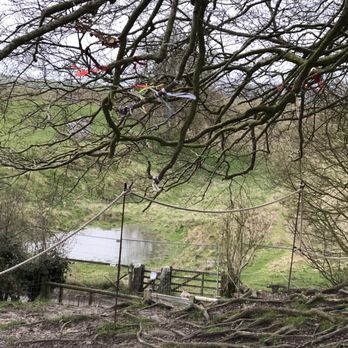
Seriously, skip Stonehenge and come here instead. Avebury has some marked advantages over Stonehenge in my opinion. First of all, you're not cordoned off from the rocks, you can right go up to each and every one of them, touch them, sit down and meditate beside each rock you feel like it, spend as much time as you wish and not feel hurried at all. Avebury is the largest Neolithic site in Europe in terms of circumference, bigger than Stonehenge, some say it is also older and if you know anything about Ley lines and earth energy lines and meridians, Avebury is one of the most important Ley lines "hubs" in the world (The Giza Plateau, Mount Kailash in Tibet, Macchu Piccu) and one of the purest. I can't put my finger on it but there is something sinister about Stonehenge but I don't feel the same energy here. There's something very happy and peaceful here. The air practically hums. I only was able to spend about 2 hours here since it was part of a day trip guided tour (which included Stonehenge and Bath earlier in the day) but I can't wait to come back to England and spend more time here and take in more of it. I came in the very late afternoon, around 4pm so daylight was quickly disappearing but thankfully, I was able to break from my group and literally had some of the paddocks where the stones are to myself. Don't forget to go to the Wishing Tree, at the easternmost edge of the circle, there is a cluster of 4 trees on a small hill, on the other side of the farm, beside the muddy lane, where the trees' root systems are exposed on one side. For hundreds of years people have been tying ribbons to these exposed roots or low-hanging branches, representing their prayers, wishes and hopes. I had made tobacco prayer ties as a Native American Elder once taught me to do and duly offered them to the tree. Go into any new age or spiritual book shop in London and you will find volumes written about this place but I say don't read them. Just come here and experience the place yourself. It's totally worth it.


A surprisingly much better experience than the famous Stonehenge. For one, Avebury Circle has no entrance fee to see them (although you do have to pay for parking); 2) You can walk right among the stones and touch them (and sit in their shade, lick them, hey, whatever suits your fancy ... ). They are much more impressive and massive and awesome face to face as they tower above you; 3) It is much bigger in area than Stonehenge's circle, and the tiny village of Avebury meanders among the stones. Though this may seem as an intrusion, it is in fact quite charming; 4) No crowds, no jostling, much more tranquil and meditative. You can take your time to enjoying the view and scenery rather than feeling rushed along by the crowds at Stonehenge; 5) Avebury village itself is a charmer and offers much more choices for a relaxing lunch than the crowded Stonehenge visitor center - whose cafe is just about the only option there for a meal; 6) Avebury Circle is run by the National Trust, rather than English Heritage (not that I - a Yank - knows what that really means, but several Brits at Avebury were quite firm in their denigration of EH's management philosophy!). Nearby, there's also the mysterious Silbury Hill (man-made and unknown reason for it) which is also impressive to behold as you drive by it; and we also saw one of several "white horses" engraved in the chalk hillsides. Pretty nifty! Overall, if your heart (and bucket list) is set on seeing Stonehenge, by all means satisfy it, but do make the time to head over to Avebury Circle as a comparison. And if your original plan's to see Avebury, don't worry about including Stonehenge as part of the tour - you're not missing much ultimately. You'll remember more of Avebury than you will of Stonehenge!


The Avebury Stone Circle is just as cool as Stonehenge, but for entirely different reasons. Primarily, I think, because you get to physically touch these. And while it might seem silly to so desperately want to place your hand on a giant upright rocks in a perfectly symmetrical circle, there's something entirely magical and mesmerizing about being able to walk amongst these giant stones and feel something (imaginary or otherwise) radiating from each one. I'll reiterate what others have mentioned: this site is so accessible and intimate that you have no excuse not to check it out (maybe this place is beginning to become very popular, but when I went there was almost no one walking around!). Seemingly plunked down in the middle of a village (although it makes more sense that Avebury was built up around it, I know), it's charming, mystical, eerily peaceful, and spiritual in so many different layers as well. Take a lunch, take your time, and take yourself to the Avebury Stone Circle! Be sure to wander the village, too, for a truly authentic English feel. The architecture and atmosphere are well worth it!
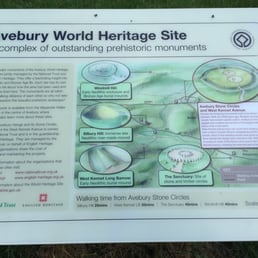

Avebury... it's similar to the circle at Stonehenge. But it's 16 times bigger, about half a mile in circumference. It has a much larger (60 foot) ditch surrounding it. But hey, technology doing its thing, amirite? Actually, it's six centuries older than Stonehenge too. Which makes Avebury basically like Stonehenge's obnoxious, competitive buddy that's always one-upping him. What's really cool about this site compared with Stonehenge is you can go right up to the stones and touch them. And you can take a nice stroll around the circle or on the ridgeline of the surrounding earthen ramparts. The past-present juxtaposition is also evocative. A small village sits in the middle of the circle, with a few shops and a pub. Sheep graze in some of the quadrants, oblivious to the stones and the history surrounding them. We weren't given much of a map or directions by the bored national trust guy sitting in the parking lot trailer, so we missed the northwest quadrant and the small museum there. But it didn't really make much difference, you're there for the hands on encounter, and that was well worth the visit.


Amazing. I had heard of Avebury most of my life but didn't realize how accessible it was compared to Stonehenge. Stonehenge keeps you behind a little rope and you can't get anywhere near the stones. Avebury Stone Circle is the polar opposite. You can touch and climb on the stones here. Avebury is a large, ancient stone circle that rings a few buildings including some shops and a pub. The stones are huge and were placed there many thousands of years ago. I won't go into all the history (you can google that), but I will tell you the basics of the place. First, there is a huge stone circle that is surrounded by a trough. The stones are all accessible and you can move in and our of sheep pastures where the stones are by using marked gates. The stones are divided by 2 main roads which breaks them into four quadrants. Each one has part of the ring. We visited all four quadrants, but the one where most people seemed to hang out was the SW and SE quadrants. SE has the smaller stone circles in it as well as a hill you can climb to get a bird's eye view of the area. The SW quadrant is closest to the car park, so most people see it first as they visit the stones. I suggest you walk through all 4 quadrants to see each set of stones, they aren't identical. Words of caution: Be careful of the the flora and fauna. I saw two different men getting attacked by wasps. I accidentally stood in a patch of nettles while having my photo taken. There are nettles (stinging plants) everywhere! They sheep don't seem to care, but you will if you get stung! The nettles like to gather of some of the stones, so if you see dark leafy plants at the bottom of a stone, don't touch them! Bathrooms are at the big barn or in the pub. Stop by the pub before leaving for a drink. Parking is easy: There is a large pay & display lot 5 minutes walk from the stones. There is also a pub in the center of the stones with its own pay & display lot. I suggest parking in the big tourist lot and walking the short distance. There is always lots of parking, it's a flat easy walk, and you don't clog up the pub's parking for their customers.


If you've been to Stonehenge, then you simply must see Avebury. In comparison, Avebury is much larger and is open access, unlike Stonehenge, which is fenced off. Many of the original stones are missing, but markers have been placed so one can get a sense of the immensity of the Avebury stone circle. The quaint little town has a pub and at least two gift shops. The gift shop by the public restrooms is a must see for locally made items and books about the history of the area at a fair price. The shop closest to the pub is more expensive and touristy. If you're visiting in the fall/winter, be prepared to walk for miles and be sure to dress for mud. It's the kind of mud that can suck your shoe/boot right off! Not to mention the sheep droppings. You've been warned ;)
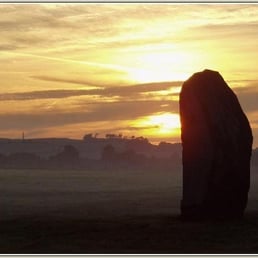

Avebury Stone Circle is one of those places which seethes with Brits as soon as a Bank Holiday comes around. I went over Easter, and the whole place was full of families; children running around and hunting for eggs. I really enjoy this type of activity, but if you've got a quieter afternoon planned, perhaps steer towards a weekday. Avebury itself is a small town which is build inside a large stone circle in Wiltshire. There are also several small stone circles inside. The area was something of a neolithic centre, and massive stones though to have been raised some 4,500 years ago. Today, the village is probably visited for its quaint English charm, just as much as the standing stones. Although you do get people travelling there for spiritual experiences; people claiming that they can still feel the people who raised the stones, and maybe ever the spirits they were raised for. Whatever you believe, Avebury is certainly a lovely day out. Perfect for families with young children needed somewhere to be set off the lead.
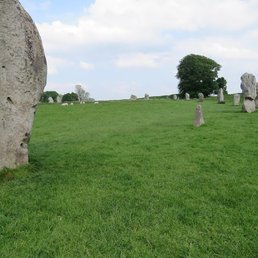

We stopped at Avebury Stone Circle, which was all but overrun with sheep in some spots, lol. This is one of the best known prehistoric sites in Britain, and it contains the largest stone circle in Europe. You get to get up close to the stones, so I guess that makes it a little better than Stonehenge.


The village of Avebury was built inside the spectacular ancient monument of the stone circle and processional. Considering the fact that much damage to the site must have happened over the centuries, there is a surprising amount of original construction to enjoy. Whether you wish to walk the entire perimeter of the circle, or simply approach individual stones within the village itself, the atmosphere and mystery of these ancient monuments is spellbinding. The scale of Avebury dwarfs other sacred sites from this period and emphasises how significant these constructions must have been to their makers. For anyone even slightly interested in man's early history, Avebury is a must!


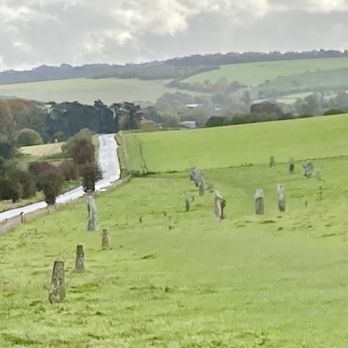
Avebury Stone Circle is one of the world's greatest prehistoric monuments: older than Stonehenge, it is the largest megalithic stone circle (henge) anywhere, and part of what was once an enormous megalithic complex stretching for miles. To me, it's more impressive and more spiritual a place than Stonehenge, despite the fact there's a road and village within its structure. History As ever with such sites, our knowledge is limited, but like Stonhenge, it is likely to have been built in phases. The best guess is that construction began around 2600BC with the inner circles, with the great ditch and outer circle completed around 2500BC, making it contemporaneous with the Pyramids at Giza. When completed, these circles included about 154 stones (only 36 remain today) and it also had two avenues 50 feet wide on either side, extending another one and a half miles. Excavations indicate it was probably used as a ritual site for some 2,300 years. A mile to the south is the artificial Silbury Hill, which must also have formed a related part of this complex, although its purpose is now unkown. Nearby Windmill Hill - an important settlement in Neolithic times - also has some burial mounds from the Bronze Age. As well as natural degradation, the monument suffered hugely during the mediaeval period when the Christian authorities actively encouraged demolition of what was regarded as a Pagan monument. This process accelerated in the 17th and 18th centuries, when local people also broke up the stones for building material. But as late as the 1720s, the great antiquarian Dr William Stukeley was able to trace the original plan, including the avenues: although his interpretation of this as a Druid site is now regarded as inaccurate, his drawings and surveys provide our best record of what it looked like. Alas, the destruction of the stones by local farmers continued unabated into the 19th century. The 20th century showed a greater interest in and respect for the site, and - rather controversially - many of the stones were re-erected in the 1930s by the archaeologist Alexander Keiller. This involved in some cases demolition of later buildings, themselves of some historical interest. I happen to think he was right to try and preserve what was left, but many contextual historians disagree. Whatever the rights and wrongs, the site is now safely in the hands of the English Heritage and managed by the National Trust. The site Today, the most impressive feature is the great ditch and its banks: the excavation of this feature - nearly 0.5km in diameter - involved moving 200,000 tonnes of soil and rock. It may even once have been filled with water to make the interior and island. Even now, the ditch and bank together are impressive, but originally they were even deeper/higher (at around 50ft). Inside this are the remains of the outer circle, which is nearly complete in the north west and south west corners. The remains of the two inside circles are more fragmentary. Unlike Stonehenge, here you can walk right up to the stones, so allow at least a couple of hours to visit properly. Don't miss walking south from the main henge monument along the West Kennet Avenue - around 30 standing stones arranged in pairs (to the form the avenue). Practicalities There is a gift shop and museum in the nearby Barn and Stables (themselves 17th century buildings) with interactive displays to put everything into context. The museums are fully accessible, but the main site has undulating grassy terrain (without footpaths) which are accessed through "kissing gates". The ground can get soft and rather boggy underfoot if it has been raining, so you will have to judge for yourself. There is a drop-off point in the village. Parking is the main problem: there is a pay and display car park (free for motorcycles and National Trust Members), on the A4361 road between Beckington and Avebury about 400m from the edge of the henge. This can become packed very quickly in the summer. There's a more central car park for those with disabled parking badges - the Red Lion car park is only for patrons. The village of Avebury itself is worth a wander around (Avebury Manor - see separate review - and the Red Lion especially, although it does get terribly busy at weekends in summer). For the most part, you'll still be inside the monument itself! read more


3 years ago
If you are aware of Stonehenge, this is similar but done 1000 years before. All standing alignment stones in a one mile circle. You can touch. You can linger. There are people here walking with copper devining Rods to connect with the magnetic vortex below the surface and between the stones. They invited us to use and experience the effect. Many many stones, multiple tons, one section buried in the ground. You see the top actually. Over 2500 years ago and for reasons of the past. Many think religion, or astronomy. Come and see. This was 3 hours. Some can perceive a natural face in the stones. Can you? The sheep eat the grass to keep it short. There is a thriving village still here. Thatched roofs of the past. School children brought here for field trips. Better than what I had 65 years ago. Nows my chance!! Great day read more
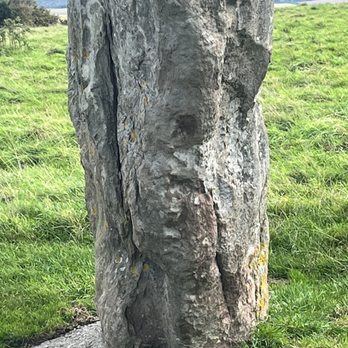


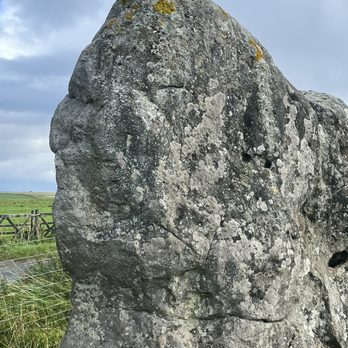


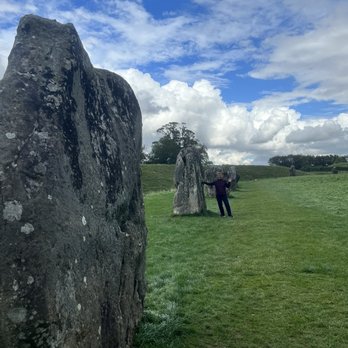
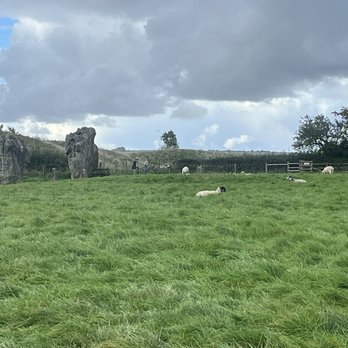


The lesser known but older than Stonehenge is often passed by, but I recommend you visit. You are allowed to get up close and personal with the stones and walk the circle which is very wide. The price of admission is cheap and includes parking per family. £7 for two adults and a car. You can upgrade by buying tickets for a tour and seeing some of the onsite buildings. Note that the parking lot pay machines only take coins but the admission desk takes card. Note your registration if you pay at the admission booth. I also recommend you check out the neighboring town and the Red Lion pub. read more

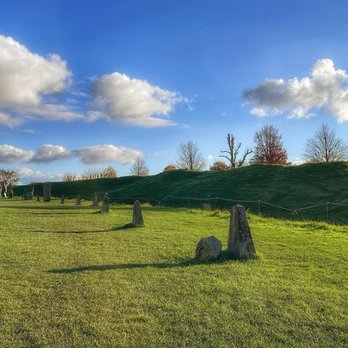


If you are a fan of Stonehenge then you will want to visit these stones as well. To see the stones it is free, how about that? Also you can touch them and go right up to them, unlike Stonehenge. They are set in a nice village and the walk is pleasant surrounded by sheep. There is also a nice pub nearby to sit and have a nice cider afterwards. The village there is also very pleasant for a walk around. read more


4 years ago
Mystical stuff doesn't really faze me. That said I wanted to visit as I'm intrigued as to what was in the minds of those who made these stone circles 3,000 years ago; believed to be a type of ceremonial site. When we toured this very impressive, free to enter, site it was a warm afternoon and there were lots of people - mostly young 20 and 30 something people - hugging these stones, with their eyes closed, or lying down touching them with their feet or outstretched fingers. This henge (Neolithic earthwork) and stone circle is Britain's largest stone circle which originally had over 100 stones, with many of them weighing over 50/60 ton. There's also a wonderful on-site cafe with good coffee and great ice cream that earns some money for upkeep. They even had ice cream treats for dogs. A week earlier we had visited Stonehenge and while there I had a rather odd, albeit brief, conversation with a chap. We were both standing by a 29 ton stone on wheels with a rope attached. There was a sign that said it was there to illustrate the size and weight of stones placed at this henge. The sign also said that some of the stones at the Giza pyramids weighed over 400 ton. I commented on the sheer scale of the weight difference and without batting an eyelid the chap said 'ah but the Egyptians had help from aliens.' An old English saying came immediately to mind - 'there's nowt as queer as folk'. If you're close by this place is worth a few hours but aliens aren't guaranteed. read more






Seriously, skip Stonehenge and come here instead. Avebury has some marked advantages over Stonehenge in my opinion. First of all, you're not cordoned off from the rocks, you can right go up to each and every one of them, touch them, sit down and meditate beside each rock you feel like it, spend as much time as you wish and not feel hurried at all. Avebury is the largest Neolithic site in Europe in terms of circumference, bigger than Stonehenge, some say it is also older and if you know anything about Ley lines and earth energy lines and meridians, Avebury is one of the most important Ley lines "hubs" in the world (The Giza Plateau, Mount Kailash in Tibet, Macchu Piccu) and one of the purest. I can't put my finger on it but there is something sinister about Stonehenge but I don't feel the same energy here. There's something very happy and peaceful here. The air practically hums. I only was able to spend about 2 hours here since it was part of a day trip guided tour (which included Stonehenge and Bath earlier in the day) but I can't wait to come back to England and spend more time here and take in more of it. I came in the very late afternoon, around 4pm so daylight was quickly disappearing but thankfully, I was able to break from my group and literally had some of the paddocks where the stones are to myself. Don't forget to go to the Wishing Tree, at the easternmost edge of the circle, there is a cluster of 4 trees on a small hill, on the other side of the farm, beside the muddy lane, where the trees' root systems are exposed on one side. For hundreds of years people have been tying ribbons to these exposed roots or low-hanging branches, representing their prayers, wishes and hopes. I had made tobacco prayer ties as a Native American Elder once taught me to do and duly offered them to the tree. Go into any new age or spiritual book shop in London and you will find volumes written about this place but I say don't read them. Just come here and experience the place yourself. It's totally worth it. read more




A surprisingly much better experience than the famous Stonehenge. For one, Avebury Circle has no entrance fee to see them (although you do have to pay for parking); 2) You can walk right among the stones and touch them (and sit in their shade, lick them, hey, whatever suits your fancy ... ). They are much more impressive and massive and awesome face to face as they tower above you; 3) It is much bigger in area than Stonehenge's circle, and the tiny village of Avebury meanders among the stones. Though this may seem as an intrusion, it is in fact quite charming; 4) No crowds, no jostling, much more tranquil and meditative. You can take your time to enjoying the view and scenery rather than feeling rushed along by the crowds at Stonehenge; 5) Avebury village itself is a charmer and offers much more choices for a relaxing lunch than the crowded Stonehenge visitor center - whose cafe is just about the only option there for a meal; 6) Avebury Circle is run by the National Trust, rather than English Heritage (not that I - a Yank - knows what that really means, but several Brits at Avebury were quite firm in their denigration of EH's management philosophy!). Nearby, there's also the mysterious Silbury Hill (man-made and unknown reason for it) which is also impressive to behold as you drive by it; and we also saw one of several "white horses" engraved in the chalk hillsides. Pretty nifty! Overall, if your heart (and bucket list) is set on seeing Stonehenge, by all means satisfy it, but do make the time to head over to Avebury Circle as a comparison. And if your original plan's to see Avebury, don't worry about including Stonehenge as part of the tour - you're not missing much ultimately. You'll remember more of Avebury than you will of Stonehenge! read more


The Avebury Stone Circle is just as cool as Stonehenge, but for entirely different reasons. Primarily, I think, because you get to physically touch these. And while it might seem silly to so desperately want to place your hand on a giant upright rocks in a perfectly symmetrical circle, there's something entirely magical and mesmerizing about being able to walk amongst these giant stones and feel something (imaginary or otherwise) radiating from each one. I'll reiterate what others have mentioned: this site is so accessible and intimate that you have no excuse not to check it out (maybe this place is beginning to become very popular, but when I went there was almost no one walking around!). Seemingly plunked down in the middle of a village (although it makes more sense that Avebury was built up around it, I know), it's charming, mystical, eerily peaceful, and spiritual in so many different layers as well. Take a lunch, take your time, and take yourself to the Avebury Stone Circle! Be sure to wander the village, too, for a truly authentic English feel. The architecture and atmosphere are well worth it! read more


Avebury... it's similar to the circle at Stonehenge. But it's 16 times bigger, about half a mile in circumference. It has a much larger (60 foot) ditch surrounding it. But hey, technology doing its thing, amirite? Actually, it's six centuries older than Stonehenge too. Which makes Avebury basically like Stonehenge's obnoxious, competitive buddy that's always one-upping him. What's really cool about this site compared with Stonehenge is you can go right up to the stones and touch them. And you can take a nice stroll around the circle or on the ridgeline of the surrounding earthen ramparts. The past-present juxtaposition is also evocative. A small village sits in the middle of the circle, with a few shops and a pub. Sheep graze in some of the quadrants, oblivious to the stones and the history surrounding them. We weren't given much of a map or directions by the bored national trust guy sitting in the parking lot trailer, so we missed the northwest quadrant and the small museum there. But it didn't really make much difference, you're there for the hands on encounter, and that was well worth the visit. read more

13 years ago
Amazing. I had heard of Avebury most of my life but didn't realize how accessible it was compared to Stonehenge. Stonehenge keeps you behind a little rope and you can't get anywhere near the stones. Avebury Stone Circle is the polar opposite. You can touch and climb on the stones here. Avebury is a large, ancient stone circle that rings a few buildings including some shops and a pub. The stones are huge and were placed there many thousands of years ago. I won't go into all the history (you can google that), but I will tell you the basics of the place. First, there is a huge stone circle that is surrounded by a trough. The stones are all accessible and you can move in and our of sheep pastures where the stones are by using marked gates. The stones are divided by 2 main roads which breaks them into four quadrants. Each one has part of the ring. We visited all four quadrants, but the one where most people seemed to hang out was the SW and SE quadrants. SE has the smaller stone circles in it as well as a hill you can climb to get a bird's eye view of the area. The SW quadrant is closest to the car park, so most people see it first as they visit the stones. I suggest you walk through all 4 quadrants to see each set of stones, they aren't identical. Words of caution: Be careful of the the flora and fauna. I saw two different men getting attacked by wasps. I accidentally stood in a patch of nettles while having my photo taken. There are nettles (stinging plants) everywhere! They sheep don't seem to care, but you will if you get stung! The nettles like to gather of some of the stones, so if you see dark leafy plants at the bottom of a stone, don't touch them! Bathrooms are at the big barn or in the pub. Stop by the pub before leaving for a drink. Parking is easy: There is a large pay & display lot 5 minutes walk from the stones. There is also a pub in the center of the stones with its own pay & display lot. I suggest parking in the big tourist lot and walking the short distance. There is always lots of parking, it's a flat easy walk, and you don't clog up the pub's parking for their customers. read more


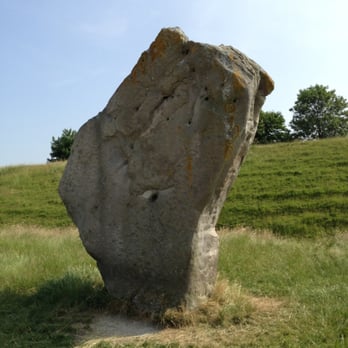


If you've been to Stonehenge, then you simply must see Avebury. In comparison, Avebury is much larger and is open access, unlike Stonehenge, which is fenced off. Many of the original stones are missing, but markers have been placed so one can get a sense of the immensity of the Avebury stone circle. The quaint little town has a pub and at least two gift shops. The gift shop by the public restrooms is a must see for locally made items and books about the history of the area at a fair price. The shop closest to the pub is more expensive and touristy. If you're visiting in the fall/winter, be prepared to walk for miles and be sure to dress for mud. It's the kind of mud that can suck your shoe/boot right off! Not to mention the sheep droppings. You've been warned ;) read more


16 years ago
Avebury Stone Circle is one of those places which seethes with Brits as soon as a Bank Holiday comes around. I went over Easter, and the whole place was full of families; children running around and hunting for eggs. I really enjoy this type of activity, but if you've got a quieter afternoon planned, perhaps steer towards a weekday. Avebury itself is a small town which is build inside a large stone circle in Wiltshire. There are also several small stone circles inside. The area was something of a neolithic centre, and massive stones though to have been raised some 4,500 years ago. Today, the village is probably visited for its quaint English charm, just as much as the standing stones. Although you do get people travelling there for spiritual experiences; people claiming that they can still feel the people who raised the stones, and maybe ever the spirits they were raised for. Whatever you believe, Avebury is certainly a lovely day out. Perfect for families with young children needed somewhere to be set off the lead. read more

10 years ago
We stopped at Avebury Stone Circle, which was all but overrun with sheep in some spots, lol. This is one of the best known prehistoric sites in Britain, and it contains the largest stone circle in Europe. You get to get up close to the stones, so I guess that makes it a little better than Stonehenge. read more

16 years ago

18 years ago
The village of Avebury was built inside the spectacular ancient monument of the stone circle and processional. Considering the fact that much damage to the site must have happened over the centuries, there is a surprising amount of original construction to enjoy. Whether you wish to walk the entire perimeter of the circle, or simply approach individual stones within the village itself, the atmosphere and mystery of these ancient monuments is spellbinding. The scale of Avebury dwarfs other sacred sites from this period and emphasises how significant these constructions must have been to their makers. For anyone even slightly interested in man's early history, Avebury is a must! read more


18 years ago

18 years ago

17 years ago

This ancient ruins is not as famous as its nearby relative Stone Henge, but is just as historic and mysterious. You are also able to get out and walk amongst the rocks here and touch them. This is not the case for Stone Henge, where you are roped off due to past vandalism. Avebury is worth a stop if you are in the area or could fine a tour group to bring you there. And check out the painted sheep while in the area. They are just as fascinating as the stones. read more


19 years ago

18 years ago

16 years ago

18 years ago

18 years ago

9 years ago
7 years ago

12 years ago

11 years ago

15 years ago
18 years ago
18 years ago
14 years ago

14 years ago
13 years ago