Cancel

    Open app

    Search

    Bibury Photos

    Recommended Reviews - Bibury

    Your trust is our priority, so businesses can't pay to alter or remove their reviews. Learn more about reviews.
    Yelp app icon
    Browse more easily on the app
    Review Feed Illustration

    6 years ago

    Helpful 0
    Thanks 0
    Love this 0
    Oh no 0

    11 years ago

    Helpful 1
    Thanks 0
    Love this 1
    Oh no 0

    Verify this business for free

    Get access to customer & competitor insights.

    Verify this business

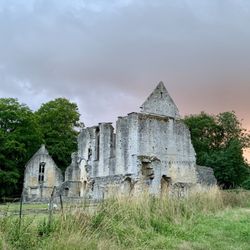
    Avebury Stone Circle - Roof of a pigeon and dove barn. 15th century when they bred birds for food.

    Avebury Stone Circle

    (38 reviews)

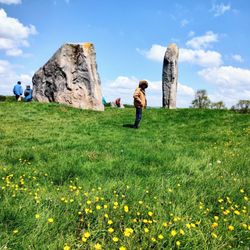
    Avebury Stone Circle is one of the world's greatest prehistoric monuments: older than Stonehenge,…read moreit is the largest megalithic stone circle (henge) anywhere, and part of what was once an enormous megalithic complex stretching for miles. To me, it's more impressive and more spiritual a place than Stonehenge, despite the fact there's a road and village within its structure. History As ever with such sites, our knowledge is limited, but like Stonhenge, it is likely to have been built in phases. The best guess is that construction began around 2600BC with the inner circles, with the great ditch and outer circle completed around 2500BC, making it contemporaneous with the Pyramids at Giza. When completed, these circles included about 154 stones (only 36 remain today) and it also had two avenues 50 feet wide on either side, extending another one and a half miles. Excavations indicate it was probably used as a ritual site for some 2,300 years. A mile to the south is the artificial Silbury Hill, which must also have formed a related part of this complex, although its purpose is now unkown. Nearby Windmill Hill - an important settlement in Neolithic times - also has some burial mounds from the Bronze Age. As well as natural degradation, the monument suffered hugely during the mediaeval period when the Christian authorities actively encouraged demolition of what was regarded as a Pagan monument. This process accelerated in the 17th and 18th centuries, when local people also broke up the stones for building material. But as late as the 1720s, the great antiquarian Dr William Stukeley was able to trace the original plan, including the avenues: although his interpretation of this as a Druid site is now regarded as inaccurate, his drawings and surveys provide our best record of what it looked like. Alas, the destruction of the stones by local farmers continued unabated into the 19th century. The 20th century showed a greater interest in and respect for the site, and - rather controversially - many of the stones were re-erected in the 1930s by the archaeologist Alexander Keiller. This involved in some cases demolition of later buildings, themselves of some historical interest. I happen to think he was right to try and preserve what was left, but many contextual historians disagree. Whatever the rights and wrongs, the site is now safely in the hands of the English Heritage and managed by the National Trust. The site Today, the most impressive feature is the great ditch and its banks: the excavation of this feature - nearly 0.5km in diameter - involved moving 200,000 tonnes of soil and rock. It may even once have been filled with water to make the interior and island. Even now, the ditch and bank together are impressive, but originally they were even deeper/higher (at around 50ft). Inside this are the remains of the outer circle, which is nearly complete in the north west and south west corners. The remains of the two inside circles are more fragmentary. Unlike Stonehenge, here you can walk right up to the stones, so allow at least a couple of hours to visit properly. Don't miss walking south from the main henge monument along the West Kennet Avenue - around 30 standing stones arranged in pairs (to the form the avenue). Practicalities There is a gift shop and museum in the nearby Barn and Stables (themselves 17th century buildings) with interactive displays to put everything into context. The museums are fully accessible, but the main site has undulating grassy terrain (without footpaths) which are accessed through "kissing gates". The ground can get soft and rather boggy underfoot if it has been raining, so you will have to judge for yourself. There is a drop-off point in the village. Parking is the main problem: there is a pay and display car park (free for motorcycles and National Trust Members), on the A4361 road between Beckington and Avebury about 400m from the edge of the henge. This can become packed very quickly in the summer. There's a more central car park for those with disabled parking badges - the Red Lion car park is only for patrons. The village of Avebury itself is worth a wander around (Avebury Manor - see separate review - and the Red Lion especially, although it does get terribly busy at weekends in summer). For the most part, you'll still be inside the monument itself!

    I almost feel educated!‍ We enjoyed this pre Stonehenge!…read more Keeps getting ! Keeps getting stranger!

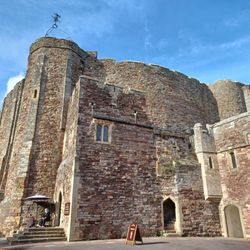
    The Oxford Castle - Mug Shot at Oxford Castle & Prison

    The Oxford Castle

    (14 reviews)

    A great tour of the Oxford Castle & Prison…read more The tour was a fantastic experience. Packed with history, storytelling with a fun tour guide that all ages could appreciate. Well worth the time and money. The demonstration of a real pillory was icing on the cake.

    This is a must-see if you visit Oxford. The guided tour takes you through the vestiges of the…read morecastle to view its architecture and give you an idea of its original use as a fortress. The moderate climb to the tower is worthwhile as you get a nice panoramic view of the city. As the tour transitions to the use of the castle in more recent times as a prison, there is an interesting display concerning that era highlighting criminal justice practices over the past couple of centuries. The "mug shots" of prisoners held there were fascinating and often poignant. This was particularly true for those stories of the children incarcerated for things like petty theft, acts they committed just to survive. The instruments of "correction" such as stocks were also described in detail. Notorious prisoners held at the castle prison were highlighted and their tales were intriguing. The stories of Mary Blandy and the Black Panther were especially memorable. Our guide did a fabulous job of informing us about the history and significance of the structure in a very engaging manner. The Castle Mound at the front of the grounds is also worth climbing as the views are terrific. This is definitely worth the time and price of admission if you are in Oxford.

    Waylands Smithy

    Waylands Smithy

    (1 review)

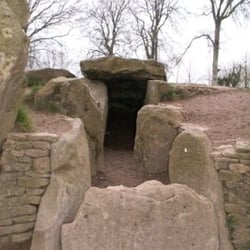
    Wantage (12km ENE) (map may be wrong)…read more Wayland Smith, Wayland Smith here is a horse for you to shoe. According to legend, a traveller whose horse has lost a shoe can leave the animal and the smallest silver coin (a groat) on the capstone at Wayland's Smithy. When he returns next morning he will find that his horse has been re-shod and the money gone. It was dusk..3 chidren with me..I took a 5p out and placed it on the stone..I said Wayland Smith, Way and the children were gone in a cloud of dust! I finish the verse and suddenly my dust was added as I ran in the increasing gloom of early evening..so fast I caught up with them and we fell in a heap giggling They do say if you look at him you are immediately struck blind Ok so combined with the rest of the area it is a good day out..take a picnic..and I used to work in archeology (as the historian) so heres the history bit :) It is conjectured that the invisible smith may have been linked to this site for many centuries before the Saxons recognized him as Wayland. The Ancient Britons may have been accustomed to making votive offerings to a local god. Wayland's Smithy is a Neolithic long barrow and chamber tomb site located, near the Uffington White Horse and Uffington Castle, at Ashbury in the English county of Oxfordshire (formerly in Berkshire).Wayland's Smithy is one of the most impressive and atmospheric Neolithic burial chambers in Britain. Somehow this ancient grave became associated with Wayland, the Saxon god of metalworking, from whom it takes its name. The later mound was 185 feet long and 43 feet wide at the south end. Its present appearance is the result of restoration following excavations undertaken by Stuart Piggott and Richard Atkinson in 1962-1963. They demonstrated that the site had been built in two different phases, a timber chambered oval barrow built around 3700 BC and the second stone chambered long barrow in around 3400 BC. The wooden mortuary house mainly consisted of a paved stone floor with two large posts at either end. A single crouched burial had been placed at one end and the mostly disarticulated remains of a further fourteen individuals were scattered in front of it. Analysis of these remains indicated that they had been subjected to excarnation prior to burial and deposited in possibly four different phases. Postholes at one end have been interpreted as supporting a timber facade. The whole monument was covered by an earth barrow with material excavated from two flanking ditches and measured around 20m in length. The later stone tomb consists of two opposing transept chambers and terminal chamber, along with the longer entrance chamber, this gives the burial area a cruciform appearance in plan. It is classified by archaeologists as one of the Severn-Cotswold tombs. The large trapezoidal earth barrow erected over it was revetted with a stone kerb and its material was again excavated from two large flanking ditches. Excavation in 1919 revealed the burials of seven adults and one child. Bones found at a prehistoric burial site indicate they belonged to victims of an ancient massacre, say scientists. The site is important as it illustrates the transition from timber chambered barrows to stone chamber tombs over a period which may have been as short as 50 years.

    Bibury - landmarks - Updated May 2026

    Loading...
    Loading...
    Loading...