Cancel

Open app

Search

Edington Church Photos

Recommended Reviews - Edington Church

Your trust is our priority, so businesses can't pay to alter or remove their reviews. Learn more about reviews.
Yelp app icon
Browse more easily on the app
Review Feed Illustration
Photo of David J.
96
2344
11912

19 years ago

Helpful 1
Thanks 0
Love this 2
Oh no 0

Verify this business for free

Get access to customer & competitor insights.

Verify this business

Titchfield Abbey

Titchfield Abbey

4.0(3 reviews)
47.9 mi

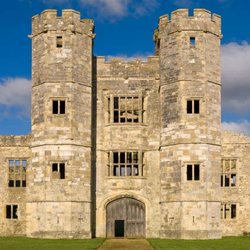
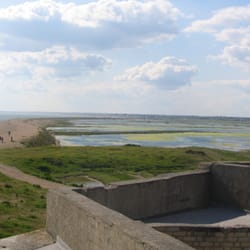
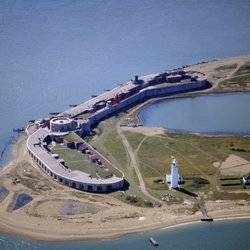
On our Road Trip through England, Wales and Scotland we focused on Castles, Abbeys and walks…read more The Titchfield Abbey we've visited on our first full day here in England. It was a hot summer day. A monday. And only really a handful people on site. Which is surprising, because these are beautiful remains of a former abbey and mansion. It's almost still fully complete even. There's no entrance fee. And even parking is free if you're a member of the EH. If not it's 2£ only. The building is very impressive. Built in the 13th Century it was first in the hand of monks. Then it changed hands under Henry VIII. And was turned into a Tudor mansion. It's quite a sight to behold. And you can walk around the whole site. But as usual: Be respectful, don't climb around and pick up your litter and after your dog (which are allowed here on the site). A very good start for this year's Road Trip. A great place to visit. And there are even one or two lunch options around, if you feel hungry after your visit.

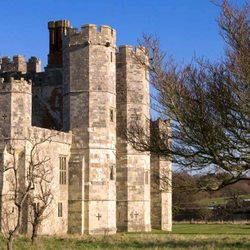
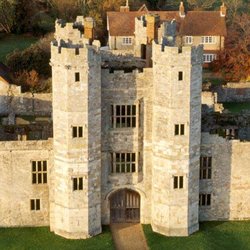
Titchfield Abbey is a ruined former country home, which was itself adapted from an Abbey during the…read moreDissolution. The Abbey was founded in 1222 by the Premonstratensian Order of canons. It was founded as a daughter house of Halesowen Abbey, and endowed both by its founder Bishop Peter of Winchester and Henry III. Never especially wealthy, the Abbey was nevertheless noted for its scholarship and held a substantial library. The Abbey buildings followed a standard plan, albeit on a relatively modest scale. The Abbey seems to have had a quiet and ordered existence, although it's location near the south coast on one of the main routes to France meant it hosted both Richard II and Henry V, and was the location of Henry VI to Margaret of Anjou in 1445. The Abbey was dissolved in 1537, at the behest of Thomas Wriothesely, Chancellor to Henry VIII. Unlike many dissolutions, the Abbott John Salisbury secured a peaceful handover, with pensions provided for the canons and the position of Dean of Norwich for himself in 1539. Wriothesely adapted the buildings to form a n impressive country home for himself, called Place House. The Abbey church itself was converted to a grand gatehouse and accommodation wing, with a long gallery and hall formed around the former cloister. This involved taking down the church tower and chancel. The house hosted Elizabeth I, Edward VI, Charles I and Charles II. It continued in use as a home until the 1780s, when the decision was taken to abandon and deliberately demolish much of the complex to form a romantic ruin. Today it is in the care of English Heritage. The impressive turreted gatehouse forms the larger part of what is visible today, the bare structure enabling much of the former church to be traced. There are also remains of the cloister walls, with the foundations of the demolished buildings traced out on the ground. The site is also known for its collection of decorative mediaeval floor tiles. The adjacent fish ponds have survived but are no longer part of the site. Practicalities: the gravel drive is quite narrow and leads to a gravel car park. Although there is level access the rough surfaces make for challenging wheelchair access. There are no toilets on site.

Photos
Titchfield Abbey
Titchfield Abbey
Titchfield Abbey

See all

Pulteney Bridge - Pulteney Bridge, Bath_Yelp_Sanju-2

Pulteney Bridge

4.4(40 reviews)
13.0 mi

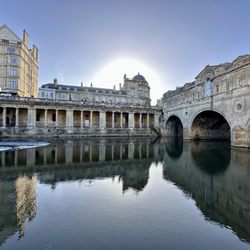
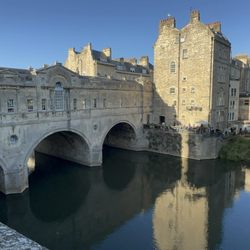
The Pulteney Bridge in Bath is one of only four bridges in the world to have retail shops spanning…read moreboth sides of the bridge. Construction of the stone arch bridge was completed over the River Avon in 1774. Crossing the bridge (I was on a bus) has a very Old World feel. I was excited by the history and seeing the little shops on the bridge. The shops were packed with tourists.

Bath's iconic architecture is one of the many reasons why the city is a designated UNESCO World…read moreHeritage site, from its Roman origins to the fashionable eighteenth-century designs that form many of the city's most recognizable buildings. The guide informed us that the historic bridge is one of only four bridges in the world to have shops across its full span on both sides. (he meant Inhabited Bridges where shops/houses are built on the bridge) 1. Ponte Vecchio, Florence 2. Krämerbrücke, Germany 3. Pulteney Bridge, UK 4. Ponte di Rialto (Venice) I had been to #1,3,4 now. Pulteney Bridge is an impressive structure, its three arches sitting astride the River Avon, a splendid backdrop to the crescent-shaped river weir. The bridge in Bath is one of the most photographed examples of Georgian architecture in the city. it was designed in 1769 by Robert Adam and named after Frances Pulteney, wife of William Johnstone Pulteney. He had grand plans to create a 'new town' to rival that of John Wood's on the west side of the city. His grand scheme needed a new bridge, and he didn't want just any old bridge; he wanted a spectacular bridge, one which everyone would talk about, and that's how this came into existence.

Photos
Pulteney Bridge - Pulteney Bridge, Bath_Yelp_Sanju-5

Pulteney Bridge, Bath_Yelp_Sanju-5

Pulteney Bridge
Pulteney Bridge

See all

The Church of St Laurence - Anglo-Saxon Church of St. Laurence in Bradford on Avon.

The Church of St Laurence

5.0(3 reviews)
7.9 mi

Bradford on Avon has a wel-preserved Anglo-Saxon (i.e., pre-Norman /pre-1066 English) Church of St…read more Laurence, also referred to as the Saxon Church. It was supposedly founded in the early 8th century and the surviving building is over 1000 years old. It has preserved a typical Anglo-Saxon style and decor and is both charming and interesting.
Bradford-on-Avon is a lovely historic town close to Bath, with a handsome mediaeval bridge, an…read moreimpressive 14th Century tithe barn and a lovely parish church of Norman foundation. But the most famous building in Bradford-on-Avon is undoubtedly the diminutive church of St Lawrence which, by an accident of history, is Britain's most perfectly preserved Saxon church. A church was founded on the site in AD 705 by St Aldhelm, although most archaeologists agree that the present building dates from the reign of King Aethelred II (978-1016). A charter granted Bradford to the nuns of Shaftesbury in 1001, and the church may date from this grant. It has been suggested that the richness of this small church implies that it was intended partly to house the relics of Aethelred's brother, Edward The Martyr. Its subsequent history is rather obscure, but appears quite early on to have been converted into secular use, with other buildings growing up around it, and extra floors inserted into its nave and chancel. These were removed when it was rediscovered and restored in 1856, although the walls still show evidence of them. There are no remaining additions from later periods, so the building we now see is purely Saxon. The church is tiny the nave is just 25ft long and the chancel is 13ft long, although it feels larger as it considerably taller than it is wide. A north porticus is still intact, but the south has been lost, although it is clear from the exterior where it stood. The robust Victorian buttresses on the south side were erected when the school-master's house, which had bee built on this side against the church, was demolished. Decoration is restrained: the exterior has Romanesque blind arcading, and the interior has simple mouldings around the narrow door arches, but the most interesting carvings are those of two bearded flying angels on the east wall of the nave. There are only a few, small windows, giving a dusky light. Although the interior is bare of furnishings, it is nevertheless an ancient and atmospheric space.

Photos
The Church of St Laurence - Anglo-Saxon Church of St. Laurence in Bradford on Avon.

Anglo-Saxon Church of St. Laurence in Bradford on Avon.

The Church of St Laurence - Anglo-Saxon Church of St. Laurence in Bradford on Avon.

Anglo-Saxon Church of St. Laurence in Bradford on Avon.

The Church of St Laurence

See all

Church of St Mary Magdalene - St Andrew's Chapel

Church of St Mary Magdalene

5.0(3 reviews)
46.9 mi

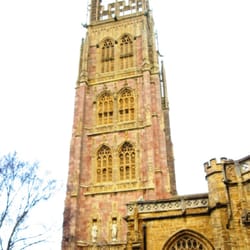
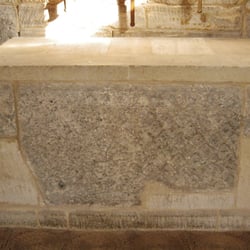
The ancient County Town of Somerset has a church worthy of its status and history, famous for its…read moresplendid tower, which is a landmark for miles around. The early history of the church is obscure: Taunton was the home of a great Augustinian Priory under the control of the Bishops of Winchester, who were also Lords of the Manor until the 19th century. The town that grew up alongside the castle and Priory looked to the Priory for many of its spiritual needs, but the townspeople probably had their own church on the present site from at least the 11th century onwards. However, the first recorded mention of the church is in the 13th century, and foundations of that age have been found during various archaeological excavations. In 1308 the church became independent of the Priory, and over the next two hundred years was rebuilt into the form we see to-day. From the outside and particularly from the perfect view between the Georgian houses of Hammet Street the dominant feature is its tower. Somerset is famed for its huge towers, built in the 15th and early 16th centuries on the wealth that came from the wool trade. They are divided into the Wells group, with vertical emphasis, and the Taunton group, with horizontal emphasis. Unsurprisingly, St Mary's belongs to the latter group, and is the grandest by far. At 163ft, (50m) it can be seen for miles. It is built in a striking red sandstone, with window openings and tracery in golden Ham stone. Constructed in 1514, the present tower is actually a copy (albeit an exact one using much of the original materials) completed in 1862, after the original became unsafe. The other external feature is the generous south porch, dating from 1508, and decorated with elaborate niches, although the statues are Victorian replacements for those destroyed in the Reformation. Indeed, much of the decoration in the church had to be replaced, following extensive damage during the Commonwealth period Taunton was a staunch Puritan town. The interior is splendid the plan is almost square, thanks to its generous double aisles, giving the impression of a forest of columns. The oldest elements are the arcade arches at the east end of the nave, which date from the late 13th century. Otherwise, most of the fabric dates from the 14th and 15th centuries. Of particular note is the 15th century carved wooden roof, with its gilded angels a Somerset tradition. There are more angels carved on the nave capitals and corbels. Although most of the furnishings are Victorian, there are some attractive memorials: on the north wall, an almost life-size statue of Robert Graye, (1570-1635), flanked by columns and topped with a arched pediment, recalls a famous son of Taunton and a generous benefactor, who built almshouses for the poor in East Street, which are still in use to-day. The windows in the north aisle contain fragments of brightly coloured mediaeval glass. Another benefactor was Richard Huish, (d. 1615), and his plainer but still attractive memorial is found on the South wall. At the west end of the inner aisle, is a stone memorial to Thomas More, (d. 1576), second owner of the Priory following the Dissolution. To-day it provides the backdrop to the small shop, selling cards and fairly traded items. Opposite, in the North Aisle, is a small but lively café, apparently catering to a regular group of pensioners. Finally, this church has a personal connection, which makes it especially interesting to me: my Great-Great-Great Grandfather and Grandmother were married here, in July 1828.

This is the largest church in Somerset, situated right in the centre of its county town, Taunton…read more I can thorougly recommend this as a place to get married! The church is really spacious and so you can have as many seated guests as you can wish. They will organise beautiful flowers for you and, of course, the photographs look great with such an amazing place in them. The vicar has changed since we got married and so I can't say what he is like but our day was really special.
Photos
Church of St Mary Magdalene - Tower of St Mary Magdalene. Red sandstone with Ham stone facings.

Tower of St Mary Magdalene. Red sandstone with Ham stone facings.

Church of St Mary Magdalene - Fragments of mediaeval stained glass in north aisle.

Fragments of mediaeval stained glass in north aisle.

Church of St Mary Magdalene - Chancel and High Altar

See all

Chancel and High Altar

Edington Church - landmarks - Updated May 2026

Loading...
Loading...
Loading...