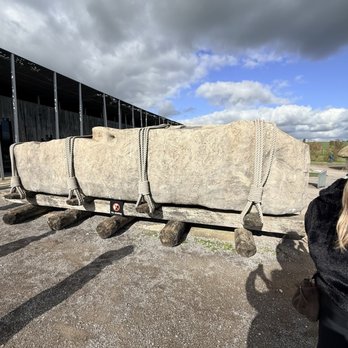
Stonehenge Photos


Recommended Reviews - Stonehenge
Start your review...


Reviews With Photos


Stonehenge is an iconic must if you're into this kind of stuff. Be sure to plan ahead as being able to get out here is quite a journey. Once you arrive, there's a long wait for a bus to get closer, or you can make the long walk to get there from the parking lot to the actual site. If you want to walk amongst the stones, you'd have to reserve a special time for it, otherwise, the actual site is roped off. There are areas whereas you're closer and yet further away areas as well. There's so many tourists that you really just have to be aware prior and not expect anything less. This is a one and done for me. Pictures was captivating. This was my first time here and may be my last.
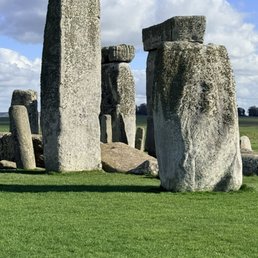

As a history lover, Stonehenge has been on my bucket list. My visit yesterday did not disappoint. In fact, Stonehenge is an amazing wonder. My heart skipped some beats as I got my first glimpse of the great rocks. My husband and I took a small group tour to visit the site. We arrived early in the morning before crowds of tourists. I had downloaded the audio tour on my phone, which was fabulous. We bought tickets at the site. Tickets allow access to the museum/discovery center, a bus ride to the site and access to the walking path around the stones. Fees collected support the site. Paid admission is totally worth the visit. Stonehenge is a Neolithic site that was built over a 1000 year time period 3000 B.C. The site was a burial site, ceremonial site with astrological importance to these early people. The construction of the site is a prehistoric wonder. Two different types of huge rocks were gathered and moved across many miles to the site. The stones were carved to shape and secure them in place. Thousands of people must have participated in construction. Burial mounds surround the rock formation. Artifacts discovered at the site suggest that people were highly sophisticated. Some of the artifacts are displayed and replicas of there homes can be explored at the Center. Stonehenge is a World Heritage UNESCO site. Parking is available but there is a fee. Restrooms are nice. There is a cafe that is quite good at the center and a gift shop with reasonably priced visitor guidebooks. The site is accessible for wheel chairs and strollers, but the path is not paved. Worth a visit....I highly recommend.


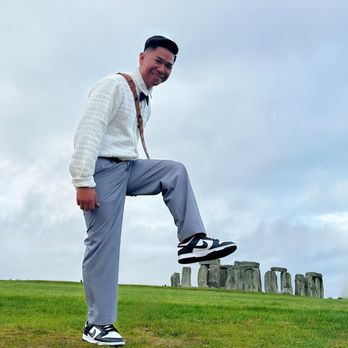
What a great experience! Another ancient wonder that I can check off my bucket list. We were on a tour and this was our first stop. It was cold but luckily, the tour route is pretty short so you can warm up in the shuttle, gift shop, or restaurant when you get back to the hub. Once you are parked, there is a smaller gift shop with limited souvenirs. If you walk a few feet more, you will arrive to the bigger gift shop, a small cafe for snacks or lunch, and the restrooms. You then jump on the shuttle that takes you to your destination. Unfortunately, you no longer could get up close and personal with the stones. There is a guided path that allows you to circle the landmark. Keep an eye out for the signs that gives you the history or fun facts about the stones. Also, you will find some photo challenges that you have to try out, make sure to tag them to get featured. Not gonna lie, I did a few. The landmark is breathtaking and nothing I have seen before. Photos do not do it justice but the experience and memory is a lifetime. Get your camera ready and make sure to strike a pose. You will want to cherish this day because it is out of this world. Note: If you are a Jellycat fan, you can purchase them here and avoid longer lines elsewhere.


To the Stones! I'm going to save you all over £38. There's a free walking path that gets you pretty close to the stones (see photos). Don't buy the tour as it only includes a bus ride to Stonehenge and closer viewing. You are not allowed to touch the rocks anymore so I don't really see the point of buying tickets. The best bathrooms are by the tour buses. The lines are shorter. Also if you choose to talk avoid the fields as there are a landline of sheep poop. Technically you can drive to a road to there the stones are located but the road is not paved. Lastly listen to How Stonehenge Works by How I Built This podcast to get a pretty good overview and how no one knows what's really going on with the stones. Enjoy!


Stonehenge! It's... well, rocks. Not as spectacular as national parks in the States or some of the world wonders, but interesting history behind it. We actually enjoyed walking from the parking lot to the actual stones as we visited in April and the weather was perfect for the walk. Being in nature and getting to appreciate the vast fields of sheep and flowers was half of the journey anyways! The weather was great and overall I'm glad we visited, but it's definitely a visit once ordeal.


If I had ONE place in England to visit this would be it..... and it was. We spent a good part of the day at the location of one of my childhood dreams. Stonehenge!!! I am currently on a European Christmas Cruise and there was an opportunity to visit here. The visit was everything I thought it would be and more. To complete the Yelp experiance I ate a blade of grass which was delicious. The ambiance is kind of stoney but that was expected. I would return down the road to eat another blade of grass to see the stones again. Highly recommend!
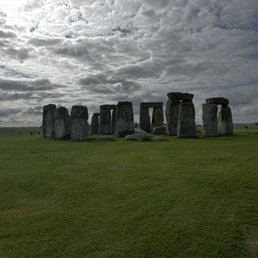

I thought Stonehenge was simply amazing. A must see once in your life and definitely a place that holds a special place in my heart. Really grateful I came here last summer and that the weather was so lovely. An ancient mystery and world wide known landmark - these stones had puzzled people for years and have been studied for centuries. I ended up buying a book at their gift shop so I won't give you a history lesson or spoil how the stones were formed and got here but if your interested there is now plenty of literature out here. The Stonehenge site has a cafe and a gift shop so there is a little more to do then just to see the stones. We purchased our tickets in advance to see the stones online. I would recommend but you would hate to miss out or wait long hours if certain time frames are sold out once you get here. It was a breeze navigating the check in and once through you can wait for one of their little buses to get a ride to the stones. It's also walkable/hike able to get to the stones but the majority of visitors seem to take the buses, at least one way. The stones are simply magnificent and my best advice would be to come earlier in the day and on a weekday. There will always be crowds but I did feel like the day we came it wasn't too busy so we could capture great photos without too many people being in the way or getting In the background of the photos. I didn't stop at the cafe part but it's nice to have an option for a soda and snack if needed. Restrooms were clean and my personal favorite (outside of the stones) was their gift shop. Had a great amount of tourists items. I bought some great Stonehenge hats and magnets to take home as gifts and then purchased myself a book so I could learn more about the history of Stonehenge. Overall a 10/10 experience as it's a place I had always wanted to see since being a little kid - dreams do come true :)


What can I say about Stonehenge that hasn't already been said. It's a monumental structure built between 3000 and 1500 BC. Experts have not been fully able to discover or explain its origins or its meaning (purpose). There are a number of theories. Suffice it to say - this is a MUST SEE site if you're in the UK. It is definitely awesome and awe inspiring. Don't miss it.


What: Stone Circle Experience tour. Highly recommended!!! This is a special tour that is either early morning before they open or after hours after closing. We did after hours. This is a guided tour of just 26 people and you get to go inside the stones behind the ropes! You literally are standing right next to the stones (do not touch please!) The regular tour has you standing far from the stones. It was so amazing to feel the energy of the stones by going inside the center of them. So cool!! An unforgettable experience of a lifetime!! Price: £70 for adults and £40 for kids 5-17 years old. We were staying in London and took the train to Salisbury in the morning. We enjoyed the day there and then took a local taxi (All the Sevens) to the Stonehenge Visitors Center. We arranged for the same taxi company to pick us up in the evening back to the Salisbury train station.


This is a must see. It's fairly far from London. Our cruise got off in Southampton, so we decided to book a tour to Stonehenge since we were out here already. Amazing site to see. Learned a lot about the site, burial mounds and area. Site and staff does a great job of shuttling people to Stonehenge and preserving the area. Even with lots of people, the place is huge and you will get great pics. We decided to walk back. Security/guides recommended the trail through the sheep farm and Fargo Wood. That was spectacular. Bring a jacket as it can get windy and cold.


Stonehenge is an ancient site with stones. That's it, that's the program, nothing more, nothing less. You can walk the fields to get a little exercise but other than that, there isn't much to explore. If I never can back here again, my life would be okay. They have a brand new cafe with a gift shop attached. I stopped here as apart of a tour I bought on Viator, which I recommend you to check out. We went to Windsor Castle/Stonehedge/Lacock/Bath. You line up to catch a bus that takes you 5 minutes to the site. You walk around it, take some pictures, then get in line to head back on the same bus. Come here if you want to. I have nothing else to say.
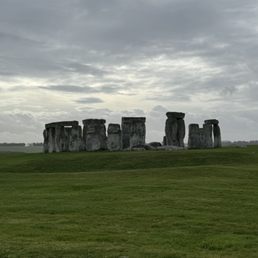

Stonehenge is a bucket-list place and I'm so thankful to have visited earlier this month. We went on a private tour of the area and enjoyed our stop at Stonehenge. The museum is nice to learn more about the history and the site itself is breathtaking. Highly recommend!


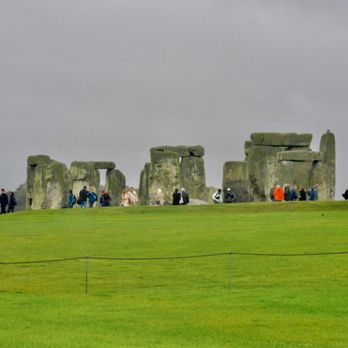
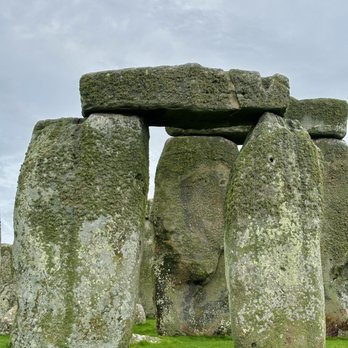
Stonehenge is one of the most mysterious and fascinating ancient monuments in the world. Located in Wiltshire, England, it is a prehistoric structure believed to have been built over 4,500 years ago. It has long been the subject of archaeological study, inspiring theories about its purpose and construction. first of all - you can't see Stonehenge up close. there is a rope that separates you from this monument. but I guess it is fine (at least for me) It is a stone circle made up of 38 stones on Salisbury Plain in Wiltshire. It then took over 1,000 years to build, in four long stages! Archaeologists believe the final changes were made around 1,500 BC, in the early Bronze Age. Each year, on 21 June, which is the longest day of the year, the sun rises over the Heel Stone at Stonehenge -this is called the summer solstice. The sun also always sets over the Heel Stone on the shortest day of the year. This means that our ancestors were probably using Stonehenge as a calendar. There are lots of theories about how the placement of the stones would coincide with their months, seasons, and years. How the stones were moved to the Stonehenge site is a mystery that still hasn't been solved. We know some of the stones came from Wales - that's a long way to transport stones that weigh more than 4 elephants each. Some theories are that they were dragged on sleighs before being taken on rafts over water but this has never been proven. Every year on the 21st of June around 20,000 people watch the sunrise over Stonehenge. we visited this as part of a bus tour but you can buy a ticket [GBP 28- $40] and the bus will take you to the main spot from the visitor center. Don't even think of walking, it's like 40 minutes of walk from the visitor center.
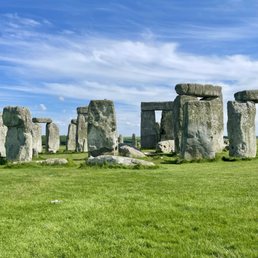

This has been on my bucket list for a long time and I was glad that Globus included it on their London Countryside Tour. About 2 hrs from London, this is an UNESCO site. A short walk from the parking lot,you take a bus about 1.5 miles to the site. You will experience the mystical stone circle of Stonehenge. You can't actually touch the stones as they are roped off but you can get close enough for some great pictures. You can spend as much time as you like and then you can either walk back or take the bus. You exit thru the gift shop where there is also a cafe and restrooms. Definitely an experience I will never forget! read more


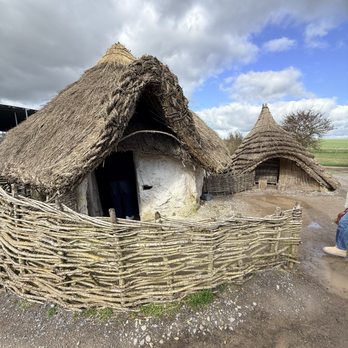
So glad to get a chance to visit this historical place. We were able to get on the first bus to get to the stones, and beat the crowd to take lots of pictures. Everything was marked, with excellent descriptions all around. There was a nice gift shop and cafe. The exhibition museum was amazing. The huts outside the museum were wonderful. All staff were very nice and welcoming. Highly recommended! read more
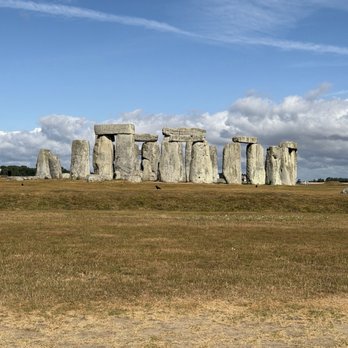


Stonehenge is an iconic must if you're into this kind of stuff. Be sure to plan ahead as being able to get out here is quite a journey. Once you arrive, there's a long wait for a bus to get closer, or you can make the long walk to get there from the parking lot to the actual site. If you want to walk amongst the stones, you'd have to reserve a special time for it, otherwise, the actual site is roped off. There are areas whereas you're closer and yet further away areas as well. There's so many tourists that you really just have to be aware prior and not expect anything less. This is a one and done for me. Pictures was captivating. This was my first time here and may be my last. read more


7 months ago
As a history lover, Stonehenge has been on my bucket list. My visit yesterday did not disappoint. In fact, Stonehenge is an amazing wonder. My heart skipped some beats as I got my first glimpse of the great rocks. My husband and I took a small group tour to visit the site. We arrived early in the morning before crowds of tourists. I had downloaded the audio tour on my phone, which was fabulous. We bought tickets at the site. Tickets allow access to the museum/discovery center, a bus ride to the site and access to the walking path around the stones. Fees collected support the site. Paid admission is totally worth the visit. Stonehenge is a Neolithic site that was built over a 1000 year time period 3000 B.C. The site was a burial site, ceremonial site with astrological importance to these early people. The construction of the site is a prehistoric wonder. Two different types of huge rocks were gathered and moved across many miles to the site. The stones were carved to shape and secure them in place. Thousands of people must have participated in construction. Burial mounds surround the rock formation. Artifacts discovered at the site suggest that people were highly sophisticated. Some of the artifacts are displayed and replicas of there homes can be explored at the Center. Stonehenge is a World Heritage UNESCO site. Parking is available but there is a fee. Restrooms are nice. There is a cafe that is quite good at the center and a gift shop with reasonably priced visitor guidebooks. The site is accessible for wheel chairs and strollers, but the path is not paved. Worth a visit....I highly recommend. read more



What a great experience! Another ancient wonder that I can check off my bucket list. We were on a tour and this was our first stop. It was cold but luckily, the tour route is pretty short so you can warm up in the shuttle, gift shop, or restaurant when you get back to the hub. Once you are parked, there is a smaller gift shop with limited souvenirs. If you walk a few feet more, you will arrive to the bigger gift shop, a small cafe for snacks or lunch, and the restrooms. You then jump on the shuttle that takes you to your destination. Unfortunately, you no longer could get up close and personal with the stones. There is a guided path that allows you to circle the landmark. Keep an eye out for the signs that gives you the history or fun facts about the stones. Also, you will find some photo challenges that you have to try out, make sure to tag them to get featured. Not gonna lie, I did a few. The landmark is breathtaking and nothing I have seen before. Photos do not do it justice but the experience and memory is a lifetime. Get your camera ready and make sure to strike a pose. You will want to cherish this day because it is out of this world. Note: If you are a Jellycat fan, you can purchase them here and avoid longer lines elsewhere. read more




To the Stones! I'm going to save you all over £38. There's a free walking path that gets you pretty close to the stones (see photos). Don't buy the tour as it only includes a bus ride to Stonehenge and closer viewing. You are not allowed to touch the rocks anymore so I don't really see the point of buying tickets. The best bathrooms are by the tour buses. The lines are shorter. Also if you choose to talk avoid the fields as there are a landline of sheep poop. Technically you can drive to a road to there the stones are located but the road is not paved. Lastly listen to How Stonehenge Works by How I Built This podcast to get a pretty good overview and how no one knows what's really going on with the stones. Enjoy! read more


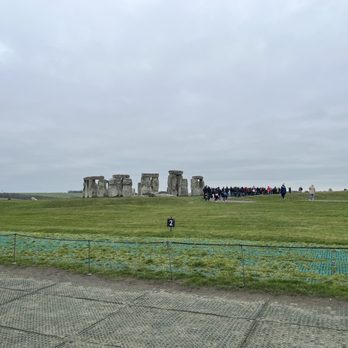


Stonehenge! It's... well, rocks. Not as spectacular as national parks in the States or some of the world wonders, but interesting history behind it. We actually enjoyed walking from the parking lot to the actual stones as we visited in April and the weather was perfect for the walk. Being in nature and getting to appreciate the vast fields of sheep and flowers was half of the journey anyways! The weather was great and overall I'm glad we visited, but it's definitely a visit once ordeal. read more



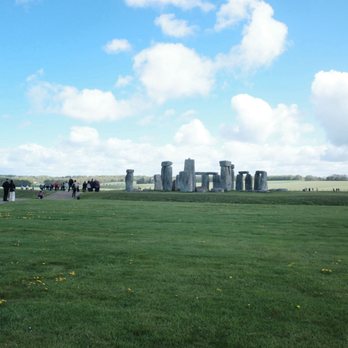

If I had ONE place in England to visit this would be it..... and it was. We spent a good part of the day at the location of one of my childhood dreams. Stonehenge!!! I am currently on a European Christmas Cruise and there was an opportunity to visit here. The visit was everything I thought it would be and more. To complete the Yelp experiance I ate a blade of grass which was delicious. The ambiance is kind of stoney but that was expected. I would return down the road to eat another blade of grass to see the stones again. Highly recommend! read more


1 year ago
I thought Stonehenge was simply amazing. A must see once in your life and definitely a place that holds a special place in my heart. Really grateful I came here last summer and that the weather was so lovely. An ancient mystery and world wide known landmark - these stones had puzzled people for years and have been studied for centuries. I ended up buying a book at their gift shop so I won't give you a history lesson or spoil how the stones were formed and got here but if your interested there is now plenty of literature out here. The Stonehenge site has a cafe and a gift shop so there is a little more to do then just to see the stones. We purchased our tickets in advance to see the stones online. I would recommend but you would hate to miss out or wait long hours if certain time frames are sold out once you get here. It was a breeze navigating the check in and once through you can wait for one of their little buses to get a ride to the stones. It's also walkable/hike able to get to the stones but the majority of visitors seem to take the buses, at least one way. The stones are simply magnificent and my best advice would be to come earlier in the day and on a weekday. There will always be crowds but I did feel like the day we came it wasn't too busy so we could capture great photos without too many people being in the way or getting In the background of the photos. I didn't stop at the cafe part but it's nice to have an option for a soda and snack if needed. Restrooms were clean and my personal favorite (outside of the stones) was their gift shop. Had a great amount of tourists items. I bought some great Stonehenge hats and magnets to take home as gifts and then purchased myself a book so I could learn more about the history of Stonehenge. Overall a 10/10 experience as it's a place I had always wanted to see since being a little kid - dreams do come true :) read more
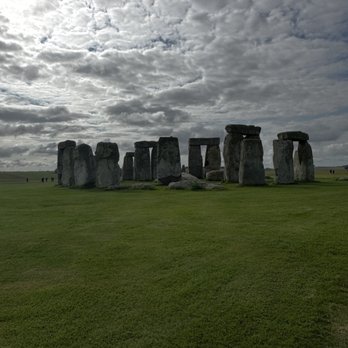


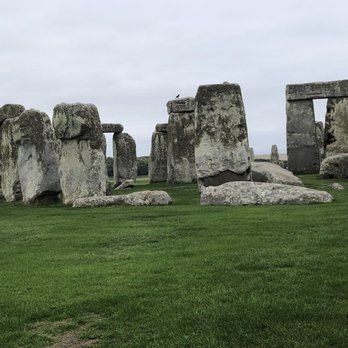
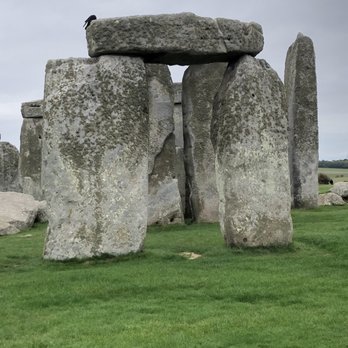
What can I say about Stonehenge that hasn't already been said. It's a monumental structure built between 3000 and 1500 BC. Experts have not been fully able to discover or explain its origins or its meaning (purpose). There are a number of theories. Suffice it to say - this is a MUST SEE site if you're in the UK. It is definitely awesome and awe inspiring. Don't miss it. read more



1 year ago
What: Stone Circle Experience tour. Highly recommended!!! This is a special tour that is either early morning before they open or after hours after closing. We did after hours. This is a guided tour of just 26 people and you get to go inside the stones behind the ropes! You literally are standing right next to the stones (do not touch please!) The regular tour has you standing far from the stones. It was so amazing to feel the energy of the stones by going inside the center of them. So cool!! An unforgettable experience of a lifetime!! Price: £70 for adults and £40 for kids 5-17 years old. We were staying in London and took the train to Salisbury in the morning. We enjoyed the day there and then took a local taxi (All the Sevens) to the Stonehenge Visitors Center. We arranged for the same taxi company to pick us up in the evening back to the Salisbury train station. read more

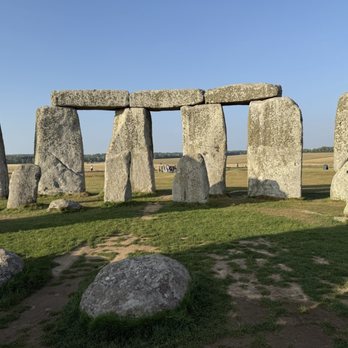


This is a must see. It's fairly far from London. Our cruise got off in Southampton, so we decided to book a tour to Stonehenge since we were out here already. Amazing site to see. Learned a lot about the site, burial mounds and area. Site and staff does a great job of shuttling people to Stonehenge and preserving the area. Even with lots of people, the place is huge and you will get great pics. We decided to walk back. Security/guides recommended the trail through the sheep farm and Fargo Wood. That was spectacular. Bring a jacket as it can get windy and cold. read more


Stonehenge is an ancient site with stones. That's it, that's the program, nothing more, nothing less. You can walk the fields to get a little exercise but other than that, there isn't much to explore. If I never can back here again, my life would be okay. They have a brand new cafe with a gift shop attached. I stopped here as apart of a tour I bought on Viator, which I recommend you to check out. We went to Windsor Castle/Stonehedge/Lacock/Bath. You line up to catch a bus that takes you 5 minutes to the site. You walk around it, take some pictures, then get in line to head back on the same bus. Come here if you want to. I have nothing else to say. read more

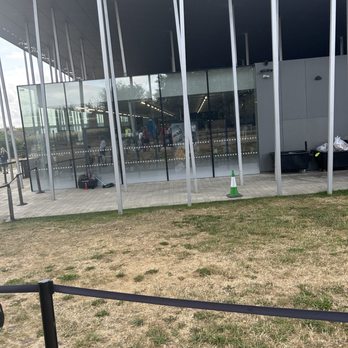


Stonehenge is a bucket-list place and I'm so thankful to have visited earlier this month. We went on a private tour of the area and enjoyed our stop at Stonehenge. The museum is nice to learn more about the history and the site itself is breathtaking. Highly recommend! read more
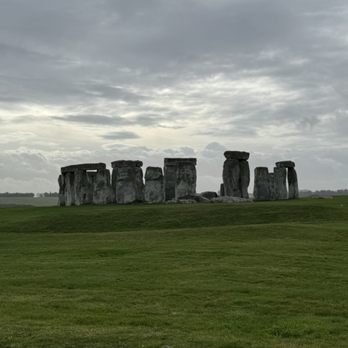

Stonehenge is one of the most mysterious and fascinating ancient monuments in the world. Located in Wiltshire, England, it is a prehistoric structure believed to have been built over 4,500 years ago. It has long been the subject of archaeological study, inspiring theories about its purpose and construction. first of all - you can't see Stonehenge up close. there is a rope that separates you from this monument. but I guess it is fine (at least for me) It is a stone circle made up of 38 stones on Salisbury Plain in Wiltshire. It then took over 1,000 years to build, in four long stages! Archaeologists believe the final changes were made around 1,500 BC, in the early Bronze Age. Each year, on 21 June, which is the longest day of the year, the sun rises over the Heel Stone at Stonehenge -this is called the summer solstice. The sun also always sets over the Heel Stone on the shortest day of the year. This means that our ancestors were probably using Stonehenge as a calendar. There are lots of theories about how the placement of the stones would coincide with their months, seasons, and years. How the stones were moved to the Stonehenge site is a mystery that still hasn't been solved. We know some of the stones came from Wales - that's a long way to transport stones that weigh more than 4 elephants each. Some theories are that they were dragged on sleighs before being taken on rafts over water but this has never been proven. Every year on the 21st of June around 20,000 people watch the sunrise over Stonehenge. we visited this as part of a bus tour but you can buy a ticket [GBP 28- $40] and the bus will take you to the main spot from the visitor center. Don't even think of walking, it's like 40 minutes of walk from the visitor center. read more





1 year ago

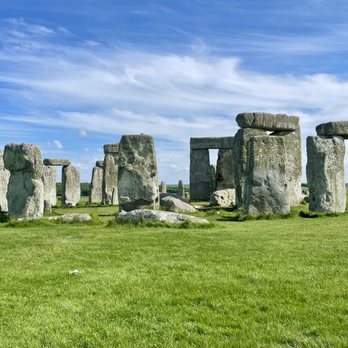

Sorry for being a grumpy Gus in this review! Yes is is awesome and amazing!! We came here on a small bus tour on June 19, 2025. We decided to take two days in London and a trip to Stonehenge and Bath before a cruise out of Dover, UK. The buses drop people off at the visitor center parking area, and then you have to walk to the site. It is about a 20-minute walk. Maybe I was a little grumpy that day, since an unusual heat wave hit the UK, with temperatures reaching 92ºF and high humidity. Yes, it was amazing to see it, but it was a long walk in that kind of heat to get from the bus drop-off to the actual site. No shade at all. There is a roped area that protects people from touching the rocks. It really didn't take more than 15 minutes to see the entire site, and I was melting! I didn't find any guide explaining Stonehenge's history, but it was so crowded that I may have missed it. Little did I know it was so crowded, as people were there for the weekend for the summer solstice, which is June 20 at sunrise. People made a weekend of it to see the sunrise. Visitors basically just took photos and left. There were large charter buses picking up people walking back, but it was at least a 20-minute wait in the hot sun due to the long lines. We did go to the visitor center's cafe, which was such a relief. read more


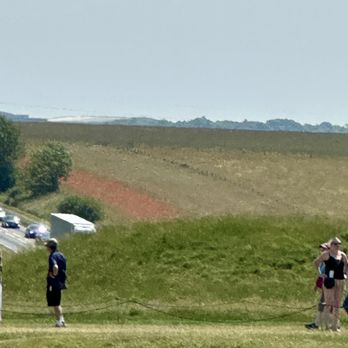


I love visiting historical sites, though the day I went it was FREEZING! Unless you're super bundled up, I'd suggest visiting Stonehenge when it's warmer so you can do the full walk around the site. I was so cold I just took a few pics and hopped back on the shuttle bus! It was cool capturing the ancient relics in pictures. Sad we can't get close to them any longer because stupid people vandalized them and tried to knock them over. Overall a worthwhile trip, but I recommend going with a tour group. My friends and I almost missed our train back to London navigating this on our own. read more


I have wanted to visit Stonehenge since I was a child. It has always been on my bucket list. Recently, before our visit, I heard a lot of negativity about this special place, including statements like, "it's just some stones in the middle of a field." Yes and no. It is indeed a ring of stones in a field but it's so much more! I was NOT disappointed. Prior to our visit, we downloaded the Stonehenge free visitors audio guide app on our phones. The first place we went after arriving was the clean, modern visitors center. We looked at all the artifacts while listening to the audio tour to learn all about the history of the monument and how it had changed over the years. Fascinating! Next, we went outside to explore the re-creation of a little village from that era. The staff were very engaging, knowledgeable and friendly. Finally, we took a shuttle bus (included in our ticket price) that drove us out to the monument. You can walk, but it was more walking than we wanted to do. Exploring the monument was amazing! There were trails all around and information (both audio guide and placards). We took photos and investigated the area. Extremely cool! Afterwards, we took the shuttle back to the visitors center and did some shopping at the gift shop. There were even some mead and wine samples (we bought a bottle of mead and a bottle of ginger wine). I highly recommend visiting if you have the opportunity! read more


First off, it's a bucket list item for many. Great visitor center exhibit which explains what they know about Stonehenge, how it was built, what tools were used, etc. Word of caution, there are human remains in the exhibit. They warn you before entering. Also see a model of the houses that the builders probably in. The cafeteria has great hot and cold food options and free WiFi and reasonably priced. Plenty of seating too. You can either walk 15 min from the visitors center or take a shuttle bus. I saw a good mix of people doing both. The stones themselves were cool considering how old they were and how they were assembled. You basically take a short path around the stones where they have some information and some places to take silly poses. The grounds are well maintained. I did find the admission prices to be a little excessive. £60 for two adults and parking. I was expecting more exhibits or free ranger talks for this price. They were willing to sell you guidebooks and audio guides but I think it should be included in the price. read more


10 months ago
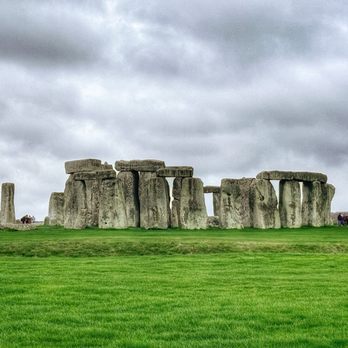
A nice place to visit an make up your own mind has to how them stones got there and to here what the surrounding areas hold alot of rich history. read more
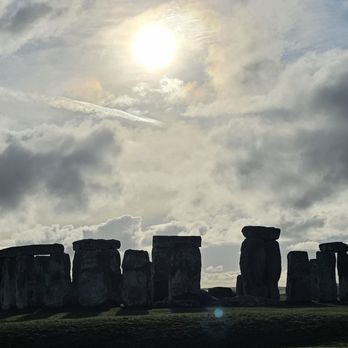


You literally have to go here to understand exactly what's going on and how it would affect you wandering around these models of stone. It goes back so far an early history and it's a place of burial, not sacrifice. The stones are aligned with the stars and standing among them these massive silent Testament to all that. Existed here millennia before his breathtaking on this Holsberry planes of England. This was high on my list visit again and again, and I am fulfilling that dream. I always feel very quiet and calm as I walk around the stones and think about its history. It's amazing to understand that these were carried 32 miles Rolling them on logs and putting them on top of this hill. Mind-boggling. With a special entrance ticket, which is either early early in the morning or late late in the afternoon you can buy the inner circle ticket, which allows you on the inside of the stones to walk around. read more


Over the years I have been to Stonehenge several times. I took yet another co-worker from the states who had never been and he seemed to enjoy this very much. You might get snarky comments from locals who say "you don't have rocks in America"? Ignore them and just go enjoy the history and mystery. Before you go here is the story: You can see the rocks very well from the road for free but you cannot stop so please be careful when you see them. When you get to the visitor center you simply walk up and buy a ticket. There is an app that will give you a self guided audio tour but you need to have your headphones so plan accordingly. Yes you can walk from visitor center to the stones and avoid the bus and it's about 1 mile or maybe a little less each way. If you are older, take the shuttle buses.. they are very efficient and free. read more


I came to the UK to celebrate my 50th birthday and the top attraction I wanted to see was Stonehenge. What an amazing structure that defies human ingenuity . To this day we don't know exactly why it was built. There are many theories, but none of them have been conclusively confirmed. But nonetheless, it is an amazing structure. I thought it would be bigger but it is still magnificent. We came with a tour company that took us to Windsor Palace, the City of Bath and Stonehenge. We had an amazing day. The weather was fantastic. Incredibly there was not a whole lot of people. Other than our tour bus there was maybe one other bus and some private visitors and that's about it, so we were able to take amazing photos. This is A MUST SEE when you come to England. read more


Once in a lifetime experience. How these ppl were able to erect these stones to monitor the moon and phases of the sun, I am in awe and so grateful to have been able to visit this wonderful sight. A wonder of the world checked off on my list! read more


6 months ago
This was an amazing experience. Simon T. led us through the inner circle experience. He was very knowledgeable and helpful! One on the coolest experiences of my life! read more


We arrived at Stonehenge with many tourist. There was a visitor center with an informative film, cafe & gift shop. There is an app and WiFi was available in the visitors center. Mead was recommended by our guide, it is a special liquor specific to this area. The gift shop was huge and they had all kinds of jams, books, clothing, wines, candy... Stonehenge, Britain's most remarkable and intriguing prehistoric monument and a UNESCO World Heritage Site. Stonehenge exerts a mysterious fascination. Simplicity, solitude and a powerful air of mystery surround this enigmatic and ancient circle of stones set within a grassy landscape. Seen by some as a sacred site, the henge attracts with its uncertain but ancient history, sheer size, shape, & fame. It was built in several stages from about 3000 BC, Stonehenge is also Europe's most famous prehistoric monument. Anthropologists can only guess at the rituals that took place here, but the alignment of the stones leaves little doubt that the circle is connected with the movement of the Earth relative to the sun & seasons. It is thought that the stones, aligned with the rising of the mid-summer sun and set within a landscape of ceremonial structures, may have been built by sun worshippers or as part of a huge astronomical calendar. Whatever their purpose, it is recognized that the transport, engineering and shaping of the stones -- some of which came from South Wales -- represented an enormous effort in time, organization and physical labor. The prehistoric builders possessed a sophisticated understanding of math & astrology, building this monument with primitive tools to help them cut & shape these huge stones. Stonehenge remains as compelling today as it was to the people who built the first phase more than 5,000 years ago. read more

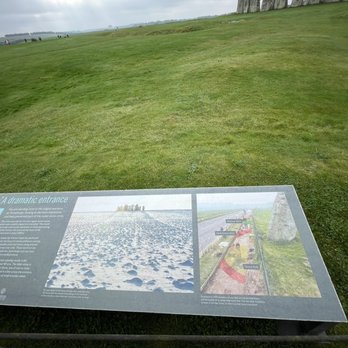


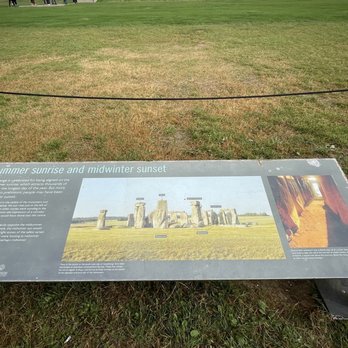

Stonehenge is a World Heritage Site and a place that everyone must seriously consider visiting if they are in London. With changes to the Seven Wonders of the World, it's arguably one of them. It just depends on who you ask. Admission tickets can be purchased there on site or you can book a tour which includes it and they provide the wristbands to enter. After you park your vehicle or the coach is parked, you walk down the a shuttle that takes you to the site. It's a quick 3-5 minute drive. You can spend as long as you want there then catch the next available shuttle back. Be prepared for the weather though. We were lucky to get in to take a few photos before it started to rain cats and dogs. This has been a bucket list item for me for a long time and I'm so happy to have finally checked it off my list. read more


2 years ago
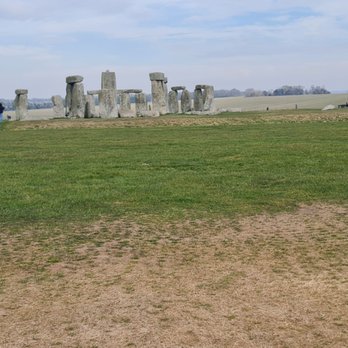
Perfect for history lovers. It was easy for us to get tickets as we went to the information centre in sialsbury and the lovely man helped us get tickets and the bus tour which was lovely there are some really picturesque views on the way. There are also other things such as a cafe and shop and they also have an exhibition of other things . The weather was peefct as well. read more



2 years ago
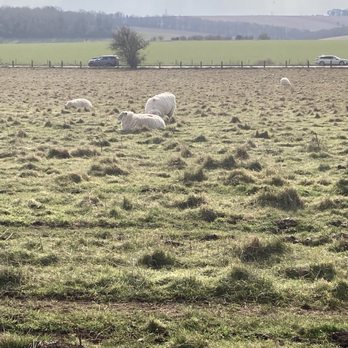
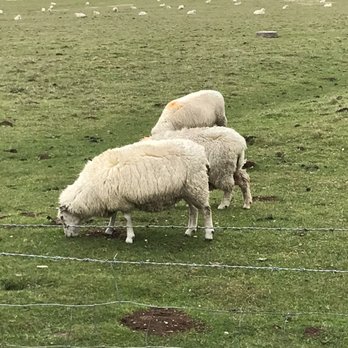
6/5 for the sheep The rocks were cool, too, ngl, but the sheep carried the entire experience read more



Another must see if you have the time and transportation. Quality/Quantity - Cool, not sure how else to describe it. Museum - If you like history and fun facts, you can spend a day reading here. I did not try, but they even have their own beer label in the gift shop, not sure if they actually brew it though. Free wine tasting - The wine was NOT good enough for me to buy any bottles. Small cafe, well organized, and with reasonable prices. Atmosphere - See pictures. Clean bathrooms. The tour bus bathrooms are much cleaner than the general public bathrooms. Events - See website. It would have been even cooler if we came on an event day. Also member events, see website. Service - Open every day except Christmas, see picture. Open from 9:30am to 5pm daily, closed Christmas day. Free shuttle after paying admission. We shuttled in and walked back since it was a beautiful day for a walk. Price - Huge line to pay, I recommend pre ordering your tickets. Our tickets came with our tour bus cost. Owner Comment - Cut and pasted from their website: "Stonehenge is the most famous prehistoric monument in the world. Begun over 5,000 years ago, archaeologists still debate theories of its use and meaning. English Heritage has campaigned to enhance the visitor experience with a brand new interactive Visitor's Centre and plans for a tunnel concealing the busy A303." read more


Wow, what more can you say about a world heritage site? It was interesting that they are still learning more about how it was built and the people who built it. The is an efficient bus system to take you from the parking or you can walk, and an interesting museum. read more


Stonehenge has been on my travel bucket list for quite some time now, and I've finally taken the plunge and booked a guided tour to witness its grandeur up close. I'm beyond excited to explore this ancient monument and unravel its mysteries. As I arrived at Stonehenge, I was relieved to find that the ticket area was swift and efficient, minimizing any delay and enabling me to quickly enter the museum area. Once inside, I was struck by the sheer volume of information available about this ancient wonder. The exhibits were meticulously curated, offering a rich and immersive experience that greatly enhanced my understanding and appreciation of Stonehenge. With my curiosity piqued, I then made my way towards the actual site area of Stonehenge. It's possible to walk up to Stonehenge from the visitor centre, but I jumped at the opportunity for the bus ride. A quick drive and you're there...! The site is impressively set up, with everything neatly roped up and a designated path around the outside that enables visitors to explore the area without any obstacles; it's fascinating to see how everything is so carefully arranged, creating an atmosphere of discovery and exploration. As I wandered around the site, I came across some intriguing photo challenge ideas that piqued my interest, and I paused a few times to give them a try, appreciating the chance to think creatively and experiment with different photography techniques. It was a really nice visit, and I'm extremely glad I decided to do it, as it allowed me to reconnect with some wonderful people and create new memories. read more


1 year ago

3 years ago
Stonehenge is truly one of the world's most famous and well known prehistoric monuments and a UNESCO World Heritage Site. When I first visited Stonehenge as a child, parking and access was unrestricted, but it is now regulated and the actual monument is roped off so you can no longer get too close. Nevertheless Stonehenge is amazing to see and definitely one of Britain's treasures. read more


C'mon now. This place is either sacred or a bunch of stones. Either a boring old sheep field way out in the rolling country side or one of the wonders of the world. This is a legendary place to visit, awe inspiring and impressive. Then again I haven't visited many thousand year old sacred oval rock formation sites to compare this to. C'mon, this is a must see. I'm Fortunate to have seen it myself. read more


Page 1 of 11
More info about Stonehenge
Stonehenge Reviews in Other Languages
Review Highlights - Stonehenge














Why does Yelp recommend reviews?
17 reviews that are not currently recommended
The reviews below are not factored into the business's overall star rating.

18 years ago

11 years ago

15 years ago

1 year ago

1 year ago

19 years ago

9 years ago

15 years ago

4 years ago

7 years ago
2 years ago

8 years ago

16 years ago
9 years ago

10 years ago

14 years ago

9 years ago


