
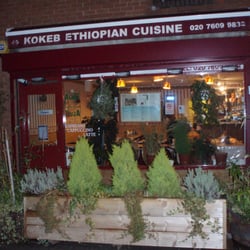
Andu Café Photos
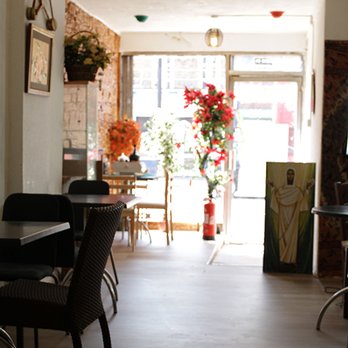
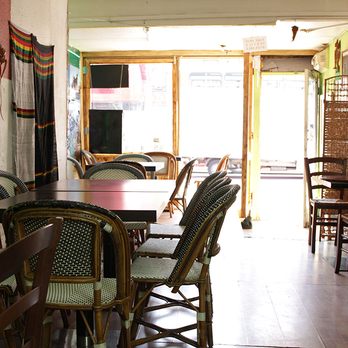


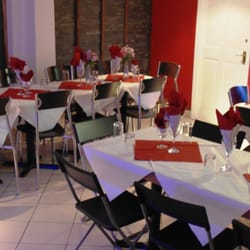
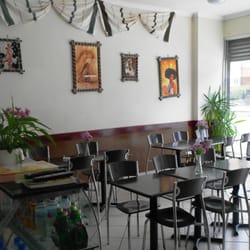
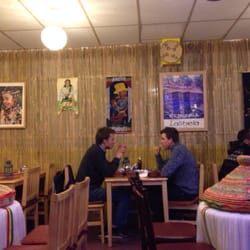
ANDU CAFÉ ATMOSPHERE
What's the vibe?
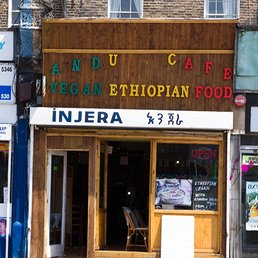
Recommended Reviews - Andu Café
Start your review...


Reviews With Photos


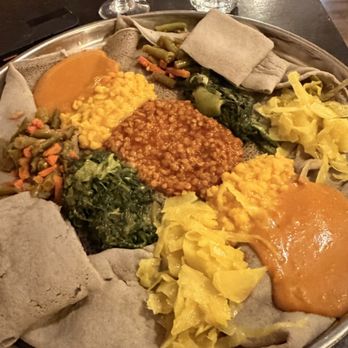
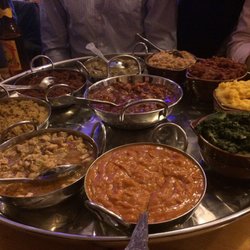
I am not a vegetarian and have no hopes of being a vegan but I came here and left telling myself, I shall definitely return. Even meatlovers like myself want a break from steak and other good grilled meat every now and then and Andu Cafe's a great place for that break. We had the sampler (we hadn't even ordered but the lovely lady telepathically knew that was what we wanted and she was right!) which allowed us to taste all six of the delicious veggie stews. If you're not too hungry, a sampler for two is all you need and just for 12 pounds. Healthy food with good taste and good price in a cozy no BS atmosphere - really check this place out! One of the neighbourhood hole in the wall type gems that you hope will stay for generations :)
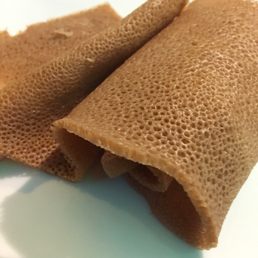

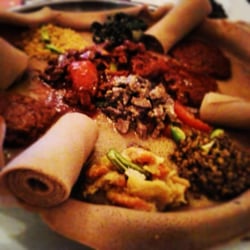
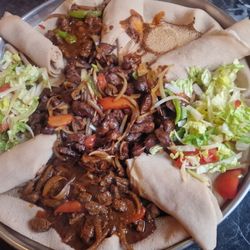
Ethiopia - a country familiar and yet foreign. On one hand, the name is certainly familiar and even famous, owing to the recent recognition of Ethiopia Yirgacheffe as one of the premier single origin coffee beans in the world; on the other hand, the name is infamous for the unfortunate (but not entirely unavoidable) famine in the 1980s. Yet, the country itself remains far and foreign since except for the occasional printed letters or glanced words, little attention is paid to its history, people or culture. From a distance of 10,000 km, Ethiopia lies beyond the horizon somewhere in the vast and mysterious land called Africa...and even there, not the exactly where on the map (Hint: It is land-locked). As too often is the case such ignorance, misconception and preconception - or outright prejudice - run rampant and cloud our perception of the nation consciously (unfortunate but amendable) and subconsciously (unfortunate and incurable). Hence, when someone thoughtlessly let it drop that "Oh, they don't eat vegetables...only on certain days, vegetables are available," one may be tempted to take such words as the truth. If that were true, then this "vegan Ethiopian food" boldly and broadly proclaimed by Andu Café in Dalston, could not possibly be authentic, could it? When it comes to food, never, ever take someone else's statement without a grain (ore more likely, a whole bottle of) salt, until one has tried, tested and, most importantly tasted, and further chewed through and chewed over, then finally it can be swallowed and digested. As it turned out, "no vegetables in Ethiopia" could not be further from the truth because Andu Café has proved this misguided statement to be delightfully and deliciously wrong. The vegetable platter is called "Yetsom Beyaynetu," and it follows one of the world's oldest vegan tradition as it is derived from the belief of the Orthodox Christianity in Ethiopia, which is, in fact, one of the most ancient and mystic Christian beliefs, existing long before it became the state religion in early 4th century. As is in the Coptic tradition, there are many fasting days where no animal product or byproduct may be consumed, which makes the food almost vegan (sometimes fish is permitted), and in the case of Ethiopia, the Ethiopian Orthodox Tewahedo Church mandates 250 days of fasting - for the monks and priests (now you can let out that breath) and 180 days for the lay people (or perhaps not so fast). Most notably, no food can be taken before noon on Wednesdays and Fridays and during the 40-days prior to Nativity; furthermore, the long-awaited meal must not contain any meat, fish, dairy or eggs. Fasting is prescribed, needlessly to say, so that the mind and body may be purified of the constant carnal (carnal - carne - meat) thoughts. Thus, came about the vegan fare in Ethiopia. Nonetheless, pure food does not mean poor or meagre because, as a matter of fact, the Ethiopian vegan fasting food is so full of flavors, colors, textures and pleasure that it is nothing but a fasting "feast" for the body and soul. Traditionally, Ethiopian food is served directly on a thin crepe called "injera" - which is made of fermented "teff" batter and cooked on a round pan. Injera is spongy with bubbles due to the fermentation, and, as if purposely designed, the air holes are perfectly suited to soak up the various vegetable sauces. If you have heard of injera, then you have most likely heard that the taste is sour, and you have heard it correct. Acidity develops in the process of fermenting the teff - making it more digestible - and produces an aromatic sourness, quite similar to a good and hearty German rye bread. Therefore, if you love the robust roggenbrot or pumpernickel, the signature sourness should pose no problem. Even those who would normally shy away from strong European bread should give it a try because the acidity complements the vegetables and beans so well that it becomes a part of the seasoning. If that is not convicting enough, then there is the trump card: teff is claimed to be one of those superfoods that is full of fiber, mineral and protein and, serendipitously, it is also gluten-free. In any case, Andu Café's injera is so fragrant and flavorful - sour, salty and savory - that it is as enjoyable by itself as it is with the multiple "side" dishes. "Side" dishes at Andu Café are served on the side, instead of on the injera directly as customarily done - which is in fact preferable as the injera does soak up the juice and becomes soggy and hence quite maddening to pick up with fingers (yes, you eat with your fingers). Regardless of whatever they are called or wherever they are served, the vegetables and legumes at Andu Café's medley of vegetable dishes definitely takes the center stage. "Fesolia" of green beans and carrots is wholesome and healthy. Adequately cooked and minimally seasoned, the texture and taste of the long beans and carrots shine on their own,


This is a very nice place to go and have a quick (and very cheap) lunch. It is all vegan and the menu is very narrow, making it very easy to choose. The typical bread they have is made with teff flour, and the texture resembles a crepe but way healthier! The flavours were amazing and the textures were wonderful. It is a great place to go for an informal and quick lunch. Be prepared because they do not accept deber or credit cards!


Very good food at a great price (I had the taster platter for £7) and a very friendly and genuine service.


I have never been to Ethiopia but this little cafe has a very authentic feel to it. I love Ethiopian food though and happy to have been to several Ethiopain restaurants over the years ... Andu Cafe is amongst the best and the fact that all dishes are not just vegetarian but vegan is an added bonus! I used to live in East London a very long time ago but now only visit once or twice a month. This part of London is changing dramatically and Kingsland Road isn't spared from gentrification. Andu Cafe feels as if it has been here forever and reminds me of the old days ... ironically it is relatively new but blends in well with the multicultural vibe. The food is simple and the menu even simpler. You are encouraged to share a sampler consisting of six delicious vegetable dishes. The only decision you have to make is whether you would like these served with rice or injera, the traditional Ethiopian bread. I think they are BYO which makes me love the place even more as you often end up spending more on booze than on the food it is accompanying. read more


11 days ago
Excellent Ethiopian food for a terrific value: £25 for a medium platter for 2 people. The medium size is huge indeed and I wish we had gotten a small size hah. Excellent flavours especially the yellow lentils, and the injera is perfectly spongy and sour. Food served almost immediately. My caveat is that the service is um.... Brusque to put it mildly. Very very busy. Unfortunately there wasn't hot tea available but plenty of tap water thankfully. read more

So, I think I must've had an off experience tonight at Andu Café. First of all, my partner and I went earlier when they opened & she told us to come back, because they were waiting on supplies to arrive. Sure, no problem! We decided to walk back over for dinner & we were directed on where to sit & asked what we wanted to order. So, we told her what we had in mind from earlier. She returned within a few minutes with our platter for 2 & told us drinks are self-service. We started to eat and the food was good. I don't really have any complaints there. To me, the spices are very similar tasting to soul food, but just a healthy version of what soul food is. More than halfway through our meal, we were told they're a cash only establishment. This sent us into a little panic, because we weren't informed of this information before being served food. All we had on us was tap to pay, so of course imagine the predicament we were in when uninformed. We definitely wouldn't have stayed to eat had we known this information. We ended up having to get back to where we are staying to grab a debit card to go to an ATM and return again. I think just the misinformation for us, not so friendly service, and having to run around town to go grab cash is what put this right down the middle for me. Yes, the food was good... but, the experience felt a bit tarnished for me. Don't let it deter you from going to enjoy this spot... just BRING CASH. Save yourself the trouble. read more

4 years ago

9 years ago
I am not a vegetarian and have no hopes of being a vegan but I came here and left telling myself, I shall definitely return. Even meatlovers like myself want a break from steak and other good grilled meat every now and then and Andu Cafe's a great place for that break. We had the sampler (we hadn't even ordered but the lovely lady telepathically knew that was what we wanted and she was right!) which allowed us to taste all six of the delicious veggie stews. If you're not too hungry, a sampler for two is all you need and just for 12 pounds. Healthy food with good taste and good price in a cozy no BS atmosphere - really check this place out! One of the neighbourhood hole in the wall type gems that you hope will stay for generations :) read more


3 years ago

9 years ago
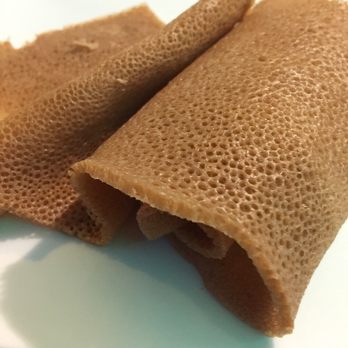
Ethiopia - a country familiar and yet foreign. On one hand, the name is certainly familiar and even famous, owing to the recent recognition of Ethiopia Yirgacheffe as one of the premier single origin coffee beans in the world; on the other hand, the name is infamous for the unfortunate (but not entirely unavoidable) famine in the 1980s. Yet, the country itself remains far and foreign since except for the occasional printed letters or glanced words, little attention is paid to its history, people or culture. From a distance of 10,000 km, Ethiopia lies beyond the horizon somewhere in the vast and mysterious land called Africa...and even there, not the exactly where on the map (Hint: It is land-locked). As too often is the case such ignorance, misconception and preconception - or outright prejudice - run rampant and cloud our perception of the nation consciously (unfortunate but amendable) and subconsciously (unfortunate and incurable). Hence, when someone thoughtlessly let it drop that "Oh, they don't eat vegetables...only on certain days, vegetables are available," one may be tempted to take such words as the truth. If that were true, then this "vegan Ethiopian food" boldly and broadly proclaimed by Andu Café in Dalston, could not possibly be authentic, could it? When it comes to food, never, ever take someone else's statement without a grain (ore more likely, a whole bottle of) salt, until one has tried, tested and, most importantly tasted, and further chewed through and chewed over, then finally it can be swallowed and digested. As it turned out, "no vegetables in Ethiopia" could not be further from the truth because Andu Café has proved this misguided statement to be delightfully and deliciously wrong. The vegetable platter is called "Yetsom Beyaynetu," and it follows one of the world's oldest vegan tradition as it is derived from the belief of the Orthodox Christianity in Ethiopia, which is, in fact, one of the most ancient and mystic Christian beliefs, existing long before it became the state religion in early 4th century. As is in the Coptic tradition, there are many fasting days where no animal product or byproduct may be consumed, which makes the food almost vegan (sometimes fish is permitted), and in the case of Ethiopia, the Ethiopian Orthodox Tewahedo Church mandates 250 days of fasting - for the monks and priests (now you can let out that breath) and 180 days for the lay people (or perhaps not so fast). Most notably, no food can be taken before noon on Wednesdays and Fridays and during the 40-days prior to Nativity; furthermore, the long-awaited meal must not contain any meat, fish, dairy or eggs. Fasting is prescribed, needlessly to say, so that the mind and body may be purified of the constant carnal (carnal - carne - meat) thoughts. Thus, came about the vegan fare in Ethiopia. Nonetheless, pure food does not mean poor or meagre because, as a matter of fact, the Ethiopian vegan fasting food is so full of flavors, colors, textures and pleasure that it is nothing but a fasting "feast" for the body and soul. Traditionally, Ethiopian food is served directly on a thin crepe called "injera" - which is made of fermented "teff" batter and cooked on a round pan. Injera is spongy with bubbles due to the fermentation, and, as if purposely designed, the air holes are perfectly suited to soak up the various vegetable sauces. If you have heard of injera, then you have most likely heard that the taste is sour, and you have heard it correct. Acidity develops in the process of fermenting the teff - making it more digestible - and produces an aromatic sourness, quite similar to a good and hearty German rye bread. Therefore, if you love the robust roggenbrot or pumpernickel, the signature sourness should pose no problem. Even those who would normally shy away from strong European bread should give it a try because the acidity complements the vegetables and beans so well that it becomes a part of the seasoning. If that is not convicting enough, then there is the trump card: teff is claimed to be one of those superfoods that is full of fiber, mineral and protein and, serendipitously, it is also gluten-free. In any case, Andu Café's injera is so fragrant and flavorful - sour, salty and savory - that it is as enjoyable by itself as it is with the multiple "side" dishes. "Side" dishes at Andu Café are served on the side, instead of on the injera directly as customarily done - which is in fact preferable as the injera does soak up the juice and becomes soggy and hence quite maddening to pick up with fingers (yes, you eat with your fingers). Regardless of whatever they are called or wherever they are served, the vegetables and legumes at Andu Café's medley of vegetable dishes definitely takes the center stage. "Fesolia" of green beans and carrots is wholesome and healthy. Adequately cooked and minimally seasoned, the texture and taste of the long beans and carrots shine on their own, read more


9 years ago
This is a very nice place to go and have a quick (and very cheap) lunch. It is all vegan and the menu is very narrow, making it very easy to choose. The typical bread they have is made with teff flour, and the texture resembles a crepe but way healthier! The flavours were amazing and the textures were wonderful. It is a great place to go for an informal and quick lunch. Be prepared because they do not accept deber or credit cards! read more


9 years ago
Very good food at a great price (I had the taster platter for £7) and a very friendly and genuine service. read more

10 years ago
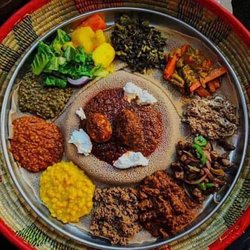
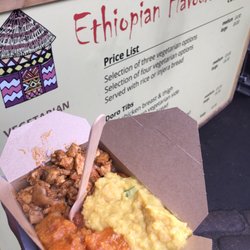
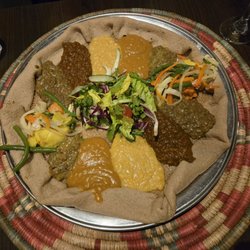
Cosy little homely kitchen just off the cool neighbourhood that is Dalston. My partner and I weren't intending to be here, we just ended up here after seeing the words "Vegan Ethiopian" from our bus window. The friendly waitress and chef sat us down where we wanted and it was a very casual affair. There was no real menu as it's just a matter of paying per head (£7) or for a sharing a platter. We obviously wanted that. For a mere £12 you get a tasting plate for two, which as it happens is more than substantial for a decent lunch. Admittedly I am quite ignorant about Ethiopian food, but it was all delicious and seemed healthy. We were given a generous portion of the traditionally fermented teff flour bread and a thali-like sharing platter. On this were two spiced lentil stews, quite similar to dahl, a couple of sautéed vegetables and a creamy sauce. I don't know what was in most of the food we ate, but it was good. I would return. No choice in the menu but the food on offer is obviously made with love. read more

7 years ago

10 years ago
More info about Andu Café
Review Highlights - Andu Café

















Why does Yelp recommend reviews?
1 review that is not currently recommended
The reviews below are not factored into the business's overall star rating.

9 years ago


