AMF Lancaster Lanes in Depew is a nearly perfect case study in corporate enshittification: the slow…read moreprocess by which a perfectly understandable neighborhood institution gets standardized, "reimagined," aggressively monetized, and transformed into a more expensive, less satisfying imitation of itself.
First, the geography. It is called Lancaster Lanes, but it is in Depew, which is partly in Lancaster and partly in Cheektowaga, along that Transit Road continuum where municipal boundaries become theoretical and every location is described relative to a Tops, Tim Hortons, former Kmart, or restaurant that used to be something else. This is Western New York. We understand it. A national corporation never will.
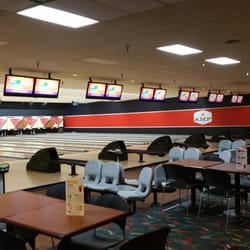
A bowling alley should be one of civilization's simplest institutions. You enter. There are lanes. You rent shoes. You bowl badly. You order beer and wings. One person who claims not to have bowled in fifteen years inexplicably scores 180. A child wanders into your approach. An elderly league bowler silently judges your technique. The model has worked for decades. It requires no disruption.
But corporate America cannot encounter a functioning institution without asking how it might be made shittier through innovation.
Someone looked at this bowling alley and did not see a community gathering place. He saw an "under-monetized location-based entertainment asset." He saw customers occupying space without being adequately extracted from. He saw people sharing one pitcher of beer and realized shareholder value was being destroyed.
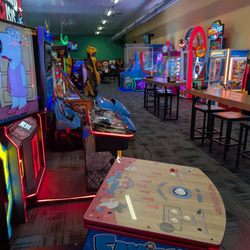
Thus, bowling becomes an "experience." The snack bar becomes "lane-side dining." Turning off the lights and activating ultraviolet fixtures becomes a premium event. A birthday becomes a tiered entertainment package. The website speaks like a Las Vegas nightclub, even though the destination is a cinder-block building in Depew surrounded by six months of accumulated parking-lot salt.
Corporate enshittification always follows the same formula: cut staffing until one employee is doing four jobs, raise prices to fund none of those jobs, impose centralized systems that make simple decisions impossible, and use cheerful branding to suggest that deterioration is modernization. The employee working the desk, snack bar, birthday party, and lane malfunction simultaneously is not the problem. That employee is a hostage.
You can end up trying to accomplish the ancient task of paying money to bowl while feeling like you are negotiating a telecommunications contract. How many people? How long? Shoes included? Did you reserve online? Is this a peak period? Would you like a package? Would you like to create an account? Would you like to receive promotional emails?
No. I want to throw a fourteen-pound ball at ten pins.
I do not want to establish a relationship with the bowling alley. I do not want an app, personalized offers, or an email tomorrow saying, "You left three pins standing, but your next visit could be a strike!" I want the anonymity once inherent in low-stakes public recreation.
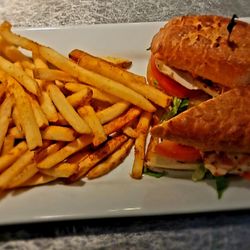
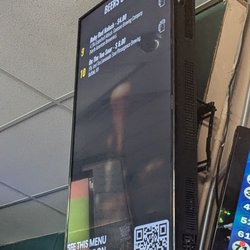
The food follows the same pattern. Bowling food should be gloriously unambitious: hot, salty, structurally stable, and edible with one hand between frames. Pizza, wings, fries, burgers, chicken fingers. Nobody needs a chef's vision. Nobody needs a drizzle. The snack bar should sell a cheeseburger called "Cheeseburger," not a "signature lane-side dining experience" assembled from the same ingredients but priced like it attended graduate school.
This is Western New York. We know bar food. You cannot put twelve damp nachos in a miniature metal basket, add three adjectives to the menu description, and expect us to be dazzled.
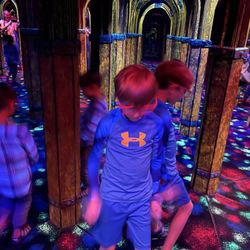
Then there is the lighting. Corporate entertainment executives apparently decided that visible carpeting and recognizable human faces are incompatible with fun. Therefore, everything must glow blue and purple while music videos flash above the pins at a volume that prevents conversation. Regular bowling is insufficiently monetizable, so they turn off the lights, activate fixtures purchased during the Black Eyed Peas era, call it "cosmic," and charge more for the same lane.
Nothing says premium entertainment like being unable to see the finger holes in the ball.
The saddest part is that a real neighborhood bowling alley remains trapped underneath all the corporate lacquer. League bowlers still arrive with bags resembling sensitive medical equipment. Families still bring children. Friends still insult each other's form. People still celebrate accidental strikes with wildly disproportionate enthusiasm. The community keeps trying to use the place as a community bowling alley while the corporation tries to convert it into a monetized entertainment ecosystem.