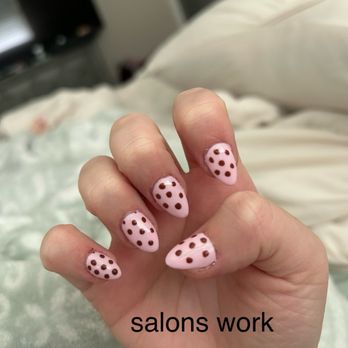
Over three years of service, I noticed a significant decline in both her customer service and…read moreattention to detail. Appointments became increasingly mechanical, the quality of her work became inconsistent, and the personalized service I once appreciated gradually disappeared.
One recurring issue involved Tiffany's insistence that I switch from my preferred gel manicure process to builder gel. I repeatedly explained that I have small hands and nail beds, and builder gel creates an overly thick appearance that I find unflattering, particularly as my nails grow out. I was intentionally moving away from heavier applications.
Despite clearly communicating my preferences, Tiffany continued advocating for builder gel, emphasizing that my existing manicure process required additional steps and took more time. While I respect a professional's expertise and recommendations, there is a fundamental difference between offering guidance and repeatedly pressuring a customer to purchase a service they have explicitly declined.
Following these conversations, I noticed a distinct change in her demeanor. She became less personable, her work felt increasingly rushed and routine.
Another concern was Tiffany's repeated criticism of the salon owner during appointments. On several occasions, she described him as unwilling to spend money on employees or replenish necessary supplies. During one appointment, she explained that a particular gel-removal product was unavailable because the owner was too cheap to purchase more. She even provided the product name, which I subsequently ordered myself through Amazon.
Regardless of any legitimate workplace frustrations, discussing internal management grievances with customers is unprofessional. Clients visit a salon expecting a relaxing experience, not to be placed in the middle of employee-management dissatisfaction.
The most disappointing experience occurred during my final appointment in late September 2026.
I requested a specific combination of gel polish colors that Tiffany had previously applied successfully: two coats of one shade followed by a final coat of another to achieve a creamy white finish. This time, the application order was reversed, producing a noticeably pink result rather than the creamy white I expected.
When I brought this to her attention, she insisted that she had followed my instructions and continued working on another client's nails without meaningfully addressing my concern.
I explained that I was leaving the country in three days for a three-week trip and asked whether the manicure could be corrected. Her response was that I would need to pay an additional charge. She also stated that mistakes happen because she is only human, that she had no availability, and that someone else would need to correct it.
Unfortunately, no alternative technician or practical solution was offered. I stood there checking the salon's online appointment schedule, only to find that the upcoming days were fully booked. After three years of consistent patronage, I was left to resolve the situation entirely on my own.
What disappointed me most was not the polish color itself. Mistakes happen in every service business. What distinguishes a quality establishment is how those mistakes are acknowledged, addressed, and resolved. In this instance, I experienced little accountability, flexibility, or effort toward customer satisfaction.
Upon returning from my trip, I considered finding another salon but decided to give Tiffany one final opportunity. I scheduled another appointment, only to receive a telephone call from the salon owner informing me that Tiffany would no longer provide my services because we were considered "not compatible."
After three years of loyalty, that was an especially disappointing conclusion to what had once been a positive business relationship.
From a customer service standpoint, this experience reflects a fundamental disconnect between technical expertise and professional service. A customer's preferences should be respected, constructive feedback should be welcomed, and service concerns should be handled with courtesy and a genuine effort toward resolution.
I have always believed that long-term customer relationships are earned through consistency, professionalism, and mutual respect. A customer should not feel pressured to accept a service they do not want, nor should expressing reasonable preferences result in a deteriorating relationship.
Ultimately, I view this as an opportunity to find a salon that better aligns with my expectations. I have already identified numerous highly rated alternatives in the area, many with 4.9- and 5-star reviews.
It is unfortunate that a three-year customer relationship ended this way. My hope is that this feedback serves as a reminder that customer retention depends not only on the quality of the work performed, but equally on the quality of the experience and the respect shown to the customer.