Simpson Park Photos


You might also consider


More like Simpson Park
Recommended Reviews - Simpson Park
Start your review...


Reviews With Photos


We happened to stumble upon this park while we were exploring and I'm so glad we did. It actually felt like a fantasy. Walking through there's so many different plants and the paths are made so nicely. There's a pond you can walk to filled with very large koi fish. A gentleman was sitting there playing violin. A beautiful park and very enchanting. Loved it


This park is cute for a walk with your dog. Easy parking and bathroom access. For elderly i wouldnt recommend because there are a lot of trip hazards. My younger kids enjoyed the koi fish, but were more interested in the underline park next door


Amazing park hidden right downtown brickell. The main entrance is closed but the side gate is still open on most days. Very worth the visit and the quick trip to the koi pond. Please watch your step for the little lizards!!


This park is in the middle of Brickell and it serves as a great place for quick stop and recharge. It is small, yet it has enough pleasant paths that can take your mind on a nice drift away from worries. I recommend it,


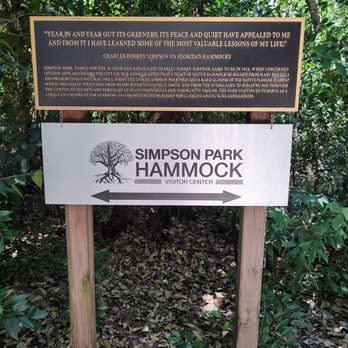
Wow who would have thought this gem of an old park would be adjacent to the loud Hussle and bustle and sleekness of all the high rises right in the heart of Brickell! But here it is. A super cool spot to chill out, meditate, get away from it all, have a walk, get some shade, and they even have koi fish in a pond there to boot. The trail is 0.60 miles in total. Here is some information regarding this slice of calm. Simpson Park is a natural preserve that encompasses over eight acres of tropical hardwood hammock in the center of Miami's urban core, one of the last remnants of the famous Brickell Hammock. The park's unique subtropical flora exemplifies the history and culture of Miami's diverse community. The creation and preservation of Simpson Park Hammock represents the Miami community's trend toward - and commitment to - environmental conservation, restoration, and exhibition of South Florida's flora and fauna for the purpose of public education and public benefit. The park area is also known to have been settled by Native Americans, including the Tequesta people. The majority of the park is comprised of native trees and undergrowth, with over 162 plant species in Simpson Park. Of these, at least 96 are native species, such as Red Stopper, Spicewood, Live Oak, Strangler Fig, Jamaica Dogwood, Gumbo Limbo, False-Mastic, and Lignum Vitae. There are 15 endangered species and 9 threatened species in the park, including Wild Cinnamon, Coffee Colubrina, Yellow Boxwood, Silver Palm, Strongbark, Eugenia confusa, and Gulf licaria.
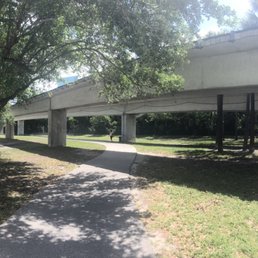

Beautiful park and green right by brickell so great easy access for people living in the city. The trail going to key biscayne passes by it too


This was a happy find. I was exploring the area and found this lovely nature oasis in the middle of the high rises of Miami. It is one a few fragments left of the Brickell Hammock which once extended from the Miami River to Coconut Grove. The other two pieces of this land can be found at Alice Wainwright Park and Barnacle Historic State Park. From 1914-1931 this area was known as Jungle Park. Mary Brickell sold 4.4 acres to the Miami City Council in 1914 for use as a park. From 1931 to the present it has been known as Simpson Park and it is currently owned by the City of Miami. Charles Torrey Simpson was one of Florida's first conservationists. In 1902 he retired to Lemon City now known as Little Haiti and wrote four books on Florida's nature. In 1926 Jungle park was damaged by the Great Hurricane of 1926. Working with Dr. Karl Dahlberg and the Miami Garden Clubs Simpson he was able to restore the hammock to the way it was when the settlers first came to Florida. He was even able to remove the exotic species which had been introduced. To recognize his efforts the city renamed Jungle Park Simpson park in his honor in 1931. In the 1930's the Miami Garden Club constructed a garden center and were able to acquire 3 more acres bringing the park to it's current size of 7.8 acres. Vandals have been a problem for the park since it's creation and a wall was reinforced in the 1990's to prevent trespassing. Through the years the park has been threatened many times. In the early 1950's it was proposed to develop half of the park into a history museum but Rose Kennedy and Marjorie Stoneman Douglas spoke up and were able to prevent it. In 1960 it was considered to have I-95 cut through the park. In the end it was decided to move the highway west. In the 1970's it was again threatened by the construction of the elevated monorail system and later by the construction of voltage lines for FPL. The urban city is always trying to encroach on this last piece of unspoiled land and somehow it has managed to survive. You enter the park through the Charles Torrey Simpson Memorial Garden Center which was constructed in 1941 out of native oolitic limestone. You need to sign in before you take your garden tour but there is no admission charge. Inside the building I was greeted by a lady who told me the history of the park and was available to answer questions. The park is a tropical hammock is a dense forest that grows on higher elevation. In this case it is on top of the Atlantic Ridge. This ecosystem is only found in South Florida and the Keys. Since the land is higher it does not flood and has a lot of bio diversity. The air is moist and the tall trees shade the ferns growing below. There are 162 species of plants growing in Simpson park including 15 endangered species which include Wild Cinnamon, Yellow Boxwood, Coffee Columbia, and Silver Palm. The garden path is natural soil and you have to be aware of where you are stepping so you don't trip on the uneven ground or tree roots. I loved how I felt a world away from the bustle of the city but when rounding a corner I could sometimes see a glimpse of the high rises towering above the trees. There is a two tiered pond in the northwest corner of the park. It was filled with fish and three turtles. The fish and turtles followed me as I moved around the pond. They must have thought I came to give them their dinner. This park is a testament to the hard work of many people who were committed to leaving at least a small part of Florida left in it's natural state.


Spent some time on Sunday morning checking out the trails in Simpson Park. Quality Simpson Park is a relatively small tropical hammock oasis that sits near the much more urban Brickell area. The park is one of the few small remnants of what this area of Florida used to look like. Full of different plants and trees native to the region, as well as a few birds and spiders, it gives a glimpse into the past. Quantity The park is relatively small, spanning about two blocks in length and one block in width. It took us about thirty minutes to walk along all the trails and read each legible sign. It is fine for a quick and quiet stroll and a nice escape from the more urban surroundings. Value The park is free to visit and if you get a parking spot near the main entrance, also free to park at. The simple fact is if they charged the simple park would not likely get many visitors. Ambiance Simpson Park is located in Brickell, right at the point the city turns into the more residential The Roads. The park is not particularly big, but has several trails that twist and turn between the trees and plants native to the area. The park is about as close to a forest as I have seen in Miami. Within this small park you can find several endangered species of plants, and the park has small signs providing some information about them. Towards the back corner of the park there is also a small pond full of fish and turtles. It is a simple park and one that has more fallen trees than living ones. The park has two entrances, the main one that goes through a wooden shed, and a side gate that has only recently opened to the public. And while no doubt beautiful and important as a preservation of the past, it is a relatively monotonous park that I did not particularly love. Crowd We only ran into two other people while walking through the park. One individual had set up on a bench and was reading a book in a shaded area of the preserve. I assume the other person worked at the park as he was going off the trail and making marks on different trees, however he did not have on a uniform or identifying marks. Service It appeared like there were several park employees inside the wooden structure at the official entrance. However, we used the new side gate, so I did not encounter anyone in uniform. Parking The park is within walking distance of my home, so we visited on foot. However, there are several spots by the main entrance and street spots near the side gate. Extra Simpson Park is a small park that has protected a piece of the past in the constantly urbanizing Miami area. And while it is very important work, it is not necessarily a place requiring a visit.


You wouldn't expect to find a nature preserve-ish park in the middle of Brickell but fortunately for all of us one such park exists and has been around for decades. Simpson Park is in the appro named Simpson Park neighborhood adjacent to Brickell. In 1913 a group set aside some area to be used as a park but after the 1926 hurricane Jungle Park was officially created and took on the title of Simpson Park in 1927 (renamed after Charles Torrey Simpson, its founder) Simpson Park is mostly indigenous growth it was once a part of the Brickell Hammock which ran from the Miami River all the way to the Grove. The park is home to some endangered and threatened plant species. Simpson is also home to a slice of old Miami. A walk threw this leafy sanctuary seems to transport you away from the usual day-to-day grind. Yes, you might here some noise from nearby I95 and catch a glimpse of a high-rise but really the surrounding flora and fauna will keep you focused on the path ahead. When I stopped by I was in dire need of a head-clearing walk. I'd always wondered about this place and not finding too much information online I decided to check it out for myself. If you're going to come visit, remember it is on the small side, there are a few benches here and there, this is an ideal conversation spot, maybe not so much picnic worthy though. I stayed on the trail, I'm sure you can go off the path if your heart desires. What struck me most while I was walking around was how little we've preserved in Miami and how grateful I am that Simpson Park was saved as many times as it was. Next time you're in the Brickell area and need to a quiet place to think spend some solitary time at Simpson Park. Sometimes a girl just needs a walk not a talk.


Simpson Park is a small park near the Roads neighborhood of Brickell. It is named after the author and naturalist Charles Torrey Simpson and has been in existence since 1916. It came about as a result of some concerned citizens wanting to preserve a tract of native hammock as a natural area. The land was purchased from Mary Brickell (the woman after which Mary Brickell village is named, and whose surname occupies one of the major financial districts in South Florida). It was then preserved to offer us a glimpse of a native habitat. Measuring 8.5 acres at the time, it is now 7.8 acres and fosters an environment for learning and for future generations to preserve. It was once a part of the largest and most diverse coastal hammocks, known as Brickell Hammock. Extending from Biscayne Bay down to Coconut Grove, Simpson Park occupies a part of history as this is one of the few fragments remaining of the Brickell Hammock. Rare and native plant species can be found, and it is known as a "Natural Forest Community." Tucked within a residential neighborhood, it is easy to miss. It is catty-corner with the roundabout and perhaps it was due to the hobo convention gathered outside by the back gate that I almost missed the park. As you park, you enter a wooden shed-like structure, which leads to the paths of the park. Once you enter this little house-like structure, you will be asked to sign in. I am not sure what the purpose is behind this, but they want names, addresses, phone numbers, and email addresses of all who enter. Once you have signed in, a man waves you through to an automatic glass sliding door. The door leads you down some steps and into the beginning of the path. If you look down on the ground, you will notice the path is made of crushed sun-bleached shells. You will easily feel like Alice in Wonderland after eating the mushroom that makes her small, as the trees tower overhead. You will feel like you're in the wilderness, with trees growing wildly, roots sometimes overtaking the walking path. As you walk, you will notice some historically-significant sights. For example, you will find a sign that indicates that the tree trunks on the ground were from a hurricane over 40 years ago, and have been left there to decompose. There is also a fallen oak, estimated to be 150 years old when it fell. As it decays, it will fertilize the soil. There are plenty of oddly twisting trees and branches, providing canopies. After a few minutes of walking, you'll see Captain Snook's pond, parts of which are carpeted by algae growing on the surface, giving the illusion of green moss. Benches and tables surround it, but before kicking your shoes off to take it in, beware of the mosquitoes, which are always in stagnant water. Most of the trees are labeled, so you can learn their names and read more about them, and some parts of the path have a self-guided tour which will explain some of the things in front of you if you press the buttons. Walking further, you will come upon some oddly placed wooden sculpture (?). I am not sure of the purpose of it, perhaps it was meant to be some interesting back entrance at one point. As you approach, you will hear brawling perhaps, as I did. These were the hobos I mentioned earlier. Since visiting the park is free, I can only assume that at one time, this was an entrance for people, but because of the homeless, loitering and littering, they have now fenced it and require sign-in at the front. Cameras are also placed around the park. Had it not been for the brawling people, it would have been very quiet, save for the occasional chirping bird and the sound of squirrels gnawing on tree bark. Although you can stray from the path, as I did a few times, because of severe overgrowth, getting around can be a challenge, and you can't go too far anyway, as it is a small park. Because of its small size, the paths that leave you wanting to see more, and the lack of wildlife, I deducted a couple of stars.


A nice shady park in the heart of downtown should get four stars just for existing! This park is very pretty with completely shaded, cool trails throughout. Enter off of 17th just a few blocks from brickle and all of the skyscrapers. A real jewel for the neighborhood that surrounds it.


This is a tranquil, well kept park on the edge of the bustling Brickell. Its 8 acres contain a tiny pond, a main trail and a garden house that is rented out for parties. The last time I visited I may have parked in the wrong location because my friends and I had to trespass through a birthday party in the garden house to get into the park. We felt a bit self conscious traipsing through the middle of a private birthday party, right by the buffet and the fancy pants guests. (I apologize for my friend who snagged a croquetta.). The park is named after a Conchologist and malacologist who studied bivalves. He worked for the Smithsonian and died in Lemon City, Fl in 1932. The park is cool because it is within 5 minutes of a hundred traffic jams but remains the same as 100 yes ago. It's small and there aren't any activities or views. But stop by if you are in the 'hood.


This little park is a soothing oasis on the middle of the glass and glam that is Brickell. We had a lovely walk in November and we stopped by the building where they hold events. We met someone who worked there who pointed out to us that because of all the construction on several sides of the little park, they have temporarily lost their parking. We had walked from our hotel so that wasn't an issue for us. It's a great little chance to immerse to yourself in nature in the middle of the city! read more


4 months ago


We happened to stumble upon this park while we were exploring and I'm so glad we did. It actually felt like a fantasy. Walking through there's so many different plants and the paths are made so nicely. There's a pond you can walk to filled with very large koi fish. A gentleman was sitting there playing violin. A beautiful park and very enchanting. Loved it read more


2 years ago
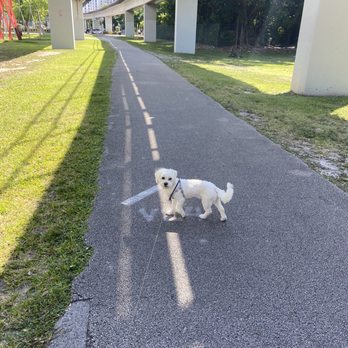
This park is cute for a walk with your dog. Easy parking and bathroom access. For elderly i wouldnt recommend because there are a lot of trip hazards. My younger kids enjoyed the koi fish, but were more interested in the underline park next door read more


2 years ago
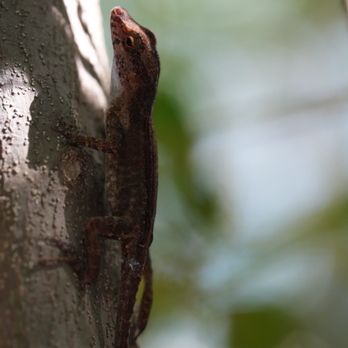
Amazing park hidden right downtown brickell. The main entrance is closed but the side gate is still open on most days. Very worth the visit and the quick trip to the koi pond. Please watch your step for the little lizards!! read more




This park is in the middle of Brickell and it serves as a great place for quick stop and recharge. It is small, yet it has enough pleasant paths that can take your mind on a nice drift away from worries. I recommend it, read more


Wow who would have thought this gem of an old park would be adjacent to the loud Hussle and bustle and sleekness of all the high rises right in the heart of Brickell! But here it is. A super cool spot to chill out, meditate, get away from it all, have a walk, get some shade, and they even have koi fish in a pond there to boot. The trail is 0.60 miles in total. Here is some information regarding this slice of calm. Simpson Park is a natural preserve that encompasses over eight acres of tropical hardwood hammock in the center of Miami's urban core, one of the last remnants of the famous Brickell Hammock. The park's unique subtropical flora exemplifies the history and culture of Miami's diverse community. The creation and preservation of Simpson Park Hammock represents the Miami community's trend toward - and commitment to - environmental conservation, restoration, and exhibition of South Florida's flora and fauna for the purpose of public education and public benefit. The park area is also known to have been settled by Native Americans, including the Tequesta people. The majority of the park is comprised of native trees and undergrowth, with over 162 plant species in Simpson Park. Of these, at least 96 are native species, such as Red Stopper, Spicewood, Live Oak, Strangler Fig, Jamaica Dogwood, Gumbo Limbo, False-Mastic, and Lignum Vitae. There are 15 endangered species and 9 threatened species in the park, including Wild Cinnamon, Coffee Colubrina, Yellow Boxwood, Silver Palm, Strongbark, Eugenia confusa, and Gulf licaria. read more


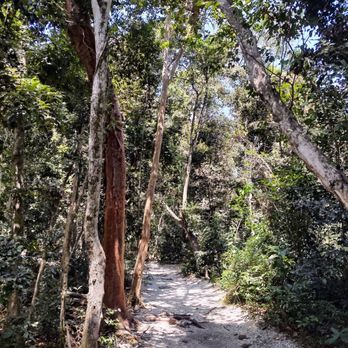


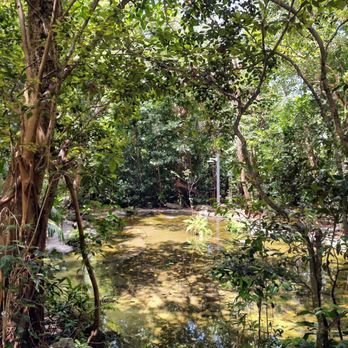

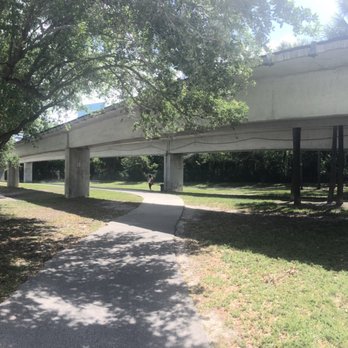
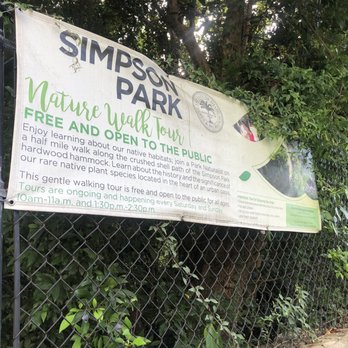
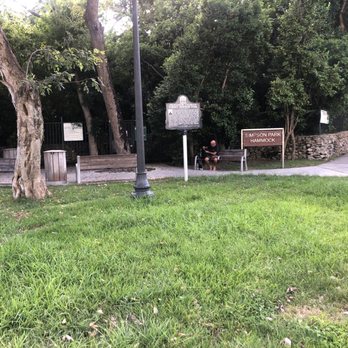


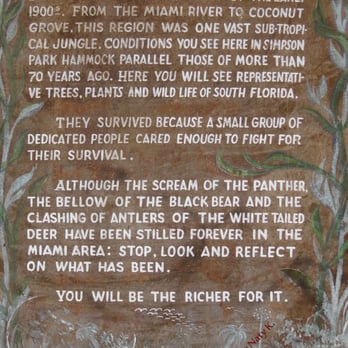
This was a happy find. I was exploring the area and found this lovely nature oasis in the middle of the high rises of Miami. It is one a few fragments left of the Brickell Hammock which once extended from the Miami River to Coconut Grove. The other two pieces of this land can be found at Alice Wainwright Park and Barnacle Historic State Park. From 1914-1931 this area was known as Jungle Park. Mary Brickell sold 4.4 acres to the Miami City Council in 1914 for use as a park. From 1931 to the present it has been known as Simpson Park and it is currently owned by the City of Miami. Charles Torrey Simpson was one of Florida's first conservationists. In 1902 he retired to Lemon City now known as Little Haiti and wrote four books on Florida's nature. In 1926 Jungle park was damaged by the Great Hurricane of 1926. Working with Dr. Karl Dahlberg and the Miami Garden Clubs Simpson he was able to restore the hammock to the way it was when the settlers first came to Florida. He was even able to remove the exotic species which had been introduced. To recognize his efforts the city renamed Jungle Park Simpson park in his honor in 1931. In the 1930's the Miami Garden Club constructed a garden center and were able to acquire 3 more acres bringing the park to it's current size of 7.8 acres. Vandals have been a problem for the park since it's creation and a wall was reinforced in the 1990's to prevent trespassing. Through the years the park has been threatened many times. In the early 1950's it was proposed to develop half of the park into a history museum but Rose Kennedy and Marjorie Stoneman Douglas spoke up and were able to prevent it. In 1960 it was considered to have I-95 cut through the park. In the end it was decided to move the highway west. In the 1970's it was again threatened by the construction of the elevated monorail system and later by the construction of voltage lines for FPL. The urban city is always trying to encroach on this last piece of unspoiled land and somehow it has managed to survive. You enter the park through the Charles Torrey Simpson Memorial Garden Center which was constructed in 1941 out of native oolitic limestone. You need to sign in before you take your garden tour but there is no admission charge. Inside the building I was greeted by a lady who told me the history of the park and was available to answer questions. The park is a tropical hammock is a dense forest that grows on higher elevation. In this case it is on top of the Atlantic Ridge. This ecosystem is only found in South Florida and the Keys. Since the land is higher it does not flood and has a lot of bio diversity. The air is moist and the tall trees shade the ferns growing below. There are 162 species of plants growing in Simpson park including 15 endangered species which include Wild Cinnamon, Yellow Boxwood, Coffee Columbia, and Silver Palm. The garden path is natural soil and you have to be aware of where you are stepping so you don't trip on the uneven ground or tree roots. I loved how I felt a world away from the bustle of the city but when rounding a corner I could sometimes see a glimpse of the high rises towering above the trees. There is a two tiered pond in the northwest corner of the park. It was filled with fish and three turtles. The fish and turtles followed me as I moved around the pond. They must have thought I came to give them their dinner. This park is a testament to the hard work of many people who were committed to leaving at least a small part of Florida left in it's natural state. read more


Spent some time on Sunday morning checking out the trails in Simpson Park. Quality Simpson Park is a relatively small tropical hammock oasis that sits near the much more urban Brickell area. The park is one of the few small remnants of what this area of Florida used to look like. Full of different plants and trees native to the region, as well as a few birds and spiders, it gives a glimpse into the past. Quantity The park is relatively small, spanning about two blocks in length and one block in width. It took us about thirty minutes to walk along all the trails and read each legible sign. It is fine for a quick and quiet stroll and a nice escape from the more urban surroundings. Value The park is free to visit and if you get a parking spot near the main entrance, also free to park at. The simple fact is if they charged the simple park would not likely get many visitors. Ambiance Simpson Park is located in Brickell, right at the point the city turns into the more residential The Roads. The park is not particularly big, but has several trails that twist and turn between the trees and plants native to the area. The park is about as close to a forest as I have seen in Miami. Within this small park you can find several endangered species of plants, and the park has small signs providing some information about them. Towards the back corner of the park there is also a small pond full of fish and turtles. It is a simple park and one that has more fallen trees than living ones. The park has two entrances, the main one that goes through a wooden shed, and a side gate that has only recently opened to the public. And while no doubt beautiful and important as a preservation of the past, it is a relatively monotonous park that I did not particularly love. Crowd We only ran into two other people while walking through the park. One individual had set up on a bench and was reading a book in a shaded area of the preserve. I assume the other person worked at the park as he was going off the trail and making marks on different trees, however he did not have on a uniform or identifying marks. Service It appeared like there were several park employees inside the wooden structure at the official entrance. However, we used the new side gate, so I did not encounter anyone in uniform. Parking The park is within walking distance of my home, so we visited on foot. However, there are several spots by the main entrance and street spots near the side gate. Extra Simpson Park is a small park that has protected a piece of the past in the constantly urbanizing Miami area. And while it is very important work, it is not necessarily a place requiring a visit. read more


You wouldn't expect to find a nature preserve-ish park in the middle of Brickell but fortunately for all of us one such park exists and has been around for decades. Simpson Park is in the appro named Simpson Park neighborhood adjacent to Brickell. In 1913 a group set aside some area to be used as a park but after the 1926 hurricane Jungle Park was officially created and took on the title of Simpson Park in 1927 (renamed after Charles Torrey Simpson, its founder) Simpson Park is mostly indigenous growth it was once a part of the Brickell Hammock which ran from the Miami River all the way to the Grove. The park is home to some endangered and threatened plant species. Simpson is also home to a slice of old Miami. A walk threw this leafy sanctuary seems to transport you away from the usual day-to-day grind. Yes, you might here some noise from nearby I95 and catch a glimpse of a high-rise but really the surrounding flora and fauna will keep you focused on the path ahead. When I stopped by I was in dire need of a head-clearing walk. I'd always wondered about this place and not finding too much information online I decided to check it out for myself. If you're going to come visit, remember it is on the small side, there are a few benches here and there, this is an ideal conversation spot, maybe not so much picnic worthy though. I stayed on the trail, I'm sure you can go off the path if your heart desires. What struck me most while I was walking around was how little we've preserved in Miami and how grateful I am that Simpson Park was saved as many times as it was. Next time you're in the Brickell area and need to a quiet place to think spend some solitary time at Simpson Park. Sometimes a girl just needs a walk not a talk. read more


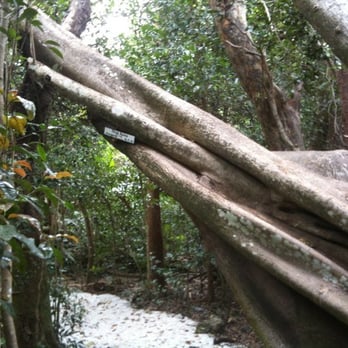


Simpson Park is a small park near the Roads neighborhood of Brickell. It is named after the author and naturalist Charles Torrey Simpson and has been in existence since 1916. It came about as a result of some concerned citizens wanting to preserve a tract of native hammock as a natural area. The land was purchased from Mary Brickell (the woman after which Mary Brickell village is named, and whose surname occupies one of the major financial districts in South Florida). It was then preserved to offer us a glimpse of a native habitat. Measuring 8.5 acres at the time, it is now 7.8 acres and fosters an environment for learning and for future generations to preserve. It was once a part of the largest and most diverse coastal hammocks, known as Brickell Hammock. Extending from Biscayne Bay down to Coconut Grove, Simpson Park occupies a part of history as this is one of the few fragments remaining of the Brickell Hammock. Rare and native plant species can be found, and it is known as a "Natural Forest Community." Tucked within a residential neighborhood, it is easy to miss. It is catty-corner with the roundabout and perhaps it was due to the hobo convention gathered outside by the back gate that I almost missed the park. As you park, you enter a wooden shed-like structure, which leads to the paths of the park. Once you enter this little house-like structure, you will be asked to sign in. I am not sure what the purpose is behind this, but they want names, addresses, phone numbers, and email addresses of all who enter. Once you have signed in, a man waves you through to an automatic glass sliding door. The door leads you down some steps and into the beginning of the path. If you look down on the ground, you will notice the path is made of crushed sun-bleached shells. You will easily feel like Alice in Wonderland after eating the mushroom that makes her small, as the trees tower overhead. You will feel like you're in the wilderness, with trees growing wildly, roots sometimes overtaking the walking path. As you walk, you will notice some historically-significant sights. For example, you will find a sign that indicates that the tree trunks on the ground were from a hurricane over 40 years ago, and have been left there to decompose. There is also a fallen oak, estimated to be 150 years old when it fell. As it decays, it will fertilize the soil. There are plenty of oddly twisting trees and branches, providing canopies. After a few minutes of walking, you'll see Captain Snook's pond, parts of which are carpeted by algae growing on the surface, giving the illusion of green moss. Benches and tables surround it, but before kicking your shoes off to take it in, beware of the mosquitoes, which are always in stagnant water. Most of the trees are labeled, so you can learn their names and read more about them, and some parts of the path have a self-guided tour which will explain some of the things in front of you if you press the buttons. Walking further, you will come upon some oddly placed wooden sculpture (?). I am not sure of the purpose of it, perhaps it was meant to be some interesting back entrance at one point. As you approach, you will hear brawling perhaps, as I did. These were the hobos I mentioned earlier. Since visiting the park is free, I can only assume that at one time, this was an entrance for people, but because of the homeless, loitering and littering, they have now fenced it and require sign-in at the front. Cameras are also placed around the park. Had it not been for the brawling people, it would have been very quiet, save for the occasional chirping bird and the sound of squirrels gnawing on tree bark. Although you can stray from the path, as I did a few times, because of severe overgrowth, getting around can be a challenge, and you can't go too far anyway, as it is a small park. Because of its small size, the paths that leave you wanting to see more, and the lack of wildlife, I deducted a couple of stars. read more



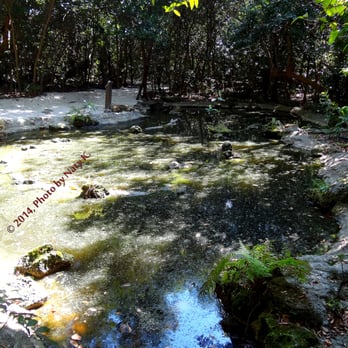
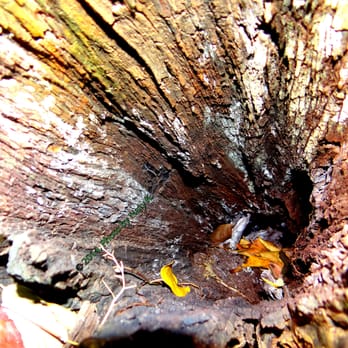


A nice shady park in the heart of downtown should get four stars just for existing! This park is very pretty with completely shaded, cool trails throughout. Enter off of 17th just a few blocks from brickle and all of the skyscrapers. A real jewel for the neighborhood that surrounds it. read more


11 years ago
This is a tranquil, well kept park on the edge of the bustling Brickell. Its 8 acres contain a tiny pond, a main trail and a garden house that is rented out for parties. The last time I visited I may have parked in the wrong location because my friends and I had to trespass through a birthday party in the garden house to get into the park. We felt a bit self conscious traipsing through the middle of a private birthday party, right by the buffet and the fancy pants guests. (I apologize for my friend who snagged a croquetta.). The park is named after a Conchologist and malacologist who studied bivalves. He worked for the Smithsonian and died in Lemon City, Fl in 1932. The park is cool because it is within 5 minutes of a hundred traffic jams but remains the same as 100 yes ago. It's small and there aren't any activities or views. But stop by if you are in the 'hood. read more

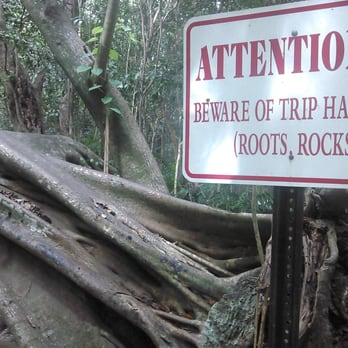

Simpson Hammock is a small, shady oasis in Brickell. I enjoyed a leisurely stroll on the walking paths and escaping the busyness of Brickell. There are a few parking spots if you are driving there, but I recommend walking if you are local. It's a small park- you can walk the entire thing in 20 minutes, but there are benches if you want to sit for a bit and take things in. read more


7 years ago

15 years ago

11 years ago
More info about Simpson Park
Ask the Community - Simpson Park
Review Highlights - Simpson Park
You might also consider


















Simpson Park - parks - Updated September 2026
Best of Miami
People found Simpson Park by searching for…
Trending Searches in Miami, FL
Apple Orchards near Simpson Park
Apple Picking near Simpson Park
Baseball Fields near Simpson Park
Blow Dry Bar near Simpson Park
Dog Friendly Things To Do near Simpson Park
Eyelash Extensions near Simpson Park
Fishing Pier near Simpson Park
Kids Birthday Party near Simpson Park
Makeup Artists near Simpson Park
Picnic Areas near Simpson Park
Places To Take Pictures near Simpson Park
Private Schools near Simpson Park
Public Running Track near Simpson Park
Public Shower near Simpson Park
Pumpkin Patches near Simpson Park
Scenic Night View near Simpson Park
Scenic Overlook near Simpson Park
Swimming Holes near Simpson Park
Browse Articles
Browse Nearby
BEST of Miami, Florida Restaurants near Simpson Park
BEST of Miami, Florida Coffee near Simpson Park
BEST of Miami, Florida Things to Do near Simpson Park
BEST of Miami, Florida Playgrounds near Simpson Park
BEST of Miami, Florida Picnic Areas near Simpson Park
BEST of Miami, Florida Breakfast near Simpson Park
BEST of Miami, Florida Star Gazing near Simpson Park
Browse Brands
Related Searches in Miami, FL
Best Nature Trails for Hiking in Miami, Florida
Best Off Leash Dog Parks in Miami, Florida
Best Parks for Parties and Events in Miami, Florida
Best Water Parks for Kids in Miami, Florida
Check Out Great Playgrounds in Miami, Florida
Discover Baseball Fields Around Miami, Florida
Discover Fun Toddler Parks in Miami, Florida for Your Little One
Discover Lakes & Ponds to Explore in Miami, Florida
Discover Popular Bike Trails in Miami, Florida
Discover Soccer Fields in Miami, Florida Near You
Discover Top Nature Parks to Visit in Miami, Florida
Discover Top State Parks to Visit in Miami, Florida
Discover the Best Beaches in Miami, Florida
Discover the Best Kids Park Spots in Miami, Florida
Enjoy Scenic Places to Walk in Miami, Florida
Enjoy the Best Picnic Spots and Ideas in Miami, Florida
Enjoy the Best Walking Trails in Miami, Florida
Explore Free Picnic Areas Around Miami, Florida
Explore Fun Activities to Do in Miami, Florida
Explore Parks With Pull Up Bars in Miami, Florida
Explore Picnic Parks Near Miami, Florida
Explore Popular Campgrounds Near Miami, Florida
Explore Popular Picnic Areas Around Miami, Florida
Explore Popular RV Parks Around Miami, Florida
Explore Scenic Lakes to Visit in Miami, Florida
Explore Top Dog Parks in Miami, Florida Near You
Explore Top Water Parks in Miami, Florida Today
Find Great Places to Feed Ducks in Miami, Florida
Find Parks and Recreation Activities in Miami, Florida
Find Top Dog Friendly Parks to Visit in Miami, Florida
Find Top Skate Parks in Miami, Florida for All Skill Levels
Find a Kids Birthday Party Park in Miami, Florida
Find a Park With BBQ Pits in Miami, Florida
Find the Best Parks BBQ Grills in Miami, Florida
Find the Best Parks for Picnics in Miami, Florida
Find the Best Playgrounds to Visit in Miami, Florida
Have Fun at a Splash Pad in Miami, Florida
Locate Tennis Courts Around Miami, Florida
Picnic Areas With BBQ Pits Available in Miami, Florida
Play at a Splash Pad Park in Miami, Florida
Popular Picnic Spots to Visit in Miami, Florida
Relax in Parks With Shade Areas in Miami, Florida
Safe and Fun Parks for Kids in Miami, Florida
Top Amusement Parks to Visit in Miami, Florida
Top Hiking Trails to Explore in Miami, Florida
Top Playgrounds for Kids to Enjoy in Miami, Florida
Top Running Trails to Explore in Miami, Florida
Top-Rated Camping Sites in Miami, Florida


