Reading Photos



Recommended Reviews - Reading
Start your review...


Reviews With Photos


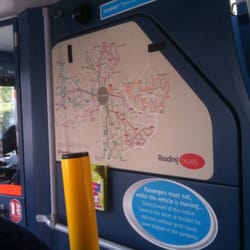
The first Reading station is over 160 years old, but the one that now exists is modern and surprisingly easy to navigate. Several platforms with overhead and underground pedestrian transfer, with access by stairs, escalator and lift ("elevator" in American). Reading is the first major station west of London and so is served often by trains heading in to London Paddington and these can get very busy during the morning and afternoon rush hours. In the morning, the trains run almost every 10 minutes! Food offerings are plentiful with AMT Coffee kiosks scattered about as well as a West Cornwall Pasty, Costa Coffee, Burger King, Bagel Factory and a few more. Marks and Spencer also has a small food hall and there is a small WH Smith's. And that's just in the ticketing area, there are more on the platforms. Information booth is staffed during daytime hours and there are also staffed ticket booths plus a dozen automated ticket machines. The departure board is easy to read. Once you're on the platform, there are waiting areas as well as more food options. Each platform also has a small display showing the next three trains for that platform. The Paddington train has usually been on platform 5, but the westbound train to Swansea or Bristol is 10, so do check the boards. There's also a line to Gatwick. Reading Rail Station is also a major terminus for buses with at least two dozen stops just outside that will take you throughout the Reading/Berkshire area and the Rail-Air coaches to Heathrow. Clean and easy to transfer, originate and terminate travel, this is a very nice full service rail station.


Reading is the major junction on the former Great Western line out of Paddington, and the second busiest station on the Western Region after Paddington itself. It handles over 14 million passengers a year, with a further 2.5 million changing trains here, making it the 20th busiest in the UK. The station opened in 1840 as a temporary terminus of the Great Western railway, before the line was completed to Bristol in 1841. As built, it had a single long platform used by trains in both directions, an awkward arrangement that surprisingly lasted until 1898 as London-bound trains had to cross over the tracks for westbound trains. Reading became a junction with the addition of lines to Newbury and Hungerford (1847), Basingstoke (1848), London via Wokingham (1856) and Guildford (1855). The Wokingham and Guildford trains had their own terminus to the south east of the station (on the site of the new concourse), but were integrated properly into the rest of the station in 1965. Its importance as a junction grew with the extension of the former Newbury and Hungerford line to Taunton in 1906, forming the main direct line to Exeter, Plymouth and Cornwall. The station was rebuilt in 1860 with the present attractive buildings and clock tower in Bath stone, and a new entrance and footbridge was added adjacent to this in 1989. As others have said, it has the full range of shops and facilities you'd expect for a station of this size, although the passenger facilities remain somewhat cramped. Services to London in particular are excellent, with up to 9 fast departures an hour, taking from 28 to 32 minutes for the journey. The present station has 10 platforms, but the development of both passenger and freight services from Birmingham (via Banbury) towards Southampton and Bournemouth, coupled with the increasing frequency of services to Cardiff, Bristol and the West of England, has made the station something of a bottleneck: in the evening peak, the station handles over 40 departures an hour. Plans are therefore afoot to rebuild the station completely in a £460m scheme, which includes 5 new platforms (increasing the number of through platforms by 75%), a new northern entrance, passenger subway, and two flyovers to the west of the station to remove the east-west and north-south conflicts. Work will start late in 2009 for completion by 2015.


This is a modern and big train station! Well laid out with a very good selection of shops. Escalators, lifts and stairs with signage to platforms is well visible. Overall a nice and easy to navigate station with a good coffee shop selection and several other convinience stores, even a hotel chocolat!


Very efficient and regular service to and from London. Very nicely situated and with a pleasant pub next door with timescreens so you don't miss your train.
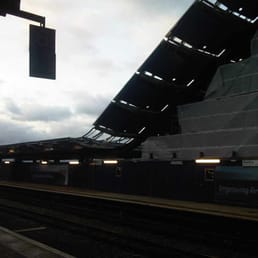

A great deal of major work going on here at the moment but is does look good. Limited seating available whilst waiting. Dispatch team in abundance and helpful to boot.


I'd have to say that this is a pretty major station, especially considering that there are an awful lot of platforms, and pretty much all of the trains that pass through here will stop. It's also the western terminus of the Elizabeth Line, which is helpful, especially if you work in the city. I was going to say that it is the edge of London, but I suspect Reading is a separate city all of its own. Pretty cool station though. read more


8 months ago

The first Reading station is over 160 years old, but the one that now exists is modern and surprisingly easy to navigate. Several platforms with overhead and underground pedestrian transfer, with access by stairs, escalator and lift ("elevator" in American). Reading is the first major station west of London and so is served often by trains heading in to London Paddington and these can get very busy during the morning and afternoon rush hours. In the morning, the trains run almost every 10 minutes! Food offerings are plentiful with AMT Coffee kiosks scattered about as well as a West Cornwall Pasty, Costa Coffee, Burger King, Bagel Factory and a few more. Marks and Spencer also has a small food hall and there is a small WH Smith's. And that's just in the ticketing area, there are more on the platforms. Information booth is staffed during daytime hours and there are also staffed ticket booths plus a dozen automated ticket machines. The departure board is easy to read. Once you're on the platform, there are waiting areas as well as more food options. Each platform also has a small display showing the next three trains for that platform. The Paddington train has usually been on platform 5, but the westbound train to Swansea or Bristol is 10, so do check the boards. There's also a line to Gatwick. Reading Rail Station is also a major terminus for buses with at least two dozen stops just outside that will take you throughout the Reading/Berkshire area and the Rail-Air coaches to Heathrow. Clean and easy to transfer, originate and terminate travel, this is a very nice full service rail station. read more


Reading is the major junction on the former Great Western line out of Paddington, and the second busiest station on the Western Region after Paddington itself. It handles over 14 million passengers a year, with a further 2.5 million changing trains here, making it the 20th busiest in the UK. The station opened in 1840 as a temporary terminus of the Great Western railway, before the line was completed to Bristol in 1841. As built, it had a single long platform used by trains in both directions, an awkward arrangement that surprisingly lasted until 1898 as London-bound trains had to cross over the tracks for westbound trains. Reading became a junction with the addition of lines to Newbury and Hungerford (1847), Basingstoke (1848), London via Wokingham (1856) and Guildford (1855). The Wokingham and Guildford trains had their own terminus to the south east of the station (on the site of the new concourse), but were integrated properly into the rest of the station in 1965. Its importance as a junction grew with the extension of the former Newbury and Hungerford line to Taunton in 1906, forming the main direct line to Exeter, Plymouth and Cornwall. The station was rebuilt in 1860 with the present attractive buildings and clock tower in Bath stone, and a new entrance and footbridge was added adjacent to this in 1989. As others have said, it has the full range of shops and facilities you'd expect for a station of this size, although the passenger facilities remain somewhat cramped. Services to London in particular are excellent, with up to 9 fast departures an hour, taking from 28 to 32 minutes for the journey. The present station has 10 platforms, but the development of both passenger and freight services from Birmingham (via Banbury) towards Southampton and Bournemouth, coupled with the increasing frequency of services to Cardiff, Bristol and the West of England, has made the station something of a bottleneck: in the evening peak, the station handles over 40 departures an hour. Plans are therefore afoot to rebuild the station completely in a £460m scheme, which includes 5 new platforms (increasing the number of through platforms by 75%), a new northern entrance, passenger subway, and two flyovers to the west of the station to remove the east-west and north-south conflicts. Work will start late in 2009 for completion by 2015. read more


This is a modern and big train station! Well laid out with a very good selection of shops. Escalators, lifts and stairs with signage to platforms is well visible. Overall a nice and easy to navigate station with a good coffee shop selection and several other convinience stores, even a hotel chocolat! read more


11 years ago


16 years ago

11 years ago

13 years ago
Very efficient and regular service to and from London. Very nicely situated and with a pleasant pub next door with timescreens so you don't miss your train. read more


12 years ago

18 years ago

14 years ago
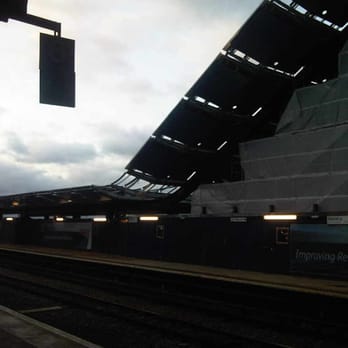
A great deal of major work going on here at the moment but is does look good. Limited seating available whilst waiting. Dispatch team in abundance and helpful to boot. read more

18 years ago

17 years ago

18 years ago

15 years ago
Despite the major works of the next few years Reading is such an important junction and interchange that it is one of the key hubs of the network. Facilities are good. read more

16 years ago
More info about Reading
Reading Reviews in Other Languages
Review Highlights - Reading





Why does Yelp recommend reviews?
2 reviews that are not currently recommended
The reviews below are not factored into the business's overall star rating.

14 years ago
14 years ago


