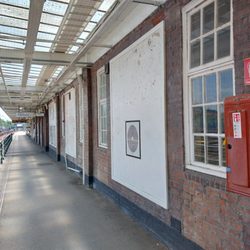
Watford Junction Photos


Recommended Reviews - Watford Junction
Start your review...



9 years ago
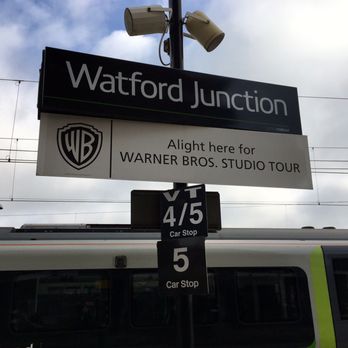
Get off here to for the Warner Bros Studio Tour: the Making of Harry Potter. You can't miss the bus or the bus stop, because chances are you'll be following a gaggle of women, tweens and kids. To get to Harry Potter, show them your confirmation or tickets (which must be purchased in advance). If you want a trip back to the train station, pay £2.50 per person for the return ticket. The bus drops you off at the front of the studio, go through the security (or if you need to pick up your ticket, find the pick up window). At the end of the day you return back to the general location to hop back on. When you are back at the Watford Junction, find the right train to take you back to Euston (or wherever you need to go). read more


8 years ago

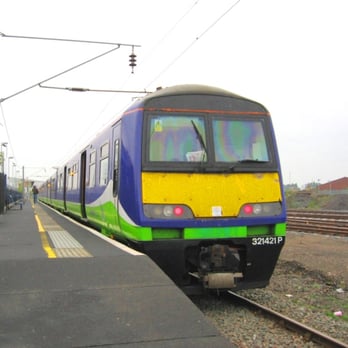
Watford Junction is the first important stop and a major interchange on the West Coast Main Line (WCML) out of London Euston, and the terminus of the local services via Watford High Street, from St Albans Abbey and from Brighton and Gatwick via the West London line. Over 4 million passengers use the station every year, with a further 500,000 changing trains here. I use it to change to and from the Watford-Brighton service and, although it is useful, I can't say it is the most pleasant station to use. The station was rebuilt in 1909 and again in the 1980s. But the buildings are architecturally nondescript, and most of the public areas are cramped and dreary. Though reasonably modern and busy, it has a faint air of neglect about it. There are plans for a major refurbishment in 2009. Although the origins of the WCML line through Watford date back to the opening of the London & Birmingham railway in 1838, Watford Junction came into being in 1858 when the London and North Western Railway (LNWR) opened its line to St Albans Abbey. A line to Rickmansworth via Watford High Street opened in 1862. In 1907 the LNWR began work to add an additional pair of tracks from London via Watford High Street, linking into the Bakerloo Line at Queen's Park. This was completed in stages, with Bakerloo trains reaching Watford in 1917, and the Euston-Watford service commencing in 1922. The Bakerloo service was terminated south of Watford in 1982, although the local Euston-Watford service is now run by London Transport under the brand of 'London Overground'. 10 platforms are currently in use: 4 platforms for main line services, 2 each for the fast and suburban services. A selection of fast trains to Birmingham, Manchester, Liverpool, Preston and Glasgow stop here, as well as four trains an hour each way running from Euston to Tring, Milton Keynes and Northampton. There are also 4 platforms for the 20-minute interval service to Euston via Watford Junction, one for the hourly Watford-Brighton service, and one for the local service to St Albans Abbey. Facilities include several cafés and a newsagents, cycle-storage, taxi rank, cash-point and extensive car parking. The whole station has step-free access (via lifts) and a disabled toilet although the route to platform 11 for the service to St Albans Abbey train involves a long, circuitous route around the end of platform 10 and along an old disused platform. read more


Fine little stop. It's very nice that they celebrate and build the suspense and excitement for the Harry Potter Warner Bros Tour immediately by being decorated in cool adverts. There are plenty of guides and signs to lead you to the tour shuttle stop just outside. The HP shuttles are each decorated in different scenes from the movies. Cost per person is £9 for the HP shuttle. The Watford stop has bathrooms and a little cafe corner for refreshments. The ride into it and back was very easy. There are two ways in and out via Watford station. The tube was a lengthier 25 minute ride. Not crowded at all. Very pleasant. The express train leaving was standing room only direct from Watford to Euston. 1 stop, 15minutes. Can't go wrong either way. Just give yourself an extra half hour more than you think you'll need to get in line at HP read more


8 years ago

15 years ago

13 years ago

14 years ago

18 years ago
18 years ago

18 years ago

18 years ago
18 years ago
More info about Watford Junction
Station Road
Watford WD17 1EU
United Kingdom
Watford
Directions
Hours
Other Amenities