Metro Photos


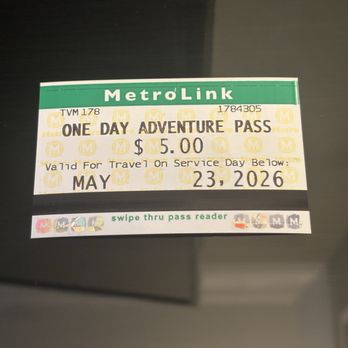
You might also consider


More like Metro
Recommended Reviews - Metro
Start your review...


Reviews With Photos


I love cities with easy public transportation that includes the airport and downtown. The Saint Louis MetroLink does exactly that. The MetroLink is the 11th largest light rail system in the United States with 38 stations and 46 miles of track. It is the only light rail system to cross state lines as the rail crosses the Mississippi River between Missouri and Illinois. Construction began in 1990 and was expanded to include the airport in 1988. There are two separate lines that overlap for the majority of their track length. The Red Line includes the airport where the Blue Line goes more south and terminates at Shrewsbury. They operate together from Forest Park through Fairview Heights (in Illinois) where the Blue Line terminates and the Red Line continues for a few more stations to terminate at Shiloh-Scott. I rode three times and there was security present for at least a few stops each time. I've heard stories, so it was nice that there was security present. That said, if you're concerned, you will want to sit in the front car closes to the driver. The cars were clean and free of litter. No eating, drinking or smoking is permitted on board. MetroLink uses a proof-of-payment system. Tickets can be purchased at ticket vending machines at the entrance to all stations and must be validated before boarding the train. Single ride tickets are good for up to two hours in the direction that a passenger initially boards. Each of the stations I visited is handicapped accessible but I don't know if they are all such. Enjoy your ride! [Review 14435 overall, 1761 of 2020, number 69 in Missouri.]


I haven't met you but I've met this metro, and it was a nice meeting for sure. I definitely prefer Kansas City mass transit to St. Louis. It feels more extensive and safer even, though they don't have the trains, which are a great addition to STL. It's still a good service to get around in a city, which means three stars, but it's a very sprawling city with a hell of a lot of crime, so that doesn't help its transit at all, honestly. And it doesn't cover all the areas that I go to, and as I said it doesn't always feel safe. But at least they have a train. Did I mention they have a train? So come on ride the train. And ride it.


There are problems but it's not metro, it's the riders. Honestly Metro is amazing considering how little money they have and how big a task they work. The city was designed for 3x the current population, and it highly impoverished. This leads to lots of petty and even violent crime. And you as a rider are not always the chosen victim. I've seen a bus driver just a couple weeks ago have a gun pulled on him, get spit on, then continued the bus ride. Amazing dedication. All for $15/hr, which is minimum wage basically (as Walmart and McDonald's seem to think so). Sure there are benefits, but a job that puts you in poverty, while getting spit on, robbed, shot at, or actually murdered (one victim was murdered weeks before retirement after decades of service). The people working here are good. Yes they are tired. Tired of the pay, the criminals, the just general lack of respect. The drivers and operators do a service for the community, a needed one, and should be highly praised. And highly paid. They are neither. They don't do the job for the money. No sane person would choose such a job solely on money. There's a factor of being a decent person who wants to serve the community that is needed to do such a job. So before you criticize anyone who works here (some do deserve it) remember they are understaffed, overworked, and probably had a gun pulled on them recently. So if they aren't super polite try to understand where they are coming from. In my experience they are usually very polite, but everyone has their limits. I'm riding the bus now and I'm listening to a passenger talk about how he is going to kill this woman who just got off the bus the next time he sees her. There are shootouts on the bus, kinda frequently. What did the woman do? Not sure, but the man said "she pointed at me" to someone in the phone, while he continued "I could of kill her right now and no one would do sh1t". Which is true. I think she may have asked the guy for money, as he was complaining about how it's not his responsibility to feed her 5 kids and she needs to get her own "bag". So yeah that happened right as I ended the review. I actually could of witnessed a shooting on the bus as I'm writing this review, but again, it's not the bus drivers fault they are the ones doing an underlaid, underappreciated job Update : as I got off the bus I thanked the driver (many do) and said "have a safe day" (not unusual for me) and the man who claimed to have a gun said to me "watchoo talkin bout have a safe day whatchoo mean. I'll smoke yo azz too". Yeah, it's not the workers, it's the public. I feel like 20% of the city population should just be banned from riding the bus. So the other 80% can ride in safety and without fear. Sounds rough, but so is getting spit on at 9am on a Sunday and having to continue driving the bus. Oh, and a gun pulled. It's to the point I would totally be for armed officers in all busses, but that's too expensive.


This review focuses mostly on Metrolink light rail system because a bus is a bus is a bus. The St. Louis metro area has had a light rail system for slightly over 2 decades. If you are not from there, or are not familiar with the area, there is at least one thing that might cause you to take note - it crosses the Mississippi River! Come to think of it, so do the Metro system trains in the Twin Cities in order to service both Minneapolis and St. Paul. The representation of the layout encountered on brochures or on the trains is, in a way, inaccurate. The routes appear to be very linear. In reality, they are not. The rail system has 2 lines, known as the Red and the Blue lines. For a large extent of the route, they overlap and use the same right of way. It is above ground, and visible, in virtually all instances and only functions as a subway in the downtown core. It's easier to discuss what the system does on the Illinois side of the river, which also has bedroom communities for St. Louis. Both the Red and the Blue lines cross the Mississippi River into Illinois, with the only difference being that the Red line continues farther along the right of way than does the Blue line. And, again, the trajectory is not linear and seems to sweep in a southeasterly direction toward Belleville, IL and towns in that area. On the more populous Missouri side, both lines cover all the major stops in the city of St. Louis's downtown core so it doesn't matter if you use the Red or the Blue line ... but only as far inland from the river as Forest Park. That station is actually named Forest Park - De Baliviere and the announcements really botch the French pronunciation of that surname to the tune of "Da-bah-luh-vehr" or something like that. Just bad. From there, the Red line goes northwesterly to the airport and to the UMSL campus. However, from Forest Park, the Blue line continues due west toward Clayton, sort of a corporate edge city for St. Louis, and then makes a broad southwesterly sweep to the southwest suburbs. Note that, to the west of Clayton is the Richmond Heights station, from which it is only a few easy blocks to the St. Louis Galleria, a fine commercial center. For regular commuters, there are all sorts of pass combinations available and, needless to say, they work on the extensive bus network under the same purview. For tourists, a day pass is $7.50 and a weekly pass is $27. At 4 or more days, you come out ahead with the weekly pass. The rail system was really needed here because there are many area freeways with only 3 lanes in each direction, including cross-country I-70. Not only that, every key area of downtown is covered by the train system - the main downtown area, the convention center, Laclede's Landing (think Gateway Arch), the stadium, the transportation hub (train and bus stations), and restored Union Station. The ridership on the Metrolink is more animated and vocal than on the light rail trains in, say, more stoic and reserved Portland and Seattle. Now, while I may not be a contributor to the decibel level, I certainly do enjoy observing the humorous banter. And, for this, the Red line seems to be a better bet than is the Blue line. Let's just get right to it ... characters gravitate toward public transit rail ridership more than they do to buses, taxis, or even their own cars. So, take a deep breath, climb aboard, sit down, read something, listen to music, look out the window, do some people watching, and it'll all be good. Or, it should be! Because the system thoughtfully goes to or within walking distance of all the major places a resident or a visitor would need to go, Metrolink gets 4 stars from me.


For just $2.50 you can take the light rail between the airport and downtown. There's no possible way you can beat that price in an Uber/Lyft or a taxi. I took the Metro several times on my recent trip, the trains were clean, and I never felt unsafe. With the exception of one guy telling a sob story and begging for money for bus fare to Texas, the passengers were all quiet and well-mannered. Try finding that in NYC, DC, or Chicago.


Hailing from Cincinnati, where light rail transit is merely a dream, I was ecstatic to discover St. Louis's MetroLink. I stayed at the Sheraton, which is conveniently located right across the street from the Civic Center Station. MetroLink was quick and efficient, and while being thoroughly used, it was never uncomfortably crowded. I opted for a day pass for $7.50, as I frequently hopped on and off exploring the city. Unlike the traditional rapid transit system, MetroLink does not have a turnstyle to check tickets, like you may find in New York City. Instead, patrons hold onto their tickets, and security guards will get on at random stops to make sure no one is hopping a free ride. Out of the dozen rides I took on MetroLink, security only boarded once. However, I did see them arresting two teenagers who were free riding. Compared to larger cities, MetroLink is a simple light rail system to use: it only has two lines. My only complaint is that I did get lost a few times because the maps at the stations were backwards: Illinois was left of Missouri. See:http://s3-media1.px.yelpcdn.com/bphoto/t2vBZtfq4keMIn5qEu-G2g/l.jpg I have no idea why the map is printed this way in some locations, particularly since these were all at Missouri stations, not on the Illinois side. Cincinnati desperately needs a light rail system, however residents are slow to get on board. St. Louis, being a city of comparable size to Cincinnati, is a wonderful example as how light rail can help both commuters and tourists travel with ease. Notes for tourists: - Purchase a day pass for $7.50. It's good the entire date of purchase for infinite rides. - Pick up a map of the routes - Pay attention to the map at the stations, as some have Illinois on the left side of Missouri, not on the right. - If you need to transfer trains, pay attention to the color-coded destination signs located on the front and side of the train cars. This will help you know which line you are getting on. - There is also a MetroLink stop that will drop you off at Gateway Arch, and another near Citygarden. Most high-traveled areas Downtown are accessible through the Metro.


2 years ago

20 days ago
2 months ago

2 years ago

I love cities with easy public transportation that includes the airport and downtown. The Saint Louis MetroLink does exactly that. The MetroLink is the 11th largest light rail system in the United States with 38 stations and 46 miles of track. It is the only light rail system to cross state lines as the rail crosses the Mississippi River between Missouri and Illinois. Construction began in 1990 and was expanded to include the airport in 1988. There are two separate lines that overlap for the majority of their track length. The Red Line includes the airport where the Blue Line goes more south and terminates at Shrewsbury. They operate together from Forest Park through Fairview Heights (in Illinois) where the Blue Line terminates and the Red Line continues for a few more stations to terminate at Shiloh-Scott. I rode three times and there was security present for at least a few stops each time. I've heard stories, so it was nice that there was security present. That said, if you're concerned, you will want to sit in the front car closes to the driver. The cars were clean and free of litter. No eating, drinking or smoking is permitted on board. MetroLink uses a proof-of-payment system. Tickets can be purchased at ticket vending machines at the entrance to all stations and must be validated before boarding the train. Single ride tickets are good for up to two hours in the direction that a passenger initially boards. Each of the stations I visited is handicapped accessible but I don't know if they are all such. Enjoy your ride! [Review 14435 overall, 1761 of 2020, number 69 in Missouri.] read more


I haven't met you but I've met this metro, and it was a nice meeting for sure. I definitely prefer Kansas City mass transit to St. Louis. It feels more extensive and safer even, though they don't have the trains, which are a great addition to STL. It's still a good service to get around in a city, which means three stars, but it's a very sprawling city with a hell of a lot of crime, so that doesn't help its transit at all, honestly. And it doesn't cover all the areas that I go to, and as I said it doesn't always feel safe. But at least they have a train. Did I mention they have a train? So come on ride the train. And ride it. read more

1 year ago

4 years ago
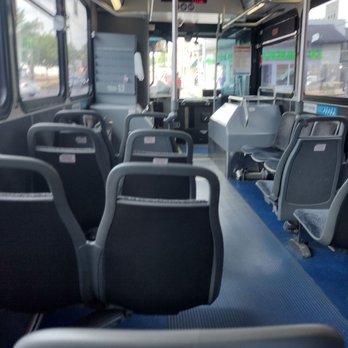
There are problems but it's not metro, it's the riders. Honestly Metro is amazing considering how little money they have and how big a task they work. The city was designed for 3x the current population, and it highly impoverished. This leads to lots of petty and even violent crime. And you as a rider are not always the chosen victim. I've seen a bus driver just a couple weeks ago have a gun pulled on him, get spit on, then continued the bus ride. Amazing dedication. All for $15/hr, which is minimum wage basically (as Walmart and McDonald's seem to think so). Sure there are benefits, but a job that puts you in poverty, while getting spit on, robbed, shot at, or actually murdered (one victim was murdered weeks before retirement after decades of service). The people working here are good. Yes they are tired. Tired of the pay, the criminals, the just general lack of respect. The drivers and operators do a service for the community, a needed one, and should be highly praised. And highly paid. They are neither. They don't do the job for the money. No sane person would choose such a job solely on money. There's a factor of being a decent person who wants to serve the community that is needed to do such a job. So before you criticize anyone who works here (some do deserve it) remember they are understaffed, overworked, and probably had a gun pulled on them recently. So if they aren't super polite try to understand where they are coming from. In my experience they are usually very polite, but everyone has their limits. I'm riding the bus now and I'm listening to a passenger talk about how he is going to kill this woman who just got off the bus the next time he sees her. There are shootouts on the bus, kinda frequently. What did the woman do? Not sure, but the man said "she pointed at me" to someone in the phone, while he continued "I could of kill her right now and no one would do sh1t". Which is true. I think she may have asked the guy for money, as he was complaining about how it's not his responsibility to feed her 5 kids and she needs to get her own "bag". So yeah that happened right as I ended the review. I actually could of witnessed a shooting on the bus as I'm writing this review, but again, it's not the bus drivers fault they are the ones doing an underlaid, underappreciated job Update : as I got off the bus I thanked the driver (many do) and said "have a safe day" (not unusual for me) and the man who claimed to have a gun said to me "watchoo talkin bout have a safe day whatchoo mean. I'll smoke yo azz too". Yeah, it's not the workers, it's the public. I feel like 20% of the city population should just be banned from riding the bus. So the other 80% can ride in safety and without fear. Sounds rough, but so is getting spit on at 9am on a Sunday and having to continue driving the bus. Oh, and a gun pulled. It's to the point I would totally be for armed officers in all busses, but that's too expensive. read more
2 years ago
2 years ago

3 years ago
2 years ago

2 years ago

4 years ago

9 years ago
This review focuses mostly on Metrolink light rail system because a bus is a bus is a bus. The St. Louis metro area has had a light rail system for slightly over 2 decades. If you are not from there, or are not familiar with the area, there is at least one thing that might cause you to take note - it crosses the Mississippi River! Come to think of it, so do the Metro system trains in the Twin Cities in order to service both Minneapolis and St. Paul. The representation of the layout encountered on brochures or on the trains is, in a way, inaccurate. The routes appear to be very linear. In reality, they are not. The rail system has 2 lines, known as the Red and the Blue lines. For a large extent of the route, they overlap and use the same right of way. It is above ground, and visible, in virtually all instances and only functions as a subway in the downtown core. It's easier to discuss what the system does on the Illinois side of the river, which also has bedroom communities for St. Louis. Both the Red and the Blue lines cross the Mississippi River into Illinois, with the only difference being that the Red line continues farther along the right of way than does the Blue line. And, again, the trajectory is not linear and seems to sweep in a southeasterly direction toward Belleville, IL and towns in that area. On the more populous Missouri side, both lines cover all the major stops in the city of St. Louis's downtown core so it doesn't matter if you use the Red or the Blue line ... but only as far inland from the river as Forest Park. That station is actually named Forest Park - De Baliviere and the announcements really botch the French pronunciation of that surname to the tune of "Da-bah-luh-vehr" or something like that. Just bad. From there, the Red line goes northwesterly to the airport and to the UMSL campus. However, from Forest Park, the Blue line continues due west toward Clayton, sort of a corporate edge city for St. Louis, and then makes a broad southwesterly sweep to the southwest suburbs. Note that, to the west of Clayton is the Richmond Heights station, from which it is only a few easy blocks to the St. Louis Galleria, a fine commercial center. For regular commuters, there are all sorts of pass combinations available and, needless to say, they work on the extensive bus network under the same purview. For tourists, a day pass is $7.50 and a weekly pass is $27. At 4 or more days, you come out ahead with the weekly pass. The rail system was really needed here because there are many area freeways with only 3 lanes in each direction, including cross-country I-70. Not only that, every key area of downtown is covered by the train system - the main downtown area, the convention center, Laclede's Landing (think Gateway Arch), the stadium, the transportation hub (train and bus stations), and restored Union Station. The ridership on the Metrolink is more animated and vocal than on the light rail trains in, say, more stoic and reserved Portland and Seattle. Now, while I may not be a contributor to the decibel level, I certainly do enjoy observing the humorous banter. And, for this, the Red line seems to be a better bet than is the Blue line. Let's just get right to it ... characters gravitate toward public transit rail ridership more than they do to buses, taxis, or even their own cars. So, take a deep breath, climb aboard, sit down, read something, listen to music, look out the window, do some people watching, and it'll all be good. Or, it should be! Because the system thoughtfully goes to or within walking distance of all the major places a resident or a visitor would need to go, Metrolink gets 4 stars from me. read more

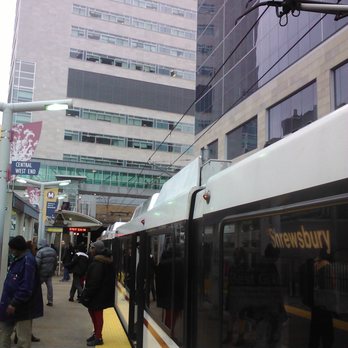


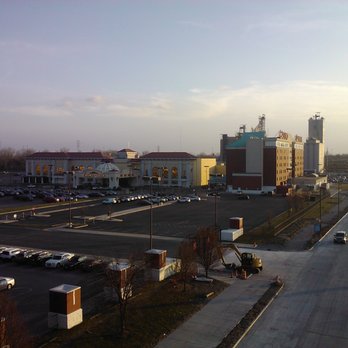

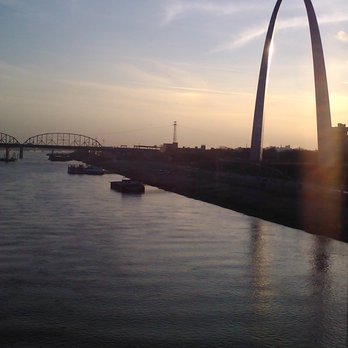


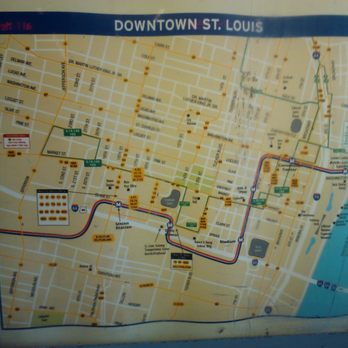

For just $2.50 you can take the light rail between the airport and downtown. There's no possible way you can beat that price in an Uber/Lyft or a taxi. I took the Metro several times on my recent trip, the trains were clean, and I never felt unsafe. With the exception of one guy telling a sob story and begging for money for bus fare to Texas, the passengers were all quiet and well-mannered. Try finding that in NYC, DC, or Chicago. read more


3 years ago
2 years ago


Hailing from Cincinnati, where light rail transit is merely a dream, I was ecstatic to discover St. Louis's MetroLink. I stayed at the Sheraton, which is conveniently located right across the street from the Civic Center Station. MetroLink was quick and efficient, and while being thoroughly used, it was never uncomfortably crowded. I opted for a day pass for $7.50, as I frequently hopped on and off exploring the city. Unlike the traditional rapid transit system, MetroLink does not have a turnstyle to check tickets, like you may find in New York City. Instead, patrons hold onto their tickets, and security guards will get on at random stops to make sure no one is hopping a free ride. Out of the dozen rides I took on MetroLink, security only boarded once. However, I did see them arresting two teenagers who were free riding. Compared to larger cities, MetroLink is a simple light rail system to use: it only has two lines. My only complaint is that I did get lost a few times because the maps at the stations were backwards: Illinois was left of Missouri. See:http://s3-media1.px.yelpcdn.com/bphoto/t2vBZtfq4keMIn5qEu-G2g/l.jpg I have no idea why the map is printed this way in some locations, particularly since these were all at Missouri stations, not on the Illinois side. Cincinnati desperately needs a light rail system, however residents are slow to get on board. St. Louis, being a city of comparable size to Cincinnati, is a wonderful example as how light rail can help both commuters and tourists travel with ease. Notes for tourists: - Purchase a day pass for $7.50. It's good the entire date of purchase for infinite rides. - Pick up a map of the routes - Pay attention to the map at the stations, as some have Illinois on the left side of Missouri, not on the right. - If you need to transfer trains, pay attention to the color-coded destination signs located on the front and side of the train cars. This will help you know which line you are getting on. - There is also a MetroLink stop that will drop you off at Gateway Arch, and another near Citygarden. Most high-traveled areas Downtown are accessible through the Metro. read more


13 years ago

13 years ago
This review is for the Metrolink train system only. Coming up on its 20th birthday, Metrolink provides a clean, safe, inexpensive and efficient way to travel around metropolitan St. Louis. During a recent visit to the city, I took six lengthy trips on Metrolink and was impressed. The Red Line to Lambert St. Louis International Airport was particularly handy. $2.25 to travel all of the way to Lambert? A virtual steal. Two thumbs up for Metrolink! read more


15 years ago

Extremely easy transportation. You don't need cabs in St. Louis, for the most part. A little piss smell and f-bomb-spewing rednecks are part of the deal. Just another reminder that you're using mass-transit instead of expensive auto fuel. read more


Being dropped off in the middle of downtown St. Louis this past weekend--I wanted to get my exploration on! Oh yeah! [I love traveling, ask any of my friends] With being from Chicago, reading the downtown metro map was easy. Their trains only run in two directions. East & West. So the simple structure was easy to figure out. The St. Louis Metro was easy, clean & fast. They even have a posted schedule!?! What?!?! A train that runs on schedule? Get outta town! There were plenty of seats, and they were wider than the Chicago L train. My only complaint is the price of the Metro. I thought Chicago was expensive, but for a 2 hour ride/pass it is for $5.75! That is the same price for a Chicago ALL day pass. For the all day pass it was $7.50. Whew--pretty pricey. However, what I also liked is that you take the ticket with you, you don't put it in terminal, it is based on the "honor" system. Which is awesome, but I doubt it would fly in Chicago. When I come visit this awesome city again, I will for sure use this public transportation. Who needs a car? Not this girl! read more


18 years ago
The Metrolink is St. Louis' mass transportation system. The fare is $2 for one ride, but you can get deals such as purchasing a month ticket for $60. The Metrolink is reliable and safe, but there are some very strange people on here. Usually when I use it, there is at least one semi-crazy person who is barking about this or that, although they never seem to do anything. It will be nice when the Link is expanded to even more places, but currently is great for the downtown and surrounding areas. Try going on off hours if you can, because otherwise there will be lines. read more

10 years ago
4 years ago

4 years ago

7 years ago

18 years ago

12 years ago


12 years ago


15 years ago

17 years ago
Page 1 of 2
More info about Metro
211 N Broadway
Ste 700
Saint Louis, MO 63102
Downtown St. Louis, Downtown
Directions
(314) 231-2345
Call Now
Visit Website
https://www.metrostlouis.org
Hours
Other Amenities
From the Business
Ask the Community - Metro
Review Highlights - Metro




















Why does Yelp recommend reviews?
13 reviews that are not currently recommended
The reviews below are not factored into the business's overall star rating.


7 years ago
6 years ago
12 years ago
6 years ago

10 years ago
11 months ago

4 years ago
16 years ago
3 years ago

3 years ago

7 years ago
3 months ago


