
Order Korn's Takeout or Delivery
Korn's Photos


Business Info
Korn's Popular Dishes






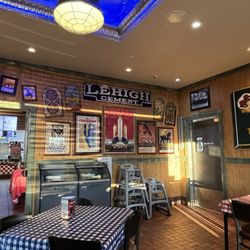
KORN'S ATMOSPHERE


You might also consider


More like Korn's
Recommended Reviews - Korn's
Start your review...

Reviews With Photos


First time!! I love when there's a kiosk to order food..it gives me more time to think while deciding, ha! They offer several different corn dogs, and of course, I had to try the potato dog with mozzarella cheese in the middle. I thought it was a little bland, but the dipping sauce I got added some nice flavor. I'll definitely be back to try a different one!


We stopped into Saraga Market and couldn't pass up this spot. Ordering at the kiosk was fairly simple: you pick the type of sausage or cheese you want, what breading or spicy level, and what side or drink you want. There are a lot of different options to choose from! My kids chose the spicy dog with strawberry boba while I stuck with a regular corn dog. They were made fresh and service was fast. The fries were pretty good too. They liked the strawberry boba and got popping pearls. It's pretty chilly in Saraga this time of year so bring a jacket if you plan to sit down as this location is near the front doors. Overall, it was pretty good!


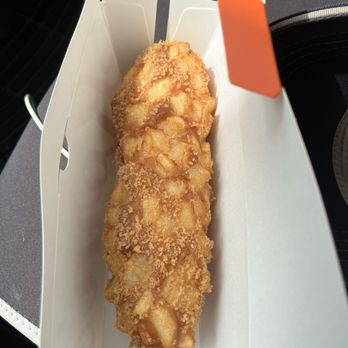
A Korean corn dog place in the new Saraga!! First few weeks they opened it was busy. They had lines. But I got their early before they opened and you could see the employees and owners working with a sense of urgency to serve their customers. It's wonderful to see Korean food highlighted with an approachable food item. It's located in the food court kinda area of Saraga so there's tables and chairs if you want to park yourself and enjoy your food for a bit. We ordered the one with the cheese inside and potato exterior. The cubed crispy potato coating was a nice contrast to the cheesy inside. The ramen corn dog version was also interesting with the crunchy ramen coating. It's a decadent meal so I don't see this being a frequent visit for me. Although, it's nice to have this option in the area!


Absolutely worthwhile. If you choose to go on a Saturday, prepare for a 15 minute line and a 15 minute wait. There is a lot of waiting and staring, not that it was problematic... everyone made space for each other and understood the hype brought a lot of business. I couldn't bring myself to try anything other than the Potato Dog on this first trip (I've wanted them so badly), so I got 2 kinds. Full 100% beef sausage & full mozzarella. The prices posted are only for a "sausage" filling which is different than beef sausage. It reminds me of imitation crab in a way, which isn't bad, but I wanted to try the 100% beef this time. My beef sausage and full mozz were $1 upcharges each. After you get your food, DONT SKIP THE SAUCE! That's half the fun and taste! Dress yours up! The batter is light and fluffy and sweet!


Located in the Eastside Saraga international Grocery store (old Target building) Korn's allows you to get your corn dog fix when you can't wait for the state fair to open up. The staff were very helpful and friendly. This was my first time so I decided to go with the crunchy dog with sausage. The wait time was about 10 minutes but well worth it. The sausage was a bit small and the crunchy dough on the outside was consistent. That being said it's the sauces that are the real stars: you get to choose: mustard, ketchup and spicy mayo. I'll go and try the other options before I decide whether this is worthy big more stars or not.


We tried this place, which is inside the Saraga International Store in Castelton, there's not a lot of place that sells Korean dog in Indy but glad this places opened up I love their corn dog, I got the classic dog with sausage, you can try different toppings and sausage/cheese mix It's made to order so you might have to wait at little bit depending on how busy the line is, but I didn't wait that long!


I got the Ramen dog with 1/2 cheese, 1/2 sausage. I ordered, shopped for groceries at Saraga, and grabbed it on the way out. I made the mistake of not putting toppings like the spicy mayo and ketchup etc on it. I had to go back through to grab some because it was pretty dry on its own. It was interesting, nice and crunchy, but not something I would crave or go out of my way for. It was $6.53 for the dog.. the cheese and ramen was good. But honestly the $1.50 costco dog has a little more flavor than the sausage here. The things that make is shine are really the toppings and the novelty. It's not something that I would go out of my way for, but worth a check out if you are in the area. There is a little bit of seating but not much for ambiance. The service was alright, it would be nice if they had an option to text you or had a little pager when order was done like SGD.


I've never cared for corn dogs, but now I'm a fan! The breading is soft and delicious! We got the beef hot dog with the potato crusted corn dog. It came out hot, fresh and so good! Can't wait to try the others!
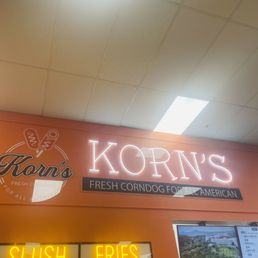

My first time trying a Korean corndog and I was NOT disappointed! This cute stand is inside of the Saraga grocery store and I appreciate that they have their own tables to sit at inside as well! I walked up to the cashier and asked him what his favorite dog was so I ordered that. A potato dog filled completely with mozzarella cheese. Now let's get to the dog. The minute I took a bite my mouth was filled with so many different flavors. The crunchy sweet breading combined with the honey mustard and let's not forget about that cheesy pull! Hot, crunchy, sweet, spicy, and cheesy all in one. Overall great food, excellent service, and cool ambiance!! I'll definitely be back at Korn's to try the spicy dog next time!!
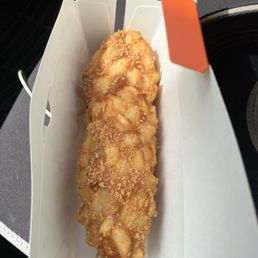

After watching a video of some British private school lads eating Korean corn dogs on YouTube, I searched high and low in my travels to find a place that sells them. Korn's is in a giant store / grocer along its perimeter. You have to enter the grocery store to gain access to the Korn store front. They have lots to choose from, and I selected the all beef dog blanketed in corn dog coating and potatoes before being fried. I enjoyed the dog. A hair underdone. If left to fry for 15-20 more seconds (or a minute if temps were lowered by frying multiple dogs at once), it would have been perfect. I'd likely try it again. Sauces on table. Lots of curious shoppers checking the place out. I waited about 5 minutes for the dog. I wouldn't have mind a little bit longer wait for a well done dog. The staff was friendly and managed orders quickly. It's great to support a local business like Korn's!


You have to try it at least once. I do like the options for what's inside your corn'dog'. You can choose sausage (regular or beef), mozzarella cheese, or half sausage half mozzarella. The options are fun! Definitely grab a bite to eat before you shop. We tried the honey garlic fries. They were okay. A little fun that they put some sausage in it!


I want to start off by saying the customer service was so pleasant! The food was fresh and came out hot! The korn dog was good but the breading for me was too thick. Flavors are all there though! Overall the store front was appealing and inviting!


I had been looking forward to finally having a Korean corn dog place close by. We stopped for a quick Sunday lunch before shopping. I had the half and half mozzarella with the potato batter and my significant other had the spicy with the all beef dog. We shared the buffalo garlic fries. The first half of my dog was good but as I got to the middle the batter was raw in the center. The fries were not good. The cheese was unmelted and the sauce was weirdly sweet. Slightly disappointed in my experience, but I think I would give it one more go for a corndog and just skip the fries.


21 days ago
My favorite part about going to Saraga is getting a korean corn dog before I start shopping! My husband and I have pretty much tried every variation of dog they have, but we keep going back to the crunchy dog and the potato dog. The outside is perfectly crunchy! I crave them! read more


This Saraga food court is truly a gem. It's perfect for a snack before or after shopping and it's convenient. Korn's has different kinds of corndogs and a variety of filling so it's not easy to make a decision. We tried the one with ramen noodle with half sausage and half cheese. It was great! They also had several different sauces and I wasn't sure what would be the best to complement this corn dog. But we got spicy mayo and it was good. There was only person working there and it was cooked to order. I'll return. read more


I tried KORN Hotdog because the name caught my attention, and I'm a corn dog fan. The presentation and packaging were fun and unique, and the food was handed to me in a way that felt intentional. I tried the sausage for the extra dollar, and while the taste was solid, the amount of breading was overwhelming. It felt more like eating a big piece of bread with a little meat inside. Then the bread settled in my stomach like a rock. I would want more meat for a $6.00 corn dog. Not bad, just not balanced. Overall, I'm glad I tried it. It was an experience, I'd only go back if the ratio of breading to meat became proportionate. read more


First time!! I love when there's a kiosk to order food..it gives me more time to think while deciding, ha! They offer several different corn dogs, and of course, I had to try the potato dog with mozzarella cheese in the middle. I thought it was a little bland, but the dipping sauce I got added some nice flavor. I'll definitely be back to try a different one! read more


9 months ago
We stopped into Saraga Market and couldn't pass up this spot. Ordering at the kiosk was fairly simple: you pick the type of sausage or cheese you want, what breading or spicy level, and what side or drink you want. There are a lot of different options to choose from! My kids chose the spicy dog with strawberry boba while I stuck with a regular corn dog. They were made fresh and service was fast. The fries were pretty good too. They liked the strawberry boba and got popping pearls. It's pretty chilly in Saraga this time of year so bring a jacket if you plan to sit down as this location is near the front doors. Overall, it was pretty good! read more


A Korean corn dog place in the new Saraga!! First few weeks they opened it was busy. They had lines. But I got their early before they opened and you could see the employees and owners working with a sense of urgency to serve their customers. It's wonderful to see Korean food highlighted with an approachable food item. It's located in the food court kinda area of Saraga so there's tables and chairs if you want to park yourself and enjoy your food for a bit. We ordered the one with the cheese inside and potato exterior. The cubed crispy potato coating was a nice contrast to the cheesy inside. The ramen corn dog version was also interesting with the crunchy ramen coating. It's a decadent meal so I don't see this being a frequent visit for me. Although, it's nice to have this option in the area! read more
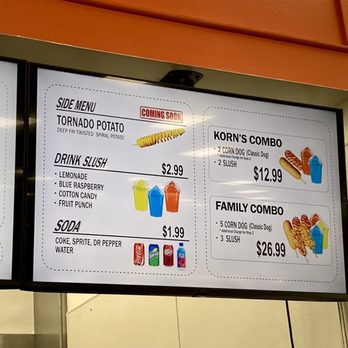


Absolutely worthwhile. If you choose to go on a Saturday, prepare for a 15 minute line and a 15 minute wait. There is a lot of waiting and staring, not that it was problematic... everyone made space for each other and understood the hype brought a lot of business. I couldn't bring myself to try anything other than the Potato Dog on this first trip (I've wanted them so badly), so I got 2 kinds. Full 100% beef sausage & full mozzarella. The prices posted are only for a "sausage" filling which is different than beef sausage. It reminds me of imitation crab in a way, which isn't bad, but I wanted to try the 100% beef this time. My beef sausage and full mozz were $1 upcharges each. After you get your food, DONT SKIP THE SAUCE! That's half the fun and taste! Dress yours up! The batter is light and fluffy and sweet! read more

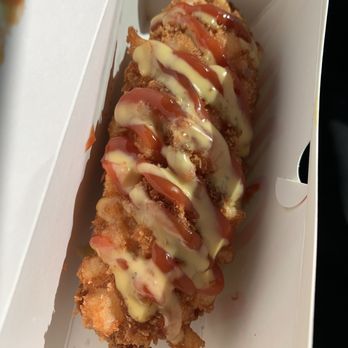

Located in the Eastside Saraga international Grocery store (old Target building) Korn's allows you to get your corn dog fix when you can't wait for the state fair to open up. The staff were very helpful and friendly. This was my first time so I decided to go with the crunchy dog with sausage. The wait time was about 10 minutes but well worth it. The sausage was a bit small and the crunchy dough on the outside was consistent. That being said it's the sauces that are the real stars: you get to choose: mustard, ketchup and spicy mayo. I'll go and try the other options before I decide whether this is worthy big more stars or not. read more


4 years ago
We tried this place, which is inside the Saraga International Store in Castelton, there's not a lot of place that sells Korean dog in Indy but glad this places opened up I love their corn dog, I got the classic dog with sausage, you can try different toppings and sausage/cheese mix It's made to order so you might have to wait at little bit depending on how busy the line is, but I didn't wait that long! read more


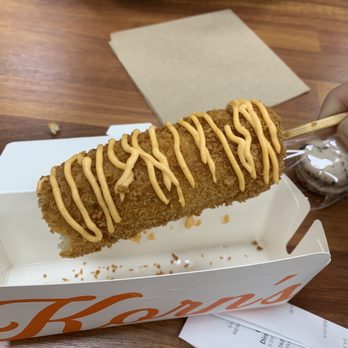


I got the Ramen dog with 1/2 cheese, 1/2 sausage. I ordered, shopped for groceries at Saraga, and grabbed it on the way out. I made the mistake of not putting toppings like the spicy mayo and ketchup etc on it. I had to go back through to grab some because it was pretty dry on its own. It was interesting, nice and crunchy, but not something I would crave or go out of my way for. It was $6.53 for the dog.. the cheese and ramen was good. But honestly the $1.50 costco dog has a little more flavor than the sausage here. The things that make is shine are really the toppings and the novelty. It's not something that I would go out of my way for, but worth a check out if you are in the area. There is a little bit of seating but not much for ambiance. The service was alright, it would be nice if they had an option to text you or had a little pager when order was done like SGD. read more


3 years ago
I've never cared for corn dogs, but now I'm a fan! The breading is soft and delicious! We got the beef hot dog with the potato crusted corn dog. It came out hot, fresh and so good! Can't wait to try the others! read more
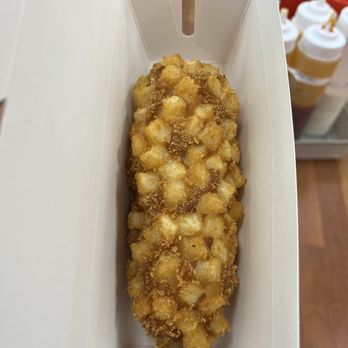

My first time trying a Korean corndog and I was NOT disappointed! This cute stand is inside of the Saraga grocery store and I appreciate that they have their own tables to sit at inside as well! I walked up to the cashier and asked him what his favorite dog was so I ordered that. A potato dog filled completely with mozzarella cheese. Now let's get to the dog. The minute I took a bite my mouth was filled with so many different flavors. The crunchy sweet breading combined with the honey mustard and let's not forget about that cheesy pull! Hot, crunchy, sweet, spicy, and cheesy all in one. Overall great food, excellent service, and cool ambiance!! I'll definitely be back at Korn's to try the spicy dog next time!! read more
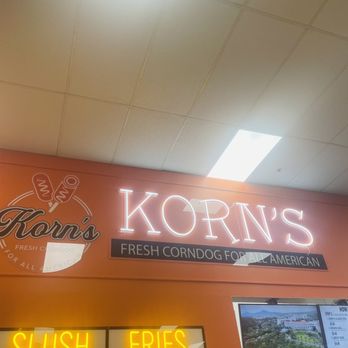
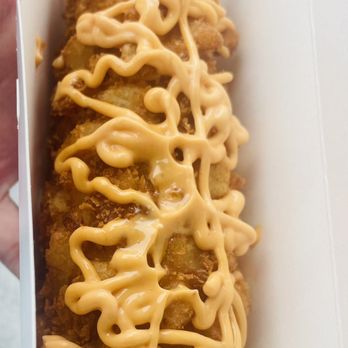

After watching a video of some British private school lads eating Korean corn dogs on YouTube, I searched high and low in my travels to find a place that sells them. Korn's is in a giant store / grocer along its perimeter. You have to enter the grocery store to gain access to the Korn store front. They have lots to choose from, and I selected the all beef dog blanketed in corn dog coating and potatoes before being fried. I enjoyed the dog. A hair underdone. If left to fry for 15-20 more seconds (or a minute if temps were lowered by frying multiple dogs at once), it would have been perfect. I'd likely try it again. Sauces on table. Lots of curious shoppers checking the place out. I waited about 5 minutes for the dog. I wouldn't have mind a little bit longer wait for a well done dog. The staff was friendly and managed orders quickly. It's great to support a local business like Korn's! read more

4 years ago
You have to try it at least once. I do like the options for what's inside your corn'dog'. You can choose sausage (regular or beef), mozzarella cheese, or half sausage half mozzarella. The options are fun! Definitely grab a bite to eat before you shop. We tried the honey garlic fries. They were okay. A little fun that they put some sausage in it! read more


I want to start off by saying the customer service was so pleasant! The food was fresh and came out hot! The korn dog was good but the breading for me was too thick. Flavors are all there though! Overall the store front was appealing and inviting! read more


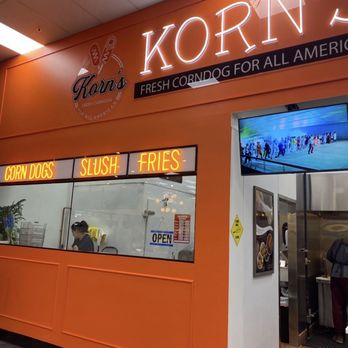

I had been looking forward to finally having a Korean corn dog place close by. We stopped for a quick Sunday lunch before shopping. I had the half and half mozzarella with the potato batter and my significant other had the spicy with the all beef dog. We shared the buffalo garlic fries. The first half of my dog was good but as I got to the middle the batter was raw in the center. The fries were not good. The cheese was unmelted and the sauce was weirdly sweet. Slightly disappointed in my experience, but I think I would give it one more go for a corndog and just skip the fries. read more


9 months ago

If you like interesting corn dogs, this is the spot for you. They have sausage, cheese or 1/2&1/2 sausage/cheese dogs. Then you can pick what you want fried into the dough, like ramen noodles or potatoes or hot Cheetos. We got the ramen one and the potato one, both with all sausage. We did get one with beef, which I didn't think was worth the extra $1. The corn dogs were good, filling, as there is a lot of breading. Each dog costs between $4-$7. The service is quick. They have a few picnic style tables to sit at. read more


1 year ago
Overall experience was pleasant at first but upon finishing our meal we discovered a hair in our corn dog!!! DISGUSTING, when we asked the staff for help it was only one guy and he said he couldn't provide a refund? and instead wanted to make me another corn dog....no thanks I do not want another hairy expensive corn dog. 1STAR read more


4 years ago
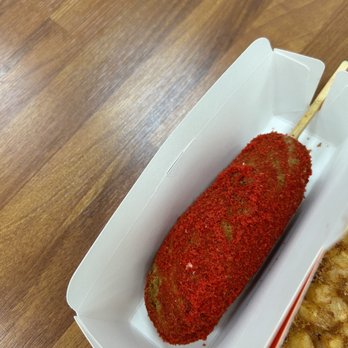
I've been seeing these all over the internet and we finally have a place here that serves them! I really enjoyed this place. it is located inside of the new Saraga International Grocery Store. I tried the potato dog, spicy dog and Ramen dog the potato dog reminded me of french fries to the taste. I had it filled with half cheese and half hot dog. the spicy dog is coated in hot cheetos and I had that filled with mozzeralla cheese. it wasn't spicy at all to me but it was very good none the less the Ramen Dog which ended up being my favorite has fried Ramen noodles in the outside and I had it filled with mozzeralla cheese. They had toppings on tables for you to use and I topped this one with their sweet chili sauce and it was amazing! I went on a Sunday after noon and the line was wrapped around inside of the store, so if you go here on a weekend be prepared to wait but its worth it. read more


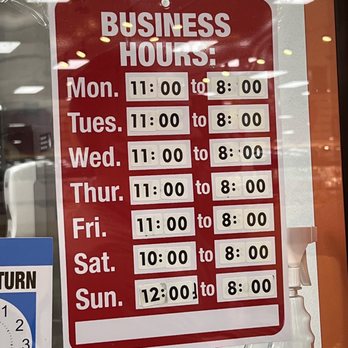


This is not your average corn dog that you can purchase from the state fair! Korn's is located in Sarga which I love; it is definitely worth checking out this market. I ordered an original corn dog, and I love how customizable everything is. They cook everything fresh after you order and the packaging is excellent. read more


We got the potato, ramen and spicy with half sausage and half mozzarella. They were all good. The potato was a favorite for us. The spicy wasn't really that spicy which worked out so my daughter could eat it. The ramen was good and crunchy but it fell apart easily. The mozzarella was more than half of the stick which kind of made it overwhelming next one I'd do all hotdog. We enjoyed it and will definitely try it again. read more


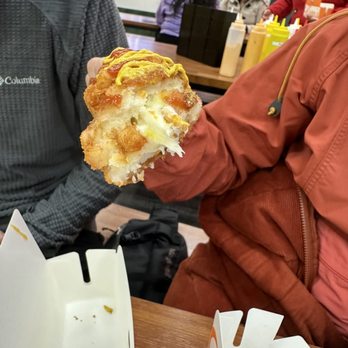


I really wanted to love Korn's, but this place was just okay. There was quite a line to order on a Saturday evening, but it moved fairly quickly. Once through the line, we waited about 10 minutes for our order. Seating is limited, so we opted to move down a few restaurant spots to find a less crowded table. I chose the ramen dog with a regular hotdog interior. The ramen was crispy, but the hotdog itself was nearly flavorless. Taking a bite, everything tasted the same. Spicy mayo was the thing that got me through. My partner had an original exterior, but went half cheese/half hotdog on the interior. The cheese was good, but it was probably 75% cheese and 25% hotdog. It would be better if they wrapped cheese around the hotdog or cut each in half to lay them side by side. Not bad if you're already in Saraga, but not worth going out of your way for. I'm looking forward to trying the other little restaurants next time. read more


4 years ago
Definitely recommend I got the half mozzarella with sausage with a sprinkle of powdered sugar (Very tasty ) read more


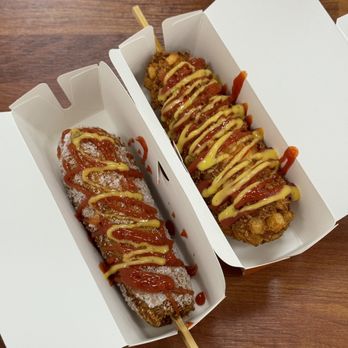
I was contemplating between a 3 and a 4 - but my most recent visit was a bit more positive than my first so decided to go with a four. I didn't know about their fries before so had it for the first time during my recent visit. It was good - a little spicy - but I liked it more than their hot dogs. I wish the batter wasn't too thick, and a little stretchier - can't find a better term for what I mean to say - but whenever I take a bite, everything falls apart. I have had Korean Hot Dogs in different cities so it was hard to not compare. But, for a quick snack, it was good. But not something I would be craving. Hope they can change the recipe a bit up, but that doesn't mean I won't be back. But glad we can finally have some more Korean delicacies in Indy! read more


3 years ago
Was really excited to try. Order process was easy. Got the spicy dog, buffalo garlic fries and a cotton candy slushie. Took about twenty minutes to get my order. A little longer than expected, but I was in no hurry. The fries were amazing!! The spicy dog was not so great. It really lacked flavor, also the breading was still gooey. The slushie was okay. I will try this place again eventually, but in the mean I'm excited to try the other dining experiences inside the Saraga International Grocery. read more


Decided to check this place out since I was in Saraga grocery shopping. There wasn't a line when I walked up to the counter. Only 2 employees were working. I've heard many things about Korn's. I ordered the potato dog with mozzarella. I thought that it was a hot dog plus mozzarella inside but what a disappointment. It was just fried mozzarella for $8! This is something that you can make at home. Not worth the money. It wasn't tasty to me at all. read more


I walked into the new Saraga and was delightfully surprised to be met with the smell of what I immediately was Korean corndogs. I didn't know this was here and was SO excited. I hadn't planned on an afternoon snack, but I couldn't say no. The line was long but I didn't mind, it was going quick. I was able to order in 5 minutes- I got the spicy dog (hot Cheetos) with half sausage half cheddar. The price point was perfect- $5 plus tax. And I could tell turnaround time was about 10-15 minutes so I did a little grocery shopping and came back for my order. It was perfect!! Crunchy, cheesy, beefy. All of it! It was amazing. I imagine once they get used to the demand, the process will speed up a bit, but still worth the wait. This little gem will be a regular stop! read more


We were really excited to try this place and weren't disappointed at all. We both got the classic Korean style corn dog with potatoes on it and it was great! The corn dog batter was fluffy and the standard sausage was flavorful. You can even watch them make it fresh through the window. We got one with sugar and one without to try them both ways and I really recommend trying it with sugar. The sweetness is balanced out with the addition of spicy mayo for a near perfect combination. We will come back again and again. read more
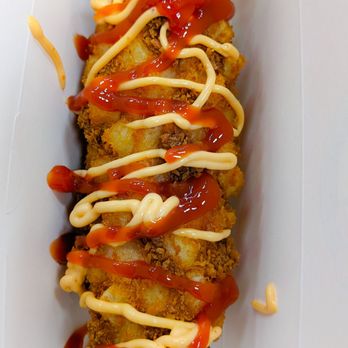


I've been waiting for Korean corn dogs to make their way to Indiana! This is located in the food courts inside the Castleton Saraga. The taste was good but honestly the corn dog needed to be cooked longer. I think they may have added too much batter which was why it didn't cook all the way through. But my cheese didn't melt all the way and some of the dough was uncooked. They've just recently opened so I am sure they will improve. Loved the #2 (corndog with potato) with half mozzarella and sausage. It comes out fresh and it's so delicious!!! read more


Wow! Talk about a unique setting for a corn dog shop! Having a mini AMP or Garage inside a mini Jungle Jim's is AWESOME. Go check out Saraga ASAP. Korn's is the only restaurant serving corn dogs that I actually want to eat again, and I forsee myself eating a whole lot more. Most cordogs are standard, but this is not your average frozen fare. I ordered a classic dog that was half sausage and half mozzarella, and I also got a real spicy dog that was all sausage. I love the variety offered, and the flavor is top-notch. If you like spicy food, ORDER THE REAL SPICY DOG. The flavor is awesome. They really nailed it. read more


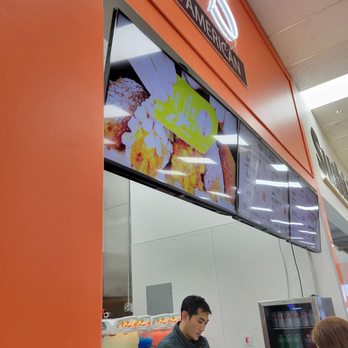
I have been seeing these all over the internet so I had to look and see if we had one here on Indy. To my surprise it was one located in Saraga international market in Castleton. Funny because when I first went there I missed this place all together. Per all the reviews I read the line was long, today was no different but they kept the line moving speedily and the food quality was not sacrificed. I ordered a potato corn dog with beef sausagefor me, a Ramen corn dog with beef sausage for my son and a blue raspberry slushie to drink. The presentation was wonderful and the smells were amazing. Seating was sparce so I opted to bring it home. Since it was our first time trying we split the dogs. They were still hot and fresh. Super crunchy and flavorful, both of them. Fried to perfection... I didn't know what to expect initially but I was not disappointed. Extremely yummy... looking forward to going back and trying other varities... on to the next food adventure. read more


4 years ago
This was our first experience with Korean street food! It was pretty freaking delicious! My hubby got the spicy beef hot dog and said it was pretty good. I got the cereal with cheese only and did half sugar! Flavors I never in a million years would put together but it worked! Super yummy and filling. The lady helping us suggest the sugar and was very nice. It was clean and fast! Ate the dog too fast for a photo oops!! read more


4 years ago
Super friendly staff! There was a line/wait, but it moved quickly. We liked both of our beef corn dogs - Ramen and Potato; however, personal preference was potato. I thought, even with the line on the weekend, there was ample seating. It was a fun experience. We would definitely come back! read more


3 years ago
My husband RAVED about his spicy dog, he loved it. I wasn't overly impressed with my potato dog, so Hubs finished it and declared it to be wonderful as well. read more


Page 1 of 2
More info about Korn's
Ask the Community - Korn's
You might also consider
















Why does Yelp recommend reviews?
1 review that is not currently recommended
The reviews below are not factored into the business's overall star rating.

4 years ago


