This is a multi-generational family farm run by a couple and their two daughters. The family is very hard-working, helpful, and experienced, and someone is always available and willing to help when needed.
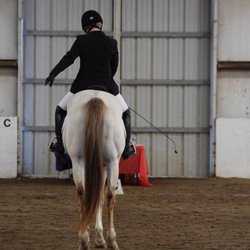
Pros: low-key, kid-friendly atmosphere, huge indoor arena, excellent head trainer, full-sized outdoor dressage ring, heated tack room with hot water, and access to endless miles of trails and dirt roads allows for plenty of independence and fitness work. They offer both stall board and pasture board at reasonable prices ($400 and $550). (Horses on stall board are fed hay and grain three times per day as opposed to just twice for pasture board horses.) They also make their own hay, which tends to be plentiful and high in quality although it can vary and occasionally becomes limited in the spring. They will do blanket changes some of the time. Almost all the turnout areas have shelters, but owners reserve most of the nice grassy fields for their personal horses while boarders' horses are often turned out in less desirable areas which can be extremely muddy in the spring. Trailer parking is complimentary and kept plowed and accessible throughout the winter. The house is close to the barn, so there is always someone around to attend to emergencies, and they always do a night check of the horses in the barn.
Cons: the kid-friendly atmosphere includes kid barn help. Many of the chores are done by working students who are not always supervised and are often quite young and inexperienced. Water buckets and troughs are not scrubbed often enough. Stalls have dirt floors which soak in pee and produce overwhelming ammonia odors by springtime. No wash stall. No jumps but people have brought their own, and boarders are free to jump without being in a lesson. Last time I was there, much of the wood/wire fencing was falling apart and horses were getting loose on a regular basis. There were also often loose wires on the ground. Spooky horses may be unsettled by the frequent use of dirt bikes, nearby gunshots during hunting season, and random machinery on the go, but it's great for desensitizing them. The footing in the indoor is dirt and compacted manure (they drag the manure back into the footing rather than pick it out), and can get very dusty. The footing is not too deep but can be a little too firm in the winter. Also they do not water it, but occasionally will put down snow in the winter, which doesn't make much of a difference. read more