
Happyrock Coffee Roasting Photos


HAPPYROCK COFFEE ROASTING ATMOSPHERE


You might also consider


More like Happyrock Coffee Roasting
Recommended Reviews - Happyrock Coffee Roasting
Start your review...

Reviews With Photos


We've entered a new era where smaller, independent coffee roasters are emerging in many cities. These are now referred as "micro roasters", just like the micro breweries. Many of these micro roasters also have working relationships with the micro breweries in my town(San Diego)to produce coffee- influenced beers such as stouts and porters. I would imagine this happens in Portland as well, since it's a beer town like mine. I must admit, I have never been to Gladstone, much less Oregon, but my coworker stopped in and brought back two types of coffee on his recent visit to Portland. He picked up the Little Bear Blend for us to brew at work, and a small care package of El Chupacabra for me to take home. I was impressed with the lower acidity of the coffee on both styles which led to a balanced, smooth taste. They both had a slight citrus flavor and heavier chocolate notes. Flavors were not complex really, just very smooth similar to cold brew coffee. Not sure when I can make it up this way, but I do have a nephew that lives outside of Eugene, so I told him to check it out if he's in the area. I've always wanted to visit some breweries here, and for me, beer and coffee are my favorite drinks! I just might have to make the trip happen one day! Yes, but coffee first...!


Beat the high score and your drink is free. How's that for a challenge? I pretty much fell in love with this place when I saw the Creature from the Black Lagoon pinball machine. [1] Happyrock Coffee is a little out of the way, but so worth the effort. A micro roaster in the sleepy little town of Gladstone, close to the river. I regularly drive along McLoughlin Blvd. and consider it an ugly blur between Oregon City and Milwaukie. Just a few blocks off the main drag and it is like going back in time to a small downtown filled with taverns and vintage gas stations. I imagine this is what Milwaukie looked like before the recent gentrification. The owner, Lisa, roasts small batches of beans and makes very good coffee drinks. I've had an equally good experience with other staff. There are a few food items, including baked goods from Two Girls Catering and pizza from DaVinci's. They also have Pop Tarts (2 for a $1). The indoor space is incredibly small and dominated by the roaster. It feels more like a funky living room, than a retail space. No complaints. When I want the world to slow down and have a nice cup of coffee in a quirky environment, this is a fantastic choice. And if I want a breath of fresh air, I head out back to the patio. [1] 'The Creature' has since been replaced by South Park.


I've been returning to Happy Rock for three years since my first discovery. Nothing has changed I am pleased to say. I come alone, I bring friends, whatever, it's worth it. This is how I improve my morning. This is now the coffee I buy and take home. Oh, Happy Rock, stay forever!


4 years ago

1 year ago
2 years ago


3 years ago

We've entered a new era where smaller, independent coffee roasters are emerging in many cities. These are now referred as "micro roasters", just like the micro breweries. Many of these micro roasters also have working relationships with the micro breweries in my town(San Diego)to produce coffee- influenced beers such as stouts and porters. I would imagine this happens in Portland as well, since it's a beer town like mine. I must admit, I have never been to Gladstone, much less Oregon, but my coworker stopped in and brought back two types of coffee on his recent visit to Portland. He picked up the Little Bear Blend for us to brew at work, and a small care package of El Chupacabra for me to take home. I was impressed with the lower acidity of the coffee on both styles which led to a balanced, smooth taste. They both had a slight citrus flavor and heavier chocolate notes. Flavors were not complex really, just very smooth similar to cold brew coffee. Not sure when I can make it up this way, but I do have a nephew that lives outside of Eugene, so I told him to check it out if he's in the area. I've always wanted to visit some breweries here, and for me, beer and coffee are my favorite drinks! I just might have to make the trip happen one day! Yes, but coffee first...! read more

2 years ago

3 years ago

Beat the high score and your drink is free. How's that for a challenge? I pretty much fell in love with this place when I saw the Creature from the Black Lagoon pinball machine. [1] Happyrock Coffee is a little out of the way, but so worth the effort. A micro roaster in the sleepy little town of Gladstone, close to the river. I regularly drive along McLoughlin Blvd. and consider it an ugly blur between Oregon City and Milwaukie. Just a few blocks off the main drag and it is like going back in time to a small downtown filled with taverns and vintage gas stations. I imagine this is what Milwaukie looked like before the recent gentrification. The owner, Lisa, roasts small batches of beans and makes very good coffee drinks. I've had an equally good experience with other staff. There are a few food items, including baked goods from Two Girls Catering and pizza from DaVinci's. They also have Pop Tarts (2 for a $1). The indoor space is incredibly small and dominated by the roaster. It feels more like a funky living room, than a retail space. No complaints. When I want the world to slow down and have a nice cup of coffee in a quirky environment, this is a fantastic choice. And if I want a breath of fresh air, I head out back to the patio. [1] 'The Creature' has since been replaced by South Park. read more


4 years ago

8 years ago
I've been returning to Happy Rock for three years since my first discovery. Nothing has changed I am pleased to say. I come alone, I bring friends, whatever, it's worth it. This is how I improve my morning. This is now the coffee I buy and take home. Oh, Happy Rock, stay forever! read more


4 years ago

5 years ago
4 years ago
3 years ago

4 years ago

4 years ago
3 years ago

4 years ago
4 years ago
3 years ago

12 years ago
The staff was very easygoing, the shop had a very nice country feel, with excellent coffee. I had an Americano with soy, and the perky, red-haired barista poured it right up, even offering suggestions on other roasts to try for next time. There is wifi, outdoor seating and one of the most unique aspects of this shop, is that they roast their beans right inside the customer seating area, which serves as a treat to see for those who get chills of joy at the sight and smell of freshly roasted coffee. read more


12 years ago
I picked this place out of the blue today. The shop is tiny and eclectic, and the customers all seem to be old friends. I was easily pulled into conversation, and the barista was friendly and accommodating, but not overly peppy. The Americano was dark and smooth, and I was glad to see Stevia on the shelf. The wifi is fast, but the shop was a little grubby. I'm enjoying the sunshine on the back patio though! read more


12 years ago
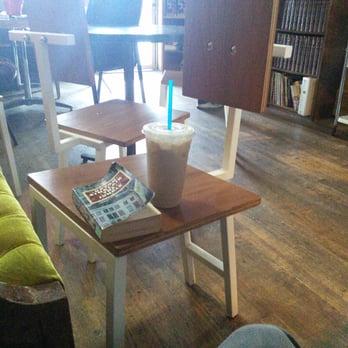
Pay w square. I ordered a coffee pop which was interesting...coffee, syrup, cream and seltzer. I don't think I'd get it again but I'm glad I tried it. And I did drink the whole thing. Live music...it was a fun family kind of event w guitar. I liked the feel of the cafe. But it was kinda dark and def chilly today. The music was great, big band. And the guitars were all over the board. There's parking outside for four hours and free WiFi. Everyone seemed to be ordering eggnog lattes so maybe I'd try that when I go back. Loved the local collabs! Molly Muriel soap on site made w Happy Rock grounds. And Fearless Brewing's porter w coffee. Yum! Cute patio out back. Staff was friendly. Wish there was more lighting. Overall, cool place! I'll be back. Also I'm not a coffee connoisseur... Is pour over avail as iced? I love iced coffee but the closest options were americano or ...? read more

8 years ago

5 years ago

5 years ago

5 years ago


13 years ago
This is a unique little coffee shop in Gladstone. The barista, Lisa is very knowledgeable about coffee and does a fantastic job roasting beans. I am currently hooked on a seasonal but she has several great regular roasts. I am dairy free do extra kudos to Lisa for offering hemp milk as one of the dairy alternatives. Overall an excellent place to hang for java!! read more

10 years ago
5 years ago

9 years ago

19 years ago

13 years ago

12 years ago

11 years ago
Business owner information

Lisa H.
Hello! Thanks for visiting Happyrock Coffee. Sorry our dark roast…

Page 1 of 3
More info about Happyrock Coffee Roasting
1085 Portland Ave
Gladstone, OR 97027
Directions
(503) 650-4876
Call Now
Visit Website
http://www.happyrockcoffee.com/
Hours
Payment methods
Food & Alcohol
Indoor Amenities
Outdoor Amenities
Other Amenities
From the Business
Ask the Community - Happyrock Coffee Roasting
Review Highlights - Happyrock Coffee Roasting
You might also consider












Why does Yelp recommend reviews?
10 reviews that are not currently recommended
The reviews below are not factored into the business's overall star rating.
11 years ago

11 years ago

9 days ago
4 years ago

9 years ago

1 year ago
8 months ago

9 years ago
3 years ago
9 days ago


