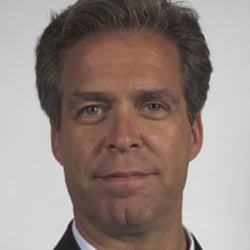
Dr. Fitzgerald tends to diagnose a great majority of his patients (if not all of them) with PLF - perilymphatic fistula. PLFs are extremely uncommon, and yet somehow every person who comes into his office with the slightest irregularity gets slapped with that diagnosis. Surprise, surprise -- many of his tests are not covered by insurance. Surprise, surprise -- PLFs require surgery. It's a scam.
There were two glaring red flags with Dr. Fitzgerald:
First, he pushed hard for the surgery, going so far as to say that I was "crazy" if I were to opt against it. I didn't have the surgery, however, because none of the tests indicated it. Among the battery of inner ear tests I had, most were negative, one showed that there was a problem (but it wasn't conclusive at all about what the cause was and in no way related to a PLF), and the one test that would have suggested -- but not conclusively identified -- a PLF was also negative. Still, Dr. Fitzgerald pushed hard for the surgery. That seemed odd to me.
Second, when I later got a copy of my medical reports from Dr. Fitzgerald to give to another doctor there was NO MENTION of a possible PLF or Dr. Fitzgerald's strong insistence that I have surgery. NO MENTION of even a possibility of a PLF. There was NO MENTION that we even discussed a PLF. If that's the case, how would I even know about perilymphatic fistulas? I am not a doctor, and when I brought up PLFs to my doctor friends, they, too, had never heard of them.
In the event that someone is confused as to why a doctor would not put his recommendation and his diagnosis in his notes, it's because Dr. Fitzgerald was covering his ass. Should he ever be reviewed by the Medical Board (which he wont, as the Medical Board in DC is inept), it would be damning if a disproportionate number of patients were diagnosed with the same problem and were recommended to have the same surgery. So, by not referring to his insistent recommendation that I have surgery and not mentioning that we even discussed the surgery or that diagnosis, he evades detection should he ever be reviewed. There is a word for that: UNETHICAL. Yes, Dr. Fitzgerald is an unethical doctor. Do not go to him. If anyone goes to him and he diagnoses that individual with a PLF, it should come as no surprise. Had Dr. Fitzgerald at least written that PLF was a possibility or that surgery was an option, I would merely think Dr. Fitzgerald was a bad doctor. But he's worse: Dr. Fitzgerald is not only bad, he's also unethically cutting into people, recommending them for surgeries that they probably don't need, and when they show any semblance -- such as I did -- about not being on board with his recommendation, he does not document his "professional" medical opinion. In fact, after pounding into me that surgery was my only viable option, he merely wrote in his notes that I was a candidate for "vestibular rehabilitation" -- a much more conversative treatment approach, something that should have been suggested before surgery was even mentioned, and something we had never, ever discussed.
Not surprisingly, every single patient in the waiting room had been diagnosed with a PLF. Unless people are traveling to Dr. Fitzgerald from the world over, that in itself is highly suspicious. Unless PLF is the most underdiagnosed medical problem in the otolaryngological world -- it isn't -- there shouldn't be dozens of people getting this unusual surgery at any given time.
As a bookend to my experience -- which punctuated my already formed opinion even further - one of the movers who loaded my belongings when I moved out of town happened to mention out-of-the-blue about some vertigo issue he had. With no prompting from me, he mentioned that he had been to Dr. Fitzgerald at Washington Hospital, who, like me, had diagnosed him with a perilymphatic fistula. Imagine that?!!? What are the odds? Fortunately, he, too, did not opt for the surgery.
Dennis Fitzgerald is an unethical and dishonest doctor. Don't go to him. And if you do, don't be surprised if you're diagnosed with a PLF.
Don't say you weren't warned. read more