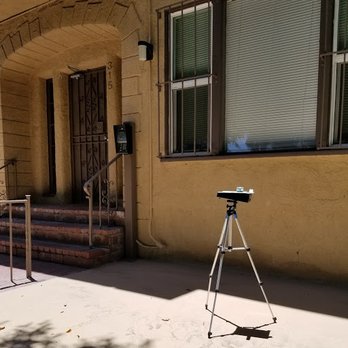
I had a horrible experience of doing work with this man. While he is professional and can provide knowledgeable information, he is horrible when it comes to assessing a property. He's like one of those guys on the streets that has a sign "THE END IS NEAR!" You know those teachers that always gives F's. The guy that has a bunker underneath his home. The one that has plastic over his furniture? He is that guy. Couple of things I take issue with here. Mold is EVERYWHERE - it is in our environment and in our homes. Most molds are harmless and those that are in the category of toxic need LARGE quantities to have any effect.
I got a lab report from showing total fungi count of 520. Recommended acceptance in residential in california by Baxtor Model (EAA - which he is a member of) less then 1300. The journal goes on to state the toxic molds that need to be reviewed are stachybotrys and Aspergillius/Penicillum which also gave me estimates counts that were low in comparison to my lab report! (PLEASE NOTE THESE ARE RECOMMENDATION BASED on 75% ACCEPTANCE IN SOUTHERN CALIFORNIA)
Moving on to another reason for rejection... "Potential for mycotoxin production exists with these fungi" - First off mycotoxin is produced by fungis - most commonly from aspergillus and stachybotrys.
I looked it up on CDC website.. you know.. Center for Control Disease and Prevention - back in the 90's findings from CDC caused this whole paranoia that mold affects the pulminary hemorrhage in infants causing billions in lawsuits - mold in homes were causing sickness! In 2000 CDC recanted there statement:
https://www.ncbi.nlm.nih.gov/pubmed/11795499
My friend.. you are using outdated information to stir fear into people. I might understand if there are high spore counts and I would be concerned.. but when I have a report here showing below with LOW counts (30 m/3? or 40 m/3?). A journal you are a member of stating recommendations for acceptance criteria. I have to think there is something else going on with you.
THERE IS NO EXACT SCIENCE OR CRITERIA IN THE WORLD OF MOLD TESTING and THAT IS WHERE THIS PARANOID people that feed others paranoia play a role. And that is the problem. He can give whatever BS information he wants with outdated information.
UPDATE: STOP THE LIES YOU FEED TO PEOPLE!
Central of Disease Control - Government Agency
http://www.cdc.gov/mold/stachy.htm#Q1
I heard about "toxic molds" that grow in homes and other buildings. Should I be concerned about a serious health risk to me and my family?
The term "toxic mold" is not accurate. While certain molds are toxigenic, meaning they can produce toxins (specifically mycotoxins), the molds themselves are not toxic, or poisonous. Hazards presented by molds that may produce mycotoxins should be considered the same as other common molds which can grow in your house. There is always a little mold everywhere - in the air and on many surfaces. There are very few reports that toxigenic molds found inside homes can cause unique or rare health conditions such as pulmonary hemorrhage or memory loss. These case reports are rare, and a causal link between the presence of the toxigenic mold and these conditions has not been proven.
In 2004 the Institute of Medicine (IOM) found there was sufficient evidence to link indoor exposure to mold with upper respiratory tract symptoms, cough, and wheeze in otherwise healthy people; with asthma symptoms in people with asthma; and with hypersensitivity pneumonitis in individuals susceptible to that immune-mediated condition. The IOM also found limited or suggestive evidence linking indoor mold exposure and respiratory illness in otherwise healthy children. In 2009, the World Health Organization issued additional guidance, the WHO Guidelines for Indoor Air Quality: Dampness and Mould[PDF - 2.52 MB]. Other recent studies have suggested a potential link of early mold exposure to development of asthma in some children, particularly among children who may be genetically susceptible to asthma development, and that selected interventions that improve housing conditions can reduce morbidity from asthma and respiratory allergies, but more research is needed in this regard. read more