Cancel

    Open app

    Search

    Seattle Central Creative Academy

    5.0 (2 reviews)
    Closed Closed

    Seattle Central Creative Academy Photos

    You might also consider

    More like Seattle Central Creative Academy

    Recommended Reviews - Seattle Central Creative Academy

    Your trust is our priority, so businesses can't pay to alter or remove their reviews. Learn more about reviews.
    Yelp app icon
    Browse more easily on the app
    Review Feed Illustration

    9 years ago

    Helpful 0
    Thanks 0
    Love this 0
    Oh no 0

    9 years ago

    Helpful 0
    Thanks 0
    Love this 0
    Oh no 0

    Ask the Community - Seattle Central Creative Academy

    You might also consider

    Verify this business for free

    People searched for Specialty Schools 208 times last month within 20 miles of this business.

    Verify this business

    The Studio Seattle - stage actors

    The Studio Seattle

    (7 reviews)

    Phinney Ridge

    I'll start off by sharing a positive experience I had at The Studio Seattle, which was getting to…read morelearn from Hailey Henderson. Hailey is as excellent of an instructor as she is an actor. She clearly loves teaching and is incredibly knowledgeable about acting theory and applications. Hailey has high expectations for her learners and is also deeply compassionate, a perfect combination for creating an effective learning environment. I am immensely grateful to have been able to learn with her. Hailey is the primary instructor for The Studio Seattle, whereas Andrew Tsao is the artistic director and founder. Andrew was going to cover the last several weeks of classes in my Acting Foundations 2 class series, and prior to this he co-taught a class with Hailey. In this class, Andrew had us participate in exercises where we would be improvising interactions with a scene partner. These scenes were meant to be highly realistic- we were playing ourselves and had similar relationships to each other as we do in real life. Our objectives and given circumstances were given to us individually, without our scene partner's (or the class's) knowledge. In one scene, Andrew had one of our male classmates play the role of a sexual predator towards not one, but two of our classmates. When his scene partner responded to his unwanted advances authentically, by attempting to distract the perpetrator and leave, Andrew told her that she was responding incorrectly and that should/would in fact "fight". He also told her that her "avoidance" would be a hindrance to her as an actor. In another scene, part of the given circumstances was that one of my classmates had had an abortion. I followed up with Andrew expressing my concern that not one, but two extremely sensitive topics, particularly for women, were chosen for these exercises. I stated that that the nature of the exercises required us to be ourselves, thereby increasing the level of sensitivity and creating a high potentiality for trauma/re-traumatization. I acknowledged that while actors do work with difficult content, we get to choose and consent to this, which was not an option in this situation (since we did not know our scene partner's backgrounds or objectives). I stated my expectation that content will be more thoughtfully chosen for these exercises moving forward and that learners be made more fully aware of their options. Andrew's initial response acknowledged that he could have been more thoughtful in ensuring everyone was aware that they could opt out of the exercises. He did not address my concerns over the nature of the content itself, other than implying that more experienced actors would have been fine with the content (I have since heard from multiple other acting instructors that this is not at all the case). I responded by saying that I appreciated his effort to improve transparency around opting out of exercises moving forward. I again stated my concern over the content itself, particularly as it relates to women, and expressed skepticism that more experienced actors would have been fine with the content. Overall, I felt like my concerns were dismissed. Andrew responded by disinviting me to continue attending classes at The Studio Seattle. Based on my experience, I'm of the opinion that Andrew Tsao is not interested in feedback as it relates to the safety of his students, particularly women. For this reason, I would caution any woman/female person against taking classes at The Studio Seattle.

    I have completed Foundations 1 & 2 at The Studio Seattle and cannot speak highly enough about this…read moreprogram and instructors. Alana's deep understanding of theory and process offers the groundwork to feel comfortable and prepared for the deeper work in Foundations 2, while Aaron has a magical way of balancing thoughtful and respectful lessons with a humility and irreverence that creates a joyful space to learn and try new things. Thank you, Andrew for creating a welcoming, enriching, and intensive space in Seattle.

    Hugo House

    Hugo House

    (32 reviews)

    Capitol Hill

    It's obviously great that this place exists for an introverted, writerly city like Seattle, but…read morethis legendary nonprofit has developed some key flaws since its founding. First off, it doesn't honor its mandate as a place for community-building nearly enough. With over 90% of their classes virtual on any given season, they are not taking advantage of their beautiful building to have in-person classes where people can meet. If virtual classes is what I'm looking for, then I'll take a virtual class based in New York, LA, London, etc. Secondly, not all their instructors are of the same quality. Some are quite good without a doubt, while others have scant publishing credentials or dubious abilities to lead a class (e.g., they lack focus, or lack facilitation skills, etc.). A baseline standard & some class leadership guidelines would go a long way. I will say, Hugo House largely keeps the focus on writing, and doesn't fall prey to distracting identity politics like other Seattle literary institutions (looking at you, Open Books). Also can we, like, fix the audio in open mics? I feel like we're in a cave.

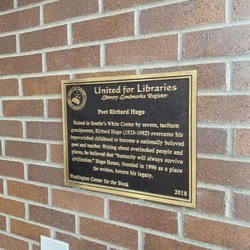
    This is an AWESOME writing school or writing educational center located right next to Kajiken (the…read moreaburasoba place) on 11th Avenue in Seattle's Capitol Hill District. Founded by or named after the poet and teacher Richard Hugo, the school offers creative writing classes on every single aspect of the craft imaginable (as can be seen by the colorful fliers posted on the inside of the wall). Definitely check this place out on 11th Avenue!

    The Seattle School of Theology and Psychology - TSS's youngest ever graduate student.  Lolz

    The Seattle School of Theology and Psychology

    (5 reviews)

    Central District

    This school is a paradox and I can't imagine being anywhere else. It's a seminary. So, if you are…read morelooking for a secular institution you won't find that here. What many who have embraced this place have found it to be, is a place for individuals who have been wounded by 'the Christian church' or their more fundamentalist upbringings but who are not necessarily wanting to abandon their faith. This place is by no means conservative, in fact it really does occupy the space right between the point of secular humanism and Christianity which is why you see some of the extreme reactions from both ends of the spectrum in the reviews.--conservative Christians who expected TSS to be a traditional Christian seminary are deeply uncomfortable and sometimes even enraged by its not being 'christian' enough, and then there are those who come to a Christian seminary who are not Christian and are deeply offended that professors engage their own Christian faith (which by the way is completely different for each of them: another thing some more conservative students have a hard time with. Understandable considering many of us are raised being taught one or another denomination is more accurate than the other) and ask students to do the same for themselves, mainly for the purpose of challenging students to deeply consider and define for themselves what they believe and why. For those who are deeply guarding their evangelical roots, this place will likely feel like a challenge to their beliefs, as professors discuss some of the origins of those beliefs, present alternative voices and perspectives, and ask students to deeply wrestle with how their beliefs have historically been used to oppress, control and turn away from marginalized communities. So, students who want this place to: 1. be like their particular conservative church growing up, 2. Or are not comfortable with being asked to wrestle with why they believe what they do, and/or 3. are expecting this place to only talk about faith from the perspective of a secular institution but not ask you to personally wrestle with or engage Christian theology as it relates to your life, then you might find yourself challenged here. But, this tends to be a place where students find that they can bring their anger and their questions and their dissatisfaction with God, the church, how Christians have traditionally acted out harm throughout history and in their own lives. This place requires counseling students to take a few theology, bible and spiritual formation classes but they are engaged in ways very different from conservative seminaries--inviting you to engage your body, your sexuality, the ways you've been silenced and have silenced others, the ways patriarchy and racism have informed our view of self, faith and others etc. This school is def a place for students who are clinging more tightly to a desire to live out their faith in a way that feels more congruent to the practice of love, than they are with their faith maintaining the particular boundaries or structure that they came to the school with. This school isn't perfect. None of them are. But more than any other institution I've been at, they seem to desire to grow and are constantly asking, listening and being changed because of their engagement with students. This is a quality that is so unique to this school. I have so much more to say but this is already way to long. To sum it all up. What it boils down to is, whether you are a Christian, humanist, or anything else, if you want to stay comfortable, or are clinging so tightly to your particular worldview that you cannot or do not want to be challenged than this might not be the place for you. However, if you want to ask hard questions, be challenged to look inward at yourself in a way that will be deeply uncomfortable, yet profoundly transformative in how you engage yourself and your future work with others, this may be a place worth checking out.

    This school has many aspects of a cult and is a money-making racket…read more I gave one star because I have to and I met some well-meaning people there. 1. The admissions people promised me that the program would take 2 years, it is the main reason I joined. Once I started at the school I found that almost no one completes the program in 2 years. 2. I was told by admissions that the program is very spiritual, not religious and there was lots of space for people who are not religious. In this I was totally misled. see below: 3. The founder of the school leads one of the first required classes. The class consists of (mainly) him ranting on and on about Jesus. I had a very orthodox Christian girl who was part of the "Christian purity movement" tell me: "YOU DEFINITELY NEED TO DRINK THE KOOLAID TO SURVIVE THE PROGRAM" during that class. 3. The founder preaches that students must dig into our own inner suffering to heal ourselves to become good counsellors. I had a meeting with the dean of education and specifically asked her if students were supposed to dig deep and hard into their darkest sufferings, to come out on the other side as better people (as he suggested). She answered with a definite "yes" that this was how the program worked on students. I fundamentally disagree that one needs to suffer through a program to heal and be a better therapist. *** AND, I later talked to a client of mine who had attended the school and come down with a serious illness due to being in the program. She said she would have warned me to avoid the school. (She completed the program). 4. The founder went into a graphic description of his own rape at age 12 without any warning to a group of 120 of us. I asked why there had been no sensitivity to the nervous systems of those of us who might not be able to handle hearing graphic rape stories. I was told that these are the tactics to get us to suffer (and come out healed etc). 5. You meet with a group of 8-10 people weekly in a small room. You tell a story about something difficult that happened to you. The other students in the room respond to your story. So you bare your soul and have unqualified people passing judgement on what they see in you based on what you shared. Other schools are shocked when I speak about this practice. I was told I was not vulnerable enough and ostracized. 4 other women who I'd noted as strong capable people were too. 6. I found out later that about half the people that started the program left by the 2-3rd quarter. = money making scheme. Be very wary of this program. I wrote a letter of complaint and asked for my money back, they have not responded. I'm taking my case to the WA state attorney General. (https://carm.org/signs-practices-of-a-cult).

    Seattle Central Creative Academy - specialtyschools - Updated May 2026

    Loading...
    Loading...
    Loading...