Cancel

    Open app

    Search

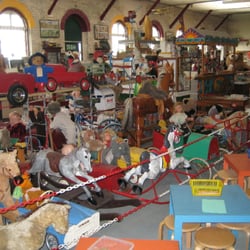
    Robin Hoods Bay Interesting Stuff

    4.0 (2 reviews)

    Robin Hoods Bay Interesting Stuff Photos

    Recommended Reviews - Robin Hoods Bay Interesting Stuff

    Your trust is our priority, so businesses can't pay to alter or remove their reviews. Learn more about reviews.
    Yelp app icon
    Browse more easily on the app
    Review Feed Illustration

    18 years ago

    Helpful 0
    Thanks 0
    Love this 0
    Oh no 0

    17 years ago

    Helpful 0
    Thanks 0
    Love this 0
    Oh no 0

    Verify this business for free

    Get access to customer & competitor insights.

    Verify this business

    The Bram Stoker Dracula Experience

    The Bram Stoker Dracula Experience

    3.1(7 reviews)
    7.6 km

    Bram Stoker's 'Dracula' is brought to life in this walk-through attraction - a series of 10 scenes…read moreusing sounds and new electronic special effects, eerie life-size models and live actors. A cape weighing 56 kilos and worn by Christopher Lee in his 2nd 'Dracula' film is on show. They say it is an educational and historical tour, ideal for school partiesI think more of an old fashioned fun house thing. Dracula and Whitby were thrown together in a most dramatic manner, to say the least. A terrifying storm lashed the coastline and the Russian schooner, Demeter, somehow managed to gain the safety of the harbour. The Dailygraph newspaper summed up the strange event thus: The searchlight followed her, and a shudder ran through all who saw her, for lashed to the helm was a corpse, with a drooping head, which swung horribly to and fro at each motion of the ship. No other form could be seen on deck at all. A great awe came on all as they realized that the ship, as if by a miracle, had found the harbour, unsteered save by the hand of a dead man! However, all took place more quickly than it takes to write these words. The schooner paused not, but rushing across the harbour, pitched herself on that accumulation of sand and gravel washed by many tides and many storms into the south-east corner of the pier jutting under the East Cliff, known locally as Tate Hill Pier. But, strangest of all, the very instant the shore was touched, an immense dog sprang up on deck from below, as if shot up by the concussion, and running forward, jumped from the bow on the sand. Making straight for the steep cliff, where the churchyard hangs over the laneway to the East Pier so steeply that some of the flat tombstones - 'thruff-steans' or 'throughstones,' as they call them in the Whitby vernacular - actually project over where the sustaining cliff has fallen away, it disappeared in the darkness, which seemed intensified just beyond the focus of the searchlight. Bram Stoker found some of his inspiration for Dracula after staying in the town. He stayed in a house on the West Cliff (the Crescent). Stoker found a general history book at the Whitby Library (which was near the Quayside originally). He tells us so at the top of a sheet of his notes taken from William Wilkinson's 'An Account of the Principalities of Wallachia and Moldavia' (1820). These notes contain the only reference to Dracula (the historical figure) in all of Stoker's papers. There seems to be little doubt that Whitby is where he discovered the name. Prices Adult £1.95 Child £1.50 Concession £1.50 Family £6.00 (2 adults & 2 children)

    The Dracula Experience has been in Whitby for donkey's years, and still seems to be a very popular…read moreattraction! It is situated on Marine Parade, opposite the Lifeboat Mooring. It is open all year round, including Christmas and New Year! I visited the Draculsa Experience a couple of years back with my niece who was 13 at the time. We kind of knew what to expect, and we weren't disappointed! Although there's really not much to the attraction itself it does have it's charm; it's basically just a walk-through telling the story of Dracula, with waxworks and spooky noises to give it that authentic spooky feel! There was a live actor on when we visited (at least i hope it was an actor) and he was following us around touching us with his long rubber hands! We thought this was hilarious as we kept telling him to go away and making the sign of the cross at him! I would recommend the Dracula Experience for adults and older children; it would probably be too scary for most under sevens. It is a daft laugh and you can't knock it for some cheap entertainment!

    Photos
    The Bram Stoker Dracula Experience - Bram Stoker

    Bram Stoker

    The Bram Stoker Dracula Experience - The Dog

    See all

    The Dog

    Robin Hood's Bay - Its History and Origins - Beach

    Robin Hood's Bay - Its History and Origins

    4.4(5 reviews)
    0.3 km

    The bay is breezy and picturesque; it is built in a fissure between two steep cliffs. Oh steep…read morereally means steep; you need to be super, super fit even going down hill. It's a pleasant place and pretty but then England has lots of beautiful harbours that aren't life threatening for the unfit. My wife and I really struggled walking back up the steep, steep hill. It's also narrow and winding and vehicle unfriendly. The village is ancient and its houses are built mostly of sandstone with red-tiled roofs. The headlands at each end of the beach are known as Ness Point or North Cheek (north) and Old Peak or South Cheek (south). There's not a lot of life in the beach rock pools. The cliffs are composed of Upper Lias shale, capped by Dogger and False Bedded Sandstones and shales of the Lower Oolite. We wouldn't return unless we had to and if we did we'd need a taxi on speed dial.

    Having written about the Whitby area and Robin Hoods Bay I thought some may be intetested in a bit…read moreof the history before visiting. I love this place. It appears that in the 16th century, Robin Hood's Bay was far more important than Whitby. In a series of Dutch sea charts published in 1586, Robin Hood's Bay is indicated while Whitby is not even mentioned. What we are certain of is that in the 18 th century, Robin Hood's Bay was reportedly the busiest smuggling community on the Yorkshire coast. Its natural isolation, protected by marshy moorland on three sides, offered a natural aid to this well-organised business which, despite its dangers, must have paid better than fishing. Five and twenty ponies trotting through the dark..brandy for the parson..baccy for the clerk Smuggling at sea was backed up by many on land who were willing to finance and transport contraband. Fisherfolk, farmers clergy and gentry alike were all involved. Fierce battles ensued between smugglers and excise men, both at sea and on land, and Bay wives were known to pour boiling water over excise men from bedroom windows in the narrow alleyways. Hiding places, bolt holes and secret passages abounded. It is said that a bale of silk could pass from the bottom of the village to the top without leaving the houses. The threat of the excise men was not the only danger to Bayfolk. In the late 18 th century and early 19 th century, the Press Gangs were feared and hated. Sailors and fishermen were supposed to be exempt but, in reality, rarely were. Once 'pressed', their chances of returning to their homes were not high. Village women would beat a drum to warn the men folk that the Press Gangs had arrived and it was not unusual for the Press Gang to be attacked and beaten off. Millions of years ago, the land upon which Robin Hood's Bay is situated was once a deep sea. The sea animals of the time, buried in the mud, became fossilised, providing one of the best sources in Britain for the fossil hunter. Some of these fossils can be seen on display in the museum and can still be picked up on the beach if you look carefully. Robin Hood's Bay lies in the ancient parish of Fylingdales. The name itself is believed to be derived from the Old English word 'Fygela' which meant 'marshy ground'. The first evidence of man in the area was 3000 years ago when Bronze Age burial grounds were dug on the high moorland a mile or so south of the village. These are known as Robin Hood's Butts. Some 1500 years later, Roman soldiers had a stone signal tower built at Ravenscar about the 4 th century AD. The first regular settlers, however, were probably Saxon peasants, followed by the Norsemen. The main colonists of this coast were Norwegians who were probably attracted by the rich glacial soil and ample fish, and this is how they survived by a mixture of farming and fishing. The likely original settlement of the Norsemen was at Raw, a hamlet slightly inland, which helped to avoid detection by other pirates. After the Norman Conquest, the Manor of Fyling was given as the spoils of war to one of William the Conqueror's relatives, Hugh of Chester. Eventually, it passed to the Percy family who gave the land to Whitby Abbey. The first recorded reference to Robin Hood's Bay was in 1536 by King Henry VIII's topographer, Leland, who described 'a fischer townelet of 20 bootes with Dok or Bosom of a mile yn length'. By now the cliff settlement had grown larger than the inland settlement, probably because they felt more secure from piracy and because it would be more convenient to walk from the boats. By 1540, the village was said to have fifty cottages by the shore (a large settlement at that time) so we can speculate that the present village originated somewhere in the 15 th century. In 1540, the chief tenant was Matthew Storm and his descendants still live in the area. At the dissolution of the monasteries in 1539, the land passed to the King who sold it to the Earl of Warwick. The Cholmleys and then the Stricklands became the final 'Lords of the Manor' The actual origin of the name remains a mystery.Robin Hood was the name of an ancient forest spirit similar to Robin Goodfellow and the use of the name for such an elf or spirit was widespread in the country. Many natural features were named after these local folk of legend and, in time, stories crossed over from one legend to another. The traditional anecdotes probably go way back in time but as to their origin - who knows? The fishing industry reached its zenith in the mid 19 th century and a thriving community existed in Bay. The townsfolk liked to amuse themselves in the winter and there were dances almost every evening. Church and chapel were well attended and funerals and weddings were occasions for a festival. Like other fishing villages, Bay had its own gansey pattern. (knitted sweaters)From the early 19 th century, Robin Hood's Bay began to attract visitors from the outside and this has

    Photos
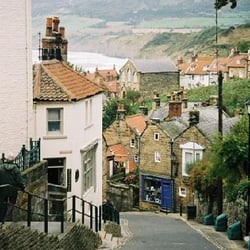
    Robin Hood's Bay - Its History and Origins - Village view

    Village view

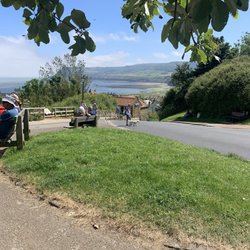
    Robin Hood's Bay - Its History and Origins - View before going down hill

    View before going down hill

    Robin Hood's Bay - Its History and Origins - Main street

    See all

    Main street

    The Dracula Trail

    The Dracula Trail

    5.0(1 review)
    7.4 km

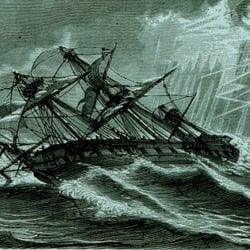
    Many books have been Written using Whitby as the setting. Most notably of course Dracula and the…read moreteen books of the Witby Witches series by Robin Jarvis which mentions the whole town but particularly the 199 steps, the hand of glory, in the museum, and the Aufwaders..a mysterious clan of gnome like fisherfolk who live in the cliffs. But the most famous as I say is Dracula. The author Bram Stoker, set three quarters of his story around Whitby and it is still possible to retrace those steps of the undead, taking the Dracula Trail Tour. Overall I was very impressed with the Whitby Dracula Trail For 50p I bought the Whitby Dracula Trail guide from the local Tourist Information Centre. The guide was developed with the help of the London based Dracula Society and takes in the landmarks of old and new Whitby. The tour starts at the Bram Stoker Memorial Seat which was built on the 20th April 1980 to commemorate the 68th anniversary of Bram Stoker's death. It was said that on this spot directly opposite the Royal Hotel, the inspiration for the novel, Dracula, was born. This bench on the west cliff, overlooking Whitby Harbor, is one that all travelers should visit at least once. Bring a breakfast thermos of (blood?) bloody Marys and your tattered copy of Dracula. Read chapters six through eight while sitting on the bench, and watch the novel come to life before you begin the trail. Below are the cold sand beaches that welcomed the Russian schooner Demeter, the ship that brought Dracula to England from Transylvania. In the book, the ship's captain is dead and lashed to the wheel. The crew is missing. The only sign of life on board is a huge, black, dog-like creature that dives from the ship and disappears into the narrow alleys of Whitby's east side. A real Russian schooner called Demitrius washed ashore on those sands in 1885, about a decade before Stoker visited Whitby for a holiday weekend. Gaze across the harbor to the east cliff where the red-roofed houses seem to pile up on top of each other against the hillside, just like Stoker's character Mina Harker described. At the top of the cliff are St. Mary's Church and its graveyard of limestone markers, worn blank by the North Sea wind. (some say brass plaques were removed to make musket balls in the Civil War). This is the graveyard where Stoker's ill-fated character Lucy is first seduced by the count. Dracula didn't die in Whitby, but he took refuge in the grave of George Cannon, who had commited suicide. According to the booklet there is no trace of George Cannon grave today. A Commemorative Plaque is at 6 Royal Crescent, on the West Cliff, where Bram Stoker stayed. There are still hotels in Royal Crescent today. As the self-guided tour winds its way around the old streets of Whitby documenting different points of interest it is easy to imagine yourself back in the 1870s when Stocker wrote his classic novel. As you make your way along the narrow streets and steep slopes, numerous old fashioned restaurants and quaint shops reminiscent of times past can be seen. Whitby has gone out of its way to mark and memorialize every possible sight in the town that had a place in the novel. The final destination on this tour is perhaps the most famous landmark mentioned in Dracula the 199 steps leading up to St. Mary's Church. It was here that Mina made a frantic dash as she ran up the steps to save Lucy only to find her friend being protected and asleep beside the Black Dog (Dracula). Of course the legend is that the black dog exists and can still be seen or heard howling. Even better do the tour at night on a Whitby Goth weekend when the place is full of vampires. Then without warning the tempest broke. With a rapidity which, at the time, seemed incredible, and even afterwards is impossible to realize, the whole aspect of nature at once became convulsed. The waves rose in growing fury, each over-topping its fellow, till in a very few minutes the lately glassy sea was like a roaring and devouring monster. White-crested waves beat madly on the level sands and rushed up the shelving cliffs. Others broke over the piers, and with their spume swept the lanthorns of the lighthouses which rise from the end of either pier of Whitby Harbour. To add to the difficulties and dangers of the time, masses of sea-fog came drifting inland. White, wet clouds, which swept by in ghostly fashion, so dank and damp and cold that it needed but little effort of imagination to think that the spirits of those lost at sea were touching their living brethren with the clammy hands of death, and many a one shuddered as the wreaths of sea-mist swept by. Bram Stoker, Dracula

    Photos
    The Dracula Trail
    The Dracula Trail
    The Dracula Trail

    See all

    Yorkshire Air Museum - The Museum is home to Victor XL231, a Cold War jet kept in live running condition

    Yorkshire Air Museum

    4.4(7 reviews)
    63.0 km

    This is a great day out regardless of age be you 5 or 105 there should be something to interest…read moreyou. Located on a former wartime Air-base this museum is run by many volunteers, including an ex-rear Gunner and wireless operator who was shot up during a raid over Germany. George Martin can be found in the Air Gunners Exhibition and I can assure you a more interesting bloke with his experiences and memories of this period I have yet to meet. The Museum is spread within several restored wartime sheds which house the various themes on display, along with many restored aircraft outside and in hangers. It also still has the air traffic control tower which displays how things would have been. One of the hangers displays other restored Aircraft including, the Halifax bomber of which nearly 80 were lost during raids over Germany from this base alone. Other more modern planes are also on display including the Buccaneer, Vulcan Bomber, and Harrier to name a few. The museum continues to restore aircraft and long may it continue we had an excellent day out and at an entrance cost of only £5.00 per adult including parking it wasn't going to break the bank.

    We went on a slightly miserable but warm morning. When we arrived we were very impressed with the…read moresetup of the museum. It is very well kept with lots if different executions and lots of planes to see. I was particularly impressed with the Halifax bomber! You could also try out a couple of actual cockpits and they had 2 simulators, one to practice landings and the other as a rear gunner! The sun came out and it was a glorious day, we sat outside the NAAFI with a drink and a cake from the canteen. We would highly recommend you take a trip out, the kids would love it at well!!!

    Photos
    Yorkshire Air Museum - Spitfire

    Spitfire

    Yorkshire Air Museum - Tornado jet in the sunshine at the Yorkshire Air Museum

    Tornado jet in the sunshine at the Yorkshire Air Museum

    Yorkshire Air Museum - Our Bomber Command exhibition explores the history of WW2

    See all

    Our Bomber Command exhibition explores the history of WW2

    The Sutcliffe Gallery - Lizzie who is on my wall

    The Sutcliffe Gallery

    5.0(1 review)
    7.5 km

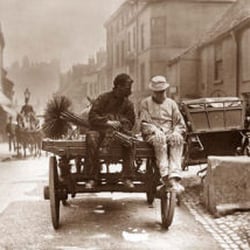
    The Sutcliffe gallery is a gem. I have a few framed prints that I bought in this shop and spent…read moreages looking through images of past times. Some are local characters like fishergirls Polly Swallow and Lizzy Alice Hawksfield. He produced magnificent studies of the characterful fisherfolk working around the harbourside with its picturesque square-rigged ships. Think Prospect of Whitby (the pub in Wapping) named after one of the ships. Love the one of the miller and the sweep on a cart..new meaning to black and white! Naked children swimming and playing (Water Rats)..children on doorsteps..farm workers..urchins. Lizzy spent many years on my wall as did one of ships in harbour. His most famous image is called Water rats (1886), a delightful picture which caused considerable controversy, and the wrath of the Whitby clergy for corruption of the young; it is said that they excommunicated Sutcliffe for exhibiting what they felt to be an indecent print to the corruption of the young and the other sex. By contrast the Prince of Wales (later Edward VII) purchased a copy of the picture. A photographer who is regarded as a pictorialist, there is also the documentary aspect of much of his work, portraying as it does the life of the times, with their street musicians, farmers, and other ordinary people. The full extent of his contribution was not recognised until long after his death. His work may also be seen at the Whitby Literary and Philosophical Society, Whitby. If you love Victorian scenes and photography..mainly of happy people then I defy anyone to browse this place and not come out owning a few prints. Background history for those interested: Frank Sutcliffe, born at Headingley, Leeds in 1853, set up his own professional photographic studio in a dis-used jet workshop in Waterloo Yard, Whitby in 1875. He remained in Whitby up until his death at the age of 88 in 1941..Sutcliffe developed a great affection for the busy little fishing port on the rugged North Yorkshire coast. These Whitby photos, together with his superbly composed landscapes and the farming community going about its daily tasks in the neighbouring moorland villages and valleys, eventually earned him over sixty gold, silver and bronze medals at exhibitions throughout the world between the late 1870s and the end of the 19th century. The vast majority of his negatives were on whole plate glass, the earliest being on wet collodion requiring the glass to be coated with the sensitive emulsion immediately prior to exposure of the plate. These negatives and the business were acquired by the Shaw family in 1959 after having been passed along through two other owners subsequent to Frank Sutcliffe. In 1965 Sutcliffe's plates were donated by The Sutcliffe Gallery to Whitby Literary & Philosophical Society, owners of Whitby Museum. Since that time a gradual process has taken place of transferring the images from the original plate, in the early days onto 8x10 sheet film, to create high quality duplicate negatives but now, with the means available to make high resolution scans, each subject is being digitally recorded on to two CDs, one for the Gallery archives and one for Whitby Literary & Philosophical Society. The main reason for doing all of this is the ethical one of obviating any further handling of the original negative.

    Photos
    The Sutcliffe Gallery - Sweep and miller

    Sweep and miller

    The Sutcliffe Gallery - Polly Sparrow on many Whitby advertising items

    Polly Sparrow on many Whitby advertising items

    The Sutcliffe Gallery - Frank Sutcliffe

    See all

    Frank Sutcliffe

    Robin Hoods Bay Interesting Stuff - museums - Updated May 2026

    Loading...
    Loading...
    Loading...