Some of the interesting stuff I have found at Robin Hoods Bay. A day or two can be spentlooking…read more There are also long coastal (clifftop) walks to do.
There is not a scrap of evidence to suggest that Robin Hood of Sherwood Forest folklore visited the Bay. The name is more likely to have grown from legends with local origin and probably from more than one legend. Robin Hood was the name of an ancient forest spirit similar to Robin Goodfellow and the use of the name for such an elf or spirit was widespread in the country.
The first reference to Robin Hood's Bay comes in 1538 when it was recorded as a fisher townlet of twenty boats. At that time the settlement consisted of just fifty houses, but from that day to this the activities of the people living here have centred around and been dominated by the sea. Generations of fishermen have lived out their lives here, and smuggling looms large in the village's history. Many of the houses were once connected by a network of tunnels -- some still are -- that enabled smuggled goods to be easily transported from bay to clifftop without ever seeing the light of day.
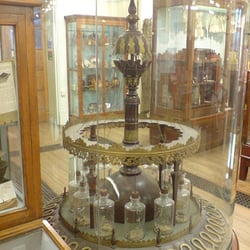
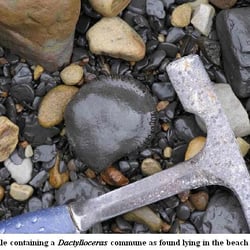
Millions of years ago, the land upon which Robin Hood's Bay is situated was once a deep sea. The sea animals of the time, buried in the mud, became fossilised, providing one of the best sources in Britain for the fossil hunter. Some of these fossils can be seen on display in the museum and can still be picked up on the beach if you look carefully.
A plaque fixed to a wall near the Collecting-Box Mine tells a fascinating story of courage and determination. On the 18th of January, 1881 there was a violent storm, during which a brig called Visitor ran aground in Robin Hood's Bay. The weather was so bad it was impossible to launch the local lifeboat, so a remarkable decision was made. The lifeboat from Whitby -- six miles away - was taken from its housing and physically hauled overland. To make the task even more difficult, there were deep snowdrifts along the route, and at many points the two hundred men and eighteen horses involved were straining to pull their burden uphill.As the Whitby lifeboat inched towards the village, men from Robin Hood's Bay worked their way up the hillside towards it, clearing snow with their shovels. It is a testament to the sheer determination of Yorkshire folk that the lifeboat was launched just two hours after leaving Whitby, and after one failed attempt managed to rescue the entire crew of the stranded and storm-battered Visitor.
The plaque was placed here as a memorial in 1981, exactly one hundred years after the events it describes.
If you visit Robin Hood's Bay when the tide is out, you can spend a pleasant hour or two exploring the beach. There are tide pools worth investigating, fossils to be found beneath your feet, and all manner of seabirds to keep you company.
Robin Hood may not have wandered these streets, but John Wesley, founder of the Methodist Church, certainly did. He preached at several locations in the village including Chapel Street, the Dock and the Square. In King Street, opposite the Mens' Institute, you can see the writer Leo Walmsley's house. Walmsley, who lived here from 1894-1913, wrote novels that revolved around a fictional village he called Bramblewick, a place that was clearly based on Robin Hood's Bay. His time here is commemorated with a plaque, and there is further information about the writer, his novels and his idiosyncratic characters in the Chapel Book Shop.
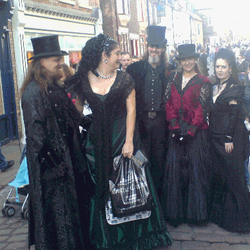
In early December the town also hosts an Annual Victorian Weekend. This is a very popular event, with many visitors joining the locals in wearing Victorian costumes. Attractions include Punch and Judy shows, The Grand Turk Choir singing in the Dock, Professor Fiddlesticks on his unicycle, Morris Dancing and a Magic Lantern Show!