Don't get surgery with Dr. Hwang. I'll start the review with an overview of my experience, and follow with some reasons not to get surgery with him.
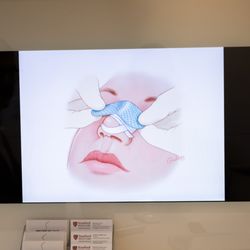
I underwent a turbinate reduction and septoplasty with Dr. Hwang in July 2014 to address chronic nasal congestion. Shortly afterwards, I noticed some symptoms in my left nasal passageway but thought nothing of it initially. By late 2014, I was experiencing excruciating pain, pressure, and congestion from that left side. When presenting my symptoms to Dr. Hwang, he responded defensively, claiming that everything looked fine and that the surgery had gone well. Fast forward a year later after obtaining the opinions of 7-8 different ENTs, I discovered a ENT who pinpointed the problem and has been treating me since. The last 4-5 years have been a slow grind for me - before meeting this current ENT, I experienced excruciating symptoms for a year. Throughout the last few years, my current ENT has performed an additional 10-15 procedures to ameliorate the symptoms I experienced after Dr. Hwang's surgery.
Moving on to the reasons not to get surgery with Dr. Hwang.
1. I'm fairly certain he merely supervised the surgery, while a resident actually performed the surgery. I believe this is the case for a lot of hospitals affiliated with universities. I obtained a copy of my surgery record from Stanford, which seems to corroborate my theory. Essentially, you as the patient become the trial case for residents who are trying to complete their training.
2. As mentioned in my summary, he seems to care most about protecting his reputation than helping treat a patient who was experiencing severe symptoms after a surgery he supervised. When my post-surgery symptoms first became severe, I was desperate to pinpoint the problem. However, every time he checked my nasal passageway, he found no problems and was extremely defensive that the surgery went well. He didn't really seem to care enough to investigate further or attempt to extrapolate why I was experiencing such severe symptoms.
Due to the volatile nature of nasal tissue, my post-surgery symptoms ended up being a little tricky to pinpoint, so my biggest grievance here is his attitude rather than his inability to find the problem.
3. One of the primary reasons I obtained the opinions of 7-8 different ENTs before finding my current ENT was that a good amount of them seemed to be intimidated by Stanford as an institution. A few of them seemed to lose all interest in treating me when I told them my surgery was at Stanford, and merely remarked that Stanford was the best for ENT treatment.
As a final tip, do your research before signing up for surgery at all. In my case, I assumed turbinate reductions and septoplasties were side effect-free because they were common surgeries. Dr. Hwang also portrayed the surgery as safe and easy during my first visit. After experiencing my post-surgery symptoms, I spent a lot of time researching my symptoms and found a good amount of potential side effects from turbinate reductions, which may have made me more careful before jumping into the surgery initially. read more