Located in Miami's Brownsville neighborhood, the Historic Hampton House was once known as the…read more"Social Center of the South." Originally built in 1954 as the Booker Terrace Motel, it became a premier place for African American travelers during the Jim Crow era and remains one of the few surviving Negro Motorist Green Book hotels in Miami.
Published by Victor Hugo Green from 1936 to 1966, the Negro Motorist Green Book was an indispensable travel guide for African Americans, listing hotels, restaurants, gas stations, and businesses where Black travelers could expect safe and respectful service. At a time when segregation and discrimination made travel dangerous, the guide provided a lifeline for families on the road. Publication ended after the Civil Rights Act of 1964 outlawed legal segregation, making the guide's mission increasingly unnecessary. The Green Book later inspired the title of the 2018 Academy Award-winning film Green Book.
The Hampton House also gained renewed attention through the 2020 film One Night in Miami, which dramatizes the evening of February 25, 1964, after Muhammad Ali defeated Sonny Liston to win his first heavyweight championship. The film imagines Ali celebrating at the Hampton House alongside Malcolm X, Jim Brown, and Sam Cooke. According to local history, it was here that Ali enjoyed the famous bowl of vanilla ice cream he had promised himself after the fight.
More than just a motel, the Hampton House became an important gathering place during the Civil Rights Movement. It welcomed influential figures such as Muhammad Ali, Malcolm X, and Dr. Martin Luther King Jr., who is said to have practiced an early version of his "I Have a Dream" speech here in 1960. Its renowned pool and jazz club also attracted legendary performers including Ella Fitzgerald, Sam Cooke, Nat King Cole, and many others who could entertain audiences on segregated Miami Beach but were prohibited from staying there overnight.
Following desegregation, economic activity gradually shifted away from Brownsville, and the Hampton House closed in 1976 before falling into decades of neglect. Thanks to determined preservation efforts led by the Dade Heritage Trust and local community advocates, notably Dr. Enid C. Pinkney, the Historic Hampton House was saved from demolition in 2002. Miami-Dade County purchased the property, and a $6 million restoration project transformed the abandoned motel into a museum and cultural center, that opened in 2015. In 2022, it was officially listed on the National Register of Historic Places.
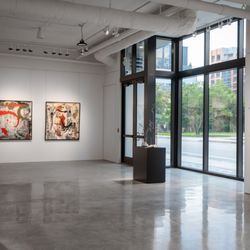
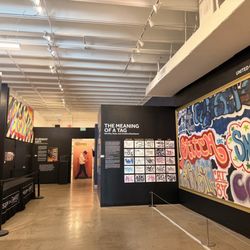
Today you can tour the two-story, fifty-room, modernist style inn featured a jazz club, restaurant, and swimming pool. Tickets are $25 for a 45 minute tour but they sometimes host events with free tours. Check their website for dates and details. As someone who loves history I appreciate this time capsule of mid century modern design but more importantly the Hampton House is an important symbol of resilience, civil rights, and Black history that continues to educate and inspire.