Minnesota Timberwolves Photos


You might also consider

More like Minnesota Timberwolves
Recommended Reviews - Minnesota Timberwolves
Start your review...


Reviews With Photos
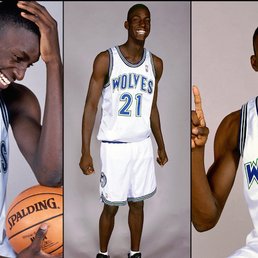

The Minnesota Timberwolves are OK. Of the current 30 teams in the NBA, the Wolves are one of the "newer" teams, having joined the league in 1989 along with the Orlando Magic. Only the Memphis Grizzlies (1995), Toronto Raptors (1995), and New Orleans Pelicans (2002) are younger. At the time of writing this review, in the franchise's 23-year history, the Wolves have made the playoffs nine times. Eight of those nine appearances happened in consecutive seasons, 1996-2004, under late and beloved coach Flip Saunders. Those teams featured Kevin Garnett, one of the NBA's all-time greats, as the centerpiece. Minnesota drafted KG right out of high school (when that was still allowed) in 1995. I ended up writing a college English paper comparing the then-blossoming careers of Garnett and another basketball legend, Tim Duncan. The two were very comparable contemporaries. Those KG-led Timberwolves teams, with complementary players like Latrell Sprewell, Sam Cassell, and Troy Hudson, are what I remember most when I think about this franchise. Despite the greatness of KG, they could never get over the hump, losing in the first round of the playoffs for seven straight years. It was in the 2004 playoffs that the Wolves finally looked like they had a chance to contend, but then they ran into Shaquille O'Neal, Kobe Bryant, Gary Payton, and Karl Malone in the Western Conference Finals. The Wolves lost the series to the Lakers, 4-2. The Pistons ended up upsetting the Lakers in the Finals, 4-1, to win the championship that year. Minnesota has not been great at drafting. They've drafted many NBA players who have gone on to have long careers, but not in Minnesota. Some of the Wolves' biggest stars have been acquired mainly via trades. For example, during the 1996 draft, the Wolves drafted Ray Allen (No. 5 pick) and traded him to the Bucks for Stephon Marbury (No. 4 pick). In 2008, the Wolves acquired Kevin Love in a multiplayer draft day deal. Six years later (2014), Love was sent packing to Cleveland in a deal that landed Minnesota Andrew Wiggins (No. 1 pick in the '14 draft). And in 2017, the Wolves traded for Jimmy Butler in another draft day transaction. Aside from KG in '95, notable franchise contributors that the Timberwolves actually drafted include Rasho Nesterovic (1998), Wally Szczerbiak (1999), Nikola Pekovic (2008), Ricky Rubio (2009), Karl-Anthony Towns (2015), and Josh Okogie (2018). Karl-Anthony Towns, a.k.a. "KAT," has been an absolute beast for the Wolves; almost like a second coming of sorts of KG. However, KAT has only led Minnesota to the playoffs once so far. They managed to win only one game against the Rockets in the first round. In general, during the KAT era, I think one of the problems is the Wolves have been a poor defensive team. Josh Okogie certainly helps on the defensive end. I love his intensity. I've been a Georgia Tech men's basketball season ticket holder since 2005, met Josh on multiple occasions, and watched him up close while he was in Atlanta (2016-18). Most people were surprised when he declared for the draft after his sophomore season, but he and NBA scouts knew something we didn't. Okogie was taken in the 1st round with the 20th pick and so far, he seems to have panned out. He joins Stephon Marbury, who played at Georgia Tech for one season (1995-96), as Yellow Jackets who have become fan favorites in Minneapolis. The Timberwolves are currently in the KAT and D'Angelo Russell era. Minnesota acquired Russell on February 6, 2020 in a trade that sent Wiggins to Golden State. Now both the number one (KAT) and number two (Russell) overall picks in the 2015 NBA draft are playing together on the same team. KAT and Russell are also reportedly longtime friends. It's reminiscent of how the Heat united Dwyane Wade, LeBron James, and Chris Bosh from the 2003 draft class. It remains to be seen how the Minnesota Timberwolves will do from here, but the combined talent of their two cornerstones gives reason to be optimistic.


Great organization. Loved attending the game tonight. 5 stars all around. Anthony edwards killed it tonight


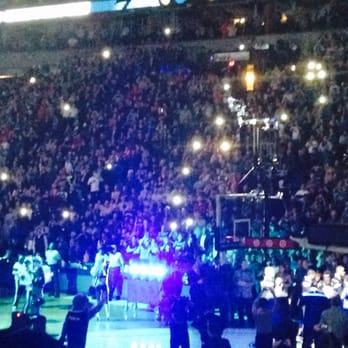
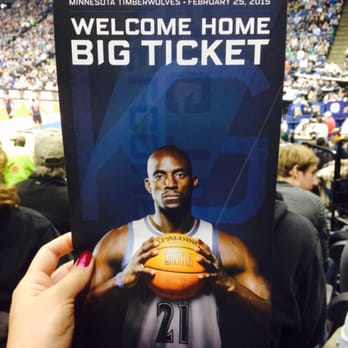
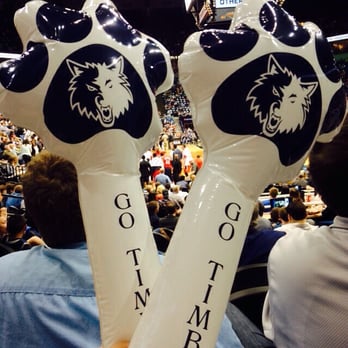
I got to see KG's debut last week and his entrance was amazing! Check out my video and photos. The game was one of the best I've been to and the energy in the crowd was high and intense! Virtually all the seats were occupied which is a first in a long time. We bought our lower level seats for $29 back in the day before KG's debut was announced so we ended up with a great bargain since the same seats were over $100 after his debut game was announced. I also like T-wolves games since I never get spilled or spit on and the fans seem less obnoxious than NFL games.
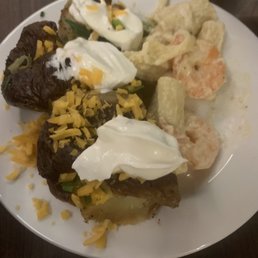

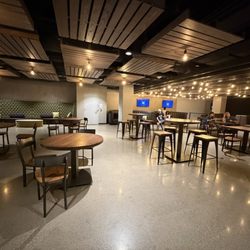
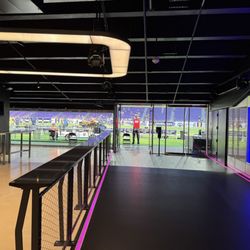
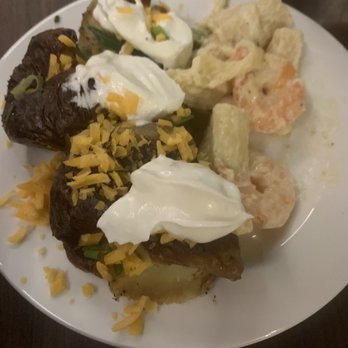
Recently I experience the Lexus Courtside Club experience for the Timberwolves game. My boyfriend loves basketball and we went with some associates of his. He goes to games and enjoys courtside more often but, this was my first experience going with him. I am really more of a baseball person but, it was a fun experience! The slogan is Get started with your VIP experience unlike any other. We pulled into valet and it was nice and quick. We went inside to the club house entrance and were greeted quiet a few times. They take your ticket and give you a black wrist band for re-entry into the club house. I checked my coat which was quick and easy. This is a nice a modern dimly lit clubhouse. Included are free cocktails and a buffet or you can upgrade to pay for other cocktails as well. On the other side of the club you can also enjoy a candy bar with popcorn, Swedish fish, m&m's, jelly beans, and a few other candies to bring in the venue. We enjoyed Chanaska wine and some Summit EPAs. The buffet had charcuterie, hot dog bar, pasta, salad, chicken, prime rib, smashed potato bar, flatbread, and a few other things. I enjoyed the pasta which was an Alfredo sauce with shrimp which was my favorite of the night. The salad was also really good, and the smashed potato bar was really fun as well. My boyfriend enjoyed the prime rib and hot dog bar. The server was in charge of bringing us drinks, and she forgot about us three times. The first time another server came over and asked if we needed help, and we said were just waiting for drinks sine we had already gone up twice for food. When she got to us she said I heard you were calling for me in a bit of a snarky manner. This felt strange but we ordered wine, and waited for the other two in our party. When they arrived it was also long before we saw the server for drinks. Toward the end they had ordered two classed of wine 25 minutes prior and nothing was coming with about 5 minutes to the game start of the game so we just went to the bar for our order and left he table. We had seats three rows back from the hoop which I liked more than being right in the mix of things. It was a nice experience and our server was very kind and attentive for the most part. She checked on us constantly asking our needs. The only thing that would have been nice was if she told us when last call was. Someone in our party wanted a drink and she did not order the last time around with 1/2 a drink filled. The server didn't say it was last call and just took ordered. When she came back she asked and said sorry that was last call. I really enjoyed the whole game, and of course it was nice because the Timberwolves beat the Spurs! The entertainment was great as well, and we felt proud to be there supporting on military night. During 1/2 time we went back to the club house. They had a ton of desserts available which were a fun treat while waiting for the game to return. We enjoyed the rest of the game. After the game coat check went by quickly, and we were directed out the door. We went to valet to give our ticket. They instructed us to go wait inside. We went to the door and the gentleman inside said no re-entry. Then we shared that with the head valet and he was like Oh ok. We ended up waiting 50 minutes outside and it wasn't warm, and my boyfriend did not have his jacket on since we didn't really think it would take that long or they would make us wait outside. I know they have regulars and people who tip very well to get their cars but, waiting for escalades, teslas, and Denalis and seeing these people come after us with their ticket was just silly after more than 20 minutes. If you have regulars then designated people for them, and then designated valets who can assist maybe new people who would be interested in be a regular in the future...but now we will never do valet again. Completely not worth it. We would have been home (maple grove) in the amount of time it took them to get us our car. One of my favorite chefs in Minneapolis was waiting for his car, and you could tell he was bothered by how long it was taking. He said something and his car arrived 5 minutes later. We said something and it was a good 30 minutes later we got ours.
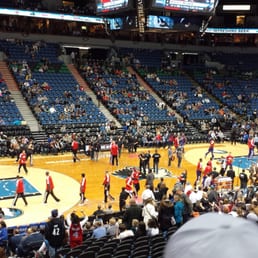

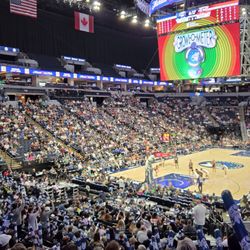
Great arena!! Recently watched the timberwolves for the first time and was very impressed. The layout of the place is great, really easy to navigate and plenty of restrooms and places to buy souvenirs, food and drinks. The seats for the game are really comfortable and actually worked - a vast improvement on many Arenas I've been to. Overall I couldn't fault this arena, I can't wait to visit again and see another game.


P & I are season ticket holders. Last year was the rookie year. I bought this for P's wedding gift from me (what a great wife). The team isn't the greatest but the staff at the Timberwolves has been AHMAZING!!!!!. We were lucky to get Laura Meyer as our season ticket person and she has been very welcoming! She is one of the reasons we decided to renew the tickets (and upgrade our seats) plus P being a Twolves fan. We know the team isn't the greatest but hey at least there is an NBA team in Minneapolis. Show them some love (not just Kevin Love).


I don't care if they don't win a lot of games. I love these wolves. Sure, they're still a work in progress, but one day they're gonna be great (hopefully). The 2011-2012 wolves roster contains one all-star (Mr. Love), and two rookie of the year candidates (Sr. Rubio & Mr. Williams). They're actually a really exciting squad to watch. If you go to see them, they might not win, but they'll keep it interesting.


For my first and potentially only time in my life, I had the unique and incredible opportunity to sit court side at a Minnesota Timberwolves basketball game. This checked off a bucket list item for me and I could honestly gloat about it for hours! From the time you arrive they offer a coat check, seat you in the Lexus Court side club and you get to enjoy unlimited food and beverages. There were food and drink options for everyone no matter your allergies or dining preferences and the food was delicious too. Come time for the game I headed out to watch players warm up and even got to interact a little with them from the sidelines. Being court side you get right up in the action and really get to experience the wild athleticism these players bring. I've said it time and time again, but basketball games, specifically the wolves, is the most entertaining in person sport on the planet. It's non stop action, every commercial break they bring out performers and they run fun and silly events constantly between quarters. The game itself is always fast paced and full of fantastic action no matter which game I watch. Got a wolves fan for life in me! read more


4 years ago
Minnesota Timberwolves fan yes I am. I have a lot of family in Minnesota. Some of my favorite friends are also fans. To me they are a young team not a professional team for many years like I'm used to. They were founded in 1989 and play at the Target Center. They struggled in their first years but are gaining strength each year. I love the logo and mascot. They're a great team to watch play even though I don't favor watching basketball! I do it for my family and friends. read more




The Minnesota Timberwolves are OK. Of the current 30 teams in the NBA, the Wolves are one of the "newer" teams, having joined the league in 1989 along with the Orlando Magic. Only the Memphis Grizzlies (1995), Toronto Raptors (1995), and New Orleans Pelicans (2002) are younger. At the time of writing this review, in the franchise's 23-year history, the Wolves have made the playoffs nine times. Eight of those nine appearances happened in consecutive seasons, 1996-2004, under late and beloved coach Flip Saunders. Those teams featured Kevin Garnett, one of the NBA's all-time greats, as the centerpiece. Minnesota drafted KG right out of high school (when that was still allowed) in 1995. I ended up writing a college English paper comparing the then-blossoming careers of Garnett and another basketball legend, Tim Duncan. The two were very comparable contemporaries. Those KG-led Timberwolves teams, with complementary players like Latrell Sprewell, Sam Cassell, and Troy Hudson, are what I remember most when I think about this franchise. Despite the greatness of KG, they could never get over the hump, losing in the first round of the playoffs for seven straight years. It was in the 2004 playoffs that the Wolves finally looked like they had a chance to contend, but then they ran into Shaquille O'Neal, Kobe Bryant, Gary Payton, and Karl Malone in the Western Conference Finals. The Wolves lost the series to the Lakers, 4-2. The Pistons ended up upsetting the Lakers in the Finals, 4-1, to win the championship that year. Minnesota has not been great at drafting. They've drafted many NBA players who have gone on to have long careers, but not in Minnesota. Some of the Wolves' biggest stars have been acquired mainly via trades. For example, during the 1996 draft, the Wolves drafted Ray Allen (No. 5 pick) and traded him to the Bucks for Stephon Marbury (No. 4 pick). In 2008, the Wolves acquired Kevin Love in a multiplayer draft day deal. Six years later (2014), Love was sent packing to Cleveland in a deal that landed Minnesota Andrew Wiggins (No. 1 pick in the '14 draft). And in 2017, the Wolves traded for Jimmy Butler in another draft day transaction. Aside from KG in '95, notable franchise contributors that the Timberwolves actually drafted include Rasho Nesterovic (1998), Wally Szczerbiak (1999), Nikola Pekovic (2008), Ricky Rubio (2009), Karl-Anthony Towns (2015), and Josh Okogie (2018). Karl-Anthony Towns, a.k.a. "KAT," has been an absolute beast for the Wolves; almost like a second coming of sorts of KG. However, KAT has only led Minnesota to the playoffs once so far. They managed to win only one game against the Rockets in the first round. In general, during the KAT era, I think one of the problems is the Wolves have been a poor defensive team. Josh Okogie certainly helps on the defensive end. I love his intensity. I've been a Georgia Tech men's basketball season ticket holder since 2005, met Josh on multiple occasions, and watched him up close while he was in Atlanta (2016-18). Most people were surprised when he declared for the draft after his sophomore season, but he and NBA scouts knew something we didn't. Okogie was taken in the 1st round with the 20th pick and so far, he seems to have panned out. He joins Stephon Marbury, who played at Georgia Tech for one season (1995-96), as Yellow Jackets who have become fan favorites in Minneapolis. The Timberwolves are currently in the KAT and D'Angelo Russell era. Minnesota acquired Russell on February 6, 2020 in a trade that sent Wiggins to Golden State. Now both the number one (KAT) and number two (Russell) overall picks in the 2015 NBA draft are playing together on the same team. KAT and Russell are also reportedly longtime friends. It's reminiscent of how the Heat united Dwyane Wade, LeBron James, and Chris Bosh from the 2003 draft class. It remains to be seen how the Minnesota Timberwolves will do from here, but the combined talent of their two cornerstones gives reason to be optimistic. read more


5 years ago
Great organization. Loved attending the game tonight. 5 stars all around. Anthony edwards killed it tonight read more


12 years ago
I got to see KG's debut last week and his entrance was amazing! Check out my video and photos. The game was one of the best I've been to and the energy in the crowd was high and intense! Virtually all the seats were occupied which is a first in a long time. We bought our lower level seats for $29 back in the day before KG's debut was announced so we ended up with a great bargain since the same seats were over $100 after his debut game was announced. I also like T-wolves games since I never get spilled or spit on and the fans seem less obnoxious than NFL games. read more






7 years ago
Recently I experience the Lexus Courtside Club experience for the Timberwolves game. My boyfriend loves basketball and we went with some associates of his. He goes to games and enjoys courtside more often but, this was my first experience going with him. I am really more of a baseball person but, it was a fun experience! The slogan is Get started with your VIP experience unlike any other. We pulled into valet and it was nice and quick. We went inside to the club house entrance and were greeted quiet a few times. They take your ticket and give you a black wrist band for re-entry into the club house. I checked my coat which was quick and easy. This is a nice a modern dimly lit clubhouse. Included are free cocktails and a buffet or you can upgrade to pay for other cocktails as well. On the other side of the club you can also enjoy a candy bar with popcorn, Swedish fish, m&m's, jelly beans, and a few other candies to bring in the venue. We enjoyed Chanaska wine and some Summit EPAs. The buffet had charcuterie, hot dog bar, pasta, salad, chicken, prime rib, smashed potato bar, flatbread, and a few other things. I enjoyed the pasta which was an Alfredo sauce with shrimp which was my favorite of the night. The salad was also really good, and the smashed potato bar was really fun as well. My boyfriend enjoyed the prime rib and hot dog bar. The server was in charge of bringing us drinks, and she forgot about us three times. The first time another server came over and asked if we needed help, and we said were just waiting for drinks sine we had already gone up twice for food. When she got to us she said I heard you were calling for me in a bit of a snarky manner. This felt strange but we ordered wine, and waited for the other two in our party. When they arrived it was also long before we saw the server for drinks. Toward the end they had ordered two classed of wine 25 minutes prior and nothing was coming with about 5 minutes to the game start of the game so we just went to the bar for our order and left he table. We had seats three rows back from the hoop which I liked more than being right in the mix of things. It was a nice experience and our server was very kind and attentive for the most part. She checked on us constantly asking our needs. The only thing that would have been nice was if she told us when last call was. Someone in our party wanted a drink and she did not order the last time around with 1/2 a drink filled. The server didn't say it was last call and just took ordered. When she came back she asked and said sorry that was last call. I really enjoyed the whole game, and of course it was nice because the Timberwolves beat the Spurs! The entertainment was great as well, and we felt proud to be there supporting on military night. During 1/2 time we went back to the club house. They had a ton of desserts available which were a fun treat while waiting for the game to return. We enjoyed the rest of the game. After the game coat check went by quickly, and we were directed out the door. We went to valet to give our ticket. They instructed us to go wait inside. We went to the door and the gentleman inside said no re-entry. Then we shared that with the head valet and he was like Oh ok. We ended up waiting 50 minutes outside and it wasn't warm, and my boyfriend did not have his jacket on since we didn't really think it would take that long or they would make us wait outside. I know they have regulars and people who tip very well to get their cars but, waiting for escalades, teslas, and Denalis and seeing these people come after us with their ticket was just silly after more than 20 minutes. If you have regulars then designated people for them, and then designated valets who can assist maybe new people who would be interested in be a regular in the future...but now we will never do valet again. Completely not worth it. We would have been home (maple grove) in the amount of time it took them to get us our car. One of my favorite chefs in Minneapolis was waiting for his car, and you could tell he was bothered by how long it was taking. He said something and his car arrived 5 minutes later. We said something and it was a good 30 minutes later we got ours. read more


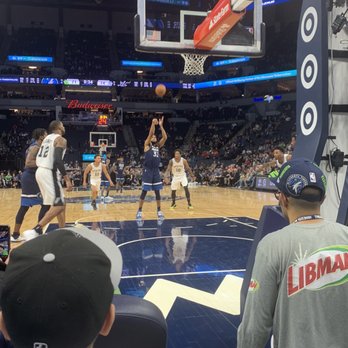


Great arena!! Recently watched the timberwolves for the first time and was very impressed. The layout of the place is great, really easy to navigate and plenty of restrooms and places to buy souvenirs, food and drinks. The seats for the game are really comfortable and actually worked - a vast improvement on many Arenas I've been to. Overall I couldn't fault this arena, I can't wait to visit again and see another game. read more
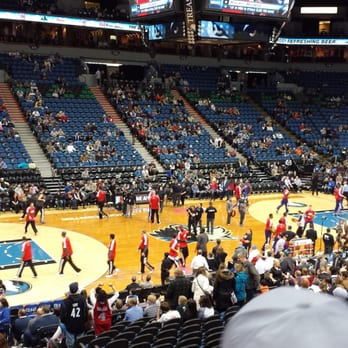

P & I are season ticket holders. Last year was the rookie year. I bought this for P's wedding gift from me (what a great wife). The team isn't the greatest but the staff at the Timberwolves has been AHMAZING!!!!!. We were lucky to get Laura Meyer as our season ticket person and she has been very welcoming! She is one of the reasons we decided to renew the tickets (and upgrade our seats) plus P being a Twolves fan. We know the team isn't the greatest but hey at least there is an NBA team in Minneapolis. Show them some love (not just Kevin Love). read more


I don't care if they don't win a lot of games. I love these wolves. Sure, they're still a work in progress, but one day they're gonna be great (hopefully). The 2011-2012 wolves roster contains one all-star (Mr. Love), and two rookie of the year candidates (Sr. Rubio & Mr. Williams). They're actually a really exciting squad to watch. If you go to see them, they might not win, but they'll keep it interesting. read more


12 years ago
Love attending live sporting events and the Minnesota Timberwolves in particular. You get to see world class talent for a fraction the price of other big cities. While the in game hosts are not that good, the DJ is proficient and the action on he floor is always entertaining. If you only want to see the hometown team win....this is not the place for you. read more


11 years ago

5 years ago


9 years ago

11 years ago
11 years ago

12 years ago
14 years ago
11 years ago