Metro Honda
Services - Metro Honda
Auto brake repair
Auto HVAC repair
Auto transmission repair
Metro Honda Photos

You might also consider


More like Metro Honda
Recommended Reviews - Metro Honda
Start your review...


Reviews With Photos
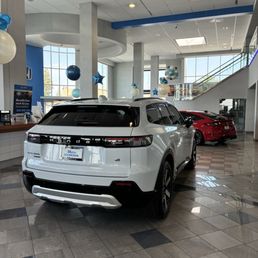

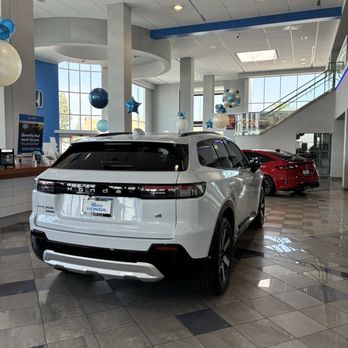
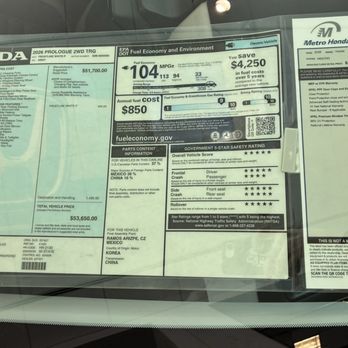
I picked up my 2026 CRV today. Super smooth experience. I arrived at 5:20 after work, and because my rep Joseph King was already gone for the day, I went to the cashier office to pay the balance which was $1600 to replace the front struts and shocks, including the charge for alignment and labor. The drive home was super smooth--the shocks work great! While I waited for my car to be pulled up to the driveway, I explored the showroom floor again and took a photo of a sky blue two-door Honda Prelude, with its current specs and price. I personally prefer 4-door cars over 2-door ones, perhaps because I prefer being higher above ground, having more space to transport people, and also because a bigger car seems safer. But even I can admit that it looks cool . The red type R Honda Civic managed to look snazzy too though, so between the two I'd hypothetically choose that one. What do you think? Come on down to the Metro Honda dealership if you are looking into a new car--one of these could be yours.
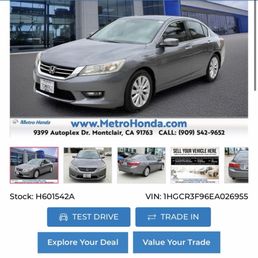
I had came to look at a brand new vehicle at this location, but they lost me because of Larvell the sales manager. He was extremely rude. This is my second review because I just notice they were trying to scam me. The vehicle I had test drove was a new Honda Civic sport. As I'm looking over the documents with the numbers they provided they had marked on the paperwork the vehicle I was interested in was a 2014 Honda with 132,000 miles. I didn't catch it then and I'm glad I didn't sign. Not once did I mention that vehicle nor did I know it even existed. I had Angel email me the numbers because I didn't trust them and they sent over numbers with the 2026 new Honda Sport.


My sister did a bunch of research for her 2026 Honda CRV so she came in knowing what she wanted and actually only wanted to test drive today. She was initially guided by a sales associate who I forgot his name but he ended up leaving her to look on her own. Ivan who approached me when I arrived showed me around since I am shopping for a Type R. Ivan then walked me around to find my sister and ended up helping us test drive and eventually closing on my sister's car. In and out in 2 hours since they got us the number we wanted even though we were looking to buy elsewhere later this weekend. I really appreciate how nice, respectful, and helpful Ivan was and how many times he walked back and forth up the stairs to get us keys and paperwork. I hope to return for a Type R soon if the price is right.


I called this dealership after finding a car listed on Carfax. Marta confirmed the vehicle was in stock but failed to mention it had $5,500 in dealer add-ons--two paint protection packages and two car alarms. The car already comes equipped with HondaLink, making the alarms unnecessary. When we sat down to talk numbers with Sunday, I was asked if I would buy the car if we could make a deal. I said yes, without the add-ons. The salesperson came back with a "deal" that was simply MSRP plus all the add-ons. I'm not sure what definition of a deal they're using, but in my book, that's not one. Beware of this dealership and find one that's actually willing to work a fair deal.
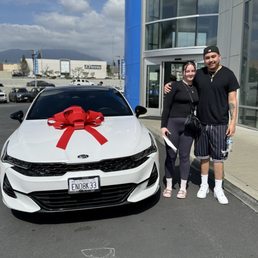

My daughter recently purchased her first car on her own, and I came with her to support her and ask questions during the process. When we first arrived at Metro Honda, we initially interacted with Angel. To be completely honest, the first interaction was not very welcoming. He came across as somewhat dismissive and unwilling to engage when we had questions. For a first-time buyer, that kind of interaction can easily discourage someone, and it honestly felt like the type of experience that could cause a customer to walk out and take their business elsewhere. Fortunately, the experience took a completely different turn once we moved forward in the dealership. We met Lavelle, the assistant manager, who was extremely professional, respectful, and helpful. He took the time to make sure we were taken care of and introduced us to Marcus, who ended up working directly with my daughter. Marcus did a great job keeping us informed throughout the process while we waited and made sure my daughter felt comfortable every step of the way. He also took the time to go on the test drive with her and answer all of her questions. When it came time to finalize everything, we met with Armando in finance. He was very professional, patient, and not pushy at all. He allowed my daughter and I the time to carefully read through the contract and answered our questions without rushing us. Buying a first car can be overwhelming, but Lavelle, Marcus, and Armando helped turn the experience into a positive one for my daughter. Their professionalism and patience are ultimately what kept us there and helped make her first car-buy a great experience. Thank you for helping make such an important milestone a positive one for her.

WARNING - Whatever price you see advertised on their website, add $5,480 to it and that is where they will start the price negotiation. They say these are all optional add-ons but they refuse to deactivate or take them off. It seems they will negotiate down about $2,000 and take off what they can (their words) but I did not want any of it. The sales guys said they add these on to bring up the Blue Book value which is complete BS - I looked up the KBB. These are the addons - FDS Alarm - $1495 XPEL Paint Protection, Interior Door Cups and Edge Guards - $995 Pursuit SVR GPS - $1495 MEP Paint & Frabric Protection - $1495 I guess this explains why they have such a large inventory - no one is buying cars here because they are all overpriced. Do yourself a favor and drive down the street to Penske Honda. Their prices are the same as what is advertised. They do have some addons but they are completely optional. And if you are Costco Member they will give you $600 off any Used Car Sticker Price.


14 days ago

18 days ago

1 month ago

1 month ago


I picked up my 2026 CRV today. Super smooth experience. I arrived at 5:20 after work, and because my rep Joseph King was already gone for the day, I went to the cashier office to pay the balance which was $1600 to replace the front struts and shocks, including the charge for alignment and labor. The drive home was super smooth--the shocks work great! While I waited for my car to be pulled up to the driveway, I explored the showroom floor again and took a photo of a sky blue two-door Honda Prelude, with its current specs and price. I personally prefer 4-door cars over 2-door ones, perhaps because I prefer being higher above ground, having more space to transport people, and also because a bigger car seems safer. But even I can admit that it looks cool . The red type R Honda Civic managed to look snazzy too though, so between the two I'd hypothetically choose that one. What do you think? Come on down to the Metro Honda dealership if you are looking into a new car--one of these could be yours. read more



Business owner information

John L.
Thank you for taking the time to share your experience with us. We…

1 month ago
I had came to look at a brand new vehicle at this location, but they lost me because of Larvell the sales manager. He was extremely rude. This is my second review because I just notice they were trying to scam me. The vehicle I had test drove was a new Honda Civic sport. As I'm looking over the documents with the numbers they provided they had marked on the paperwork the vehicle I was interested in was a 2014 Honda with 132,000 miles. I didn't catch it then and I'm glad I didn't sign. Not once did I mention that vehicle nor did I know it even existed. I had Angel email me the numbers because I didn't trust them and they sent over numbers with the 2026 new Honda Sport. read more
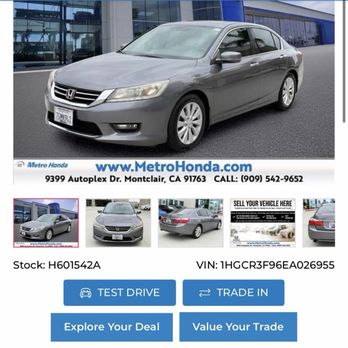


My sister did a bunch of research for her 2026 Honda CRV so she came in knowing what she wanted and actually only wanted to test drive today. She was initially guided by a sales associate who I forgot his name but he ended up leaving her to look on her own. Ivan who approached me when I arrived showed me around since I am shopping for a Type R. Ivan then walked me around to find my sister and ended up helping us test drive and eventually closing on my sister's car. In and out in 2 hours since they got us the number we wanted even though we were looking to buy elsewhere later this weekend. I really appreciate how nice, respectful, and helpful Ivan was and how many times he walked back and forth up the stairs to get us keys and paperwork. I hope to return for a Type R soon if the price is right. read more


3 months ago

9 months ago
I called this dealership after finding a car listed on Carfax. Marta confirmed the vehicle was in stock but failed to mention it had $5,500 in dealer add-ons--two paint protection packages and two car alarms. The car already comes equipped with HondaLink, making the alarms unnecessary. When we sat down to talk numbers with Sunday, I was asked if I would buy the car if we could make a deal. I said yes, without the add-ons. The salesperson came back with a "deal" that was simply MSRP plus all the add-ons. I'm not sure what definition of a deal they're using, but in my book, that's not one. Beware of this dealership and find one that's actually willing to work a fair deal. read more


5 months ago

1 month ago
Business owner information

John M.
We apologize for the disappointment you experienced at Metro Honda's…

7 months ago
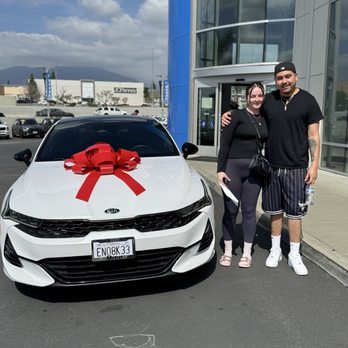
My daughter recently purchased her first car on her own, and I came with her to support her and ask questions during the process. When we first arrived at Metro Honda, we initially interacted with Angel. To be completely honest, the first interaction was not very welcoming. He came across as somewhat dismissive and unwilling to engage when we had questions. For a first-time buyer, that kind of interaction can easily discourage someone, and it honestly felt like the type of experience that could cause a customer to walk out and take their business elsewhere. Fortunately, the experience took a completely different turn once we moved forward in the dealership. We met Lavelle, the assistant manager, who was extremely professional, respectful, and helpful. He took the time to make sure we were taken care of and introduced us to Marcus, who ended up working directly with my daughter. Marcus did a great job keeping us informed throughout the process while we waited and made sure my daughter felt comfortable every step of the way. He also took the time to go on the test drive with her and answer all of her questions. When it came time to finalize everything, we met with Armando in finance. He was very professional, patient, and not pushy at all. He allowed my daughter and I the time to carefully read through the contract and answered our questions without rushing us. Buying a first car can be overwhelming, but Lavelle, Marcus, and Armando helped turn the experience into a positive one for my daughter. Their professionalism and patience are ultimately what kept us there and helped make her first car-buy a great experience. Thank you for helping make such an important milestone a positive one for her. read more

5 months ago
WARNING - Whatever price you see advertised on their website, add $5,480 to it and that is where they will start the price negotiation. They say these are all optional add-ons but they refuse to deactivate or take them off. It seems they will negotiate down about $2,000 and take off what they can (their words) but I did not want any of it. The sales guys said they add these on to bring up the Blue Book value which is complete BS - I looked up the KBB. These are the addons - FDS Alarm - $1495 XPEL Paint Protection, Interior Door Cups and Edge Guards - $995 Pursuit SVR GPS - $1495 MEP Paint & Frabric Protection - $1495 I guess this explains why they have such a large inventory - no one is buying cars here because they are all overpriced. Do yourself a favor and drive down the street to Penske Honda. Their prices are the same as what is advertised. They do have some addons but they are completely optional. And if you are Costco Member they will give you $600 off any Used Car Sticker Price. read more

3 months ago
17 days ago

3 months ago

6 months ago

11 months ago
I went to this Dealership to get engine and transmission oil changed. Arrived at 2:30 pm and I even appolgised for arriving ten minutes early. The service Advisor told me that it will take about one and a half to two hours. I sat down patiently till 5:0pm (over 2:30 hours later) and went and asked the Advisor and agreed to go and check. Came back at 5:10pm and told me the car will be ready soon. He came to me at 5:40pm and said it's ready. It took another ten minutes to take my money and give me the paperwork. When he did not give me the report only he went to the computer and got that for me. The car was not washed as mentioned by the lady whom I made the appointment. I am sorry to say that it took THREE HOURS AND TWENTY MINUTES for something they should have taken one hour. I feel even two stars is more than I should give for the very poor service. read more


3 months ago

6 months ago

6 months ago
I do not recommend coming here if your service consultant is Kareem Sourial. He lacks training and knowledge on how to handle notifications or have any idea of how long it takes for services. Kareem says that only certain services should be done on the weekdays. He clearly doesn't understand that people have kids and a full time job. I had a scheduled appointment and he tried to tell my husband that the parts to repair weren't at the shop (which they were because the service tech called me 2x prior to scheduling the appointment that they were in). Then he told my husband car would be ready at 1:30pm but texted me at 12:37pm that the car was ready for pickup. He later texts at 2pm when I'm 5min away to pickup my car that it would not be ready until 3:30pm now. He tried to blame an automatic system for notifying me when my car wasn't ready when it was in fact him who sent the message. He later proceeded to blame the consultant I was originally signed up with, who isn't even working today. He said that certain repairs like faulty seatbelt sensors shouldn't be scheduled on a Saturday. This guy needs more training if he has a title of "consultant". read more


9 months ago

3 months ago

3 months ago

4 months ago

4 months ago
4 months ago

5 months ago

11 months ago
We brought our 2019 Accord in to replace a recalled part and ended up trading it in for a 2026 HR-V. Ivan was our sales rep and Larvell Hollis was the assistant manager. They were both very helpful and friendly. The process was smooth and fairly quick. We weren't expecting to get a new car today but we were very pleased with the whole experience. Not once did we ever pressured or uncomfortable. I would recommend Metro Honda to anyone that is interested in a new car. read more


5 months ago

1 year ago

11 months ago

1 year ago
2 months ago
6 months ago
11 months ago
Metro Honda ROCKS!! Went for a used car and drove off with a BRAND NEW 2026! Larvelle, Angel and Ivan were a dream team! Top customer service! They went above and beyond with the financing! Very modern dealership... highly recommend! Thank you Honda team!! read more

Page 1 of 40
More info about Metro Honda
Metro Honda Reviews in Other Languages
Ask the Community - Metro Honda
How much does an oil change cost?
Review Highlights - Metro Honda
You might also consider





Why does Yelp recommend reviews?
1,040 reviews that are not currently recommended
The reviews below are not factored into the business's overall star rating.
5 months ago

9 years ago
3 years ago

12 years ago
2 years ago
10 years ago

13 years ago
15 years ago

6 months ago
13 years ago
11 years ago
11 years ago

12 years ago
13 years ago

13 years ago

8 years ago

13 years ago
13 years ago
13 years ago
3 years ago


