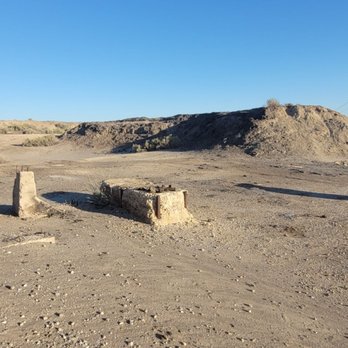
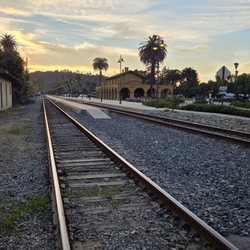
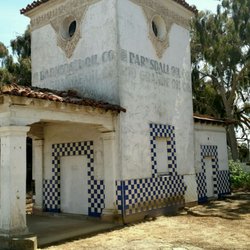
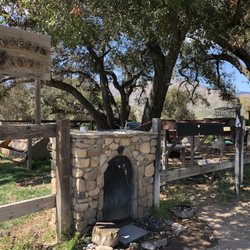
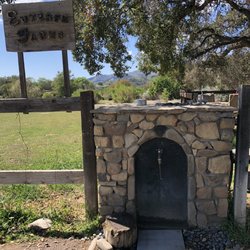
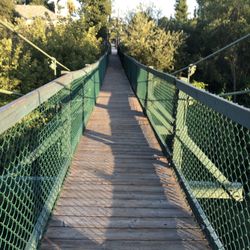
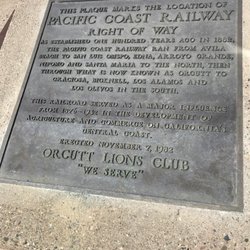
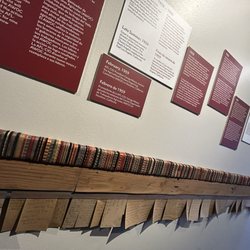
This wonderful vestige of local history serves to mark on the "right of ways…read more" of the old functional, but not scenic, Pacific Coast Railway.
In other words, that old now defunct railroad was the very first railroad in the Central Valley & predates the wider rail that the Coast Starlight Express/ Amtrak uses from WA to OR, to CA, & then the SF Bay area then all the way down the coast to SB then LA, much of which either hugs the coast or parallels various sections of roads such as 101, El Camino Real, Hwy #1, etc.
Since SLO & Santa Barbara Counties were essentially landlocked by geography back then, the first rails were actually started at Hanford Pier in Avila Beach. People would take a steamship from SF to Avila. The first Tram was built by Ah Louis, a SLO-town Chinese gentlemen of great distinction. The Tram was power by horses & then people transferred to a coach to get to SLO. Ah Louis, who's building still stands in downtown SLO, also later organized Chinese laborers to later build the rail system that first went from Avila to SLO.
The later amazing tunnels & more advance railroad by yet another company [the Southern Pacific Railroad which today handles more familiar Amtrack trains] with wider gauge/rails was extended down from Santa Margarita down the Cuesta Grade and later competed with PCR, was also built by Ah Louis & Chinese laborers. Indeed there is a large bronze stylized statue of two Chinese railroad workers, laboring on the railroad at today's Amtrak station, in SLO. The Ah Louis store still stands as a historic building with a plaque, but it is used for purposes other than history. In fact, much of SLO's downtown so-called Chinatown has been progressive destroyed over many decades, & little remains beyond the Ah Louis building, an obscure mural on the side of a parking lot, and a absurd Chop Suey Neon sign [at a hotel that does not serve Chop Suey], which obviously did not exist in Ah Louis's time. All excavated artifacts are either stored somewhere else or have been forgotten. I am not aware of any display of Chinese historic artifacts from that era in SLO.
Anyway, the earlier narrow gauge rail system was gradually extended first down to Arroyo Grande, to Nipomo [which formed the nucleus of this town], to Santa Maria, Los Alamos, & finally to Los Olivos. Passengers at the end of the line back then would stay overnight at the Mattie Tavern [still in use] & Hotel in Los Olivos & then take a stagecoach to Santa Barbara the next day.
Branches of this narrow gauge [or 3 foot wide narrow rail] would also extend to Guadalupe & Betteravia, westward on the Coast & toward Sisquoc East. Much later the Sugar Factory & Co. town of Betteravia became a rare ghost town in 1966. After much of the oil was exhausted in other areas, they also declined.
The West branch was used for all kinds of things ranging from Sugar Beets/Sugar to Oil. Sisquoc had lots of oil fields which were discovered all over, but like so many other places that discovered Gold, Black Gold, or precious materials, it was often boom and then bust.
While there is one building said to have been at one time a depot for the PCR train system a few block away from this landmark, I cannot confirm it.
There appears to be dozens of past & present rail systems in CA alone.
There is even a Santa Maria Valley rail system & an organization that keep that information alive. https://friends-smvrr.org/index.html
https://en.wikipedia.org/wiki/Santa_Maria_Valley_Railroad
Sadly, not much remains of the Pacific Coast Railway, except for maybe one lone locomotive that may be in Oregon, the remains of a station, and right of ways, that have been repurposed as gas line right of ways. Here & there, old rails may be buried under roads & can be still detected by metal detectors. Sometimes erosion of new roads, reveal underlying rails, but the vast majority of metal artifacts was used as scrap long ago. Here and there such groups as the SMVRR do go on outings to see what traces that they can find and get special permission to go onto private lands to explore. The SLO Railway Museum near the Amtrak station is helpful.
Ref. : https://en.wikipedia.org/wiki/Pacific_Coast_Railway
https://www.thirdrail.com/ttrpcrr.htm
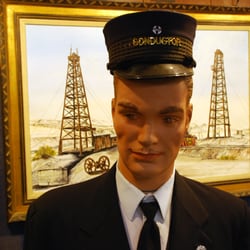
[..."Oil was first struck in March of 1900 in the Husna Valley. Later again in Arroyo Grande at 500 feet, but these strikes were insufficient to be profitable until 1901 when the Western Oil Company brought in a well on the Careaga Ranch at 200 barrels a day. So great was the activity around Graciosa Station that a new town was laid out one mile to the North. The town was named "Orcutt" in honor of W. W. Orcutt the Chief Geologist for the Union Oil Company...."].
I am by no means knowledgable on these historical topics. Sadly, as time goes on, more is forgotten, destroyed, or even distorted.
At least some take it upon themselves to preserve some history.
To those individuals, I thank you!