
Hyde Park Art Center
Hyde Park Art Center Photos


You might also consider


More like Hyde Park Art Center
Recommended Reviews - Hyde Park Art Center
Start your review...


Reviews With Photos


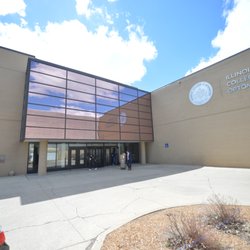
The new building for the recently relocated Hyde Park Art Center was designed by local architect Douglas Garofalo. Its east wall along Cornell features the largest exterior digital facade, so experimental artists like Inigo Manglano-Ovalle can get a crack at doing their artistic thing with the building, which used to be a printing plant. HPAC recently hosted a 36-hour "Creative Move", a free grand opening festival which introduced visitors to works by local artists along with a variety of dances, presentations, and lectures.


4 years ago
This is a hidden gem in Hyde Park and I'm so glad that I did and I think you would as well. They are open 7 days a week and it is free, but they need a small donation or big lol to help keep the doors open. They have a big event starting Saturday September 24th 2022 from 1pm to 4pm. Don't worry if you can't make it this weekend because they have this event every 3 months with different art. Many of the Artist are teen and their work is totally awesome and powerful. They also have another fund raising event coming up now hold your britches the tickets are $750 but remember it's a fund raising event. Now if that is too much for you because I know it is for me. The good news Is they have some $75 doll ar tickets for the after party. Any whoooo I can't wait to go back because they have something for everyone. As always folks.. Be Safe and Enjoy!!! I have no rights to any of the Art work...just sharing the joy! read more


9 years ago
I live less than a mile from here but so rarely visit. We went to a Friday night opening and closing exhibition. Every room had something going on, from crafts, poetry reading, a movie screening, snacks. I love the video projector room, a mixture of hand-made art and larger than life video projections. I envy places that can do free wine, but since the younger-than-21 demographic visits and contributes the art sometimes, it appears alcohol is purchase only. Really great art, coolly presented, check it out! read more


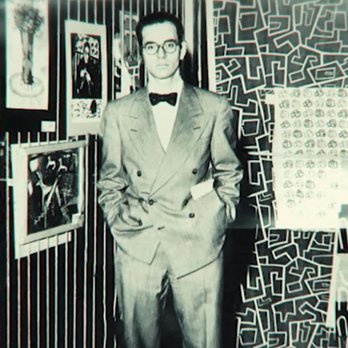
This describes part of the early history of Hyde Park Art Center, and contributions by Don Baum. My review is based on the fact that, in the year 1970, I saw an exhibition at U.C. Berkeley that included paintings by four of the Chicago Imagists. The exhibition catalogue was called, "Human Concern/Personal Torment." When I was a freshman student at U.C. Berkeley, I attended this exhibition and saw paintings by Chicago Imagists Karl Wirsum (Baseball Girl), Jim Nutt (Miss E. Knows), Gladys Nilsson (Catwomen War), and Ed Paschke (Dos Criados). These paintings are in the catalogue, and attached here are my photographs of two paintings from the catalogue (Jim Nutt; Gladys Nillson). The Acknowledgments section of the catalogue states that, "For the encouragement, advice, and assistance, I am pleased to thank . . . Donald Baum . . . many colleagues will have contributed assistance by the time the exhibition and catalogue are completed." In the years, 1980 to 1984, I lived in Madison, WI and, during that era, visited Chicago to view exhibits at Phyllis Kind Gallery, where I saw paintings by Ed Paschke, Chicago Institute of Art, and Museum of Contemporary Art. My review is also based on the documentary directed by Leslie Buchbinder, called, "A Walk on Da Hairy Side !" The movie is available from Pentimenti Productions. My attached photos include screenshots from this movie, showing the outside of Hyde Park Art Center (at 4 minutes), a screenshot showing young Don Baum (at 14 minutes), and a photo of older Don Baum (at 16 minutes). Here are some quotations from the movie. "There weren't that many places back in the mid-1960's where there walls available, and the gallery scene was minimal, not too many commercial galleries," spoken by Gladys Nilsson. At 13 minutes, Jim Nutt says, "For young artists, there really wasn't a scene. And then, the Hyde Park Art Center was basically the only real opening." "We started exhibiting around '64 at the Hyde Park Art Center," says Gladys Nilsson at 14 min. At 14 min, we see a black and white still photo of Don Baum, and the narrator says, "The Hyde Park Art Center gained momentum in the 1950's through the vision of a maverick curator, Don Baum." In an interview, Mr. Baum says, "My idea for the Hyde Park Art Center was that it would be a place where artists who had no previous exhibiting experience could show! I always felt my role was to permit!" At 15 min, Don Baum says, "There was an animal, vegetable, and mineral . . . three separately." Then, Jim Nutt says, "All the paintings had to be about animal, vegetable, or mineral." Then, Art Green says, "I remember I was in the vegetable series, for sure, and I think in the mineral series as well." At 16 minutes, a video shows Don Baum at an opening at Hyde Park Art Center, and wearing a Turkish fez. Critic Dennis Adrian says, "Don Baum was a fireworks display, going off all the time." Then, the narrator says, "Located 7 miles south of downtown Hyde Park was home to the University of Chicago, a magnet for the city's intellectual elite, and a hotbed of cultural non-conformity." Then, Don Baum says, "There was a period in which this kind of flamboyance was right on the nose." At 23 minutes, the narrator says, "From the very beginning The Hairy Who paid homage to their beloved form of the comic book, by publishing their own comics, for each of their Hyde Park Art Center shows, in 1966, 1967, and 1968." At 36 minutes, artist Kerig Pope says, "Don Baum managed to convince them [The Hairy Who] that they weren't competing with each other, they were competing against the world." read more



4 years ago

The new building for the recently relocated Hyde Park Art Center was designed by local architect Douglas Garofalo. Its east wall along Cornell features the largest exterior digital facade, so experimental artists like Inigo Manglano-Ovalle can get a crack at doing their artistic thing with the building, which used to be a printing plant. HPAC recently hosted a 36-hour "Creative Move", a free grand opening festival which introduced visitors to works by local artists along with a variety of dances, presentations, and lectures. read more


day 61 in chicago where else can you go to look at art, play with clay, and drink alcohol? http://static.px.yelp.com/bphoto/juFeR75GyaU9BZkjxo5-hQ/l I made this. don't ask me what it is. it was supposed to be the two towers... read more


14 years ago
Business owner information

Marketing M.
Hi Catherine. We're so glad you support our mission! But we're very…


17 years ago


20 years ago

17 years ago

8 years ago

16 years ago


16 years ago

11 years ago

18 years ago


12 years ago

18 years ago

13 years ago

17 years ago


14 years ago

17 years ago

16 years ago

15 years ago
Business owner information
Marketing M.
Daniel, please forgive the slow response. We're thrilled that you…
17 years ago

15 years ago

8 years ago
18 years ago
14 years ago
14 years ago
Business owner information
Marketing M.
Hi Ti T.…
More info about Hyde Park Art Center
5020 S Cornell Ave
Chicago, IL 60615
Kenwood
Directions
(773) 324-5520
Call Now
Visit Website
http://www.hydeparkart.org
Hours
Payment methods
Services
Outdoor Amenities
Other Amenities
From the Business
Ask the Community - Hyde Park Art Center
Review Highlights - Hyde Park Art Center
You might also consider













Why does Yelp recommend reviews?
3 reviews that are not currently recommended
The reviews below are not factored into the business's overall star rating.
15 years ago

12 years ago
17 years ago


