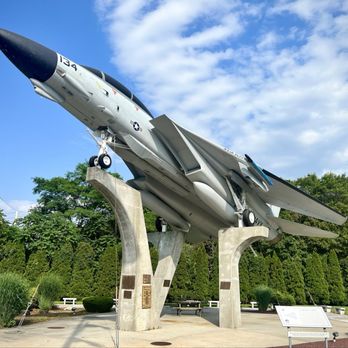
Grumman Memorial Park Photos


You might also consider


More like Grumman Memorial Park
Recommended Reviews - Grumman Memorial Park
Start your review...


Reviews With Photos


Neat to see the fighter jets. There's a trail close by to ride your bike. It's 9 miles around. Go for it!


We were looking for a stop over for lunch after a Lavender field visit in the area. The memorial park exceeded our expectations. Aside for picnic table that we were needing, the awesome planes displayed are a sight. My hubby had a big smile upon seeing . It is worth stopping by whenever in the area.


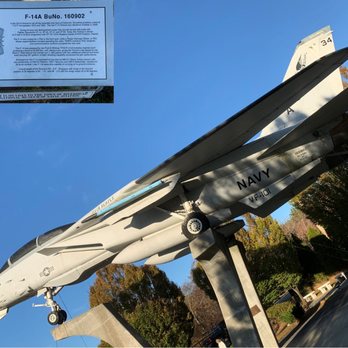
Really COOL place!! The park is on the small side, But has information on the two planes a tomcat f-14a and a-6e. the planes are really great to look at and the park is really nice. great place to hang out especially if you are a top gun pilot at heart.
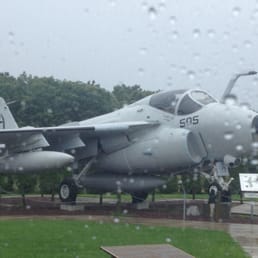

Note: not my kinda thing. But, if your into WWII & history, fighter jets etc. then you might dig it. It's very small but many plaques listing names, dates, war history etc.


Didn't know this existed until yesterday. Just around a mile from Calverton National Cemetery where my parents are buried, this park has a F-14 Tomcat ( Anytime Baby!), a A-6 Intruder, and a Phoenix Missile. I grew up in Bethpage and so Grumman was all around me, and lived in Redondo Beach, CA for 26 years, home of Northrop Grumman, so anything related is very sentimental to me...so it was great seeing several bricks in the walkway, too many to count stating proud employee, etc, and so many with several decades on the job. There's a small path as well. Hours: 9-5 daily. read more


As someone who is related to family who worked at the legendary Grumman on Long Island this small memorial park holds special meaning. I've visited here numerous times for a run in Calverton and it's always a cool feeling to park here and view the fighter jets - F14 Tomcat and A6 Intruder. It's well manicured with parking, plaques detailing the aircraft and histories, some picnic benches, and memorial bricks lining the inside of the park area highlighting those who worked on their many projects in aerospace and aviation. There are running and biking trails from this park out on and around the former 10,000 foot flight test runway. Worth a visit for aviation history buffs if you are out on LI near the area. read more


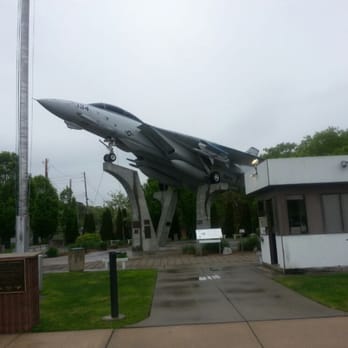
A fitting tribute to the men and women, management and employees of the Grumman corporation that gave their blood, sweat and tears in building and defending this country. Since its founding in the 30's by the late Leroy Grumman building wooden bi-plaines, it had been a pillar of industry on Long Island employing as many as 25,000 people in WWII to over 20,000 today. They were famous for building the F6F Hellcat carrier based fighter that won the war in the Pacific, turning out as many as 500 per month at peak production. 12,000 Hellcats were built in a short span of 2-1/2 years. In the 60's, they built the Lunar Modules that landed men on the moon and started developing the newest & greatest of their cats, the F-14 Tomcat, made famous by namesake Tom Cruise in "Top Gun". Since the merger with Northrop in 1994, most of their facilities and people were relocated across the country from Florida to California. Before the mass exodus from Long Island, a small patch of land along Rt 25 Old Country Rd, north of the Calverton Airport was set aside and money was raised by the company and employees to create the Grumman Memorial Park, dedicated to its founder and all the people that built the arsenal that defended our country. Two products of the "Grumman Iron Works" buttress and guard the park. The F-14A Tomcat is mounted on concrete pillars on the east side and an A-6E Intruder carrier based bomber sits on its concrete apron to the west, both retired warriors of the Cold War. Along the pathways, you'll find marble paving stones & benches from families of employees dedicated to their loved ones. There is also a patch of concrete from the original WWII era runway at Bethpage that launched Hellcats, complete with a landing light. Towards the back is a mock-up of a AIM-54A Phoenix air-to-air missile, once carried by the Tomcat. Along the rear fence runs a bicycle path and a lot of people park their cars here to go riding. But never forget that Leroy built his company here on Long Island signified by the giant letters G R U M M A N painted on the asphalt that a satellite can see from space. read more



6 years ago
We were looking for a stop over for lunch after a Lavender field visit in the area. The memorial park exceeded our expectations. Aside for picnic table that we were needing, the awesome planes displayed are a sight. My hubby had a big smile upon seeing . It is worth stopping by whenever in the area. read more


Really COOL place!! The park is on the small side, But has information on the two planes a tomcat f-14a and a-6e. the planes are really great to look at and the park is really nice. great place to hang out especially if you are a top gun pilot at heart. read more



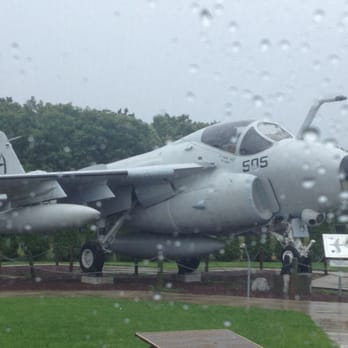


10 years ago
When in the area, this small Calverton memorial park is nice to come see the two fighter jets on display. It's a World War II memorial that's simple and free. Worth a short stop over. read more


11 years ago

11 years ago
More info about Grumman Memorial Park
NY-25
Calverton, NY 11933
Directions
(631) 369-1826
Call Now
Hours
Other Amenities