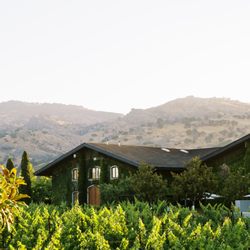
Green & Red Vineyard Photos


You might also consider


More like Green & Red Vineyard
Recommended Reviews - Green & Red Vineyard
Start your review...


2 years ago
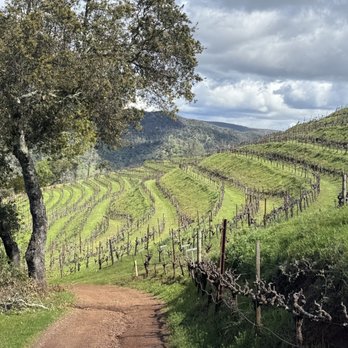
Ray is the ultimate tour guide, mixing his love for his wife, her family, his father-in-law (emphasis on "law" for Ray), and the beautifully sculpted vineyards climbing the hillside. The stories he shared and the experience we had made joining their club quick and wise decision. The Chiles Canyon Zinfandel and Tip-Top Zinfandel were delicious, and we can't wait to receive an allocation of their Viognier. It's quite the experience getting up to the winery from the main road, but both the drive and end result are worth it! read more

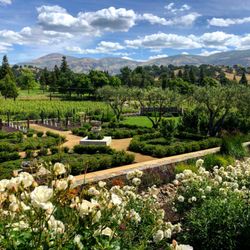
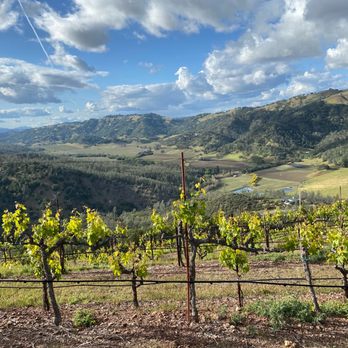
I'm a reasonably objective Yelp reviewer, but don't think I can't be bought. A few seasons on Mad Ave in NY taught me enough about bad habits, sellout journalism, paid endorsements. After all what are "wine experts" for (think Betty Crocker). But having no influencer$ around now makes it easy to say what I think. Frankly, there's not much else in this for me otherwise. I get to see my real voice in print again, and there's no editor around thanks to Yelp. For this writer at the moment it's enough. So, my thousands of avid readers (I know you're out there btw; Madame Sophia's cards are never wrong), enjoy my born-again integrity. Except: this review suspends my arms-length rule from the subject as I've long-admired Green and Red Vineyards. If you check it out yourself you'll discover one of few great Zinfandel wines in the world. Visiting the place, you'll see a winery that would never have happened had it not become the lifework of one of the most unusual, creative individuals to be involved with California wines. Green and Red is the kind of place where you might wonder why some people take on such ventures? This one began more than 50 years ago. I came across Green and Red before it had a name, back in days when I was a grad student of Enology and Other Black Arts at UC Davis. But quantifying exactly "when" isn't really necessary, is it? (OK Boomers, it was back when the Sticky Fingers album cover had a real zipper.) Most of us in the program didn't know it then but we were destined simply to become glorified technocratic labrats. The more aggressive guys among us would become better known, or at least print their names on a few premium wine labels. But there was one particularly adventurous individual who didn't pursue this academic route, just dropped by the department now and then to compare notes. He wasn't like the rest of us: born in NYC, educated as a sculptor, taught at UC Berkeley, raced motorcycles, learned winemaking while living in Bordeaux, and worked in Manhattan with some of the biggest names in the trade of world class wines. His name was Jay Heminway. Jay's credentials for a guy our age were impressive. I would have been happy stopping at that Manhattan chapter and never leaving. But Jay moved on, purchasing what seemed to be half a mountain on the East side of the Napa Valley. When a few of us followed him up the winding road to his hilltop farm we found a project that elevated his status among us to a level beyond mere winemaking. Jay was on a mission. Most of us had left jobs in relatively dull industries to start over in grad school, hoping this would pave the way to exotic work in the wine industry. This was essentially an effort to save ourselves from being stupefied by the corporate state which was, back then and just like the draft, the demon to avoid at all cost. But if working with wine turned out not to save most of us from professional ennui, then at least we had chosen a career that allowed drinking on the job. Jay had higher goals, a vision years ahead of the rest of us that would ultimately set him apart from most in the industry who essentially made predictably competent, uninspired wines. He was not given to pretentious posing and posturing common in the 60s (and he would likely object to this term today) but Jay was quintessentially "hip". The term back then meant many things, but in his case it refers to his unusual awareness and the will to independently pursue "thinking outside the box". Having purchased his rocky hillside Jay would spend the rest of his life pursuing his vision, carving a living sculpture 1,700 feet above the Napa valley floor. The purpose of his creation was one thing: to make perfectly balanced red zinfandel wine. This was a big challenge because prior to that the land was only briefly planted to grapes and wine had never been made on the property. Also the elevation, which in the upper vineyards is quite steep, increased the difficulty of doing anything up there. And Zinfandel was and is not one of the great varietals. Green and Red today results from a level of difficulty very few wineries have ever required here. Jay passed away three years ago, and Green and Red is now in the capable hands of his daughter. You can only visit in small groups as tours are not their main objective. For the truly interested, it's well worth making the arrangements as I did recently. As to what's special about the wines: Zinfandel is a tough grape to grow. The berries and clusters easily turn to raisins on the vine and for the most part the wines have a cloying "jammy" character. But in cool growing sites, like at the top of this mountain, the grapes naturally retain their characteristic berry flavor, with alcohol and fruit acid in balance. Realizing this was Jay Heminway's vision. But you don't need to drive up the mountain to drink it, unless you also wanta see something very unusual. read more




4 years ago
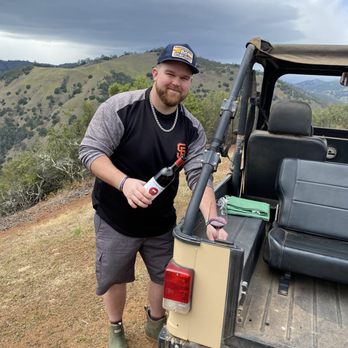
Green & Red is for people who really appreciate wine, wine that you can swill in your mouth and truly enjoy. The experience here is different from standing at a posh tasting room, foot on a brass rail, listening to the pourer asking you if you are on the white or which red have you had? This is back to the essence of great wine, consisting first and foremost of great people, then land, grapes, care, craft and dedication. Moreover, you get to ride on a jeep to the top of a mountain and taste some of the best wine Napa has to offer with a view of the entire valley. How cool is that? Outstanding! read more


8 years ago

14 years ago

13 years ago
More info about Green & Red Vineyard
3208 Chiles Pope Valley Rd
Saint Helena, CA 94574
Directions
(707) 965-2346
Call Now
Visit Website
http://www.greenandred.com
Hours
Services
Outdoor Amenities
Other Amenities