Fort Butler Photos


More like Fort Butler
Recommended Reviews - Fort Butler
Start your review...



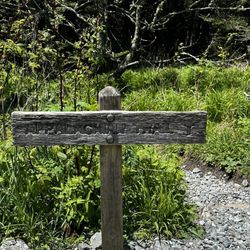
Just across the bridge from downtown Murphy, this marker points out a small piece of history that became the incident known as the "Trail of Tears" when the native population was forcibly moved across the country. America, eh? The marker reads, "One of forts in which Gen. Winfield Scott gathered the Cherokee before moving them west in 1838. Stood 1/4 mile southwest." and it was erected in 1987 by the North Carolina Archives and Highway Departments. Online, there is more information. The marker explains that the 1830 Indian Removal Act and the disputed 1835 Treaty of New Echota set in motion the forced removal of the Cherokee despite the treaty being signed by only a small, unauthorized group. In 1838 President Martin Van Buren directed General Winfield Scott and thousands of troops to round up about 15,000 Cherokee and confine them in hastily built camps where disease killed more than 1,500 people. Several forts in western North Carolina, including Fort Butler near present‑day Murphy, served as temporary internment sites during this roundup. Between mid‑June and mid‑July 1838, more than 3,000 Cherokee passed through Fort Butler as they were forced west along the Unicoi Turnpike at the beginning of the Trail of Tears. While we've had The Indian Citizenship Act (1924), The Indian Reorganization Act (1934) and The Indian Civil Rights Act (1968), the underlying dynamics of government power, land pressure and political convenience still show up in modern forms. Just look at pipeline routes pushed through tribal land, water rights battles, and long legal fights over reservation boundaries. Yay? [Review 515 of 2026 - 4610 in North Carolina - 25697 overall] read more