
DC Streetcar Photos


You might also consider


More like DC Streetcar
Recommended Reviews - DC Streetcar
Start your review...


Reviews With Photos


Bottom Line: Great for accessing stuff on H Street and Benning Rd. but there is limited connectivity with DC's public transportation system. The DC Streetcar currently only consists of one line - H/Benning and it is either a joke or a novelty, depending on who you ask. I am in "Camp Novelty" and bizarrely fascinated with the resurrection of this circa 1800s mode of transportation. I thoroughly enjoyed ridding down H Street and being slightly jostled while listening to the percussion of the street car. But, I'm not sure how practical streetcars are in DC, in any carnation. More on that later. . . What I like about the streetcar is that it takes me to a neighborhood in DC that I would not otherwise explore. There are some real gems in this transitional neighborhood. I also like how clean the cars are. And since the streetcar is still free, that is nice too. I appreciate that the current western terminus is Union Station, DC's transportation hub, but I do wish the streetcar was closer to the train station. In any event, it is nice that the terminus has options for transfers to busses, the Metro (Red Line), commuter trains, Amtrak, etc. What I don't like about the streetcar is how slow it is. It is only slightly faster than walking but at least it's warm in the winter and cool in the summer. If the streetcar was better synched with traffic lights that would be nice. Streetcars were uber popular (ironic pun unintended) back on the 1800s and early 1900s. But, once cars became common place streetcars became obsolete. So why would one think that a streetcar can thrive in today's car culture? That is a rhetorical question. And for the record, streetcars do thrive in places like Portland, OR and San Francisco, CA where the city's residents embrace such public transportation concepts. But, a single streetcar line with minimal connection to another streetcar line or public transportation route has minimal value and practicality. The fate of the network of DC streetcars is unknown. It was never intended to be a single line, but instead eight lines covering 30ish miles. So far, the H/Benning Line was completed 10 months ago and it's not clear what the best next steps are. If the city is going to press on with the revival of the street car then a likely candidate is expansion of the current H/Benning line for 2 miles East to the Benning Road Metro Station. Connecting the streetcar to that Metro station would intersect it with the Metro's Blue and Silver lines. From there it seems possible that the streetcar could stretch from Union Station west on K St. to Georgetown. I'm curious to see what comes of the DC Streetcar. As for me, I plan to jump on the streetcar again soon and grab some delicious grub at Ben's Chili Bowl.


This has been on my bucket list for a while. I love the street cars. They are clean, roomy and still free! I love visiting H Street but sometimes parking can be tricky. Taking a street car means I don't have to circle the block or feed a parking meter. The Union Station stop boards at North Capital Street and H Street NE. It is closer for me to walk to the stop than Union Station. The DC Streetcar website even has a video tour of exactly where to board. It is fun watching the sights during the ride. A security guard is on board, which makes me feel safe, especially since I was alone. This is a great way to see a play at the Atlas Theater, visit Ben's Chili Bowl, Mythology or shop along H Street, NE. The web site lists the hours of service.


We just took the DC Streetcar for the first time! I moved here and visited H Street before the the cart existed. I heard that this was coming and this was our first time trying it out. We went to a restaurant near by (Pow Pow) and walked a little bit to get our digestion going while we waited for the Streetcar! We stopped to check the time the bus was going to stop by and it was maybe a minute off. Mind you it was 9pm but it got us quickly to Union Station. We took a bit of a walk through Union Station to get to the metro and voila we were home in 15-20 minutes. The streetcar was clean and timely. Again... keeping in mind the time. I'm sure it might be a hot mess during rush hour. The only major drawback was that I had to trek through Union Station to get to the metro. That seems kind of cumbersome, a little annoying, and as a woman possibly little worrisome. I don't really want to walk through the bus terminal at night to get to the metro. I think that should have been better thought through. On the other hand, it is at least well lit...


Yeah it took awhile. But hey, It brought me into the heart of H street, a place that was really hard to get to before. Yeah, I also had to metro into Union Station. Go up like 5 escalators, walk pass the greyhound buses, all the way outside and across the street but I guess where else could you put a street car? And again what other choice did I have to get to 15th and H in under 10 mins? So I think the (6 month free trial) deserves 4 stars.
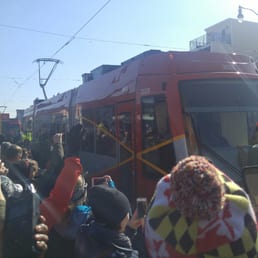

After I don't know how many years and millions of dollars, the DC Streetcar is now up and running for the public to enjoy? I say enjoy because I'm not all that sure that in its current form it will serve a true alternative transportation option. It doesn't physically connect with any of the Metro subway stations, though it does come within walking distance of Union Station. That said, it's modern, clean, and smooth. They currently run every 15 minutes and are free to ride for the next six months. If/when they extend it to the Orange Line Minnesota Avenue station, the Blue Line Benning Road Station, and Gallery Place/Chinatown Station, then the DC streetcar will be a true transportation option. Right now it's a novelty and I give it three stars for being clean, modern, and smooth. Minus two stars for not being a true transportation option and for not running on Sundays. Oh yeah, it doesn't run on Sundays. So how's that for a transportation option (or lack thereof).


9 years ago
Since I was hanging around the H Street Corridor, I thought it'd be a good opportunity to ride the DC Streetcar. If you are somewhat knowledgeable in riding buses & trolleys, you will get acclimated pretty quickly. The H/Benning Line has eight stops traveling east & west. The H Street platforms are located on both sides of the street & the Benning Road platform on the center median. I started at the 1st stop - H/Union Station, once the streetcar arrived, I pressed the round 'open' button & hopped on. There are about 30 seats or so, a few standing areas & stop request cords readily accessible. The 411: *Streetcars are scheduled within a 10-15 minute range with the expectation to be at each stop no more than 15 minutes apart. *There's a Streetcar Tracker where you can view information in real-time, which is available via the website & smart phone apps. *For the cyclists you can bring your bikes aboard during non-peak hours & if space is available. There are no racks & you are responsible for holding your bike upright while riding. *As of now, its free to ride the DCS. Eventually (no timetable) that will change & & ticket stations will be present at each stop. *Future lines are in the works - Anacostia, North-South Corridor & Union Station to G-Town to name a few. *All Streetcars & stops are equipped to accommodate individuals with disabilities. *Streetcars operates Monday-Thursday 6A-12A, Friday 6A-2A, Saturday 8A-2A & Sunday/Holidays 8A-10P. Due to the nice weather, I elected to walk out of Union Station to N. Capitol & back up to H Street. Yet for a shorter distance, you can exit Union Station on the top level where the bus terminal is located to catch the 1st stop. A fun & for now free way to move around the H Street area if you become tired or lazy. =) read more
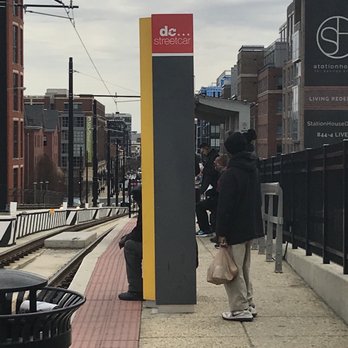

The DC Streetcar runs all along H Street, from Oakland Ave NE/ Bening Road NE to Union Station. The streetcar will come by your stop every 15 minutes and runs through 12 am Monday- Thursday. On Friday & Saturday, it runs until 2 am and Sunday and holidays, it runs until 10 pm. Very convenient and happy that the DC Streetcar is still currently free. My husband and I road this streetcar numerous of times this past week since one of the stops is right across the street from our vacation rental. It was helpful taking the streetcar to Union Station, especially with the air conditioning blasting when entering. Being that it is hot and humid visiting DC in July, that a/c was incredibly appreciative and also great to have a little from the sun too. There are so many great restaurants and businesses all along H street, I am glad the city has this provided for residents and visitors a like to take advantage of this free service. Check out this web link to see what great places you can check out the next time you are on this part of town (https://www.dcstreetcar.com/riding/guide-to-h-benning/). read more


This streetcar is not named desire, it's named the DC Streetcar. Honestly this tram is just for show. There are a lot of great cities where trams are a legitimate way to get around (and where there are legitimately a lot of trans people too), but around here you should probably be riding on the Metro Subway or if you have to then the bus. However if you're a tourist and you're visiting this new hipster gentrified neighborhood, then this tram is kind of cute. It's free, so I give it a 4 instead of the 3 it probably deserves. read more

9 years ago
Bottom Line: Great for accessing stuff on H Street and Benning Rd. but there is limited connectivity with DC's public transportation system. The DC Streetcar currently only consists of one line - H/Benning and it is either a joke or a novelty, depending on who you ask. I am in "Camp Novelty" and bizarrely fascinated with the resurrection of this circa 1800s mode of transportation. I thoroughly enjoyed ridding down H Street and being slightly jostled while listening to the percussion of the street car. But, I'm not sure how practical streetcars are in DC, in any carnation. More on that later. . . What I like about the streetcar is that it takes me to a neighborhood in DC that I would not otherwise explore. There are some real gems in this transitional neighborhood. I also like how clean the cars are. And since the streetcar is still free, that is nice too. I appreciate that the current western terminus is Union Station, DC's transportation hub, but I do wish the streetcar was closer to the train station. In any event, it is nice that the terminus has options for transfers to busses, the Metro (Red Line), commuter trains, Amtrak, etc. What I don't like about the streetcar is how slow it is. It is only slightly faster than walking but at least it's warm in the winter and cool in the summer. If the streetcar was better synched with traffic lights that would be nice. Streetcars were uber popular (ironic pun unintended) back on the 1800s and early 1900s. But, once cars became common place streetcars became obsolete. So why would one think that a streetcar can thrive in today's car culture? That is a rhetorical question. And for the record, streetcars do thrive in places like Portland, OR and San Francisco, CA where the city's residents embrace such public transportation concepts. But, a single streetcar line with minimal connection to another streetcar line or public transportation route has minimal value and practicality. The fate of the network of DC streetcars is unknown. It was never intended to be a single line, but instead eight lines covering 30ish miles. So far, the H/Benning Line was completed 10 months ago and it's not clear what the best next steps are. If the city is going to press on with the revival of the street car then a likely candidate is expansion of the current H/Benning line for 2 miles East to the Benning Road Metro Station. Connecting the streetcar to that Metro station would intersect it with the Metro's Blue and Silver lines. From there it seems possible that the streetcar could stretch from Union Station west on K St. to Georgetown. I'm curious to see what comes of the DC Streetcar. As for me, I plan to jump on the streetcar again soon and grab some delicious grub at Ben's Chili Bowl. read more


This has been on my bucket list for a while. I love the street cars. They are clean, roomy and still free! I love visiting H Street but sometimes parking can be tricky. Taking a street car means I don't have to circle the block or feed a parking meter. The Union Station stop boards at North Capital Street and H Street NE. It is closer for me to walk to the stop than Union Station. The DC Streetcar website even has a video tour of exactly where to board. It is fun watching the sights during the ride. A security guard is on board, which makes me feel safe, especially since I was alone. This is a great way to see a play at the Atlas Theater, visit Ben's Chili Bowl, Mythology or shop along H Street, NE. The web site lists the hours of service. read more


We just took the DC Streetcar for the first time! I moved here and visited H Street before the the cart existed. I heard that this was coming and this was our first time trying it out. We went to a restaurant near by (Pow Pow) and walked a little bit to get our digestion going while we waited for the Streetcar! We stopped to check the time the bus was going to stop by and it was maybe a minute off. Mind you it was 9pm but it got us quickly to Union Station. We took a bit of a walk through Union Station to get to the metro and voila we were home in 15-20 minutes. The streetcar was clean and timely. Again... keeping in mind the time. I'm sure it might be a hot mess during rush hour. The only major drawback was that I had to trek through Union Station to get to the metro. That seems kind of cumbersome, a little annoying, and as a woman possibly little worrisome. I don't really want to walk through the bus terminal at night to get to the metro. I think that should have been better thought through. On the other hand, it is at least well lit... read more


Yeah it took awhile. But hey, It brought me into the heart of H street, a place that was really hard to get to before. Yeah, I also had to metro into Union Station. Go up like 5 escalators, walk pass the greyhound buses, all the way outside and across the street but I guess where else could you put a street car? And again what other choice did I have to get to 15th and H in under 10 mins? So I think the (6 month free trial) deserves 4 stars. read more


11 years ago
After I don't know how many years and millions of dollars, the DC Streetcar is now up and running for the public to enjoy? I say enjoy because I'm not all that sure that in its current form it will serve a true alternative transportation option. It doesn't physically connect with any of the Metro subway stations, though it does come within walking distance of Union Station. That said, it's modern, clean, and smooth. They currently run every 15 minutes and are free to ride for the next six months. If/when they extend it to the Orange Line Minnesota Avenue station, the Blue Line Benning Road Station, and Gallery Place/Chinatown Station, then the DC streetcar will be a true transportation option. Right now it's a novelty and I give it three stars for being clean, modern, and smooth. Minus two stars for not being a true transportation option and for not running on Sundays. Oh yeah, it doesn't run on Sundays. So how's that for a transportation option (or lack thereof). read more
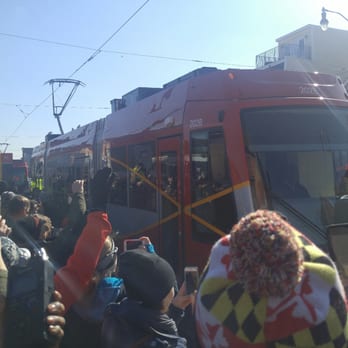


I was very very much impressed by this new/old mode of transportation that has returned after a absence of 55 years (1962). The streetcar trolley that I rode in was very clean, maintained and organized By The Way. When the system is is finally expanded I'll ride the rest of the lines when they are finally finished. There are certainly alot of interesting restaurants and shops along the Benning road and h street corridors from the Langston Golf Course to the Union Station indeed By The Way. The driver and motorman was certainly very friendly. I wish that they did not shut down the previous trolley system back in the early 1960's. Two thumbs up! read more


10 years ago

7 years ago
7 years ago
8 years ago
More info about DC Streetcar
Ask the Community - DC Streetcar
Review Highlights - DC Streetcar
You might also consider









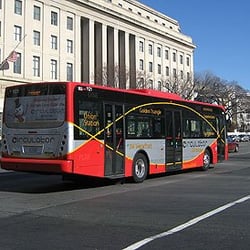
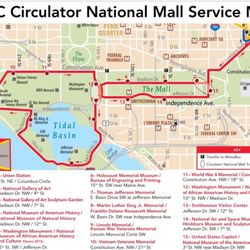

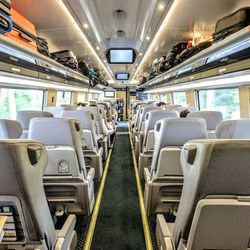






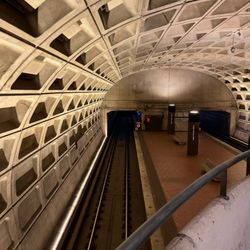
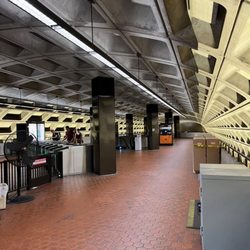



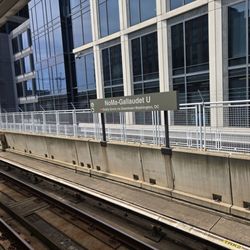

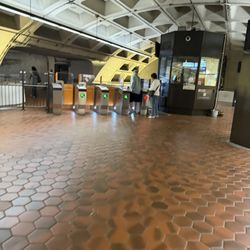





DC Streetcar - publictransport - Updated October 2026
Best of Washington, DC
People found DC Streetcar by searching for…
Metro Stations in Washington, DC
Transportation in Washington, DC
Train Stations in Washington, DC
Bus Stations in Washington, DC
Free Parking in Washington, DC
Park and Ride in Washington, DC
Public Parking in Washington, DC
Vacation Rentals in Washington, DC
Ambulance Service in Washington, DC
Phone Charging Station in Washington, DC
Trolley Tour in Washington, DC
Free Campgrounds in Washington, DC
Uber Car Service in Washington, DC
Luggage Locker in Washington, DC
Senior Transportation in Washington, DC
Tent Camping in Washington, DC
Browse Nearby
BEST of Washington, DC, District of Columbia Coffee near DC Streetcar
BEST of Washington, DC, District of Columbia Hotels near DC Streetcar
BEST of Washington, DC, District of Columbia Things to Do near DC Streetcar
BEST of Washington, DC, District of Columbia Restaurants near DC Streetcar
BEST of Washington, DC, District of Columbia Taxis near DC Streetcar
BEST of Washington, DC, District of Columbia Sandwiches near DC Streetcar
BEST of Washington, DC, District of Columbia Bus Stations near DC Streetcar
BEST of Washington, DC, District of Columbia Shopping near DC Streetcar
BEST of Washington, DC, District of Columbia Museums near DC Streetcar


