Black Beach Photos
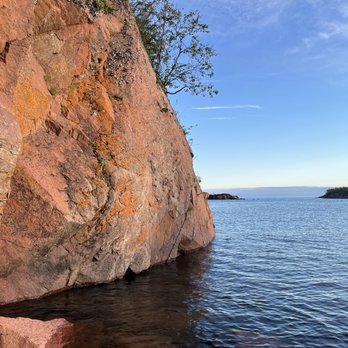


More like Black Beach
Recommended Reviews - Black Beach
Start your review...


Reviews With Photos


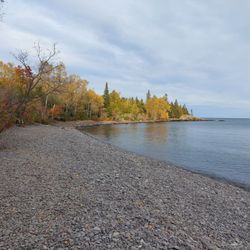
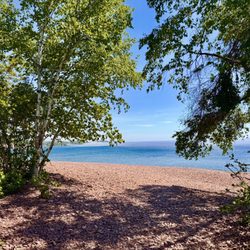
A must do when visiting the North Shore. Note that when you drive to the beach so not park at the first beach parking. That isn't black sand beach. Keep going to the parking lot at the end of the road. The first parking lot is to another beach that isn't black at all. While you can take the trail to black beach, it's much easier if you just park at the end to begin with. This is a popular spot so expect a fair amount of people. There are a few picnic tables, lots of rocks to explore and a very low water level where you can walk out to an "island". If you're spending a few hours, explore the black beach and the nearby non-black beach. Between the two there is a little cove and smaller beach that can feel semi-secluded if you want to get away from the crowds as well. A unique spot that is worth the detour and a bit of time exploring.


GREAT hidden gem right off of Route 61. This is a chance to experience a black sand beach without having to fly to Iceland or Hawaii. This is an awesome place to have a picnic. Give credit to Cliffs Corporation opening up this space to the public.


Gorgeous hidden gem on Lake Superior! It used to belong to a mining company but it has been opened to the public. You will not find any signs from the main road, so follow GPS until you get close. Parking is along the side road, then you walk down to the beach area. The water is shallow so you can swim far out. You can climb the large rocks and even find an adorable tiny swimming cove on the other side.


1. Like anywhere cool/instagram worthy, expect it to be a busy place. 2. This is not sand, but more like small black rocks -- definitely can hurt to walk on barefoot. 3. It can be a little difficult to find because there aren't signs differentiating between Black Beach and Black Sand Beach. To get here, when you see the little parking lot for Black Beach, continue driving down the dirt road. You'll probably start to see a line of cars parked and then a little parking lot with a trail that brings you to Black Sand Beach.

One of my favorite places I visited. Truly unique and very relaxing. Small parking area but we lucked out. Short walk to the lake shore. Wasn't very big if you're used to some ocean shores and beaches. Also if you're used to water ways having a stinky smell there wasn't any detectable stink to it. It's a must see!


This is a great beach. I think it's awesome the the sand is black. You do not have to pay any type of fee to go here. They gave a small free parking lot. This isn't a beach that you can swim in since the waves in lake superior are very strong. I did try kayaking which is also very difficult to do since the water waves are pretty heavy. However there is a place that you can bring firewood and have a fire. There are also picnic tables so you can have a picnic. They have a private area that is supposed to be handicap accessible however we went over there it didn't seem very easy to get down to the water if you were in a wheel chair they had a lot of rocks and things.


Unbelievably unique and beautiful place! The surrounding nature is magical! Would definitely come back. Highly recommend!


This location has panoramic views and its one of the few beaches on the North Shore with a fine black sand to enjoy and swim in the water. While the water of Lake Superior is cold overall, this location has the warmest waters. We have been to the North Shore a few times and this is our first time to Black Beach. Be sure to include Black Beach as part of your North Shore visit because it is easily accessible.
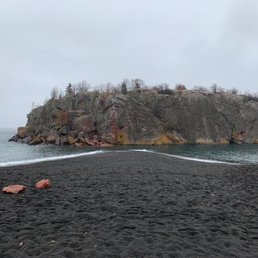

I've visited Duluth many times over the years, but had never visited the Black Beach before. Though, my understanding is that the beach just opened back up to the public in mid-2015. Unfortunately, it was a rather cold day, but the beach was still beautiful and we enjoyed walking along the water line. The "black" beach is made up of taconite tailings that have built up over the years. That said, while you can absolutely bring pets, I would be hesitant to keep them there too long. While recent studies have found that it wasn't the taconite that caused mesothelioma among miners on the iron range (instead it was asbestos), I am still leery to let my pets have contact for too long.


What an amazing place! As we were driving through Silver Bay, we saw this billboard at the side of the road for Black Beach. We were intrigued.... Was it just a name or was it black? Anyway, we got the lowdown from the innkeeper at the B&B we were staying at. For years it was simply private land owned by the mining company. Kids would sneak there for drinking parties and late night shenanegans. But it was also an amazingly beautiful beach. One day the mining company got tired of tresspassing and fenced the beach off. The locals were up in arms! Silver Bay purchased the tract of land and created a public beach (which noone but the locals seem to know about) and the rest is history. Yes, the sand is black. The taconite plant dumped a lot of minerals in the lake which accumulated in the sand and made it black. The sand is not fine but almost pebbly. I took some home with me and my daughter loves to play with it. There were some gorgeous rock formations not far off the beach and in fact the biggest was joined to the beach by a sandbar. Several young adults were attempting to climb it when we were there. There were several picnic tables, some fire pits and a vault restroom located in the small parking lot. This wasn't the easiest beach to find. Its tucked away and seems private. It wasn't crowded mid august which tells me it's not a tourist destination, but it should be!


Absolutely love this beach! There are pits to have a bonfire everywhere and the view is beautiful! It is a bit harder to access but other than that it's amazing!


Although I've been returning to the North Shore since I was five, and only visited Black Beach a few times in the interim, it will forever hold a commanding and singular place on my internal mantelpiece of warm memories. A few weeks ago, I took my Californian Honeybunny to the North Shore (and Minnesota) for the first time. And this is the first place she dipped her awe-struck paw in the great waters of Gichi Gami. We wiled away an entire morning vacillating between staring, mouths agape at the panorama of day-glow orange lichen-crusted rock formations, and stark, pine-studded, wind-swept headlands...and staring, mouths agape on hands and knees or fully prostrate at the microcosmic universe of rocks and pebbles of this vast, ebony-pebbled collection of heterogeneous mineralogical wonders. In addition to touching Superior, and being touched, in turn, by something even more vast, opaque, and enigmatic, we also tried our hands--paws--at something I've never had much success with--agate hunting! And lo and behold, she found her first agate! I found about 4-5, most of which were less than 5 mm in width, but the largest contained an oddly dark and pale complexion, like a mocha with foam. It seemed to perfectly symbolize the enigma of this depthless inland sea, both a perfect representation of its complex, multilayered beauty, and a fingerprint of its individuality. While it is easy to be swept away (pun intended) by the visual delights of this place, there is also an audio landscape that permeates this crescent sliver of night-hued sand. You hear it each time the waves lap against its edges. It is not the crashing roar I hear so often at Pacific beaches or even other parts of Minnesota's North Shore. It is more like another, distinctly Minnesotan sound, the tinkling of ice being crushed as the fragile skins of ponds either just on the cusp of freezing up in Autumn, or in Spring or the mid-winter thaw when the ice shards collide like metal wind-chimes in a faint summer breeze. While this sound is fundamentally akin to those just described, it differs in its essential qualities: it is more rhythmic, undulating at regular intervals, and less like the breaking of something; it is gentler, and lower-pitch, a cross between the sound of a giant's sonorous exhalations in a deep, peaceful slumber and the ringing of bells. It is easy to imagine some great, invisible hand or palm running over these sands, plying them like the strings of an instrument that mortal ears can barely hear let alone conceive of. The singing sands have their own voice and volition, and yet they can be plied. How is it so? How is it that a single note can provision the hearer with perfection, and it also can when played with other notes? Whether one instrument aubades us, or many simultaneously, each note resonates as an echo of the whole, just as each grain of sand is an imprint of the whole. Choose your measure: pi, the golden mean, the atom, the pentatonic scale--the entire sea exists in a drop of water, the beach in a grain of sand, the human being, in an atom, the humble snail shell in a spiral. When reduced to subatomic particles, matter and energy are indistinguishable. We are not objects, but a ceaseless oscillating wave, and when all of our voices are heard together--the voice of the sand, the sea, the plants, and humankind--above the din of our illusions, constructs, and artifices--we exist as one interstellar orchestra, there is no cacophony, just a ceaseless hum. That hum is found in the sounds mothers instinctively make to their babies, in the purrs of cats, in the wind through tall grasses, in singing sands caressed by inland oceans. We all exist in the symmetry of our relationships to and with all other things. To the degree that our actions reflect that symmetry, we achieve perfection. Symmetry is simply the external manifestation of harmony. Lest we forget that we are children of the Earth, it is wise to remember that the Earth is within us as much as we are a part of it. We are nothing without the iron in our blood that points to true north, without the calcium that forms the house of our flesh, we are nothing without the carbon that we share with all life as we know it, without the millions of unknown species of bacteria that live and die in the cities and countries inside of us, without the combination of hydrogen and oxygen atoms that makes the inland seas and rivers within us, without which nothing could live. We are intact ecosystems. We are whole, complete, perfect, and yet we could not exist alone. We are nothing and we have nothing without our relationships we have. We are but one of an infinite number... Were I to give this beach another name, I think "Singing Sands" would be a fitting title. I could spend hours here lost in reverie, deaf to all distractions, receptive only to the voice of the singing sands, and the lost language of the rocks, the wind in the branches of gnarled pines, of the Earth herself...


This was an epic beach. It is past a campsite, but it is very well marked so you know exactly where you're going. There's a small parking lot at the path toward the beach, but a lot of people park on the side of the road. It can get a little backed up and crowded so be careful of this. There is a bathroom here. There was also a man selling some merch such as sweatshirts and hoodies and they were super cute and locally made and owned. But the beach was the best part. It was incredible. The graphite was soft and it was black there was beautiful scenery surrounding the area and lots of benches and folks milling around the area. It's a great way to use man-made resource resources for good. We really enjoyed this spot and it's a great one to check out on your trip up north. read more

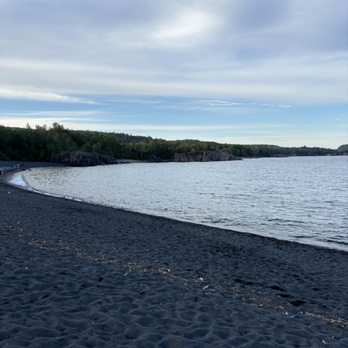


This is such a fun beach and about an hour-ish north from Duluth! There is a small parking lot(free) and if you get lucky, you may be able to park there! Otherwise there is street parking and overflow!(both free) There is a golf cart that takes people back and forth from overflow to the beach for free! He does work off of tips, so be sure to throw some money his way! He is super nice, places music and has a cool bubble machine! You will walk down a short path and then... BEACH TIME!!! The beach has some areas with coarse rocks and then fine black sand! The beach is kept pretty clean and there are garbage cans as you are coming onto the beach and leaving. There are fire pits and picnic tables on a first come first serve basis. There are rocks for kids to climb on and stay entertained! The water is always cold, but on those hot days, it feels so good!!! It is a smaller beach and is gorgeous. We like to stop at the Rustic Inn, grabs some slices of pie, and eat the on the beach! Respects the area and make sure you leave with your trash! Together we can keep this beach as outstanding as it already is! **I dropped a star because there is no toilet, only a Biffy) read more


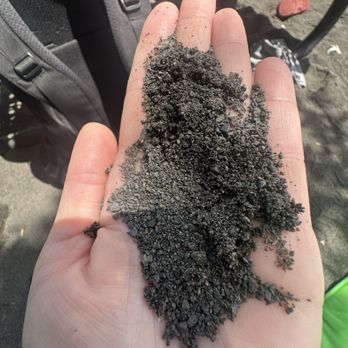


A must do when visiting the North Shore. Note that when you drive to the beach so not park at the first beach parking. That isn't black sand beach. Keep going to the parking lot at the end of the road. The first parking lot is to another beach that isn't black at all. While you can take the trail to black beach, it's much easier if you just park at the end to begin with. This is a popular spot so expect a fair amount of people. There are a few picnic tables, lots of rocks to explore and a very low water level where you can walk out to an "island". If you're spending a few hours, explore the black beach and the nearby non-black beach. Between the two there is a little cove and smaller beach that can feel semi-secluded if you want to get away from the crowds as well. A unique spot that is worth the detour and a bit of time exploring. read more


2 years ago
GREAT hidden gem right off of Route 61. This is a chance to experience a black sand beach without having to fly to Iceland or Hawaii. This is an awesome place to have a picnic. Give credit to Cliffs Corporation opening up this space to the public. read more

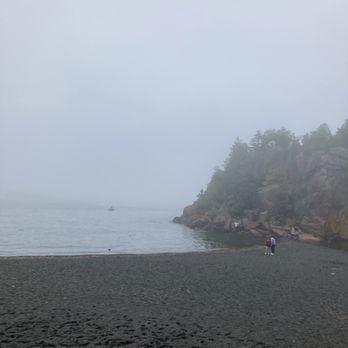

Gorgeous hidden gem on Lake Superior! It used to belong to a mining company but it has been opened to the public. You will not find any signs from the main road, so follow GPS until you get close. Parking is along the side road, then you walk down to the beach area. The water is shallow so you can swim far out. You can climb the large rocks and even find an adorable tiny swimming cove on the other side. read more


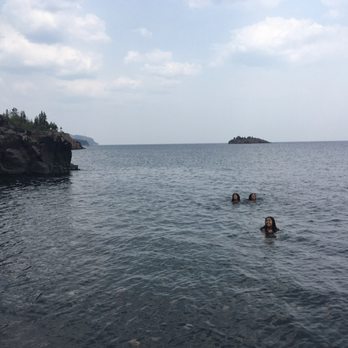


1. Like anywhere cool/instagram worthy, expect it to be a busy place. 2. This is not sand, but more like small black rocks -- definitely can hurt to walk on barefoot. 3. It can be a little difficult to find because there aren't signs differentiating between Black Beach and Black Sand Beach. To get here, when you see the little parking lot for Black Beach, continue driving down the dirt road. You'll probably start to see a line of cars parked and then a little parking lot with a trail that brings you to Black Sand Beach. read more


3 years ago
One of my favorite places I visited. Truly unique and very relaxing. Small parking area but we lucked out. Short walk to the lake shore. Wasn't very big if you're used to some ocean shores and beaches. Also if you're used to water ways having a stinky smell there wasn't any detectable stink to it. It's a must see! read more


2 years ago

6 years ago
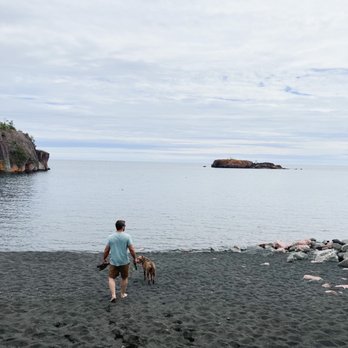
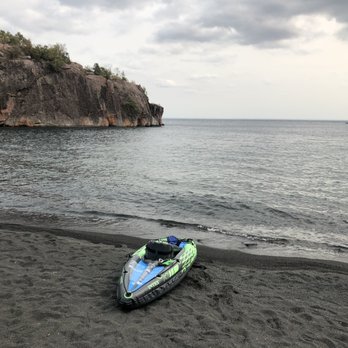
This is a great beach. I think it's awesome the the sand is black. You do not have to pay any type of fee to go here. They gave a small free parking lot. This isn't a beach that you can swim in since the waves in lake superior are very strong. I did try kayaking which is also very difficult to do since the water waves are pretty heavy. However there is a place that you can bring firewood and have a fire. There are also picnic tables so you can have a picnic. They have a private area that is supposed to be handicap accessible however we went over there it didn't seem very easy to get down to the water if you were in a wheel chair they had a lot of rocks and things. read more




4 years ago
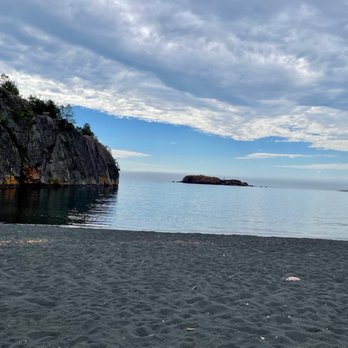
Unbelievably unique and beautiful place! The surrounding nature is magical! Would definitely come back. Highly recommend! read more

3 years ago
Had the whole beach to ourselves! Soft black rock type sand. Picturesque type of place. It was cold when we went but was worth it. So gorgeous. Definitely one of the prettiest places on the north shore read more


6 years ago
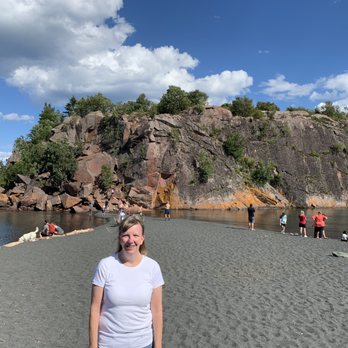
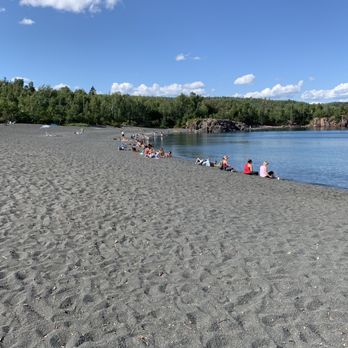
This location has panoramic views and its one of the few beaches on the North Shore with a fine black sand to enjoy and swim in the water. While the water of Lake Superior is cold overall, this location has the warmest waters. We have been to the North Shore a few times and this is our first time to Black Beach. Be sure to include Black Beach as part of your North Shore visit because it is easily accessible. read more




4 years ago

I've visited Duluth many times over the years, but had never visited the Black Beach before. Though, my understanding is that the beach just opened back up to the public in mid-2015. Unfortunately, it was a rather cold day, but the beach was still beautiful and we enjoyed walking along the water line. The "black" beach is made up of taconite tailings that have built up over the years. That said, while you can absolutely bring pets, I would be hesitant to keep them there too long. While recent studies have found that it wasn't the taconite that caused mesothelioma among miners on the iron range (instead it was asbestos), I am still leery to let my pets have contact for too long. read more
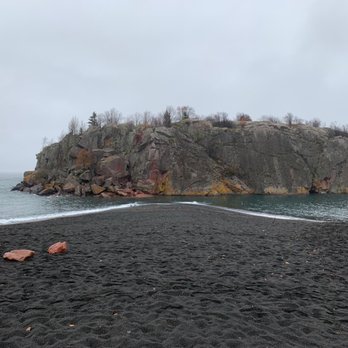

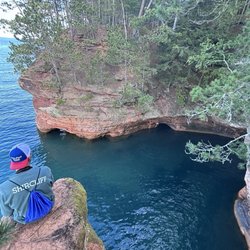
What an amazing place! As we were driving through Silver Bay, we saw this billboard at the side of the road for Black Beach. We were intrigued.... Was it just a name or was it black? Anyway, we got the lowdown from the innkeeper at the B&B we were staying at. For years it was simply private land owned by the mining company. Kids would sneak there for drinking parties and late night shenanegans. But it was also an amazingly beautiful beach. One day the mining company got tired of tresspassing and fenced the beach off. The locals were up in arms! Silver Bay purchased the tract of land and created a public beach (which noone but the locals seem to know about) and the rest is history. Yes, the sand is black. The taconite plant dumped a lot of minerals in the lake which accumulated in the sand and made it black. The sand is not fine but almost pebbly. I took some home with me and my daughter loves to play with it. There were some gorgeous rock formations not far off the beach and in fact the biggest was joined to the beach by a sandbar. Several young adults were attempting to climb it when we were there. There were several picnic tables, some fire pits and a vault restroom located in the small parking lot. This wasn't the easiest beach to find. Its tucked away and seems private. It wasn't crowded mid august which tells me it's not a tourist destination, but it should be! read more


7 years ago
Absolutely love this beach! There are pits to have a bonfire everywhere and the view is beautiful! It is a bit harder to access but other than that it's amazing! read more

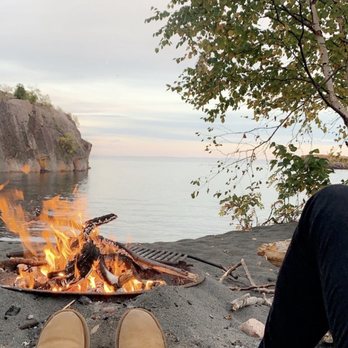

Although I've been returning to the North Shore since I was five, and only visited Black Beach a few times in the interim, it will forever hold a commanding and singular place on my internal mantelpiece of warm memories. A few weeks ago, I took my Californian Honeybunny to the North Shore (and Minnesota) for the first time. And this is the first place she dipped her awe-struck paw in the great waters of Gichi Gami. We wiled away an entire morning vacillating between staring, mouths agape at the panorama of day-glow orange lichen-crusted rock formations, and stark, pine-studded, wind-swept headlands...and staring, mouths agape on hands and knees or fully prostrate at the microcosmic universe of rocks and pebbles of this vast, ebony-pebbled collection of heterogeneous mineralogical wonders. In addition to touching Superior, and being touched, in turn, by something even more vast, opaque, and enigmatic, we also tried our hands--paws--at something I've never had much success with--agate hunting! And lo and behold, she found her first agate! I found about 4-5, most of which were less than 5 mm in width, but the largest contained an oddly dark and pale complexion, like a mocha with foam. It seemed to perfectly symbolize the enigma of this depthless inland sea, both a perfect representation of its complex, multilayered beauty, and a fingerprint of its individuality. While it is easy to be swept away (pun intended) by the visual delights of this place, there is also an audio landscape that permeates this crescent sliver of night-hued sand. You hear it each time the waves lap against its edges. It is not the crashing roar I hear so often at Pacific beaches or even other parts of Minnesota's North Shore. It is more like another, distinctly Minnesotan sound, the tinkling of ice being crushed as the fragile skins of ponds either just on the cusp of freezing up in Autumn, or in Spring or the mid-winter thaw when the ice shards collide like metal wind-chimes in a faint summer breeze. While this sound is fundamentally akin to those just described, it differs in its essential qualities: it is more rhythmic, undulating at regular intervals, and less like the breaking of something; it is gentler, and lower-pitch, a cross between the sound of a giant's sonorous exhalations in a deep, peaceful slumber and the ringing of bells. It is easy to imagine some great, invisible hand or palm running over these sands, plying them like the strings of an instrument that mortal ears can barely hear let alone conceive of. The singing sands have their own voice and volition, and yet they can be plied. How is it so? How is it that a single note can provision the hearer with perfection, and it also can when played with other notes? Whether one instrument aubades us, or many simultaneously, each note resonates as an echo of the whole, just as each grain of sand is an imprint of the whole. Choose your measure: pi, the golden mean, the atom, the pentatonic scale--the entire sea exists in a drop of water, the beach in a grain of sand, the human being, in an atom, the humble snail shell in a spiral. When reduced to subatomic particles, matter and energy are indistinguishable. We are not objects, but a ceaseless oscillating wave, and when all of our voices are heard together--the voice of the sand, the sea, the plants, and humankind--above the din of our illusions, constructs, and artifices--we exist as one interstellar orchestra, there is no cacophony, just a ceaseless hum. That hum is found in the sounds mothers instinctively make to their babies, in the purrs of cats, in the wind through tall grasses, in singing sands caressed by inland oceans. We all exist in the symmetry of our relationships to and with all other things. To the degree that our actions reflect that symmetry, we achieve perfection. Symmetry is simply the external manifestation of harmony. Lest we forget that we are children of the Earth, it is wise to remember that the Earth is within us as much as we are a part of it. We are nothing without the iron in our blood that points to true north, without the calcium that forms the house of our flesh, we are nothing without the carbon that we share with all life as we know it, without the millions of unknown species of bacteria that live and die in the cities and countries inside of us, without the combination of hydrogen and oxygen atoms that makes the inland seas and rivers within us, without which nothing could live. We are intact ecosystems. We are whole, complete, perfect, and yet we could not exist alone. We are nothing and we have nothing without our relationships we have. We are but one of an infinite number... Were I to give this beach another name, I think "Singing Sands" would be a fitting title. I could spend hours here lost in reverie, deaf to all distractions, receptive only to the voice of the singing sands, and the lost language of the rocks, the wind in the branches of gnarled pines, of the Earth herself... read more

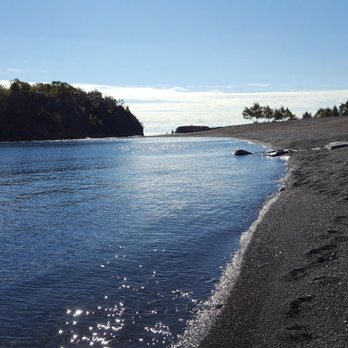


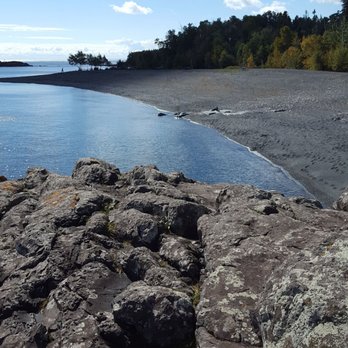


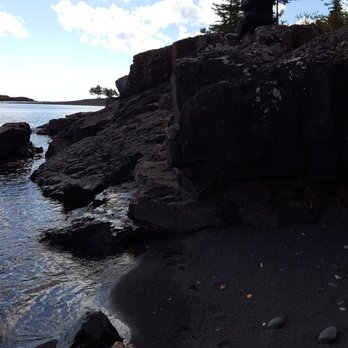

5 years ago

I've been going up North since I was 16. It's been ten years, yet I never noticed Black Beach until recently. My son and I stopped by on a whim. We had an early morning hike to Devil's Kettle Falls and made an abrupt stop at Black Beach. There are three parking lots. The first is a small parking lot, the second is handicap parking only, and the third is a bit bigger and right next to the mining gates. We parked in the bigger lot and took the path from the parking lot down to the beach, and it was gorgeous! The beach isn't a sandy beach but more like black rocks yet it was really soft on the feet and overall relaxing. It's super family friendly - there are picnic tables and a fire pit by the beach The view is also amazing. There's an island right across from the beach, so it's an excellent photo op. Would definitely bring the kiddos and stop by again! Black Beach is between Tettegouche State Park and Split Rock Light House. read more


8 years ago

8 years ago
6 years ago
More info about Black Beach
E Lakeview Dr
Silver Bay, MN 55614
Directions
Hours
Outdoor Amenities