Cancel

    Open app

    Search

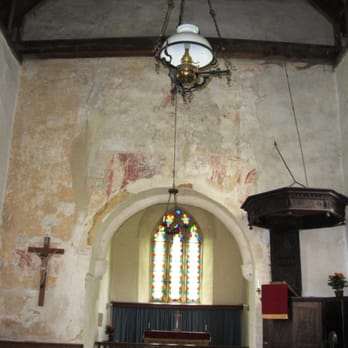
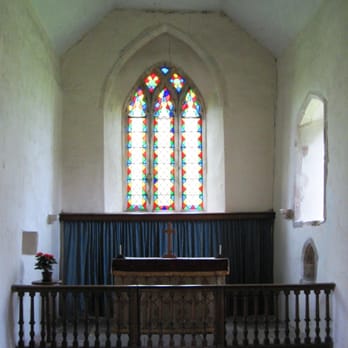
    St Botolph's Church, Botolphs

    5.0 (1 review)

    St Botolph's Church, Botolphs Photos

    Recommended Reviews - St Botolph's Church, Botolphs

    Your trust is our priority, so businesses can't pay to alter or remove their reviews. Learn more about reviews.
    Yelp app icon
    Browse more easily on the app
    Review Feed Illustration
    Photo of David J.
    96
    2344
    11912

    18 years ago

    Helpful 0
    Thanks 0
    Love this 0
    Oh no 0

    Verify this business for free

    Get access to customer & competitor insights.

    Verify this business

    Church of St Nicholas, Bramber Castle

    Church of St Nicholas, Bramber Castle

    4.0(2 reviews)
    0.9 mi

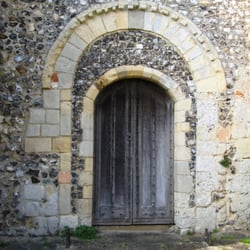
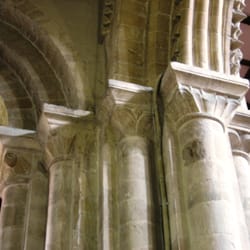
    Bramber is a picture-postcard village of the sort that wins 'Britain in Bloom' prizes. Sandwiched…read morebetween the equally pretty vllages of Steyning and Upper Beeding, it sits between the River Adur and the steep castle mound of Bramber Castle. The castle (see separate entry) is now a ruin, but its church - the oldest Norman church in Sussex - is intact, and still in regular use. Situated on a hill above the village, the church was built at the same time as the castle in 1073, by William de Braose. Originally a chapel for the castle, it became the parish church in 1250, but it declined with the village as its harbour on the River Adur silted up. The church was used as a gun emplacement for attacking the castle during the Civil War in 1642, and was ruinous by the mid-18th Century. It was restored in the 19th century. It's exterior is typically Norman - a strong, squat tower, which could also serve as a refuge, a short nave and thick walls. On the South Wall are the remains of an original Norman doorway, with a simply decorated arch. The original transepts and chancel have long since been demolished, and the church now consists only of a small west porch/vestry, nave and the tower, which functions as the chancel. Inside, the church is dark and atmospheric. The eye is drawn to the chancel arch, a perfect example of rustic Norman romanesque, and is one of only three examples to feature the original Norman figure carvings on the capitals. On the left, these feature two simple human heads, but on the right the human heads are accompanied by animal carvings in relief, showing birds and what appear to be dogs or foxes - some of them with more birds in their mouths (possibly an early 'fox and goose'). There are more Norman carvings on the capitals of the infilled north cancel arch. After a visit to the church, it's a only short climb to the lovely grounds of Bramber Castle - a perfect spot for a summer picnic.

    This church seems vastly over looked but the graves are not that old. Some are within recent years…read more The inside is classic Norman but needs a make over. The walls are peeling.
    Photos
    Church of St Nicholas, Bramber Castle - Chancel arch - 11th century carvings

    Chancel arch - 11th century carvings

    Church of St Nicholas, Bramber Castle
    Church of St Nicholas, Bramber Castle - Bramber church. South wall - Norman Door.

    See all

    Bramber church. South wall - Norman Door.

    Steyning Parish Church of St Andrew and St Cuthman

    Steyning Parish Church of St Andrew and St Cuthman

    4.0(1 review)
    1.6 mi

    Steyning is a lovely village to visit, if you are in this part of West Sussex, with an interesting…read morehistoric core of buildings, which also extends to nearby Bramber. The origins of Steyning's church are somewhat vague: it was founded around the 8th or 9th centuries, supposedly by St Cuthman. But it is clear that during the 9th century there was a flourishing Minster church here, dedicated to its presumed founder, and Ethelwulf, King of Wessex and the father of Alfred the Great, was buried here in 858. (His body was later moved to Winchester Cathedral.) An ancient gravestone in the porch purports to be from his tomb. Unfortunately, nothing else recognisably survives from the Saxon period: after the Norman conquest, the church came into the care of the monks of Fecamp Abbey in France, who rebuilt the church in romanesque style between the late 11th and mid 12th centuries. The porch was added in the 15th century and the tower in the 16th, but after the dissolution, the Norman chancel decayed and the present chancel is a Victorian addition. But the nave remains a Norman building of very high quality, which makes a strong, even dramatic impression as you enter. The arcades and clerestory are richly carved, with the typical Norman decorations across the arches and columns of ziz-zag and dogtooth carving, with additional human and animal motifs. The whole scheme is a delight, and is preserved in excellent condition. Also in Steyning are some lovely half-timbered houses and a small museum. After a visit to Steyning, cross the busy A283 to the ruined Bramber Castle. Situated at the entrance to the equally delightful village of Bramber, it makes a perfect spot for a summer picnic.

    Photos
    Steyning Parish Church of St Andrew and St Cuthman
    Steyning Parish Church of St Andrew and St Cuthman
    Steyning Parish Church of St Andrew and St Cuthman

    See all

    All Saints Church

    All Saints Church

    5.0(1 review)
    4.2 mi

    All Saints can lay a strong claim to being England's most hidden church. Although only yards from…read morethe busy A283, it lies across a small, thickly wooded valley from a narrow lane, only a diminutive wooden sign hinting that there might be a church here. To reach it, you follow a path falling steeply to the bottom of a small valley, across a wooden footbridge and rising back up again. As if to make it even harder to find, the lane is signposted 'Wiston', a mile further east than the turning for Wiston Park and House. On my visit, the path was lined with bluebells and ramsons. The church itself a small, simple two-celled structure, with a Norman nave and small Norman windows high up in the walls. Blocked arches abound, although the church guide assures us that the church was never larger. They must remain a mystery. The Chancel is brighter, with a 14th century East Window and two Early English lancets lending a little more light. The walls have small fragments of homespun 14th century wall paintings, and the Chancel arch crude Romanesque decoration. Until 2004 this included an interesting horizontal figure carved on the impost on the North side, possibly some sort of fertility symbol, sometimes called a Sheela-na-gig. Sadly, this was destroyed by an act of vandalism - after 800 years. I hope it can be restored. More happily, to the right of the altar, a perfect Decorated Piscina dates from the 14th century. Of perhaps more interest, however, are the various arches on the outside of the chancel, especially those on the north side (see above). Of late 12th Century date and of extraordinary quality, these too are something of a mystery: they clearly weren't meant for their present position. They may have come from the nearby Benedictine Priory at Sele and inserted in the 14th century when the chancel was being rebuilt. Whatever their origin, they are a delight.

    Photos
    All Saints Church
    All Saints Church
    All Saints Church

    See all

    St Michael and All Angels Church

    St Michael and All Angels Church

    4.0(5 reviews)
    7.4 mi

    St Michael's is a surprise: tucked away amongst the terraces in the fashionable Clifton area of…read moreBrighton, this large church seems almost out of place, its gothic red-brick contrasting with its white-stuccoed neighbours. It is only by looking up that you begin to realise just how big a building this is. That's partly because it is actually two churches in one, both built by renowned Victorian architects. The first was built by G F Bodley in 1861-62, and now forms the south aisle of the church. The interior features painted ceilings, tiled floors and polychromatic brick decoration. But the real joy of this part of the church is its pre-raphaelite stained glass windows, by Burne-Jones, Webb, Maddox-Brown, Gabriel Rossetti and William Morris. A stronger artistic pedigree from the 19th century would be hard to find. In 1893, work began on an extension by William Burges, with sculpture by Thomas Nicholls, which dwarfed the earlier building and became the main body of the church. This is in the French gothic style, on a cathedral-like scale, with an interior in stone rather than brick. The windows here are by Kemp, and there are other furnishings by Burges and Nicholls. But it is the sheer scale that makes this part special. The church is well worth a detour from the bustle of Brighton, in the streets below. As well as for services, the church can accommodate small groups for tours (arranged in advance). The church has recently become accessible for wheel-chair users.

    Dubbed the "Cathedral of the Backstreets", St Michael's is a grand Victorian church perched on the…read morehill. Intended to provide moral succour to a godless city of decadence and excess it has been called the finest church in Sussex. It's an architectural gem. The first phase was completed in 1862 to a design by famous architect, George Frederick Bodley. It was subsequently extended in the 1890s. Followers of the arts and crafts movement should pay a call. There are fixtures, windows and other interior features by Edward Burne-Jones, William Morris, Philip Webb and Charles Faulkner. The church is open for visitors on Saturdays and there's usually someone on hand to guide you round. Proper guided tours are also held during the Brighton Festival. By Church of England standards its tradition is high, it draws a big congregation and the choir is very good too. The candlelit midnight mass at Christmas is particularly evocative and well worth attending. But do wrap up, it's cold in there. The church also serves as a cultural and community hub. The church hosts regular musical concerts and recitals as well as a host of lectures and talks through the year. The community hall is used by lots of groups and they also do important work for homeless people. Little known St Michael's fact. They do breakfast on a Saturday morning. It's a hearty breakfast and coffee for a few pounds and it's open to all. Check it out.

    Photos
    St Michael and All Angels Church
    St Michael and All Angels Church
    St Michael and All Angels Church

    See all

    All Saints Hove - Double-fronted organ case, design by the church architect's son

    All Saints Hove

    5.0(1 review)
    6.6 mi

    The church's website describes All Saints as 'one of the finest churches of the nineteenth century…read moreGothic Revival'. Possessed of an extraordinary interior, it was much admired by the eminent architectural historians Pesvner and Sir John Summerson, and is well worth seeking out. The church was the vision of Thomas Peacey, the first Vicar of Hove when it was made a parish in its own right in 1879. He rebuilt the old church (St Andrew's) and erected another (St Barnabas), before turning his attention to providing a new and spacious Parish church. The architect chosen was John Loughborough Pearson, viewed by many as the greatest architect of the Victorian Gothic revival. Amonst other things, he was responsible for the new cathedrals of Truro and Brisbane, as well as many churches in London. All Saints was to become the largest and costliest of his parish churches. Work began in 1889 and was largely completed by 1901, although the base of the tower was not finished until 1922 (and the remainder of the tower has, unfortunately, never been completed). Pearson chose a French C13th Early Decorated Gothic style for the new church, which is built of Sussex sandstone, and roofed with Sussex oak. The outside is attractive enough, with strong pinnacles around the south transept and chancel, although the tower base looks forlorn with its humble pyramidal cap. But the interior is breathtaking. For a start, the scale and proportions are those of a cathedral: the nave is 40ft wide, and flanked by generous aisles. And the walls are entirely faced with ashlar stone - clear evidence of no expense having been spared. The plan is conventional, with an aisled nave, short transepts, south chapel and chancel. The nave is particularly impressive: five bays of clustered piers rise through large clerestoreys towards transverse roof arches. These provide a repetitive pattern against the dark wooden roof, emphasising the height and leading the eye towards the chancel. Only the south chapel and sanctuary have stone vaults. The windows are equally impressive, and the church carries an almost complete scheme of stained glass by the famous company of Clayton and Bell. The north transept has three twin-light windows with a rose window above, whereas the south transept has a magnificent five-light window. The furnishings are equally impressive and lavish: pride of place goes to a stunning high-Victorian stone reredos, of Pearson's design and carved by Nathanial Hitch. There is elaborate wooden carving everywhere, most notably the screens of the South Chapel, the choir stalls and the amazing organ case, the latter designed by Pearson's son, Frank Pearson. The marble font is a later addition, dating from 1928, and carries a large ornate wooden cover. Although the pews have been removed, the replacement chairs are reasonably sympathetic, and the interior is very well maintained. The church takes advantage of the splendid setting to stage a wonderful Sung Eucharist, every Sunday at 10h. During the summer, they also host classical music concerts every Thursday, May to September (free to enter but donations requested), and lay on tea, coffee and biscuits. The church also has an active programme of children's groups, as well as other outreach and support groups. Details of other services and events can be found on the website.
    From the owner: All Saints Hove is an inclusive catholic parish in the Church of England. We believe that there is…read morea place for everyone to receive the unconditional welcome of God, and we are a member of the Inclusive Church network. We seek to give to give a voice to those on the margins in our society and use our facilities to support the homeless and vulnerable and champion the outcast and poor. Whether you are looking for a grand period event space or a casual, cost-effective location to run classes or meetings, we make various spaces available for hire, for the purpose of offering community services and strengthening community spirit and bringing residents together.

    Photos
    All Saints Hove - The chancel façade of the William Hill & Sons pipe organ

    The chancel façade of the William Hill & Sons pipe organ

    All Saints Hove - Nave, looking east

    Nave, looking east

    All Saints Hove - High altar, viewed from the choir stalls

    See all

    High altar, viewed from the choir stalls

    St Mary's Church

    St Mary's Church

    5.0(1 review)
    3.1 mi

    St Mary's is a classic Manor church; it sits next to the impressive bulk of Wiston House, reached…read moreby driving across a huge park and some distance away from any modern settlement, although it remains parish church. The church is mentioned in the Domesday book, but underwent significant restoration by G M Hills in 1862, who swept away much of the earlier fabric. (Pevsner refers to it as being 'terribly treated' in the Sussex Volume of his Buildings of England). But it is still an interesting church to visit, its faded wooden pews lending it an air of antiquity. The church itself has a short nave, with a large two-bay south aisle, which leads in turn to a spacious Lady Chapel. The style is a mixture of Early English and Decorated Gothic, although much dates from 1862: the east and West windows are original, with 14th century reticulated tracery, and both contain fragments of colourful, original glass, the shields in the east window also dating from the 14th century. The Norman font sits on a pedestal of rather later date. But most interesting are the monuments in the Lady Chapel, where pride of place goes to a magnificent brass of Sir John de Brewys (Braose in French), who died in 1426. Adjacent is a recumbent effigy of a child beneath a Perpendicular canopy, which may be that of his infant son, whose early death resulted in the manor passing to the Sherley family. Sir Richard Sherley (d. 1540) is shown on a wall memorial with his two wives, although a harsh restoration makes it look almost modern. On the window are the kneeling figures from the monument of Sir Thomas Shirley (d. 1612). At the other end of the chapel, a late 18th century monument to Sarah Goring (d. 1798) could not be more different: a peculiar mixture of a classical mourning figure under a Gothic canopy. On my visit this had been charmingly taken over for a series of prayer requests and candles.

    Photos
    St Mary's Church
    St Mary's Church
    St Mary's Church

    See all

    St Botolph's Church, Botolphs - churches - Updated May 2026

    Loading...
    Loading...
    Loading...