Cancel

Open app

Search

New Timber Church

5.0 (1 review)

New Timber Church Photos

Recommended Reviews - New Timber Church

Your trust is our priority, so businesses can't pay to alter or remove their reviews. Learn more about reviews.
Yelp app icon
Browse more easily on the app
Review Feed Illustration

10 years ago

Helpful 0
Thanks 0
Love this 0
Oh no 0

Verify this business for free

Get access to customer & competitor insights.

Verify this business

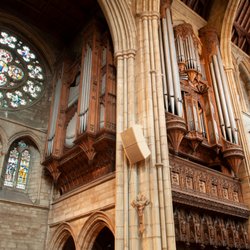
All Saints Hove - Double-fronted organ case, design by the church architect's son

All Saints Hove

5.0(1 review)
5.4 mi

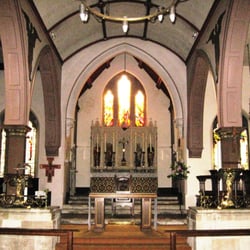
The church's website describes All Saints as 'one of the finest churches of the nineteenth century…read moreGothic Revival'. Possessed of an extraordinary interior, it was much admired by the eminent architectural historians Pesvner and Sir John Summerson, and is well worth seeking out. The church was the vision of Thomas Peacey, the first Vicar of Hove when it was made a parish in its own right in 1879. He rebuilt the old church (St Andrew's) and erected another (St Barnabas), before turning his attention to providing a new and spacious Parish church. The architect chosen was John Loughborough Pearson, viewed by many as the greatest architect of the Victorian Gothic revival. Amonst other things, he was responsible for the new cathedrals of Truro and Brisbane, as well as many churches in London. All Saints was to become the largest and costliest of his parish churches. Work began in 1889 and was largely completed by 1901, although the base of the tower was not finished until 1922 (and the remainder of the tower has, unfortunately, never been completed). Pearson chose a French C13th Early Decorated Gothic style for the new church, which is built of Sussex sandstone, and roofed with Sussex oak. The outside is attractive enough, with strong pinnacles around the south transept and chancel, although the tower base looks forlorn with its humble pyramidal cap. But the interior is breathtaking. For a start, the scale and proportions are those of a cathedral: the nave is 40ft wide, and flanked by generous aisles. And the walls are entirely faced with ashlar stone - clear evidence of no expense having been spared. The plan is conventional, with an aisled nave, short transepts, south chapel and chancel. The nave is particularly impressive: five bays of clustered piers rise through large clerestoreys towards transverse roof arches. These provide a repetitive pattern against the dark wooden roof, emphasising the height and leading the eye towards the chancel. Only the south chapel and sanctuary have stone vaults. The windows are equally impressive, and the church carries an almost complete scheme of stained glass by the famous company of Clayton and Bell. The north transept has three twin-light windows with a rose window above, whereas the south transept has a magnificent five-light window. The furnishings are equally impressive and lavish: pride of place goes to a stunning high-Victorian stone reredos, of Pearson's design and carved by Nathanial Hitch. There is elaborate wooden carving everywhere, most notably the screens of the South Chapel, the choir stalls and the amazing organ case, the latter designed by Pearson's son, Frank Pearson. The marble font is a later addition, dating from 1928, and carries a large ornate wooden cover. Although the pews have been removed, the replacement chairs are reasonably sympathetic, and the interior is very well maintained. The church takes advantage of the splendid setting to stage a wonderful Sung Eucharist, every Sunday at 10h. During the summer, they also host classical music concerts every Thursday, May to September (free to enter but donations requested), and lay on tea, coffee and biscuits. The church also has an active programme of children's groups, as well as other outreach and support groups. Details of other services and events can be found on the website.

From the owner: All Saints Hove is an inclusive catholic parish in the Church of England. We believe that there is…read morea place for everyone to receive the unconditional welcome of God, and we are a member of the Inclusive Church network. We seek to give to give a voice to those on the margins in our society and use our facilities to support the homeless and vulnerable and champion the outcast and poor. Whether you are looking for a grand period event space or a casual, cost-effective location to run classes or meetings, we make various spaces available for hire, for the purpose of offering community services and strengthening community spirit and bringing residents together.

Photos
All Saints Hove - The chancel façade of the William Hill & Sons pipe organ

The chancel façade of the William Hill & Sons pipe organ

All Saints Hove - Nave, looking east

Nave, looking east

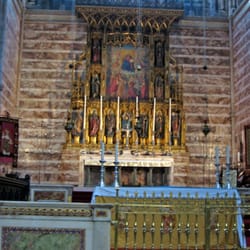
All Saints Hove - High altar, viewed from the choir stalls

See all

High altar, viewed from the choir stalls

St Michael and All Angels Church

St Michael and All Angels Church

4.0(5 reviews)
5.8 mi

St Michael's is a surprise: tucked away amongst the terraces in the fashionable Clifton area of…read moreBrighton, this large church seems almost out of place, its gothic red-brick contrasting with its white-stuccoed neighbours. It is only by looking up that you begin to realise just how big a building this is. That's partly because it is actually two churches in one, both built by renowned Victorian architects. The first was built by G F Bodley in 1861-62, and now forms the south aisle of the church. The interior features painted ceilings, tiled floors and polychromatic brick decoration. But the real joy of this part of the church is its pre-raphaelite stained glass windows, by Burne-Jones, Webb, Maddox-Brown, Gabriel Rossetti and William Morris. A stronger artistic pedigree from the 19th century would be hard to find. In 1893, work began on an extension by William Burges, with sculpture by Thomas Nicholls, which dwarfed the earlier building and became the main body of the church. This is in the French gothic style, on a cathedral-like scale, with an interior in stone rather than brick. The windows here are by Kemp, and there are other furnishings by Burges and Nicholls. But it is the sheer scale that makes this part special. The church is well worth a detour from the bustle of Brighton, in the streets below. As well as for services, the church can accommodate small groups for tours (arranged in advance). The church has recently become accessible for wheel-chair users.

Dubbed the "Cathedral of the Backstreets", St Michael's is a grand Victorian church perched on the…read morehill. Intended to provide moral succour to a godless city of decadence and excess it has been called the finest church in Sussex. It's an architectural gem. The first phase was completed in 1862 to a design by famous architect, George Frederick Bodley. It was subsequently extended in the 1890s. Followers of the arts and crafts movement should pay a call. There are fixtures, windows and other interior features by Edward Burne-Jones, William Morris, Philip Webb and Charles Faulkner. The church is open for visitors on Saturdays and there's usually someone on hand to guide you round. Proper guided tours are also held during the Brighton Festival. By Church of England standards its tradition is high, it draws a big congregation and the choir is very good too. The candlelit midnight mass at Christmas is particularly evocative and well worth attending. But do wrap up, it's cold in there. The church also serves as a cultural and community hub. The church hosts regular musical concerts and recitals as well as a host of lectures and talks through the year. The community hall is used by lots of groups and they also do important work for homeless people. Little known St Michael's fact. They do breakfast on a Saturday morning. It's a hearty breakfast and coffee for a few pounds and it's open to all. Check it out.

Photos
St Michael and All Angels Church

See all

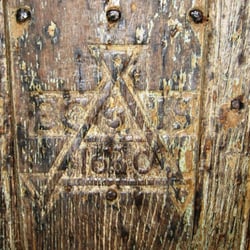
St Botolph's Church, Botolphs - Date on the church door - 1630 - and the initials of (possibly) the Churchwardens

St Botolph's Church, Botolphs

5.0(1 review)
5.4 mi

Sussex is well endowed with Saxon churches, and St Botolphs is one of the finest…read more Situated in the hamlet to which it gave its name, the church also serves the adjacent hamlet of Annington. Together, their population is today less than 50, but this large church gives away the fact that in earlier times this was a thriving port on the nearby River Adur. The church dates from 950 AD, and the nave is typical of the Saxon style: narrow, tall and long. Around 1250, a north aisle was erected, and three generous and elegant Early English Gothic arcades were inserted in the north wall. At the same time, the chancel was rebuilt, possibly replacing a Saxon apse, and the west tower added. However, as the river silted up and changed its course, the little town declined, and around 1450 the north aisle was demolished and the north wall closed up, although the three arcade arches are still clearly visible, both inside and out. Thereafter, little has altered: the south wall is the Saxon original, and includes a small Saxon window alongside newer (mostly mediaeval) insertions. The chancel arch includes a Saxon roll on its interior, unusual in that it does not follow the arch to the floor, but rests on two corbels, which have early Saxon decoration, made using a trowel. The chancel has some fine very early Gothic lancet windows, including two 'squints', to allow people outside the church (such as those excommunicated or with a disease) to watch the service within. The one on the north side is probably a 'Leper's Squint'; we know there was a leper's hospital in nearby Bramber in mediaeval times. The one on the south wall has a scratch sun-dial outside, possibly to denote the times of confession. There are also faint wall paintings above the chancel arch, the oldest of which may date from the Saxon period. Three bells dating from 1536 still ring out from the tower, hanging in their original wooden frame. There is a fine Jacobean pulpit, and a royal coat of arms from the time of Charles II. The heavy wooden door bears the date 1630 and the initials of the churchwardens. The church is well worth a visit - why not combine it with a walk along the adjacent Downs Link long distance footpath?

Photos
St Botolph's Church, Botolphs - Remains of the elegant north arcade of the nave, with Early English gothic arches resting on plain moulded capitals. Built

Remains of the elegant north arcade of the nave, with Early English gothic arches resting on plain moulded capitals. Built

St Botolph's Church, Botolphs - Interior of church door.

Interior of church door.

St Botolph's Church, Botolphs - Overal view of the church from the north west.

See all

Overal view of the church from the north west.

St. Michaels

St. Michaels

5.0(5 reviews)
9.1 mi

Located right on the High Street in Lewes, yet strangely hidden, St Michael's is a fascinating…read moreamalgam from different periods, with a distinctive and rare round tower, with a tall shingled spire. History The church dates from the late 12th or early 13th century, the actual date a puzzle as the pointed arches indicate a 13th century, but the round tower is more typical of the 11th or 12th centuries. There are two others of similar design in Sussex. The list of rectors goes back to 1283. The church was rebuilt in the 14th century with the addition of a south aisle, the arcade of which survives. However, the church suffered badly after the Reformation (Lewes being a fiercely Protestant town) and was semi-derelict by the 18th century. This necessitated a significant rebuilding in 1748, in which a north arcade was added, and the south arcade extended - unusually in wood - but in a vaguely matching style. A further rebuilding in 1884 extended the chancel, remodelled the interior and replaced three Georgian windows in the south wall with Gothic versions. The church The most distinctive external feature is the tower, now rendered, with a single pointed lancet window, and a later trefoil window above. The tower is adorned with a prominent sculpture of St Michael by Harry Phillips, erected in 1976. The 18th century frontage to High Street is an attractive example of square and knapped flintwork, with two doors, each surmounted by rounded windows, and the three Gothic windows inserted in 1884. Inside, despite the dark and atmospheric interior, one can clearly identify the distinction between the original 14th century arcade of slender Gothic arches, and the 18th century wooden versions - painted a slightly odd chocolate colour. At the west end of the south aisle is an original lancet window, an equivalent on the north side now blocked and infilled with a Victorian wall painting of St Pancras. The fittings are of extensive interest. Behind the attractive Victorian font are two brasses, relocated from the floor. The older brass, dated around 1430, is of a knight in full armour, now sadly headless, a lion at his feet. One heraldic shield survives. He may be a member of the extended de Warenne family (who built Lewes castle), possibly John Waryne, a member of the household of Henry IV. Adjacent is a half brass to John Braydforde, (d. 1457) a former rector of St Michael's. His brass has a wonderfully touching expression. On the north wall, a 16th century classical style memorial to Sir Nicholas Pelham shows him and wife facing in prayer, their ten children as mourners below. He is famous for his defence of Seaford against a French force which had previously sacked Brighthelmstone (modern Brighton). A wonderful inscription on the monument has a play on his name: His valr's proofe, his manlie virtues prayse; Cannot be marshall'd in this narrow roome; His brave exploit in great King Henry's dayes, Among the worthye hath a worthier tombe. What time the French sought to have sack't Seafoord, This Pelham did repel them back aboord. Opposite are the remains of the monument to George Goring, MP for Lewes, (d. 1601) and on the north wall a brass memorial records the life of Dr Gideon Mantell, (1790-1852), a local doctor, geologist and paleontologist. He discovered first the teeth and then a skeleton of an Iguanadon, now on show in the Natural History Museum, and is credited with helping inaugurate the scientific study of dinosaurs. There are two paintings, one large 17th century canvas of the Descent from the Cross, possibly by Balucchi, and one of the Madonna and child, thought to be Spanish of 17th century. Finally, the reredos is by celebrated Victorian Gothic architect J L Pearson. Through a door in the north wall, steep steps (formed from tomb slabs) lead up to the small but tranquil graveyard. A surprising space for the town centre, from the rear there are fine views of Lewes Castle's keep. Practicalities The church is normally open during weekdays until 5pm. The graveyard may be closed if the steps are wet. The church is part of the united benefice that includes St Anne's and St Thomas a Beckett in Cliffe. There is a Sunday Mass at St Michael's at 10.30am.


Walking along the treachorously Icy High Street of Lewes on a bitingly cold, snowy day, I came…read moreacross St Michael-In-Lewes, a 12th century church, welcome to all for prayer and contemplation. With the pure white snow clinging to the nearly sheer face of the church spire, and the surrounding areas all blotted out by the whiteness, the place looked like something out of a German fairy tale, set in a quaint little village somewhere in the Alps. Needless to say it was pretty darned beautiful, and I would recommend coming here, because architecturally the building is very interesting and quite rare. The clock that hangs of the side, gives the whole place that slightly disney-esque fairy tale, village feeling, which I guess in many ways Lewes is!

Photos
St. Michaels
St. Michaels
St. Michaels

See all

St Nicholas' Church

St Nicholas' Church

4.5(2 reviews)
5.2 mi

Brighton's ancient parish church is easily overlooked on a visit to the town. The church sits in a…read morelovely churchyard, with lawns, mature trees and brick pavements, just yards from the busy modern shopping area of Churchill Square, and yet feels as if it would be equally at home in a Sussex village. Superseded as the parish church by St Peter's in the 19th century, it still claims itself as the 'Mother Church' of Brighton, and indeed St Nicholas was the patron Saint of fishermen, doubtless a natural choice for the original little fishing village of Brighthelmstone. Its history dates back to Saxon times: the Domesday book (1085) states that there was a church here in the time of King Edward (the Confessor, presumably), although nothing survives from this foundation. It is clear that it was rebuilt in the Norman period, and there is a small amount of Norman work in the tower. Otherwise, the church is substantially a late 14th century creation, from around 1380: the nave (five bays on octagonal piers), chancel and tower arches date from this time, and the outside of the tower is probably original too. The church was heavily restored around 1853, and a clerestory added in 1892. The church is notable, however, for its furnishings. Pride of place must go to its font: the great architectural historian Pevsner regarded it as the 'best piece of Norman carving in Sussex'. The font is drum shaped, and probably dates from around 1170. The surface is completely carved, with scenes representing the Last Supper; St Nicholas and the ship; the Baptism of Christ; and another presumed story of St Nicholas. The base has a decorative frieze below the scenes, featuring scallops, scrolls and half rosettes. It is a stunning survivor. Other fittings are mostly Victorian. Close to the font is the Duke of Wellington memorial (1853): the young Wellington attended church here, and the huge octagonal sculpture, in the shape of a font cover but inspired by the Eleanor crosses, is elaborately carved in best Decorated Gothic style. There are walls painting on the east and west nave walls by Kempe, as well as some attractive stained glass, also by Kempe. An iron plaque commemorates another regular worshipper, Samuel Johnson, and a medallion celebrates another, the actress Dame Flora Robson. Outside, two headstones are worth a look: the first, commemorates Phoebe Hessel, who dressed as a man and served - and fought - as a foot soldier and died aged 108 in 1821; and the second, to Martha Gunn (d. 1815): 'Peculiarly Distinguished as a bather in this town 70 years'. It clearly did her good, as she lived to be 88.

On Wednesday's there are concerts starting at 1230hrs, put on by various Musicians or Singers, for…read moreabout three quarters of an hour. These are free, but a donation is appreciated. Prior to the concert tea and biscuit are availble for 50 P.

Photos
St Nicholas' Church
St Nicholas' Church
St Nicholas' Church

See all

New Timber Church - churches - Updated May 2026

Loading...
Loading...
Loading...