St Peter's Church Photos


Recommended Reviews - St Peter's Church
Start your review...



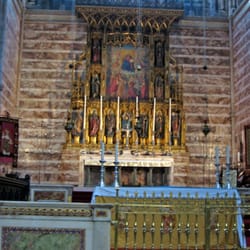
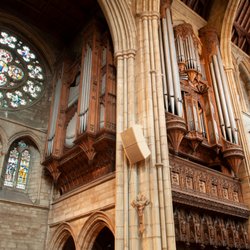
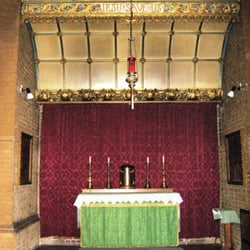
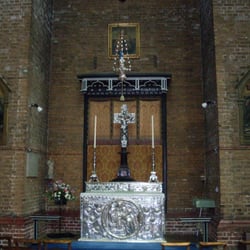
St Peter's Church is one of Brighton's most distinctive landmarks. Slightly out of the city centre on the main A23 to and from London, it sits in the middle of the gardens which run down to the sea, in splendid isolation. For many, it is the first memorable sight on entering the city. It is a grade II* listed building. The church was built originally as a 'Chapel of Ease' of the then parish church of St Nicholas, to accommodate the growing population of the city in the first quarter of the 19th century. A competition was held to design it, won by the young Charles Barry, later to find fame as the architect of the Houses of Parliament. The church was begun in 1824 and consecrated in 1828. Orientated north-south, the church had large aisle galleries and a simple hexagonal apse, making the interior typical of the 'preaching boxes' of the time. The exterior, however, with its confident Perpendicular Gothic forms - rows of buttresses and pinnacles and an innovative tower design - was a major departure for the time; the classical style was still in vogue for church building, alongside the more stylised 'Gothick' used in many country houses: many regard St Peter's as the most important neo-Gothic church of the pre-Victorian period. The church was substantially altered between 1898 and 1907 when the east end was replaced with a more traditional chancel, to designs by Somers Clarke and Micklethwaite. Built in deep yellow local sandstone, and itself an impressive work of late Perpendicular Gothic, this has, however, always contrasted somewhat uncomfortably with the earlier work in colour (Barry built in and style. The interior galleries were removed at the same time. Whilst this undoubtedly opened up the nave, it also drained some of the character from what is otherwise an impressive space. The church has a number of impressive windows by Kempe, perhaps most notably the jaw-droppingly vast east window, and the east and south-east windows in the south chapel. Increasing maintenance costs (not aided by elements of the original design, not least the unsuitably of Barry's stonework to resists the effects of salt-laden seaside air) were becoming beyond the means of its congregation, and led to the decision to declare the church redundant. It was closed in July 2009 and is now being run as a 'church plant' by Holy Trinity, Brompton, founders of the Alpha Course. read more


16 years ago

16 years ago
This early 19th century gothic style church is a bit of a Brighton landmark, located near London Road and not far from the city centre. It's also near fellow mark on the skyline St Bartholomew's church. The church was nearly closed down earlier this year following a lack of use and expensive repairs, but luckily an Anglican group (known for the infamous Alpha course) stepped in - good news as the place was falling apart and probably would've been turned into shops or cafes otherwise. read more


16 years ago

10 years ago
More info about St Peter's Church









St Peter's Church - churches - Updated May 2026
Browse Brands
Browse Articles
People who viewed St Peter's Church also viewed

St Bartholomew's Church
11 reviews

St Michael and All Angels Church
5 reviews

Unitarian Church Brighton
9 reviews

St. Michaels
5 reviews

Parish Church of St Mary
2 reviews

St Lukes Church- Queens Park
1 review

St Nicolas & St Andrew Church
3 reviews

All Saints Hove
1 review

St Peter's C Of E Church
1 review

Church of St Thomas a Becket
1 review