Cancel

    Open app

    Search

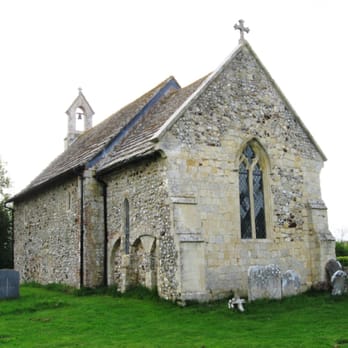
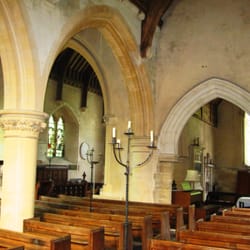
    All Saints Church

    5.0 (1 review)

    All Saints Church Photos

    Recommended Reviews - All Saints Church
    Your trust is our priority, so businesses can't pay to alter or remove their reviews. Learn more about reviews.
    Yelp app icon
    Browse more easily on the app
    Review Feed Illustration
    Photo of David J.
    96
    2344
    11912

    17 years ago

    Helpful 0
    Thanks 0
    Love this 0
    Oh no 0

    Verify this business for free

    Get access to customer & competitor insights.

    Verify this business

    St Mary's Church

    St Mary's Church

    5.0(1 review)
    1.1 mi

    St Mary's is a classic Manor church; it sits next to the impressive bulk of Wiston House, reached…read moreby driving across a huge park and some distance away from any modern settlement, although it remains parish church. The church is mentioned in the Domesday book, but underwent significant restoration by G M Hills in 1862, who swept away much of the earlier fabric. (Pevsner refers to it as being 'terribly treated' in the Sussex Volume of his Buildings of England). But it is still an interesting church to visit, its faded wooden pews lending it an air of antiquity. The church itself has a short nave, with a large two-bay south aisle, which leads in turn to a spacious Lady Chapel. The style is a mixture of Early English and Decorated Gothic, although much dates from 1862: the east and West windows are original, with 14th century reticulated tracery, and both contain fragments of colourful, original glass, the shields in the east window also dating from the 14th century. The Norman font sits on a pedestal of rather later date. But most interesting are the monuments in the Lady Chapel, where pride of place goes to a magnificent brass of Sir John de Brewys (Braose in French), who died in 1426. Adjacent is a recumbent effigy of a child beneath a Perpendicular canopy, which may be that of his infant son, whose early death resulted in the manor passing to the Sherley family. Sir Richard Sherley (d. 1540) is shown on a wall memorial with his two wives, although a harsh restoration makes it look almost modern. On the window are the kneeling figures from the monument of Sir Thomas Shirley (d. 1612). At the other end of the chapel, a late 18th century monument to Sarah Goring (d. 1798) could not be more different: a peculiar mixture of a classical mourning figure under a Gothic canopy. On my visit this had been charmingly taken over for a series of prayer requests and candles.

    Photos
    St Mary's Church
    St Mary's Church
    St Mary's Church

    See all

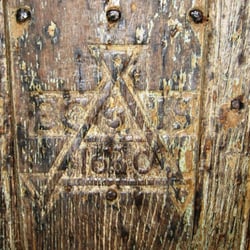
    St Botolph's Church, Botolphs - Date on the church door - 1630 - and the initials of (possibly) the Churchwardens

    St Botolph's Church, Botolphs

    5.0(1 review)
    4.2 mi

    Sussex is well endowed with Saxon churches, and St Botolphs is one of the finest…read more Situated in the hamlet to which it gave its name, the church also serves the adjacent hamlet of Annington. Together, their population is today less than 50, but this large church gives away the fact that in earlier times this was a thriving port on the nearby River Adur. The church dates from 950 AD, and the nave is typical of the Saxon style: narrow, tall and long. Around 1250, a north aisle was erected, and three generous and elegant Early English Gothic arcades were inserted in the north wall. At the same time, the chancel was rebuilt, possibly replacing a Saxon apse, and the west tower added. However, as the river silted up and changed its course, the little town declined, and around 1450 the north aisle was demolished and the north wall closed up, although the three arcade arches are still clearly visible, both inside and out. Thereafter, little has altered: the south wall is the Saxon original, and includes a small Saxon window alongside newer (mostly mediaeval) insertions. The chancel arch includes a Saxon roll on its interior, unusual in that it does not follow the arch to the floor, but rests on two corbels, which have early Saxon decoration, made using a trowel. The chancel has some fine very early Gothic lancet windows, including two 'squints', to allow people outside the church (such as those excommunicated or with a disease) to watch the service within. The one on the north side is probably a 'Leper's Squint'; we know there was a leper's hospital in nearby Bramber in mediaeval times. The one on the south wall has a scratch sun-dial outside, possibly to denote the times of confession. There are also faint wall paintings above the chancel arch, the oldest of which may date from the Saxon period. Three bells dating from 1536 still ring out from the tower, hanging in their original wooden frame. There is a fine Jacobean pulpit, and a royal coat of arms from the time of Charles II. The heavy wooden door bears the date 1630 and the initials of the churchwardens. The church is well worth a visit - why not combine it with a walk along the adjacent Downs Link long distance footpath?

    Photos
    St Botolph's Church, Botolphs - Remains of the elegant north arcade of the nave, with Early English gothic arches resting on plain moulded capitals. Built

    Remains of the elegant north arcade of the nave, with Early English gothic arches resting on plain moulded capitals. Built

    St Botolph's Church, Botolphs - Interior of church door.

    Interior of church door.

    St Botolph's Church, Botolphs - Overal view of the church from the north west.

    See all

    Overal view of the church from the north west.

    Parish Church of St Mary

    Parish Church of St Mary

    5.0(2 reviews)
    3.7 mi

    St Mary's stands at one end of a sprawling churchyard, a few minutes from the village's main…read morestreet. The site of a church since Saxon times, the present building is an amalgam of work from the Norman to Victorian periods. History The church is mentioned in the Domesday Book, and the original 11th century Norman nave now forms the north aisle, together with a Lady Chapel, formerly the chancel. A new nave was added in the 13th century, and from this date survive the arch at the east end of the north aisle, and an arch between the present Lady Chapel and chancel, as well as the windows of the north aisle. What is now the north arcade was rebuilt in Perpendicular Gothic style in the 15th century. In 1731 the original shingled spire was struck by lightning, but repaired so badly that in 1745 it collapsed, bringing down part of the nave. The nave and tower were rebuilt in 1750, though the nave rebuilt in 1843, and again in 1876, when the present south aisle, with an arcade matching that of the north aisle, were added. The chancel was also extended eastwards at this time. The present chancel arch is Victorian: the original chancel arch now rests between the chancel and the vestry. The church The church is unusual for this part of Sussex, being built of stone with ashlar dressings, built rather than of flint. The plain but handsome west tower built in 1750 stands over the three gables of the church and aisles. Inside, the interior is dominated by the nave arcades which, although 500 years apart in date, are happily well matched, with piers composed of four attached shafts. The 13th century arch in the north aisle is pointed but tapered slightly towards the imposts, giving a 'horseshoe' appearance. There is a brass to a former Rector, Henry Wilshaw (d. 1591) on the south chancel wall, and some imposing 19th century wall monuments, including one by the sculptor Sir Richard Westmacott to Sir Henry Hollis Bradford (1781-1816). A Lieutenant Colonel in the First Grenadier Foot Guards, Bradford died at La Vacherie, near Lilliere, on December 7. 1816, of wounds received at the Battle of Waterloo. In the graveyard, in a small area enclosed by privet hedges, is the grave to the Jesuit Father George Tyrrell (1861-1909). Regarded by some as the foremost intellect among English Jesuits since the Reformation, he was an important Catholic theologian whose modernist views led him to be expelled from the Jesuits and excommunicated, although he is now more usually regarded as ahead of his time. The gravestone is an early example of the sculptor and stonecutter, Eric Gill. Today the church is the centre of a busy Parish life, and on my visit I was treated to some fine change-ringing by local bell-ringers.

    I just love old churches and this one is sure to please. I went round here on my way to parham…read morehouse, to see another church. so much history. take the camera, you will not be disappointed

    Photos
    Parish Church of St Mary
    Parish Church of St Mary
    Parish Church of St Mary

    See all

    St Mary's Church - Outside

    St Mary's Church

    4.0(2 reviews)
    1.8 mi

    No, this isn't in the USA, but a small village in Sussex, just north of Worthing…read more Tucked away and bypassed by both the A24 and the A283, the village is signposted off the nearby 'Washington roundabout' where these two busy main roads cross. Once in the village, the atmosphere is completely different: sylvan, peaceful, with a large country pub, rows of cottages and an attractive mediaeval church. The village is bisected by the South Downs Way, and so is a popular stop with walkers, especially since it only a mile from the impressive Iron Age hill-fort of Chanctonbury Ring. St Mary's church dates from at least 1146, although the present building was rather heavily restored in 1866 by the architect G M Hills: only the Perpendicular tower (late 15th or early 16th century) and the early Gothic north nave arcade (from around 1200, and partially rebuilt later in the 13th century) survive intact. In Hill's 'restoration', the north aisle was widened and the south aisle added, and both nave and chancel rebuilt. The result is a rather neat looking church, with flint walls outside and ashlar within: the outside looks older thanks to the patina of lichens and moss, and the heavy roof of Horsham Slate over the aisles. Inside, the church is dark, but the well preserved Perpendicular font is attractive and dates from the 15th century. All other furnishings are Victorian or later. The wooden barrel vault ceiling in the chancel is interestingly decorated, however, and the bell tower, entered beneath its imposing Tudor arch, is full of interesting memorabilia and framed cartoons celebrating bell-ringing: the church has an active group of bell ringers, one of whom is apparently 96 years old! The church is very much part of this little community, and as well as a regular Sunday service, (with Sunday School for children), remains open during daylight hours for visitors although, as always, it's best to check opening arrangements ahead, if making a special visit.

    Cannot add to David's review so well written. From an…read moreartistic view, I point out that this church is very painter/photographer friendly. As it is at the top of a winding, quite narrow lane, there are some limitations of view from the South-East. Catches the sun well in the morning light Continue West, and you can catch the evening light. Over the bridge spanning the A24, you can continue to Rowdell House..lovely walk around here.

    Photos
    St Mary's Church - St Mary's Church from the north-west. Photo courtesy of Wikipedia Commons and taken by Charlesdrakew

    St Mary's Church from the north-west. Photo courtesy of Wikipedia Commons and taken by Charlesdrakew

    St Mary's Church
    St Mary's Church - Stained glass window

    See all

    Stained glass window

    Church of St Nicholas, Bramber Castle

    Church of St Nicholas, Bramber Castle

    4.0(2 reviews)
    3.4 mi

    Bramber is a picture-postcard village of the sort that wins 'Britain in Bloom' prizes. Sandwiched…read morebetween the equally pretty vllages of Steyning and Upper Beeding, it sits between the River Adur and the steep castle mound of Bramber Castle. The castle (see separate entry) is now a ruin, but its church - the oldest Norman church in Sussex - is intact, and still in regular use. Situated on a hill above the village, the church was built at the same time as the castle in 1073, by William de Braose. Originally a chapel for the castle, it became the parish church in 1250, but it declined with the village as its harbour on the River Adur silted up. The church was used as a gun emplacement for attacking the castle during the Civil War in 1642, and was ruinous by the mid-18th Century. It was restored in the 19th century. It's exterior is typically Norman - a strong, squat tower, which could also serve as a refuge, a short nave and thick walls. On the South Wall are the remains of an original Norman doorway, with a simply decorated arch. The original transepts and chancel have long since been demolished, and the church now consists only of a small west porch/vestry, nave and the tower, which functions as the chancel. Inside, the church is dark and atmospheric. The eye is drawn to the chancel arch, a perfect example of rustic Norman romanesque, and is one of only three examples to feature the original Norman figure carvings on the capitals. On the left, these feature two simple human heads, but on the right the human heads are accompanied by animal carvings in relief, showing birds and what appear to be dogs or foxes - some of them with more birds in their mouths (possibly an early 'fox and goose'). There are more Norman carvings on the capitals of the infilled north cancel arch. After a visit to the church, it's a only short climb to the lovely grounds of Bramber Castle - a perfect spot for a summer picnic.

    This church seems vastly over looked but the graves are not that old. Some are within recent years…read more The inside is classic Norman but needs a make over. The walls are peeling.

    Photos
    Church of St Nicholas, Bramber Castle - Chancel arch - 11th century carvings

    Chancel arch - 11th century carvings

    Church of St Nicholas, Bramber Castle
    Church of St Nicholas, Bramber Castle - Bramber church. South wall - Norman Door.

    See all

    Bramber church. South wall - Norman Door.

    Parish Church of St Mary, Sullington - Tower wall showing Saxon long-and-short work

    Parish Church of St Mary, Sullington

    5.0(2 reviews)
    2.9 mi

    Sullington's ancient church is situated at the end of a mile-long lane, south-east of the modern…read morevillage of Storrington. The lane turns south off the busy A283 road and, immediately, you feel far from the modern world. It is like a journey back in time, and one of the loveliest corners of Sussex I have visited in quite a long time. The church itself is located next to a sprawling farm, which has an impressive 17th century tithe barn. It is surrounded by a church yard full of ancient yews, with lovely, sweeping views up to the South Downs. It is listed at Grade I. The church is also ancient, dating from around 1050. The stumpy tower show signs of Saxon 'long and short' work, with corner stones laid alternately horizontally and vertically, and the nave - tall, long and narrow, could also only be Saxon. The main west door (there is no porch) is clearly early Norman, but has been rather over-restored. Much of the rest of the building was rebuilt around 1220 in the Early English style, with tall single lancet windows. The exception is the East Window, a delicate Decorated Gothic design from 1295. There is a small chantry chapel on the north side, dating from 1389, separated from the nave by an elegant two-bay arcade. A very wide 13th century arch separates nave from the chancel, on the right hand side of which is a small low window and the remains of a squint, which would have allowed lepers and others not allowed into the church to watch the service. There are some interesting furnishings, and pride of place must go to the early 13th century effigy of a knight in armour, dating from the reign of Henry III. Although badly damaged (probably in the Reformation), what remains is of high quality. It is thought to be of Sir William de Covert: the de Coverts were local Lords of the Manor. His legs are crossed in the manner of a crusader, and a 'de Covert' is mentioned at the siege of Acre (1189-91). Could this be him? Next to the tomb is a 14th century Perpendicular font, and further along is a Saxon tombstone, depicting an elongated cross, now propped up against the north tower arch. The other furnishings are mostly Victorian, but nicely done, and there is some attractive modern stained glass. It marries ancient and modern together perfectly.

    This is a beautiful old church. it is not over ornate andhad a wonderful feel inside. Outside it…read moreis up a country land next to a farm's barn. There are Yew trees surrounding the church that must be over a thousand years old. It is a lovely place to go for some quiet reflection. My half brother is buried in the small churchyard, with a lovely view across the surrounding area.

    Photos
    Parish Church of St Mary, Sullington
    Parish Church of St Mary, Sullington
    Parish Church of St Mary, Sullington

    See all

    Steyning Parish Church of St Andrew and St Cuthman

    Steyning Parish Church of St Andrew and St Cuthman

    4.0(1 review)
    2.6 mi

    Steyning is a lovely village to visit, if you are in this part of West Sussex, with an interesting…read morehistoric core of buildings, which also extends to nearby Bramber. The origins of Steyning's church are somewhat vague: it was founded around the 8th or 9th centuries, supposedly by St Cuthman. But it is clear that during the 9th century there was a flourishing Minster church here, dedicated to its presumed founder, and Ethelwulf, King of Wessex and the father of Alfred the Great, was buried here in 858. (His body was later moved to Winchester Cathedral.) An ancient gravestone in the porch purports to be from his tomb. Unfortunately, nothing else recognisably survives from the Saxon period: after the Norman conquest, the church came into the care of the monks of Fecamp Abbey in France, who rebuilt the church in romanesque style between the late 11th and mid 12th centuries. The porch was added in the 15th century and the tower in the 16th, but after the dissolution, the Norman chancel decayed and the present chancel is a Victorian addition. But the nave remains a Norman building of very high quality, which makes a strong, even dramatic impression as you enter. The arcades and clerestory are richly carved, with the typical Norman decorations across the arches and columns of ziz-zag and dogtooth carving, with additional human and animal motifs. The whole scheme is a delight, and is preserved in excellent condition. Also in Steyning are some lovely half-timbered houses and a small museum. After a visit to Steyning, cross the busy A283 to the ruined Bramber Castle. Situated at the entrance to the equally delightful village of Bramber, it makes a perfect spot for a summer picnic.

    Photos
    Steyning Parish Church of St Andrew and St Cuthman
    Steyning Parish Church of St Andrew and St Cuthman
    Steyning Parish Church of St Andrew and St Cuthman

    See all

    All Saints Church - churches - Updated May 2026
    Loading...
    Loading...
    Loading...