
San Jacinto Valley Academy Photos


You might also consider


More like San Jacinto Valley Academy
Recommended Reviews - San Jacinto Valley Academy
Start your review...


Reviews With Photos
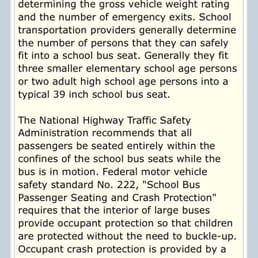

SEATING CAPACITY FOR THE BUSES IS UNSAFE. The older kids are being forced to sit 3 to a seat, thereby not adhering to federal regulations that all children on a seat must be fully in the seat and not halfway and hanging into the aisle. The seats are designed so that in the incident of a collision, the children will be protected by the seat in front of them. The sports teams are taking 2 teams at a time on the short bus for middle and high school students. This is also true for field trips. On a recent field trip for the 6th grade classes, the students were 3 to a seat, with the third child not fully in the seat, and therefore not protected by the seat in front of them. According to an employee of the school, the school does not plan on replacing the large bus that has broken down, which is the reason why our kids' safety is being compromised. I used to love this school. I am so disappointed now. Class sizes are huge, which takes away from the whole point of having my kids in a charter school. Pick up and drop off are horrible, as are the giant, pointy rocks they have in place of gravel. I can't even drive through the parking lot anymore because I don't really want to put new tires on my car. They must have bought the cheapest gravel possible. Whatever happened to real gravel? The little ones you can walk and drive on without ruining your shoes or tires. Now there are a lot of parents, including myself, who drop off in the neighborhood right there where the school is, and the downfall to that is that the recent graduates from the year before, who are now the traffic-directing crossing guards, make the kids line up in a group that goes around the corner--I'd say 60-75 kids--before they let the kids cross the in/out gates and enter the campus. I drop my kids off at 7:15, and they are usually on campus late. School starts at 7:45! Why are the kids being forced to wait for 30 minutes on a street corner? I could go on and on about the things that are worse this year compared to last year, but the review would be so long that nobody would have enough time to read it.


5 years ago

21 days ago

6 months ago

1 year ago
2 years ago

5 years ago

11 years ago
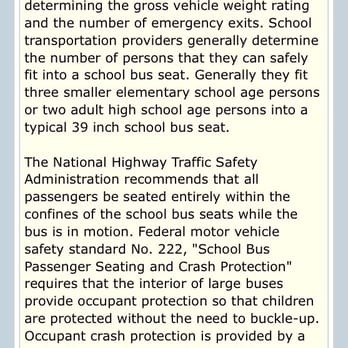
SEATING CAPACITY FOR THE BUSES IS UNSAFE. The older kids are being forced to sit 3 to a seat, thereby not adhering to federal regulations that all children on a seat must be fully in the seat and not halfway and hanging into the aisle. The seats are designed so that in the incident of a collision, the children will be protected by the seat in front of them. The sports teams are taking 2 teams at a time on the short bus for middle and high school students. This is also true for field trips. On a recent field trip for the 6th grade classes, the students were 3 to a seat, with the third child not fully in the seat, and therefore not protected by the seat in front of them. According to an employee of the school, the school does not plan on replacing the large bus that has broken down, which is the reason why our kids' safety is being compromised. I used to love this school. I am so disappointed now. Class sizes are huge, which takes away from the whole point of having my kids in a charter school. Pick up and drop off are horrible, as are the giant, pointy rocks they have in place of gravel. I can't even drive through the parking lot anymore because I don't really want to put new tires on my car. They must have bought the cheapest gravel possible. Whatever happened to real gravel? The little ones you can walk and drive on without ruining your shoes or tires. Now there are a lot of parents, including myself, who drop off in the neighborhood right there where the school is, and the downfall to that is that the recent graduates from the year before, who are now the traffic-directing crossing guards, make the kids line up in a group that goes around the corner--I'd say 60-75 kids--before they let the kids cross the in/out gates and enter the campus. I drop my kids off at 7:15, and they are usually on campus late. School starts at 7:45! Why are the kids being forced to wait for 30 minutes on a street corner? I could go on and on about the things that are worse this year compared to last year, but the review would be so long that nobody would have enough time to read it. read more

14 years ago
We are very pleased with this school. The staff is friendly and caring. Good academics, smaller class room size. Highly recommended read more


9 years ago

9 years ago
7 years ago
More info about San Jacinto Valley Academy
Ask the Community - San Jacinto Valley Academy
You might also consider














Why does Yelp recommend reviews?
5 reviews that are not currently recommended
The reviews below are not factored into the business's overall star rating.
3 years ago

13 years ago
4 months ago
2 years ago
3 years ago


