Ronald Bog Park Photos


You might also consider


More like Ronald Bog Park
Recommended Reviews - Ronald Bog Park
Start your review...




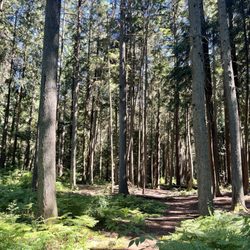
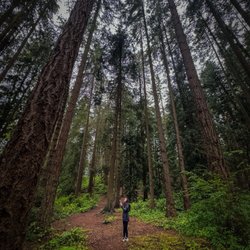
My mom and I came to Ronald Bog Park the morning of Wednesday 29 July 2020 to do a little exploring. We had driven past the park a number of times while it was closed for construction and were excited for it to reopen and look around. The parking lot is paved and easy to reach. The short drive into the parking lot branches off from the turn lane used to merge onto Interstate-5 Southbound. There are about a dozen parking spaces, and the only other car there when we arrived around 9:20 a.m. was a maintenance vehicle with workers out watering the plants. One other car had arrived by the time we left a little after 10:00 in the morning. The Pacific Northwest Conifer Arboretum constitutes part of the park and a map of the different trees one may find is posted by the parking lot. Gravel paths wind through the arboretum and into the rest of the park providing even surfaces kind on soar joints. We found a variety of beautiful trees and flowers as we walked around the arboretum and park. Directly along the water there is a small wooden covered area and a large draping tree with a bench under it where you can sit and look out over the water. My mom and I had fun watching the minnows swim in the bog and the flurry of insect activity around the bog's edge. Different birds flew overhead as we continued to walk around and a group of crows held their own convention first on the ground by the water, then in the tree branches. Various berries abounded, especially blackberries along the edge of the park by the covered bus stop. In our looking around, the only place to reach the water was by the large tree and covered area. A large 'X' shaped sculpture piece is part of an art program integrating art into Shoreline parks and sits centrally in a large grassy area of the park. Signage. The signage at this park is excellent. It provides historical context about the land of Ronald Bog Park and the how the park came to be. I enjoyed the sign that told the story of seven determined women who are responsible for the creation of Ronald Bog Park. Since their efforts the park has become cared for and frequented by more and more people. A happy trickle down effect of their efforts. I also liked that the sign did not include a picture of the seven women. It keeps the story about the park and what they were trying to achieve by not drawing away from the topic of the park. I enjoyed the sign elaborating what they meant by the term 'Coast Salish' people in reference to some indigenous peoples. Here indigenous peoples means Native Americans specifically North American Native Americans. Not all indigenous peoples are Native Americans. Using the term 'indigenous' is a baby step forward. Prefixes 'ind-' and 'indi-' still draw allusion to the terms India and Indian. The term Native refers to the original and first human inhabitants of an area, so the term Native Americans is more respectful. The word 'Indigenous Peoples' is a good bridge word to reaching 'Native Americans', hence a baby step forward. A baby step forward is still movement. In my opinion, failing to acknowledge progress that has been made can be equally as heinous as the original 'oppressive' act. In that essence, I applaud the informational signs/boards for not promoting false images of Native Americans. Not all Native Americans have black hair, this is easy to understand in a way similar but opposite to Native Europeans who are homogenized in the sense that all Native Europeans are white skinned. The false image of only black haired Native Americans dates back before colonization times centuries ago, so not having this propagated on the signage is a massive step forward. A leap really. Driving/riding past Ronald Bog Park over the years, the 'City of Shoreline' sign/welcome with the horse sculptures located on the boundary of the park has become iconic to me personally. Ronald Bog Park is a beautiful park in Shoreline that adds to making Shoreline/Seattle a place I am happy to call home. A place worth protecting and preserving. read more


6 years ago
Love it. Wish there were more walking trails available, but a beautiful spot to sit and reflect at. Very peaceful. read more



10 years ago
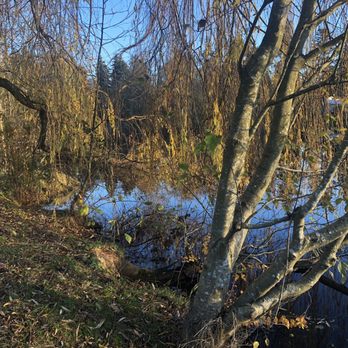
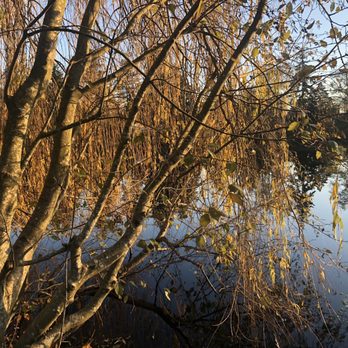
Nice little lake nestled in Shoreline. I've caught bass from here but supposedly the prized fish is carp in this lake. Have not had any luck catching them, but they can be observed from shore. The area doesn't appear to have too many trees with the exception of a few near the lake, thus there is no brush cover and can get pretty windy. Sadly, the migrating ducks and geese in the area leave the grounds covered in feces. I've noticed people also walk their dogs here. Make sure to clean your shoes thoroughly as you exit the park. Been here a handful of times, during my last trip I noticed a few people have made part of the deeper bushes, their campgrounds. Be mindful and alert if you intend to walk into or near the bushes, might be people lurking around. read more