I am writing to share my experience as a patient who underwent total knee replacement surgery and…read moresubsequently spent more than five months in postoperative physical therapy.
From the very beginning of my recovery, I consistently reported instability, pain, persistent swelling, a clunking sensation, and an overall feeling that something mechanically was not right with my knee. While I understood that recovery from knee replacement can be challenging, my symptoms never felt consistent with what I was being told to expect. I repeatedly expressed these concerns throughout my course of therapy.
In addition, I was often told that my progress was well behind what is typically expected following a total knee replacement. Despite my repeated reports of instability, pain, persistent swelling, clunking, and the feeling that something mechanically was not right, no additional hands-on assessment or targeted testing of my knee was performed to determine whether there might be an underlying mechanical issue. Instead, treatment largely consisted of visual observation, massage therapy to address swelling and discomfort, and continuation of many of the same exercises month after month. As my symptoms persisted and my progress remained limited, I became increasingly concerned that the underlying cause of my difficulties was not being adequately investigated.
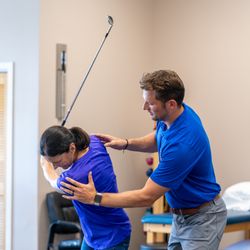
As the months passed, I became increasingly concerned that my recovery was not following a normal course. I ultimately decided to seek a second opinion from another local physical therapist. Within minutes of reviewing my history and performing a brief assessment, he recognized excessive laxity and spacing in my knee and determined that my symptoms warranted referral to a revision specialist.
That referral led me to Dr. Nazarian at Rothman Orthopaedics. Following his evaluation, it was determined that revision surgery was necessary.
One question people may ask is, "Why didn't you just go back to your surgeon sooner?"
The reality is that after surgery, patients are encouraged to place tremendous trust in their physical therapist. Once the operation is complete, much of the day-to-day management of recovery is effectively handed off to physical therapy. Physical therapists are the healthcare professionals who see patients multiple times per week, monitor progress, evaluate setbacks, and help determine whether recovery is progressing as expected. As a patient, you are expected to trust that your physical therapist is appropriately evaluating your recovery and advising you when something falls outside the norm.
Because of that, I trusted the process. I trusted that the instability, pain, swelling, clunking, and persistent feeling that something was mechanically wrong with my knee were being properly evaluated. Looking back now, I wish I had sought another opinion much sooner.
What frustrates me most is that I spent over five months attending therapy, using the majority of the visits covered by my insurance, while continuing to report the same symptoms from the very beginning. I cannot help but wonder whether a more thorough evaluation or earlier recognition that my recovery was not normal could have led to answers much sooner and potentially saved months of frustration, uncertainty, discomfort, and the need to spend so much time addressing a problem that ultimately required consultation with a revision specialist.
The purpose of this feedback is not simply to share my experience but to encourage patients to advocate for themselves. Do your research. Ask questions. Listen to your instincts. If something does not feel right, do not be afraid to seek another opinion. Not all physical therapists bring the same level of experience, critical thinking, or ability to recognize when a patient is not following a typical recovery path. At the end of the day, no one has a greater stake in your recovery than you do.
Based on my experience, I highly recommend Steve Pete at JOYNT in Lewes. He listened carefully to my concerns, performed a thoughtful assessment, recognized almost immediately that my symptoms were not consistent with a routine recovery, and helped direct me toward the specialist who ultimately identified the need for revision surgery.
Choosing the right physical therapist can make an enormous difference. A highly skilled clinician may help patients obtain answers sooner and potentially save significant time, money, heartache, and unnecessary pain.