Revisiting major hub airports in America (2 of 2)…read more
It would be hard to change Atlanta's rating. ATL is so big that this update is mostly about changes that are incremental. I initially remember ATL as 5 long parallel concourses labeled from A through E. They had gates on both sides and Delta, the hometown airline, seemed to be present in most, if not all of them. Today, the map has two big newer pieces. There's Terminal T and there's the International Terminal.
I've never used the International Terminal, but it sits at the eastern end of the airport and is actually connected to Terminal E. However, vehicular access is from the other freeway, after I-75 and I-85 have split off to create that sort of wishbone. International flights are gaining more prominence at ATL, with more carriers coming here. Sadly, the days of the quad-jet seem to be in our rear view mirror and seeing B747s, A380s, or even A340s here is a thing of the past. They are instead coming to ATL with newer and more efficient, but less interesting, twin aisle two engine aircraft.
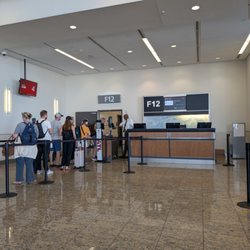
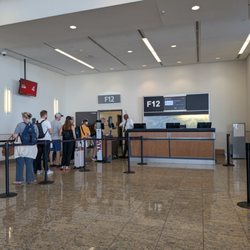
I recently used Terminal T for the first time. I always wondered what it featured. They evidently needed more domestic gates, so they snuggled it up to the roadway closer to the Main Terminal such that you only have gates on one side - so essentially a "single loaded" corridor - with windows looking out onto the roadway on the other side. I used it for a United operated flight.
Things are much like they've always been. At first glance, clearing TSA seems to be cumbersome, but they are handling lines more efficiently. You just might be moved to an auxiliary line you didn't know about instead of queuing in the main centralized one.
Atlanta's climate is mostly mild, despite a hot and humid summer. That said, delays due to weather are not as common as up north. If they occur, it's because of an unusual system in the Southeast or because of storm activity in adjacent Florida. I'm sure cancellations here can get messy and have a ripple effect given how many flights this airport handles.
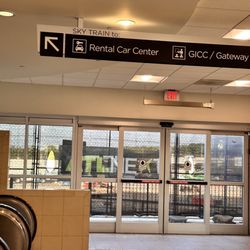
Most of the action at ATL seems to be improvements in ancillary and supporting functions. There are some large new parking structures. Those structures across from and flush with the Main Terminal just weren't enough. A separate rental car center is now operative, complete with another small dedicated rail system taking customers there. Gone are the days of rental agencies scattered in makeshift buildings in parking lots scattered around Camp Creek Parkway! That said, ATL now has yet another train in addition to MARTA and the Plane Train connecting the concourses inside the airport. Incidentally, MARTA service to the airport is a big asset and I really enjoy beginning and ending my trip to Atlanta with a MARTA ride.
Mostly, ATL is a well oiled machine. It works. The train system inside it makes it seem more manageable and even "smaller."
The concourses are sort of utilitarian. They make no architectural statement whatsoever. They don't have moving walkways within them ... at least not the ones I've used.
There are some quirks at this airport. The people watching ought to be interesting, except that there will be quite a few "golf pukes," given that that is a big deal in this part of the country and these glad-handers are typically en route to sell their business customers one thing or another. There will be Chick-Fil-A locations as well as airport-sized versions of downtown's The Varsity. Those ancient neon "Fly Delta Jets" sign that seem to be a staple of this airport are thankfully still there and you might see one from your plane window. Lastly, this airport's code has given the city one of its nicknames - "the ATL!"
For a person who used to ride their bike to LAX to watch planes land and take off when a teenager, never did I think this would be my hometown airport for a few years! It may not have LAX's geography and uniqueness, but, in "the city too busy to hate," this is "the airport too busy to take a breather." ATL is just that - big and busy.